The Secret to Making Your HVAC System Live Forever
## How Long Does an HVAC System Actually Last? (The Honest Answer)
The average lifespan of an HVAC system falls somewhere between 10 and 25 years — but that wide range tells an important story. What you actually get depends on the type of system in your home, how well it's been maintained, and yes, the demands of Colorado's climate.
Here's a quick breakdown by system type:
| HVAC System Type | Average Lifespan | | --- | --- | | Central Air Conditioner | 12-15 years | | Heat Pump | 10-15 years | | Gas or Electric Furnace | 15-25 years | | Boiler | 15-30 years | | Ductless Mini-Split | 15-20 years | | Geothermal Heat Pump | 25-30 years | | Ductwork | 20-25 years |
Most homeowners in Thornton and the Denver metro don't think much about their HVAC system until something goes wrong — a furnace that won't kick on during a January cold snap, or an air conditioner that struggles through a July heat wave. By that point, the system has often been quietly losing efficiency for years.
The good news? Lifespan isn't just luck. Research consistently shows that an unmaintained system can fail in as little as half its expected service life, while a well-cared-for system can push well past the average. We've seen both ends of that spectrum here in Colorado — systems that gave up before the 10-year mark, and others that kept homes comfortable for 30 years or more.
Understanding where your system stands on that spectrum is the first step to making smart decisions — whether that's a simple tune-up, a targeted repair, or planning ahead for a replacement before an emergency forces your hand.
Decoding the Average Lifespan of an HVAC System
When we talk about the average lifespan of an HVAC system, we are really looking at how long the mechanical components can withstand friction, heat, and pressure before the cost of keeping them running outweighs the benefit. It is helpful to think of your HVAC system in "dog years." A ten-year-old system might still look fine on the outside, but internally, it has logged thousands of hours of heavy labor.
Different systems age at different rates because they perform different jobs. For example, Air Conditioning units sit outside in the wind, rain, and sun. They face constant exposure to debris and temperature swings. On the other hand, indoor Heating equipment like furnaces are tucked away in a basement or utility closet, protected from the elements. This protection is a major reason why heating units often outlast cooling units by several years.
Mechanical wear is inevitable. Over time, bearings lose lubrication, electrical contacts pit, and seals become brittle. However, "average" doesn't mean "guaranteed." In our experience serving Thornton and Northglenn, we have found that the actual longevity of a system is a combination of its build quality and the environment it lives in.
The Average Lifespan of an HVAC System for Heat Pumps vs. Furnaces
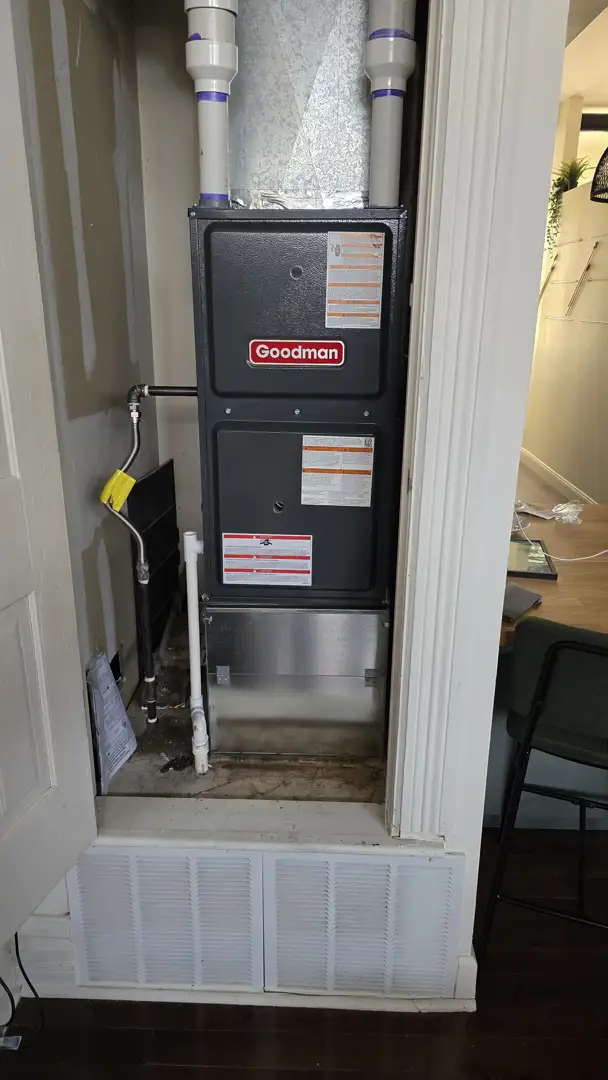
There is a significant gap between how long a furnace lasts compared to a heat pump. A standard gas furnace typically enjoys a lifespan of 15 to 30 years. Because they only run during the colder months, they get a "break" during the summer.
Heat pumps, however, are the workhorses of the HVAC world. They provide both heating and cooling, meaning they run almost year-round. This "double-duty" operation usually limits their lifespan to about 10 to 15 years. Similarly, a Mini Split system typically lasts 15 to 20 years, benefiting from advanced inverter technology that reduces the stress of "on-off" cycling.
If you have a Boiler, you are likely looking at the longest-lasting heating option. These systems are incredibly durable, with some cast-iron models lasting 30 years or more, provided the water chemistry is managed correctly to prevent internal corrosion.
How Long Does Ductwork and Ventilation Last?
While the machines get all the glory, your ductwork is the "circulatory system" of your home. On average, ductwork lasts between 20 and 25 years. It doesn't have moving parts, but it does suffer from seal degradation. As the years go by, the tape and mastic used to seal joints can dry out and crack, leading to air leaks.
In many older Colorado homes, leaky ducts can cause a system to lose up to 30% of its efficiency. This makes your furnace or AC work much harder to move air, which indirectly shortens the average lifespan of an HVAC system. Maintaining Energy Efficient HVAC standards means keeping those ducts sealed and insulated.
Key Factors That Influence Your System's Longevity
If you want your system to "live forever" (or at least as long as possible), you have to look at the factors you can control. The most critical factor happens on day one: the quality of the installation.
A system that is improperly sized will fail prematurely. If an AC unit is too large, it will "short cycle," turning on and off rapidly, which puts immense strain on the compressor. If it’s too small, it will run constantly, wearing out the motor. This is why we prioritize precision Air Conditioning Replacement Longmont CO and Furnace Replacement Brighton CO. Getting the sizing and the initial setup right can add five years to your system’s life before it even starts its first season.
How Maintenance Impacts the Average Lifespan of an HVAC System
We cannot stress this enough: maintenance is the single biggest variable in the longevity equation. Think of it like your car—you wouldn't expect an engine to last 200,000 miles without an oil change.
Our Maintenance Plan is designed to catch the small "domino" effects. For instance, a dirty filter restricts airflow, which makes the blower motor work harder and get hotter. That heat eventually causes the motor windings to fail. By following an AC Maintenance and Service routine and a Spring HVAC Maintenance Checklist, you keep those components running at their designed temperature and pressure. Clean coils and fresh filters aren't just for air quality; they are for mechanical survival.
The Role of Colorado’s Extreme Climate
Living in Northglenn and Thornton means our systems face unique challenges. We have dramatic temperature swings where it might be 70 degrees at noon and 20 degrees by midnight. This causes metal components to expand and contract rapidly, which can lead to stress fractures over time.
Our high altitude and semi-arid climate also mean more dust. Dust is a silent killer for HVAC systems. It acts like sandpaper on moving parts and forms an insulating layer on coils that prevents heat transfer. Regular Air Conditioning Tune-Up Henderson CO and Furnace Maintenance Northglenn CO are essential here to clear out the "Colorado grit" that accumulates inside your cabinets.
Warning Signs Your System is Nearing Retirement
Systems rarely fail all at once. They usually give you "hints" that they are reaching the end of their functional life. If you notice your energy bills creeping up month after month even though your habits haven't changed, your system is likely losing its efficiency. A central AC that was rated at 14 SEER when installed can effectively drop to 10 SEER after a decade of hard work.
Other red flags include:
- Strange Noises: Squealing (belts), grinding (bearings), or banging (loose parts). - Inconsistent Temperatures: Some rooms are freezing while others are stifling. - Frequent Repairs: If you are calling for HVAC Repair Denver CO more than once a year, the "nickel and diming" phase has begun. - Short Cycling: The system turns on and off every few minutes without reaching the set temperature.
Why Maintenance is the Average Lifespan of an HVAC System Game-Changer
Proactive care changes the math. When we perform Boiler Maintenance Lafayette CO or Mini-Split Maintenance Arvada CO, we aren't just looking for what is broken today. We are looking for what is going to break tomorrow.
Catching a failing capacitor during a routine tune-up is a minor fix. If that capacitor fails on a 100-degree day, it can cause the compressor to overheat and burn out—a much more expensive disaster. Efficiency retention is the other half of the battle; a clean system uses less power, putting less "miles" on the electrical components.
When to Repair vs. Replace Your Colorado HVAC Unit
As of April 2026, the decision to repair or replace has a few "hard" boundaries. One of the most famous is the 50% Rule: If the cost of a repair exceeds 50% of the cost of a new system, and the unit is past 50% of its expected lifespan, replacement is almost always the better financial move.
There are also regulatory and safety factors to consider:
1. Refrigerant Obsolescence: If your older AC uses R-22 refrigerant (which was phased out years ago), a simple leak can be incredibly expensive to fix. Reclaimed R-22 can cost hundreds of dollars just for a few pounds. 2. Safety Hazards: If a technician finds a cracked heat exchanger in your furnace, this is a non-negotiable safety issue. It can leak carbon monoxide into your home. In these cases, we often recommend immediate replacement to protect your family. 3. Efficiency Gaps: Modern units are significantly more efficient. Moving from an old 10 SEER unit to a new 18 SEER2 system can slash your cooling costs by 40%.
Whether you need Boiler Replacement Longmont CO or are looking at Mini-Split Replacement Lafayette CO, we help you weigh these factors so you aren't throwing good money after bad.
Frequently Asked Questions about HVAC Longevity
Should I replace my AC and furnace at the same time?
Generally, yes. While it’s a bigger investment upfront, replacing them together ensures "matched" efficiency. Modern blowers in new furnaces are designed to work perfectly with the coils in new AC units. Plus, you save on labor costs by having the team do both at once, and you reset the warranty clock for the entire system simultaneously.
Is a 20-year-old furnace safe to operate in Denver?
It can be, but it requires a very close eye. At 20 years, a furnace is approaching the end of the average lifespan of an HVAC system. The primary concern is the heat exchanger. Over two decades of heating and cooling, the metal can fatigue and crack. We recommend an annual professional inspection for any furnace over 15 years old to check for safety risks and carbon monoxide leaks.
How often should I change my filters to extend system life?
For most homes in Thornton and Northglenn, we recommend checking your filter every 30 days and replacing it at least every 1 to 3 months. If you have pets or allergies, stay on the shorter end of that window. A clean filter is the simplest way to reduce stress on your blower motor and keep your internal coils clean.
Conclusion
At Quality Heating and Air, we believe in treating every home like our own. Our community roots in Thornton and Northglenn run deep, and our goal is to provide honest communication and reliable workmanship that helps your system last as long as possible. We know that the average lifespan of an HVAC system is just a number—what matters is the comfort and safety of your family.
Whether you need a quick tune-up to stay ahead of the weather or you're ready to explore a new, energy-efficient upgrade, our team is here to help with transparent pricing and 24/7 emergency availability.
Ready to maximize your home comfort? Schedule your energy-efficient HVAC service today with Quality Heating and Air.

Testimonials
Neighbors trust Quality Heating & Air for honest work and fair pricing.
Really happy with my overall experience. They worked neatly, quickly, and taught me MUCH along the way. Gave great advice, helped me with a side concern, that was holding me up; and finished in time for my Dentist visit. I would highly recommend this business, and the price was a pure blessing. GREAT local company and I wasn't bribed for my review 🙃 thx guys!
Bonnie B.
Fred was very knowledgeable, he repaired an old rusted iron pipe that was part of the original house build. I thought the repair would be more costly than what Fred qouted me including parts and labor. Fred made the repair after 5pm, after getting the necessary parts and he was very clean because he put down a cloth on the bathroom floor while working. I would highly recommend Fred for service in the future and I will use Quality's services again in the future.
Chris S.
Fred did a wonderful job diagnosing our air conditioning issue, presenting options available, and installing the new unit we needed. In addition to being a truly nice person, Fred was very knowledgable and professional, and we highly recommend him. Thank you Fred!
James D.
Fred was great and explained our issues we had and fixes we needed in an easy to understand way. Will ask for him next time.
Justin F.
Great service, Fred was able to show up the same day we had a problem and get everything fixed. Very knowledgeable and did not pressure us to spend money we didn’t need to spend. I would recommend to a friend without question.
Kyle F.
Fred Gottschalk performed a miracle with the furnace. He is by far the most knowledgeable HVAC professional I know to date. He knew everything about my furnace and replaced an old blower. The blower is far superior over the OEM one. I did the right thing choosing Fred!
Marty P.
I had an amazing experience with Fred Gottschalk! From the moment he came in to the moment he left he was very personable and made me feel good about my decision to call this company for assistance. I love the fact that they prioritize a personal touch making sure whoever comes to your door will remain your tech every time you call in. One thing he told me that gained my trust is that he will take care of my furnace the way he would want someone to take care of his granny’s. Thank you Quality heating and air, and thank you Fred!
Monica G.
Our technician Fred was excellent. Arrived on time, communicated well and was very knowledgable. Highly recommend and will continue to use these guys.
Nancy S.
Fred was great! He was friendly and informative, answered all of our questions and even got along with our cat (also named Fred). Would highly recommend!
Sadie P.
Highly recommend. Easy scheduling process and our technician Fred was on time, very professional, and knowledgeable on all things in the mechanical world. Took time to educate us and fix the issues we had.
Scott F.
Really happy with my overall experience. They worked neatly, quickly, and taught me MUCH along the way. Gave great advice, helped me with a side concern, that was holding me up; and finished in time for my Dentist visit. I would highly recommend this business, and the price was a pure blessing. GREAT local company and I wasn't bribed for my review 🙃 thx guys!
Bonnie B.
Fred was very knowledgeable, he repaired an old rusted iron pipe that was part of the original house build. I thought the repair would be more costly than what Fred qouted me including parts and labor. Fred made the repair after 5pm, after getting the necessary parts and he was very clean because he put down a cloth on the bathroom floor while working. I would highly recommend Fred for service in the future and I will use Quality's services again in the future.
Chris S.
Fred did a wonderful job diagnosing our air conditioning issue, presenting options available, and installing the new unit we needed. In addition to being a truly nice person, Fred was very knowledgable and professional, and we highly recommend him. Thank you Fred!
James D.
Fred was great and explained our issues we had and fixes we needed in an easy to understand way. Will ask for him next time.
Justin F.
Great service, Fred was able to show up the same day we had a problem and get everything fixed. Very knowledgeable and did not pressure us to spend money we didn’t need to spend. I would recommend to a friend without question.
Kyle F.
Fred Gottschalk performed a miracle with the furnace. He is by far the most knowledgeable HVAC professional I know to date. He knew everything about my furnace and replaced an old blower. The blower is far superior over the OEM one. I did the right thing choosing Fred!
Marty P.
I had an amazing experience with Fred Gottschalk! From the moment he came in to the moment he left he was very personable and made me feel good about my decision to call this company for assistance. I love the fact that they prioritize a personal touch making sure whoever comes to your door will remain your tech every time you call in. One thing he told me that gained my trust is that he will take care of my furnace the way he would want someone to take care of his granny’s. Thank you Quality heating and air, and thank you Fred!
Monica G.
Our technician Fred was excellent. Arrived on time, communicated well and was very knowledgable. Highly recommend and will continue to use these guys.
Nancy S.
Fred was great! He was friendly and informative, answered all of our questions and even got along with our cat (also named Fred). Would highly recommend!
Sadie P.
Highly recommend. Easy scheduling process and our technician Fred was on time, very professional, and knowledgeable on all things in the mechanical world. Took time to educate us and fix the issues we had.
Scott F.
Really happy with my overall experience. They worked neatly, quickly, and taught me MUCH along the way. Gave great advice, helped me with a side concern, that was holding me up; and finished in time for my Dentist visit. I would highly recommend this business, and the price was a pure blessing. GREAT local company and I wasn't bribed for my review 🙃 thx guys!
Bonnie B.
Fred was very knowledgeable, he repaired an old rusted iron pipe that was part of the original house build. I thought the repair would be more costly than what Fred qouted me including parts and labor. Fred made the repair after 5pm, after getting the necessary parts and he was very clean because he put down a cloth on the bathroom floor while working. I would highly recommend Fred for service in the future and I will use Quality's services again in the future.
Chris S.
Fred did a wonderful job diagnosing our air conditioning issue, presenting options available, and installing the new unit we needed. In addition to being a truly nice person, Fred was very knowledgable and professional, and we highly recommend him. Thank you Fred!
James D.
Fred was great and explained our issues we had and fixes we needed in an easy to understand way. Will ask for him next time.
Justin F.
Great service, Fred was able to show up the same day we had a problem and get everything fixed. Very knowledgeable and did not pressure us to spend money we didn’t need to spend. I would recommend to a friend without question.
Kyle F.
Fred Gottschalk performed a miracle with the furnace. He is by far the most knowledgeable HVAC professional I know to date. He knew everything about my furnace and replaced an old blower. The blower is far superior over the OEM one. I did the right thing choosing Fred!
Marty P.
I had an amazing experience with Fred Gottschalk! From the moment he came in to the moment he left he was very personable and made me feel good about my decision to call this company for assistance. I love the fact that they prioritize a personal touch making sure whoever comes to your door will remain your tech every time you call in. One thing he told me that gained my trust is that he will take care of my furnace the way he would want someone to take care of his granny’s. Thank you Quality heating and air, and thank you Fred!
Monica G.
Our technician Fred was excellent. Arrived on time, communicated well and was very knowledgable. Highly recommend and will continue to use these guys.
Nancy S.
Fred was great! He was friendly and informative, answered all of our questions and even got along with our cat (also named Fred). Would highly recommend!
Sadie P.
Highly recommend. Easy scheduling process and our technician Fred was on time, very professional, and knowledgeable on all things in the mechanical world. Took time to educate us and fix the issues we had.
Scott F.
Really happy with my overall experience. They worked neatly, quickly, and taught me MUCH along the way. Gave great advice, helped me with a side concern, that was holding me up; and finished in time for my Dentist visit. I would highly recommend this business, and the price was a pure blessing. GREAT local company and I wasn't bribed for my review 🙃 thx guys!
Bonnie B.
Fred was very knowledgeable, he repaired an old rusted iron pipe that was part of the original house build. I thought the repair would be more costly than what Fred qouted me including parts and labor. Fred made the repair after 5pm, after getting the necessary parts and he was very clean because he put down a cloth on the bathroom floor while working. I would highly recommend Fred for service in the future and I will use Quality's services again in the future.
Chris S.
Fred did a wonderful job diagnosing our air conditioning issue, presenting options available, and installing the new unit we needed. In addition to being a truly nice person, Fred was very knowledgable and professional, and we highly recommend him. Thank you Fred!
James D.
Fred was great and explained our issues we had and fixes we needed in an easy to understand way. Will ask for him next time.
Justin F.
Great service, Fred was able to show up the same day we had a problem and get everything fixed. Very knowledgeable and did not pressure us to spend money we didn’t need to spend. I would recommend to a friend without question.
Kyle F.
Fred Gottschalk performed a miracle with the furnace. He is by far the most knowledgeable HVAC professional I know to date. He knew everything about my furnace and replaced an old blower. The blower is far superior over the OEM one. I did the right thing choosing Fred!
Marty P.
I had an amazing experience with Fred Gottschalk! From the moment he came in to the moment he left he was very personable and made me feel good about my decision to call this company for assistance. I love the fact that they prioritize a personal touch making sure whoever comes to your door will remain your tech every time you call in. One thing he told me that gained my trust is that he will take care of my furnace the way he would want someone to take care of his granny’s. Thank you Quality heating and air, and thank you Fred!
Monica G.
Our technician Fred was excellent. Arrived on time, communicated well and was very knowledgable. Highly recommend and will continue to use these guys.
Nancy S.
Fred was great! He was friendly and informative, answered all of our questions and even got along with our cat (also named Fred). Would highly recommend!
Sadie P.
Highly recommend. Easy scheduling process and our technician Fred was on time, very professional, and knowledgeable on all things in the mechanical world. Took time to educate us and fix the issues we had.
Scott F.
Service Areas

Testimonials
Neighbors trust Quality Heating & Air for honest work and fair pricing.
Service Areas