Don't Let the Colorado Climate Dry You Out

## How Colorado Dry Air Affects Indoor Air Quality — And What You Can Do About It
How Colorado dry air affects indoor air quality is something every homeowner in the state eventually notices — whether it shows up as cracked skin in January, a scratchy throat that won't quit, or static shocks every time you touch a doorknob. Colorado's combination of high altitude, semi-arid climate, and cold winters creates some of the driest indoor air conditions in the entire country. In fact, winter humidity levels here can drop below 15% — drier than the Sahara Desert's typical 25% — and once your furnace kicks on, indoor conditions can get even worse.
Here's a quick look at the main ways Colorado's dry air affects your home environment:
- Low humidity levels — Colorado's outdoor humidity often sits between 10–20% in winter, pulling indoor levels well below the healthy 30–50% range - Respiratory irritation — Dry air dries out mucous membranes, making you more susceptible to colds, flu, and respiratory infections - Worsened allergies and asthma — Without moisture to weigh them down, dust, pollen, and pet dander stay suspended in the air longer - Skin and eye discomfort — Itchy skin, dry eyes, chapped lips, and nosebleeds are common complaints - Home damage — Wood floors, furniture, and drywall can crack, warp, or pull apart at the seams - Static electricity — Low humidity below 30% significantly increases static buildup throughout your home - Higher heating bills — Dry air feels colder, so people crank up the thermostat, using more energy than necessary
If you've been waking up with a dry throat or noticing your wood floors starting to gap, Colorado's climate is almost certainly a factor. The good news is that understanding the problem is the first step toward fixing it — and most solutions are more straightforward than you'd expect.
Why is the Air So Dry? Understanding How Colorado Dry Air Affects Indoor Air Quality
To understand how colorado dry air affects indoor air quality, we first have to look at the geography of the Front Range. Living in areas like Thornton and Northglenn means living at a high altitude—typically 5,000 to over 6,000 feet above sea level. At these elevations, the atmospheric pressure is significantly lower than at sea level. This "thinner" air simply cannot hold as much moisture.
Colorado is classified as a semi-arid climate. While we love our 300+ days of sunshine, that lack of precipitation translates to a persistent lack of humidity. During the winter, the situation becomes extreme. Cold air holds even less water vapor than warm air. When that 10% humidity outdoor air leaks into your home and is heated by your furnace to 70 degrees, its relative humidity can plummet to less than 5%. To put that in perspective, the Sahara Desert typically averages about 25% humidity. We are essentially living in an indoor environment drier than one of the world's most famous deserts.
| Location/Condition | Typical Humidity Level | Impact on Comfort | | --- | --- | --- | | Ideal Indoor Range | 30% – 50% | Optimal health and home preservation | | Sahara Desert (Avg) | 25% | Very dry; specialized flora/fauna | | Colorado Outdoor (Winter) | 10% – 20% | Extremely dry; pulls moisture from skin | | Colorado Indoor (Heated) | < 15% | High risk of illness, static, and wood damage |
Furthermore, winter inversions along the Front Range can trap pollutants near the ground, making Indoor Air Quality even more critical as we seal our homes tight to stay warm.
Concerned about the air quality in my house? The Hidden Health and Home Risks of Low Humidity
When the air in your home is thirsty, it will take moisture from wherever it can find it. This includes your body and your home’s physical structure. If you’ve asked yourself, "Why am I so static-prone lately?" or "Why is my floor creaking?", you are seeing the direct results of low humidity.
Low humidity levels act as a mechanical stressor. In a dry environment, static electricity builds up rapidly because the air is no longer conductive enough to let charges dissipate. This doesn't just result in "zaps" when you touch a doorknob; it can actually damage sensitive electronics and furnace control boards.
Furthermore, moisture-starved air causes organic materials to shrink. We often see Indoor Air Quality Thornton CO and Indoor Air Quality Westminster CO customers dealing with gaps in their crown molding or hardwood floors that "shrink" during the winter months, only to expand again in the spring.
How colorado dry air affects indoor air quality and respiratory health
The most significant impact of how colorado dry air affects indoor air quality is on your physical well-being. Your respiratory system relies on a thin layer of mucus to trap viruses, bacteria, and allergens. When you breathe in air with less than 30% humidity, these membranes dry out and crack. This essentially "opens the door" for illnesses, making you much more susceptible to the common cold and the flu.
For those dealing with Indoor Air Quality Broomfield CO or Indoor Air Quality Northglenn CO challenges, dry air also means that particles like dust, pet dander, and pollen stay suspended in the air longer. In humid air, these particles bind with water droplets and fall to the ground. In dry air, they float freely, where they are easily inhaled, triggering asthma attacks and allergic reactions.
Impact of low humidity on home structural integrity
Your house is often your biggest investment, and dry air is a quiet enemy to its longevity. Wood is hygroscopic, meaning it absorbs and releases moisture. When the air is too dry, wood furniture, cabinetry, and flooring lose their internal moisture and begin to contract.
We frequently assist residents with Indoor Air Quality Lake Arbor CO and Indoor Air Quality South Westminster CO issues where dry air has caused:
- Musical Instruments: Pianos and guitars can go out of tune or even suffer structural cracks in the soundboard. - Drywall Gaps: You might notice tiny cracks appearing at the corners of doors or where the wall meets the ceiling. - Furniture Joints: Chairs and tables may become "wobbly" as the wood shrinks away from the glue and fasteners.
Why Your Furnace Might Be Making the Dryness Worse in Thornton
It is a common misconception that furnaces "burn off" the moisture in the air. While the heat exchanger does get incredibly hot (up to 1,000°F!), the real issue is the physics of air. Modern forced-air systems move a lot of air very quickly. If your home isn't perfectly sealed, the furnace creates negative pressure, pulling in cold, dry air from the outside through cracks in windows and doors to replace the air being circulated.
Older "atmospheric" furnaces are even bigger culprits because they pull air from inside the home for combustion and vent it out the chimney, forcing even more dry outdoor air to infiltrate your living space. This constant cycle of heating and air exchange is why Air Purification Systems Westminster CO and Air Purification Systems Denver CO are so vital for comfort in the Mile High region.
Managing how colorado dry air affects indoor air quality during winter
One of the best ways to combat the increased dust and debris that dry air leaves behind is through superior filtration. Because dry air allows micro-dust to stay airborne, your furnace filter works overtime during a Colorado winter.
We recommend the following for managing Air Purification Thornton CO and Air Purification Systems Lafayette CO:
- Filter Replacement: Check your filters every 30 days. In dry, dusty conditions, they clog faster than you think. - MERV Ratings: Move to a MERV 8 to MERV 13 filter. These are dense enough to catch the smaller particles that thrive in dry air without putting too much strain on your blower motor. - HEPA Filtration: For those with severe allergies, integrated HEPA systems can remove 99.97% of airborne pollutants that the dry climate keeps afloat.
Looking for advanced air purification services in Westminster? Effective Solutions for Balancing Humidity
If you are tired of the "shocking" doorknobs and the scratchy throats, it’s time to move beyond small, portable humidifiers. While a tabletop unit might help a single bedroom, it won't address the overall impact of how colorado dry air affects indoor air quality throughout your entire home.
The most effective solution is a whole-home humidification system. These units are installed directly into your HVAC ductwork and connected to your home's water supply. They work automatically, adding moisture to the air before it is distributed to your rooms.
There are two primary types we often install:
1. Bypass Humidifiers: These use the furnace's blower to move air through a moistened pad. They are reliable and energy-efficient. 2. Steam Humidifiers: These boil water to create steam, which is then injected into the airflow. These are the "heavy hitters" for larger homes or those who want precise control, as they can add moisture even when the furnace isn't actively heating.
To maintain a healthy home, you should aim for a 30-50% humidity range. You can monitor this easily with a digital hygrometer. We also recommend air sealing—using weatherstripping and foam to stop that dry outdoor air from sneaking in.
For a natural boost, consider adding these humidity-loving houseplants to your décor:
- Spider Plants: Great for beginners and excellent at filtering toxins. - Boston Ferns: These are natural humidifiers that release moisture through transpiration. - Peace Lilies: They look beautiful and help keep the air moist and clean. - Snake Plants: Extremely hardy and perfect for Colorado homes.
By combining Air Purification Systems Wheat Ridge CO with Air Purification Systems Golden CO technologies like whole-home humidifiers, you can finally find relief from the high-altitude dryness.
Frequently Asked Questions about Colorado Humidity
What is the ideal indoor humidity for a home in Thornton?
The "sweet spot" for Colorado homes is between 30% and 50%. If you go below 30%, you’ll start to feel the effects of dry skin and static. If you go above 50% during a very cold winter day, you might see condensation or frost on your windows, which can lead to mold issues. We usually recommend starting at 40% and adjusting as needed.
How often should I change my HVAC filters in a dry climate?
In Colorado, you should inspect your filter every month. Because our dry air allows more dust to circulate, filters tend to fill up faster here than in more humid states. At a minimum, replace standard filters every 1–3 months. If you have pets or live near a construction site, you’ll likely need to change them more frequently to maintain good air quality.
Can whole-home humidifiers save money on energy bills?
Yes! Moist air holds heat better than dry air. Furthermore, when your skin is dry, moisture evaporates off you faster, which makes you feel colder (evaporative cooling). By maintaining a healthy 40% humidity, you can often lower your thermostat by 2 or 3 degrees and feel just as warm as you did at a higher setting. This can lead to significant savings on your monthly heating costs.
Conclusion
At Quality Heating and Air, we believe you shouldn't have to suffer through the "winter itch" or worry about your home's woodwork cracking every time the temperature drops. We’ve spent years helping our neighbors in Thornton, Northglenn, and the surrounding areas navigate the unique challenges of the Front Range climate.
From comprehensive IAQ assessments to the installation of advanced whole-home humidifiers and high-efficiency filtration, our goal is to ensure your home is a sanctuary of comfort and health. When you balance your humidity, you aren't just protecting your furniture; you're protecting your family's respiratory health and improving your home's energy efficiency.
Don't let the Colorado climate dry you out. Take control of your indoor environment today and experience the difference that proper moisture balance can make.
Breathe easier with professional indoor air quality solutions

Testimonials
Neighbors trust Quality Heating & Air for honest work and fair pricing.
Really happy with my overall experience. They worked neatly, quickly, and taught me MUCH along the way. Gave great advice, helped me with a side concern, that was holding me up; and finished in time for my Dentist visit. I would highly recommend this business, and the price was a pure blessing. GREAT local company and I wasn't bribed for my review 🙃 thx guys!
Bonnie B.
Fred was very knowledgeable, he repaired an old rusted iron pipe that was part of the original house build. I thought the repair would be more costly than what Fred qouted me including parts and labor. Fred made the repair after 5pm, after getting the necessary parts and he was very clean because he put down a cloth on the bathroom floor while working. I would highly recommend Fred for service in the future and I will use Quality's services again in the future.
Chris S.
Fred did a wonderful job diagnosing our air conditioning issue, presenting options available, and installing the new unit we needed. In addition to being a truly nice person, Fred was very knowledgable and professional, and we highly recommend him. Thank you Fred!
James D.
Fred was great and explained our issues we had and fixes we needed in an easy to understand way. Will ask for him next time.
Justin F.
Great service, Fred was able to show up the same day we had a problem and get everything fixed. Very knowledgeable and did not pressure us to spend money we didn’t need to spend. I would recommend to a friend without question.
Kyle F.
Fred Gottschalk performed a miracle with the furnace. He is by far the most knowledgeable HVAC professional I know to date. He knew everything about my furnace and replaced an old blower. The blower is far superior over the OEM one. I did the right thing choosing Fred!
Marty P.
I had an amazing experience with Fred Gottschalk! From the moment he came in to the moment he left he was very personable and made me feel good about my decision to call this company for assistance. I love the fact that they prioritize a personal touch making sure whoever comes to your door will remain your tech every time you call in. One thing he told me that gained my trust is that he will take care of my furnace the way he would want someone to take care of his granny’s. Thank you Quality heating and air, and thank you Fred!
Monica G.
Our technician Fred was excellent. Arrived on time, communicated well and was very knowledgable. Highly recommend and will continue to use these guys.
Nancy S.
Fred was great! He was friendly and informative, answered all of our questions and even got along with our cat (also named Fred). Would highly recommend!
Sadie P.
Highly recommend. Easy scheduling process and our technician Fred was on time, very professional, and knowledgeable on all things in the mechanical world. Took time to educate us and fix the issues we had.
Scott F.
Really happy with my overall experience. They worked neatly, quickly, and taught me MUCH along the way. Gave great advice, helped me with a side concern, that was holding me up; and finished in time for my Dentist visit. I would highly recommend this business, and the price was a pure blessing. GREAT local company and I wasn't bribed for my review 🙃 thx guys!
Bonnie B.
Fred was very knowledgeable, he repaired an old rusted iron pipe that was part of the original house build. I thought the repair would be more costly than what Fred qouted me including parts and labor. Fred made the repair after 5pm, after getting the necessary parts and he was very clean because he put down a cloth on the bathroom floor while working. I would highly recommend Fred for service in the future and I will use Quality's services again in the future.
Chris S.
Fred did a wonderful job diagnosing our air conditioning issue, presenting options available, and installing the new unit we needed. In addition to being a truly nice person, Fred was very knowledgable and professional, and we highly recommend him. Thank you Fred!
James D.
Fred was great and explained our issues we had and fixes we needed in an easy to understand way. Will ask for him next time.
Justin F.
Great service, Fred was able to show up the same day we had a problem and get everything fixed. Very knowledgeable and did not pressure us to spend money we didn’t need to spend. I would recommend to a friend without question.
Kyle F.
Fred Gottschalk performed a miracle with the furnace. He is by far the most knowledgeable HVAC professional I know to date. He knew everything about my furnace and replaced an old blower. The blower is far superior over the OEM one. I did the right thing choosing Fred!
Marty P.
I had an amazing experience with Fred Gottschalk! From the moment he came in to the moment he left he was very personable and made me feel good about my decision to call this company for assistance. I love the fact that they prioritize a personal touch making sure whoever comes to your door will remain your tech every time you call in. One thing he told me that gained my trust is that he will take care of my furnace the way he would want someone to take care of his granny’s. Thank you Quality heating and air, and thank you Fred!
Monica G.
Our technician Fred was excellent. Arrived on time, communicated well and was very knowledgable. Highly recommend and will continue to use these guys.
Nancy S.
Fred was great! He was friendly and informative, answered all of our questions and even got along with our cat (also named Fred). Would highly recommend!
Sadie P.
Highly recommend. Easy scheduling process and our technician Fred was on time, very professional, and knowledgeable on all things in the mechanical world. Took time to educate us and fix the issues we had.
Scott F.
Really happy with my overall experience. They worked neatly, quickly, and taught me MUCH along the way. Gave great advice, helped me with a side concern, that was holding me up; and finished in time for my Dentist visit. I would highly recommend this business, and the price was a pure blessing. GREAT local company and I wasn't bribed for my review 🙃 thx guys!
Bonnie B.
Fred was very knowledgeable, he repaired an old rusted iron pipe that was part of the original house build. I thought the repair would be more costly than what Fred qouted me including parts and labor. Fred made the repair after 5pm, after getting the necessary parts and he was very clean because he put down a cloth on the bathroom floor while working. I would highly recommend Fred for service in the future and I will use Quality's services again in the future.
Chris S.
Fred did a wonderful job diagnosing our air conditioning issue, presenting options available, and installing the new unit we needed. In addition to being a truly nice person, Fred was very knowledgable and professional, and we highly recommend him. Thank you Fred!
James D.
Fred was great and explained our issues we had and fixes we needed in an easy to understand way. Will ask for him next time.
Justin F.
Great service, Fred was able to show up the same day we had a problem and get everything fixed. Very knowledgeable and did not pressure us to spend money we didn’t need to spend. I would recommend to a friend without question.
Kyle F.
Fred Gottschalk performed a miracle with the furnace. He is by far the most knowledgeable HVAC professional I know to date. He knew everything about my furnace and replaced an old blower. The blower is far superior over the OEM one. I did the right thing choosing Fred!
Marty P.
I had an amazing experience with Fred Gottschalk! From the moment he came in to the moment he left he was very personable and made me feel good about my decision to call this company for assistance. I love the fact that they prioritize a personal touch making sure whoever comes to your door will remain your tech every time you call in. One thing he told me that gained my trust is that he will take care of my furnace the way he would want someone to take care of his granny’s. Thank you Quality heating and air, and thank you Fred!
Monica G.
Our technician Fred was excellent. Arrived on time, communicated well and was very knowledgable. Highly recommend and will continue to use these guys.
Nancy S.
Fred was great! He was friendly and informative, answered all of our questions and even got along with our cat (also named Fred). Would highly recommend!
Sadie P.
Highly recommend. Easy scheduling process and our technician Fred was on time, very professional, and knowledgeable on all things in the mechanical world. Took time to educate us and fix the issues we had.
Scott F.
Really happy with my overall experience. They worked neatly, quickly, and taught me MUCH along the way. Gave great advice, helped me with a side concern, that was holding me up; and finished in time for my Dentist visit. I would highly recommend this business, and the price was a pure blessing. GREAT local company and I wasn't bribed for my review 🙃 thx guys!
Bonnie B.
Fred was very knowledgeable, he repaired an old rusted iron pipe that was part of the original house build. I thought the repair would be more costly than what Fred qouted me including parts and labor. Fred made the repair after 5pm, after getting the necessary parts and he was very clean because he put down a cloth on the bathroom floor while working. I would highly recommend Fred for service in the future and I will use Quality's services again in the future.
Chris S.
Fred did a wonderful job diagnosing our air conditioning issue, presenting options available, and installing the new unit we needed. In addition to being a truly nice person, Fred was very knowledgable and professional, and we highly recommend him. Thank you Fred!
James D.
Fred was great and explained our issues we had and fixes we needed in an easy to understand way. Will ask for him next time.
Justin F.
Great service, Fred was able to show up the same day we had a problem and get everything fixed. Very knowledgeable and did not pressure us to spend money we didn’t need to spend. I would recommend to a friend without question.
Kyle F.
Fred Gottschalk performed a miracle with the furnace. He is by far the most knowledgeable HVAC professional I know to date. He knew everything about my furnace and replaced an old blower. The blower is far superior over the OEM one. I did the right thing choosing Fred!
Marty P.
I had an amazing experience with Fred Gottschalk! From the moment he came in to the moment he left he was very personable and made me feel good about my decision to call this company for assistance. I love the fact that they prioritize a personal touch making sure whoever comes to your door will remain your tech every time you call in. One thing he told me that gained my trust is that he will take care of my furnace the way he would want someone to take care of his granny’s. Thank you Quality heating and air, and thank you Fred!
Monica G.
Our technician Fred was excellent. Arrived on time, communicated well and was very knowledgable. Highly recommend and will continue to use these guys.
Nancy S.
Fred was great! He was friendly and informative, answered all of our questions and even got along with our cat (also named Fred). Would highly recommend!
Sadie P.
Highly recommend. Easy scheduling process and our technician Fred was on time, very professional, and knowledgeable on all things in the mechanical world. Took time to educate us and fix the issues we had.
Scott F.
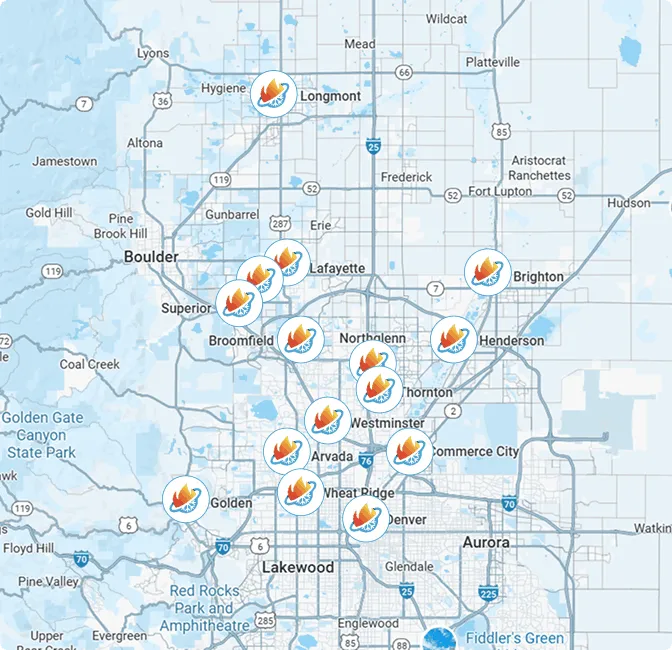
Service Areas

Testimonials
Neighbors trust Quality Heating & Air for honest work and fair pricing.
Service Areas