What is a Mini Split? Everything Homeowners Need to Know
## Mini Split Systems Explained for Homeowners: What You Need to Know
Mini split systems explained for homeowners comes down to this: a mini split is a ductless heating and cooling system made up of two main parts — an outdoor compressor unit and one or more indoor air handlers — connected by a small conduit of refrigerant lines. Instead of pushing air through ducts, it moves heat directly into or out of your living space, room by room. That means no energy lost through leaky ductwork, quieter operation, and the ability to control the temperature in each room independently.
Here is a quick overview of how mini splits work:
- No ductwork required - A small 3-inch hole in the wall connects the indoor and outdoor units - Heats and cools - Mini splits function as heat pumps, handling both functions in one system - Zone control - Each indoor unit can be set to a different temperature independently - High efficiency - Without duct losses, they can be up to 3 times more efficient than traditional HVAC systems - Quiet operation - Indoor units can run as quietly as 24 decibels, which is softer than a whisper - Flexible installation - Indoor units can be wall-mounted, ceiling-recessed, or floor-mounted - Long lifespan - With proper maintenance, mini split systems last 15 to 20 years
If your Thornton home relies on an older heating system, has rooms that never seem to reach the right temperature, or lacks ductwork entirely, a mini split system could be exactly what you have been looking for. According to ENERGY STAR, mini splits can save homeowners up to 30% on their energy bills — a meaningful number for anyone watching utility costs climb each season.
The sections below break down everything you need to make a confident decision, from how the technology works to what installation looks like and how to qualify for rebates.
How Mini Split Systems Explained for Homeowners Actually Work
To understand how these systems operate, it helps to think of them as "heat movers" rather than "heat makers." In the summer, the indoor unit absorbs heat from your room and sends it outside. In the winter, the process reverses: the outdoor unit extracts heat from the air (yes, even cold Colorado air has heat energy!) and pumps it into your home.
The connection between the inside and outside is a weather-tight conduit. This bundle houses the power cable, communication wires, copper refrigerant tubing, and a condensation drain line. Because this conduit only requires a three-inch hole in your exterior wall, the structural impact on your home is minimal.
One of the most significant technological leaps in these systems is inverter technology. Unlike a traditional furnace or air conditioner that is either "all the way on" or "all the way off," a mini split uses a variable-speed compressor. It functions like the cruise control on your car, adjusting its speed to maintain a steady temperature rather than constantly cycling on and off. This prevents those annoying temperature swings and saves a massive amount of electricity.
For those looking into specific configurations, you can learn more about mini split services and how they can be tailored to your floor plan.
The Core Components of a Ductless Setup
A standard system consists of several high-tech parts working in harmony:
- The Condensing Unit: Located outside, this is the "heart" of the system where the compressor lives. - The Evaporator Coil: Located inside the air handler, this is where the refrigerant absorbs or releases heat. - The Expansion Valve: This regulates the flow of refrigerant, ensuring the system operates safely and efficiently. - Communication Cables: These allow the indoor and outdoor units to "talk" to each other constantly, sharing data to optimize performance. - Condensate Drain Line: This carries away the moisture pulled from the air during the cooling process, preventing indoor humidity issues.
Why Mini Split Systems Explained for Homeowners Are More Efficient Than Ducts
In a typical American home with central forced air, the ductwork is often the weakest link. Research shows that duct losses can account for more than 30% of energy consumption for air conditioning. This happens because ducts often run through unconditioned spaces like attics or crawlspaces, where they leak air or lose temperature through thin metal walls.
By eliminating ducts entirely, mini splits deliver 100% of the conditioned air exactly where you want it. This allows these systems to reach staggering efficiency levels—up to 28.5 SEER2 for cooling and 18 HSPF2 for heating. When you combine this with ENERGY STAR guidelines, it is easy to see why so many Thornton homeowners are making the switch to lower their monthly overhead.
Comparing Mini Splits to Central Air and Window Units
When deciding on a new HVAC system, it is helpful to see how the "ductless" approach stacks up against the traditional competition.
| Feature | Mini Split | Central AC | Window Unit | | --- | --- | --- | --- | | Ductwork Needed | No | Yes | No | | Efficiency | Very High (Up to 28+ SEER2) | Moderate (13-26 SEER2) | Low (8-12 SEER) | | Noise Level | Whisper Quiet (24 dB) | Moderate (Fan/Duct Whoosh) | High (50-60+ dB) | | Zoning | Individual Room Control | Whole House Only | Single Room Only | | Installation | Easy (3" Hole) | Intrusive/Expensive | Temporary/Bulky |
While central air is great for homes that already have high-quality ductwork, it often lacks the precision of a mini split. Window units, on the other hand, are noisy, block your view, and pose a security risk. A mini split offers a "best of both worlds" scenario: the power of a permanent HVAC system with the flexibility of a portable one.
Is a Mini Split Right for My Thornton Home?
We often recommend mini splits for specific scenarios where traditional systems fall short:
- Retrofits for Older Homes: Many historic homes in our area were built with radiant heat and no ducts. Adding a mini split provides modern cooling without tearing down plaster walls. - Room Additions: If you have added a sunroom or a "man cave," your existing central system might not have the capacity to handle the extra load. A mini split is the perfect independent solution. - Converted Spaces: Garages, basements, and attics are notorious for being uncomfortable. A ductless unit can turn these into year-round livable spaces. - High-Performance Homes: For those building net-zero or highly insulated homes, the precision and efficiency of a mini split are unmatched.
Suitability for Whole-Home Heating and Cooling
Can a mini split really replace your furnace and central AC? For many, the answer is yes. Through multi-zone systems, a single outdoor condenser can power up to five or more indoor units.
This allows for independent thermostats in every room. If you like your bedroom at 65 degrees but want the living room at 72, you can do that without affecting anyone else. This "spot conditioning" ensures you aren't paying to heat or cool empty guest rooms, which is a major win for your wallet.
Key Advantages and Potential Limitations to Consider
The biggest advantage is undoubtedly zoning control. End the "thermostat wars" in your family by giving everyone their own remote. Beyond comfort, mini splits also offer improved air quality. Because there are no ducts to collect dust, pet dander, or mold, and because most units feature multi-stage filtration, the air you breathe is often much cleaner.
Furthermore, these systems are excellent at dehumidification. On those humid but not overly hot days, many models have a "dry mode" that removes moisture from the air without significantly lowering the temperature.
Performance in Cold Climates and Extreme Weather
A common question we hear in Thornton and Northglenn is: "Will this work when it's freezing outside?"
Modern heat pump technology has come a long way. While older models struggled when temperatures dropped below freezing, today's cold-climate mini splits are engineered to operate effectively even when it is -22°F outside. At high altitudes like ours, we perform specific load calculations to ensure your system is sized correctly for the thinner air and dramatic temperature swings. For extreme cold snaps, some homeowners choose to keep their existing furnace as a supplemental heat source, though many find the mini split handles the Colorado winter just fine on its own.
Aesthetic and Space Considerations
We know that not everyone loves the look of a white box on the wall. Fortunately, there are several mounting options to fit your home's decor:
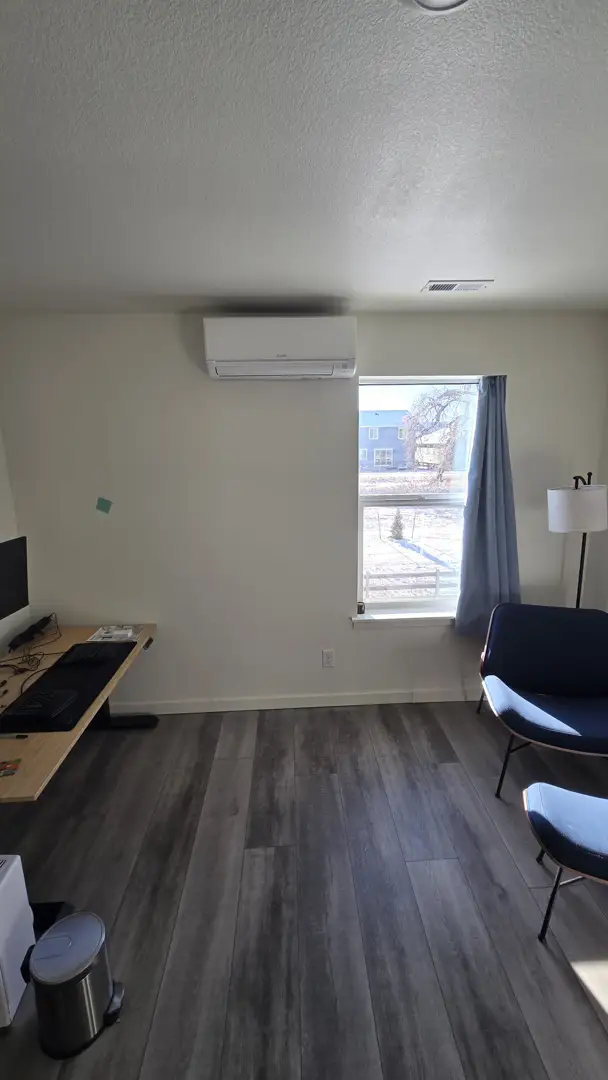
- Wall-Mounted: The most common and cost-effective option, usually placed high on the wall. - Floor Consoles: Great for replacing old baseboard heaters or for rooms with lots of windows and little wall space. - Ceiling Cassettes: These sit flush with the ceiling, showing only a discrete grille. - Slim-Duct Options: These are hidden behind a wall or in a closet, using very short duct runs to vents in the ceiling.
Installation and Maintenance: What Homeowners Should Expect
While the installation of a mini split is less intrusive than central air, it is not a DIY project. Professional installation ensures that the system is properly sized. If a unit is too large, it will "short cycle," turning on and off too quickly and wearing out the motor. If it's too small, it will run constantly and fail to keep you comfortable.
During installation, we handle the refrigerant calibration and electrical connections. In some older homes, an electrical upgrade to 200-amp service might be necessary to support the new equipment, especially if you are also adding things like an EV charger.
Maximizing Your Mini Split Systems Explained for Homeowners Investment
A high-quality mini split is an investment that should last 15 to 20 years. To get the most out of it, simple maintenance is key:
1. Clean the Filters: Most indoor units have filters that you can simply pop out, rinse, and put back in once a month. 2. Clear the Outdoor Unit: Keep snow, leaves, and debris away from the outdoor condenser to ensure proper airflow. 3. Annual Inspections: Have a professional check the refrigerant levels and electrical components once a year.
Hiring a professional also protects your warranty. Most manufacturers offer warranties of up to 12 years, but only if the system was installed by a licensed HVAC technician.
Qualifying for Rebates and Incentives
Because mini splits are so energy-efficient, there are often significant financial incentives available. Between Federal tax credits (thanks to the Inflation Reduction Act) and local utility rebates from providers serving Thornton and Northglenn, the upfront cost can be offset significantly.
Choosing an ENERGY STAR certified model not only ensures lower monthly bills but often unlocks the highest tier of these rebates. When you factor in the 30% savings on energy bills, the long-term ROI of a mini split is one of the best in the home improvement world.
Frequently Asked Questions about Mini Splits
Can I install a mini split myself?
While you might see DIY kits at big-box stores, we strongly advise against it. Handling refrigerant requires specialized tools and EPA certification. Furthermore, improper electrical wiring is a fire hazard, and a DIY installation almost always voids the manufacturer's warranty. Professional installation ensures the system is safe, efficient, and protected.
How many rooms can one outdoor unit handle?
This depends on the model. A single-zone system connects one outdoor unit to one indoor unit. A multi-zone system can typically handle between two and five (and sometimes more) indoor units. We use "branch boxes" to manage the refrigerant flow to different areas of the home, ensuring each room gets exactly the heating or cooling it needs.
Are mini splits noisy?
Quite the opposite! Because the noisy compressor is located outside, the indoor units are whisper-quiet. Operating at roughly 24 decibels, they are quieter than a library and even softer than the sound of rustling leaves. You likely won't even notice it's running.
Conclusion
At Quality Heating and Air, we believe every homeowner deserves a comfortable, efficient home. Whether you are looking to fix a single "hot room" or want to overhaul your entire home's HVAC system, mini split systems explained for homeowners offer a versatile, high-tech solution that fits the unique needs of Colorado living.
As Thornton HVAC experts, we pride ourselves on a customer-centric approach, treating every home as if it were our own. We offer transparent pricing and the expertise needed to navigate high-altitude installations and local rebate programs.
Ready to experience a new level of home comfort? Start your mini split project today and see why ductless technology is the future of home heating and cooling.

Testimonials
Neighbors trust Quality Heating & Air for honest work and fair pricing.
Really happy with my overall experience. They worked neatly, quickly, and taught me MUCH along the way. Gave great advice, helped me with a side concern, that was holding me up; and finished in time for my Dentist visit. I would highly recommend this business, and the price was a pure blessing. GREAT local company and I wasn't bribed for my review 🙃 thx guys!
Bonnie B.
Fred was very knowledgeable, he repaired an old rusted iron pipe that was part of the original house build. I thought the repair would be more costly than what Fred qouted me including parts and labor. Fred made the repair after 5pm, after getting the necessary parts and he was very clean because he put down a cloth on the bathroom floor while working. I would highly recommend Fred for service in the future and I will use Quality's services again in the future.
Chris S.
Fred did a wonderful job diagnosing our air conditioning issue, presenting options available, and installing the new unit we needed. In addition to being a truly nice person, Fred was very knowledgable and professional, and we highly recommend him. Thank you Fred!
James D.
Fred was great and explained our issues we had and fixes we needed in an easy to understand way. Will ask for him next time.
Justin F.
Great service, Fred was able to show up the same day we had a problem and get everything fixed. Very knowledgeable and did not pressure us to spend money we didn’t need to spend. I would recommend to a friend without question.
Kyle F.
Fred Gottschalk performed a miracle with the furnace. He is by far the most knowledgeable HVAC professional I know to date. He knew everything about my furnace and replaced an old blower. The blower is far superior over the OEM one. I did the right thing choosing Fred!
Marty P.
I had an amazing experience with Fred Gottschalk! From the moment he came in to the moment he left he was very personable and made me feel good about my decision to call this company for assistance. I love the fact that they prioritize a personal touch making sure whoever comes to your door will remain your tech every time you call in. One thing he told me that gained my trust is that he will take care of my furnace the way he would want someone to take care of his granny’s. Thank you Quality heating and air, and thank you Fred!
Monica G.
Our technician Fred was excellent. Arrived on time, communicated well and was very knowledgable. Highly recommend and will continue to use these guys.
Nancy S.
Fred was great! He was friendly and informative, answered all of our questions and even got along with our cat (also named Fred). Would highly recommend!
Sadie P.
Highly recommend. Easy scheduling process and our technician Fred was on time, very professional, and knowledgeable on all things in the mechanical world. Took time to educate us and fix the issues we had.
Scott F.
Really happy with my overall experience. They worked neatly, quickly, and taught me MUCH along the way. Gave great advice, helped me with a side concern, that was holding me up; and finished in time for my Dentist visit. I would highly recommend this business, and the price was a pure blessing. GREAT local company and I wasn't bribed for my review 🙃 thx guys!
Bonnie B.
Fred was very knowledgeable, he repaired an old rusted iron pipe that was part of the original house build. I thought the repair would be more costly than what Fred qouted me including parts and labor. Fred made the repair after 5pm, after getting the necessary parts and he was very clean because he put down a cloth on the bathroom floor while working. I would highly recommend Fred for service in the future and I will use Quality's services again in the future.
Chris S.
Fred did a wonderful job diagnosing our air conditioning issue, presenting options available, and installing the new unit we needed. In addition to being a truly nice person, Fred was very knowledgable and professional, and we highly recommend him. Thank you Fred!
James D.
Fred was great and explained our issues we had and fixes we needed in an easy to understand way. Will ask for him next time.
Justin F.
Great service, Fred was able to show up the same day we had a problem and get everything fixed. Very knowledgeable and did not pressure us to spend money we didn’t need to spend. I would recommend to a friend without question.
Kyle F.
Fred Gottschalk performed a miracle with the furnace. He is by far the most knowledgeable HVAC professional I know to date. He knew everything about my furnace and replaced an old blower. The blower is far superior over the OEM one. I did the right thing choosing Fred!
Marty P.
I had an amazing experience with Fred Gottschalk! From the moment he came in to the moment he left he was very personable and made me feel good about my decision to call this company for assistance. I love the fact that they prioritize a personal touch making sure whoever comes to your door will remain your tech every time you call in. One thing he told me that gained my trust is that he will take care of my furnace the way he would want someone to take care of his granny’s. Thank you Quality heating and air, and thank you Fred!
Monica G.
Our technician Fred was excellent. Arrived on time, communicated well and was very knowledgable. Highly recommend and will continue to use these guys.
Nancy S.
Fred was great! He was friendly and informative, answered all of our questions and even got along with our cat (also named Fred). Would highly recommend!
Sadie P.
Highly recommend. Easy scheduling process and our technician Fred was on time, very professional, and knowledgeable on all things in the mechanical world. Took time to educate us and fix the issues we had.
Scott F.
Really happy with my overall experience. They worked neatly, quickly, and taught me MUCH along the way. Gave great advice, helped me with a side concern, that was holding me up; and finished in time for my Dentist visit. I would highly recommend this business, and the price was a pure blessing. GREAT local company and I wasn't bribed for my review 🙃 thx guys!
Bonnie B.
Fred was very knowledgeable, he repaired an old rusted iron pipe that was part of the original house build. I thought the repair would be more costly than what Fred qouted me including parts and labor. Fred made the repair after 5pm, after getting the necessary parts and he was very clean because he put down a cloth on the bathroom floor while working. I would highly recommend Fred for service in the future and I will use Quality's services again in the future.
Chris S.
Fred did a wonderful job diagnosing our air conditioning issue, presenting options available, and installing the new unit we needed. In addition to being a truly nice person, Fred was very knowledgable and professional, and we highly recommend him. Thank you Fred!
James D.
Fred was great and explained our issues we had and fixes we needed in an easy to understand way. Will ask for him next time.
Justin F.
Great service, Fred was able to show up the same day we had a problem and get everything fixed. Very knowledgeable and did not pressure us to spend money we didn’t need to spend. I would recommend to a friend without question.
Kyle F.
Fred Gottschalk performed a miracle with the furnace. He is by far the most knowledgeable HVAC professional I know to date. He knew everything about my furnace and replaced an old blower. The blower is far superior over the OEM one. I did the right thing choosing Fred!
Marty P.
I had an amazing experience with Fred Gottschalk! From the moment he came in to the moment he left he was very personable and made me feel good about my decision to call this company for assistance. I love the fact that they prioritize a personal touch making sure whoever comes to your door will remain your tech every time you call in. One thing he told me that gained my trust is that he will take care of my furnace the way he would want someone to take care of his granny’s. Thank you Quality heating and air, and thank you Fred!
Monica G.
Our technician Fred was excellent. Arrived on time, communicated well and was very knowledgable. Highly recommend and will continue to use these guys.
Nancy S.
Fred was great! He was friendly and informative, answered all of our questions and even got along with our cat (also named Fred). Would highly recommend!
Sadie P.
Highly recommend. Easy scheduling process and our technician Fred was on time, very professional, and knowledgeable on all things in the mechanical world. Took time to educate us and fix the issues we had.
Scott F.
Really happy with my overall experience. They worked neatly, quickly, and taught me MUCH along the way. Gave great advice, helped me with a side concern, that was holding me up; and finished in time for my Dentist visit. I would highly recommend this business, and the price was a pure blessing. GREAT local company and I wasn't bribed for my review 🙃 thx guys!
Bonnie B.
Fred was very knowledgeable, he repaired an old rusted iron pipe that was part of the original house build. I thought the repair would be more costly than what Fred qouted me including parts and labor. Fred made the repair after 5pm, after getting the necessary parts and he was very clean because he put down a cloth on the bathroom floor while working. I would highly recommend Fred for service in the future and I will use Quality's services again in the future.
Chris S.
Fred did a wonderful job diagnosing our air conditioning issue, presenting options available, and installing the new unit we needed. In addition to being a truly nice person, Fred was very knowledgable and professional, and we highly recommend him. Thank you Fred!
James D.
Fred was great and explained our issues we had and fixes we needed in an easy to understand way. Will ask for him next time.
Justin F.
Great service, Fred was able to show up the same day we had a problem and get everything fixed. Very knowledgeable and did not pressure us to spend money we didn’t need to spend. I would recommend to a friend without question.
Kyle F.
Fred Gottschalk performed a miracle with the furnace. He is by far the most knowledgeable HVAC professional I know to date. He knew everything about my furnace and replaced an old blower. The blower is far superior over the OEM one. I did the right thing choosing Fred!
Marty P.
I had an amazing experience with Fred Gottschalk! From the moment he came in to the moment he left he was very personable and made me feel good about my decision to call this company for assistance. I love the fact that they prioritize a personal touch making sure whoever comes to your door will remain your tech every time you call in. One thing he told me that gained my trust is that he will take care of my furnace the way he would want someone to take care of his granny’s. Thank you Quality heating and air, and thank you Fred!
Monica G.
Our technician Fred was excellent. Arrived on time, communicated well and was very knowledgable. Highly recommend and will continue to use these guys.
Nancy S.
Fred was great! He was friendly and informative, answered all of our questions and even got along with our cat (also named Fred). Would highly recommend!
Sadie P.
Highly recommend. Easy scheduling process and our technician Fred was on time, very professional, and knowledgeable on all things in the mechanical world. Took time to educate us and fix the issues we had.
Scott F.
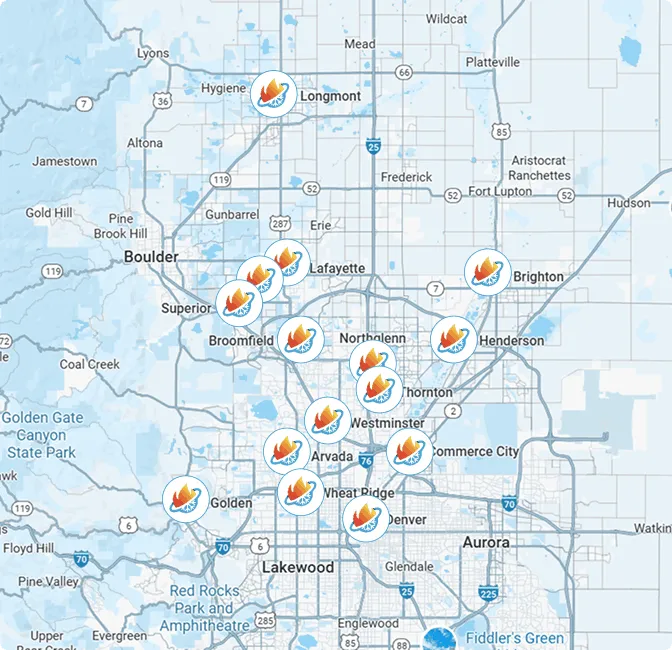
Service Areas

Testimonials
Neighbors trust Quality Heating & Air for honest work and fair pricing.
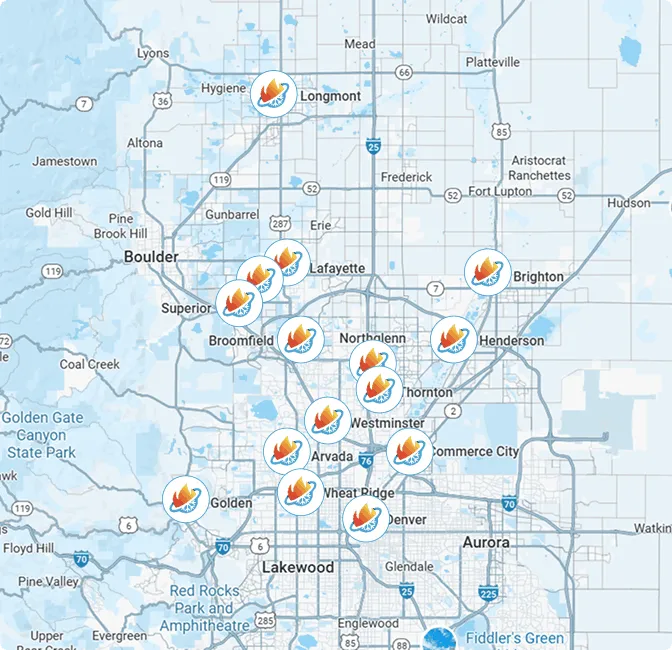
Service Areas