Timing is Everything: When to Replace Your Furnace or AC Filter
## The Simple Answer Most Homeowners Miss About HVAC Filter Timing
How often should you change your HVAC air filter depends on a few key factors, but here is a quick-reference guide to get you started:
| Filter Type | Recommended Replacement Interval | | --- | --- | | Fiberglass (1-inch) | Every 30 days | | Standard pleated (1-inch) | Every 60-90 days | | High-quality pleated (MERV 8-13) | Every 90 days | | 4-inch media filter | Every 6 months | | 5-inch deep-pleated filter | Every 9-12 months | | Vacation/rarely used home | Every 9-12 months |
Adjust sooner if you have:
- Pets (every 60 days, or 20-45 days with multiple pets) - Allergy or asthma sufferers in the home - High occupancy or young children - Smokers or frequent fireplace use - Poor outdoor air quality or wildfire smoke nearby
Most homeowners in Thornton and the surrounding Denver area fall somewhere in the 30-to-90-day range, but your home's specific conditions can push that number in either direction.
Here is the honest truth: changing your HVAC filter is one of those tasks that slips through the cracks until something goes wrong. Maybe your energy bill creeps up. Maybe the air feels stuffy. Maybe your system starts struggling to keep up. By the time you notice, the filter has often been overdue for weeks — sometimes months.
According to the U.S. Department of Energy, simply replacing a clogged filter can improve your system's efficiency by 5 to 15 percent. That is a meaningful difference, and it costs nothing more than a few dollars and five minutes of your time.
This guide breaks down exactly how often you should be changing your filter based on your filter type, home size, lifestyle, and the unique conditions that come with living in Colorado — including wildfire season.
How Often Should You Change Your HVAC Air Filter?
While the table above provides a solid baseline, the "90-day rule" is the most common advice you’ll hear from manufacturers. However, at Quality Heating and Air, we’ve seen that 90 days is often the maximum limit for a standard home in Northglenn or Thornton, not necessarily the ideal target.
Fiberglass vs. Pleated Filters
The material of your filter dictates its lifespan.
- Fiberglass filters: These are the thin, blue or white see-through filters often sold in multi-packs. They are designed to protect the large components of your furnace from big chunks of dust and lint. Because they have very little surface area, they clog quickly. You should replace these every 30 days or less. - Pleated filters: These are made of folded paper or polyester. The "pleats" create more surface area, allowing them to trap smaller particles like pollen and mold while maintaining better airflow for longer. These typically last 60 to 90 days.
Disposable vs. Washable
Most homeowners use disposable filters because they are convenient and effective. While washable filters exist and are marketed as eco-friendly, they require monthly cleaning and must be completely dry before re-insertion to prevent mold. In many cases, they don't trap small particles as effectively as a high-quality pleated filter.
If you are looking to stay ahead of system wear and tear, regular Furnace Maintenance in Westminster, CO is the best way to ensure your filtration system is working in harmony with your blower motor.
Factors Influencing Your Replacement Schedule
No two homes in Colorado are identical. A single person living in a 900-square-foot condo in Northglenn will have a very different filter schedule than a family of six with three dogs in a large Thornton home.
How often should you change your hvac air filter if you have pets?
Pets are one of the biggest "filter killers." Between fur, dander, and the dirt they track in from the backyard, pets can clog a filter 20% to 30% faster than dust alone.
- One pet: We recommend a 60-day interval. - Multiple pets: If you have a "full house" of furry friends, you should check your filter every 20-30 days and likely replace it every 45 days.
Impact of Home Size and Air Circulation
Your HVAC system moves a specific volume of air to maintain the temperature. In a larger home, the system must circulate more air to keep every room comfortable. More air moving through the filter means more opportunities for dust to get trapped. If you have a multi-story home with a single return vent, that filter is working overtime and will need more frequent attention.
For those struggling with persistent dust or respiratory issues, exploring Indoor Air Quality Solutions in Thornton, CO can help identify if you need more than just a standard filter change. If someone in your home suffers from seasonal reactions, our guide on Allergy Relief HVAC offers deeper insights into how filtration affects your health.
Understanding MERV Ratings and Filter Thickness
MERV stands for Minimum Efficiency Reporting Value. It’s a scale from 1 to 16 for residential filters that measures how well the filter catches particles.
- MERV 1–4: Basic protection; catches large particles only. - MERV 8–11: The "sweet spot" for most Colorado homes. It catches dust, pollen, and dust mites without overworking the motor. - MERV 13–16: High-efficiency; catches bacteria and smoke particles.
How Filter Thickness Dictates Longevity
If you look at your furnace, you might see a thin 1-inch slot or a wide 5-inch cabinet.
- 1-inch filters: These have limited surface area and need frequent changes (1–3 months). - 5-inch media filters: These are deep-pleated. Because they have so much more surface area, they can often last 6 to 12 months. They provide superior filtration while allowing your system to "breathe" easier.
If you are interested in the highest level of protection, a Whole Home Air Purifier Installation in Thornton, CO can be integrated into your existing ductwork to work alongside your filter. You can learn more about these systems on our IAQ page.
Signs and Consequences of a Clogged Filter
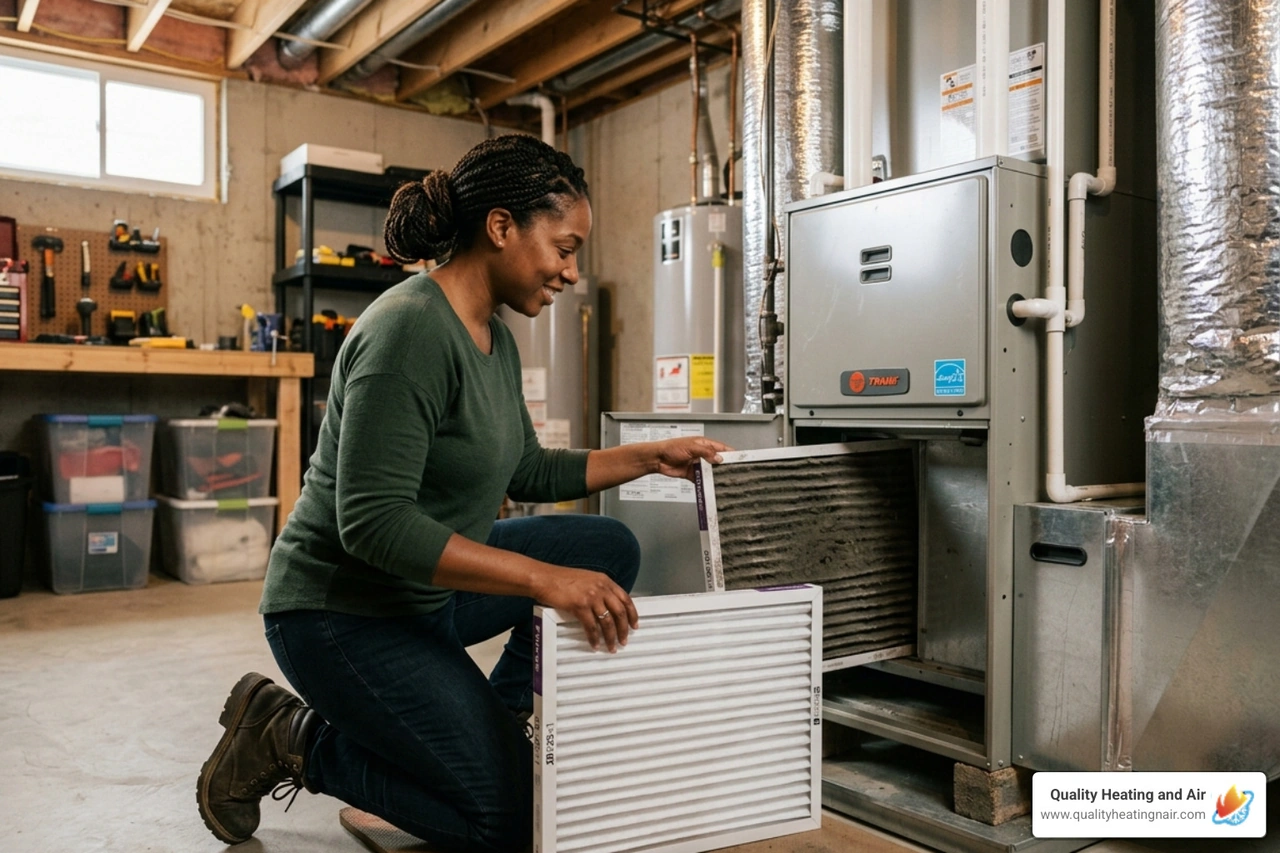
How do you know it’s time? The most reliable method is the Visual Light Test. Take your filter out and hold it up to a bright light or the sun. If you can’t see light passing through the fibers, the filter is "full" and needs to be replaced immediately.
What Happens if You Wait Too Long?
A dirty filter isn't just a "dusty" problem; it’s a mechanical one.
1. Reduced Airflow: Your system has to work harder to pull air through a clogged filter. This leads to "hot spots" in your home where some rooms just won't get cool or warm. 2. Increased Energy Bills: When the motor works harder, it uses more electricity. That 5–15% efficiency loss mentioned earlier shows up directly on your monthly bill. 3. System Damage: In the summer, restricted airflow can cause your evaporator coils to freeze over, turning your AC into a block of ice. In the winter, it can cause the heat exchanger to overheat and crack.
Regular Air Conditioning Maintenance in Golden, CO and general AC Maintenance and Service include a full inspection of these components to ensure a dirty filter hasn't caused hidden damage.
Environmental Impacts and Seasonal Usage
In Colorado, our HVAC usage isn't "set it and forget it." During the peak of summer and the depths of winter, your system runs almost constantly. More runtime equals more filtration, which means you should check your filter monthly during these peak seasons.
How often should you change your hvac air filter during Colorado wildfire seasons?
Wildfire season presents a unique challenge for Thornton and Northglenn residents. When the sky turns hazy, your air filter is your home's primary defense against fine ash and smoke particles. During active wildfire periods, we recommend:
- Checking your filter every 2 weeks. - Replacing it monthly, regardless of the "90-day" recommendation. - Keeping the HVAC fan set to "ON" rather than "AUTO" to continuously scrub the air.
For long-term protection against outdoor pollutants, consider Air Purification Systems Installation in Thornton, CO. You can also prepare for the cooling season by reading about a Spring AC Tune Up: What to Expect to ensure your system is ready for the heavy lifting.
Step-by-Step Guide to Replacing Your Filter
Changing your filter is a simple DIY task that takes less than five minutes. Here is how to do it right:
1. Turn Off the Power: For safety, turn your HVAC system off at the thermostat so it doesn't kick on while the filter is out. 2. Locate the Filter: This is usually found in a slot next to the furnace/air handler or behind a large return air grille in a wall or ceiling. 3. Check the Size: Look at the side of the old filter for dimensions (e.g., 16x25x1). 4. Note the Airflow Arrow: This is the most important step! Filters have an arrow printed on the frame. This arrow must point toward the furnace or blower motor (the direction the air is moving). 5. Slide it In: Ensure the fit is snug. If air can leak around the edges, the dust will simply bypass the filter. 6. Date the Filter: Use a permanent marker to write the date of installation on the edge of the new filter. This removes the guesswork next month!
Frequently Asked Questions
Can I just vacuum my air filter instead of replacing it?
We don't recommend it. Vacuuming might remove the surface dust you can see, but it won't pull out the microscopic particles embedded deep in the fibers. Furthermore, the suction can damage the delicate filter media, creating holes that allow dirt to pass through into your expensive HVAC equipment.
Where is the air filter usually located in a Thornton home?
In most Colorado homes, the filter is located at the "return" side of the furnace. Look for a narrow metal slot where the large return duct meets the furnace cabinet. In some homes, especially those with crawlspaces or specific attic configurations, the filter may be located behind the large intake vents (grilles) on your wall or ceiling.
Does a higher MERV rating always mean a better filter?
Not necessarily. While a MERV 16 filter traps almost everything, it is also very "thick" and difficult to breathe through. If your HVAC system's blower motor isn't designed for that level of resistance, it can actually cause the motor to burn out. Always check your owner's manual or ask a technician what MERV rating is safe for your specific equipment.
Conclusion
Knowing how often should you change your hvac air filter is the first step toward a healthier home and a longer-lasting HVAC system. Whether you are dealing with pet dander in Northglenn or wildfire smoke in Thornton, staying proactive with your filter is the cheapest "insurance policy" you can buy for your home comfort.
At Quality Heating and Air, we are committed to helping our neighbors throughout the Denver metro area breathe easier. Beyond simple filter changes, we offer comprehensive support to keep your home running efficiently year-round. If you want to take the guesswork out of home maintenance, consider joining our Maintenance Plan. We’ll handle the heavy lifting, the deep cleanings, and the safety checks, so you can focus on enjoying your home.
Ready for a professional eye on your system? Give us a call today—we treat every home like our own.

Testimonials
Neighbors trust Quality Heating & Air for honest work and fair pricing.
Really happy with my overall experience. They worked neatly, quickly, and taught me MUCH along the way. Gave great advice, helped me with a side concern, that was holding me up; and finished in time for my Dentist visit. I would highly recommend this business, and the price was a pure blessing. GREAT local company and I wasn't bribed for my review 🙃 thx guys!
Bonnie B.
Fred was very knowledgeable, he repaired an old rusted iron pipe that was part of the original house build. I thought the repair would be more costly than what Fred qouted me including parts and labor. Fred made the repair after 5pm, after getting the necessary parts and he was very clean because he put down a cloth on the bathroom floor while working. I would highly recommend Fred for service in the future and I will use Quality's services again in the future.
Chris S.
Fred did a wonderful job diagnosing our air conditioning issue, presenting options available, and installing the new unit we needed. In addition to being a truly nice person, Fred was very knowledgable and professional, and we highly recommend him. Thank you Fred!
James D.
Fred was great and explained our issues we had and fixes we needed in an easy to understand way. Will ask for him next time.
Justin F.
Great service, Fred was able to show up the same day we had a problem and get everything fixed. Very knowledgeable and did not pressure us to spend money we didn’t need to spend. I would recommend to a friend without question.
Kyle F.
Fred Gottschalk performed a miracle with the furnace. He is by far the most knowledgeable HVAC professional I know to date. He knew everything about my furnace and replaced an old blower. The blower is far superior over the OEM one. I did the right thing choosing Fred!
Marty P.
I had an amazing experience with Fred Gottschalk! From the moment he came in to the moment he left he was very personable and made me feel good about my decision to call this company for assistance. I love the fact that they prioritize a personal touch making sure whoever comes to your door will remain your tech every time you call in. One thing he told me that gained my trust is that he will take care of my furnace the way he would want someone to take care of his granny’s. Thank you Quality heating and air, and thank you Fred!
Monica G.
Our technician Fred was excellent. Arrived on time, communicated well and was very knowledgable. Highly recommend and will continue to use these guys.
Nancy S.
Fred was great! He was friendly and informative, answered all of our questions and even got along with our cat (also named Fred). Would highly recommend!
Sadie P.
Highly recommend. Easy scheduling process and our technician Fred was on time, very professional, and knowledgeable on all things in the mechanical world. Took time to educate us and fix the issues we had.
Scott F.
Really happy with my overall experience. They worked neatly, quickly, and taught me MUCH along the way. Gave great advice, helped me with a side concern, that was holding me up; and finished in time for my Dentist visit. I would highly recommend this business, and the price was a pure blessing. GREAT local company and I wasn't bribed for my review 🙃 thx guys!
Bonnie B.
Fred was very knowledgeable, he repaired an old rusted iron pipe that was part of the original house build. I thought the repair would be more costly than what Fred qouted me including parts and labor. Fred made the repair after 5pm, after getting the necessary parts and he was very clean because he put down a cloth on the bathroom floor while working. I would highly recommend Fred for service in the future and I will use Quality's services again in the future.
Chris S.
Fred did a wonderful job diagnosing our air conditioning issue, presenting options available, and installing the new unit we needed. In addition to being a truly nice person, Fred was very knowledgable and professional, and we highly recommend him. Thank you Fred!
James D.
Fred was great and explained our issues we had and fixes we needed in an easy to understand way. Will ask for him next time.
Justin F.
Great service, Fred was able to show up the same day we had a problem and get everything fixed. Very knowledgeable and did not pressure us to spend money we didn’t need to spend. I would recommend to a friend without question.
Kyle F.
Fred Gottschalk performed a miracle with the furnace. He is by far the most knowledgeable HVAC professional I know to date. He knew everything about my furnace and replaced an old blower. The blower is far superior over the OEM one. I did the right thing choosing Fred!
Marty P.
I had an amazing experience with Fred Gottschalk! From the moment he came in to the moment he left he was very personable and made me feel good about my decision to call this company for assistance. I love the fact that they prioritize a personal touch making sure whoever comes to your door will remain your tech every time you call in. One thing he told me that gained my trust is that he will take care of my furnace the way he would want someone to take care of his granny’s. Thank you Quality heating and air, and thank you Fred!
Monica G.
Our technician Fred was excellent. Arrived on time, communicated well and was very knowledgable. Highly recommend and will continue to use these guys.
Nancy S.
Fred was great! He was friendly and informative, answered all of our questions and even got along with our cat (also named Fred). Would highly recommend!
Sadie P.
Highly recommend. Easy scheduling process and our technician Fred was on time, very professional, and knowledgeable on all things in the mechanical world. Took time to educate us and fix the issues we had.
Scott F.
Really happy with my overall experience. They worked neatly, quickly, and taught me MUCH along the way. Gave great advice, helped me with a side concern, that was holding me up; and finished in time for my Dentist visit. I would highly recommend this business, and the price was a pure blessing. GREAT local company and I wasn't bribed for my review 🙃 thx guys!
Bonnie B.
Fred was very knowledgeable, he repaired an old rusted iron pipe that was part of the original house build. I thought the repair would be more costly than what Fred qouted me including parts and labor. Fred made the repair after 5pm, after getting the necessary parts and he was very clean because he put down a cloth on the bathroom floor while working. I would highly recommend Fred for service in the future and I will use Quality's services again in the future.
Chris S.
Fred did a wonderful job diagnosing our air conditioning issue, presenting options available, and installing the new unit we needed. In addition to being a truly nice person, Fred was very knowledgable and professional, and we highly recommend him. Thank you Fred!
James D.
Fred was great and explained our issues we had and fixes we needed in an easy to understand way. Will ask for him next time.
Justin F.
Great service, Fred was able to show up the same day we had a problem and get everything fixed. Very knowledgeable and did not pressure us to spend money we didn’t need to spend. I would recommend to a friend without question.
Kyle F.
Fred Gottschalk performed a miracle with the furnace. He is by far the most knowledgeable HVAC professional I know to date. He knew everything about my furnace and replaced an old blower. The blower is far superior over the OEM one. I did the right thing choosing Fred!
Marty P.
I had an amazing experience with Fred Gottschalk! From the moment he came in to the moment he left he was very personable and made me feel good about my decision to call this company for assistance. I love the fact that they prioritize a personal touch making sure whoever comes to your door will remain your tech every time you call in. One thing he told me that gained my trust is that he will take care of my furnace the way he would want someone to take care of his granny’s. Thank you Quality heating and air, and thank you Fred!
Monica G.
Our technician Fred was excellent. Arrived on time, communicated well and was very knowledgable. Highly recommend and will continue to use these guys.
Nancy S.
Fred was great! He was friendly and informative, answered all of our questions and even got along with our cat (also named Fred). Would highly recommend!
Sadie P.
Highly recommend. Easy scheduling process and our technician Fred was on time, very professional, and knowledgeable on all things in the mechanical world. Took time to educate us and fix the issues we had.
Scott F.
Really happy with my overall experience. They worked neatly, quickly, and taught me MUCH along the way. Gave great advice, helped me with a side concern, that was holding me up; and finished in time for my Dentist visit. I would highly recommend this business, and the price was a pure blessing. GREAT local company and I wasn't bribed for my review 🙃 thx guys!
Bonnie B.
Fred was very knowledgeable, he repaired an old rusted iron pipe that was part of the original house build. I thought the repair would be more costly than what Fred qouted me including parts and labor. Fred made the repair after 5pm, after getting the necessary parts and he was very clean because he put down a cloth on the bathroom floor while working. I would highly recommend Fred for service in the future and I will use Quality's services again in the future.
Chris S.
Fred did a wonderful job diagnosing our air conditioning issue, presenting options available, and installing the new unit we needed. In addition to being a truly nice person, Fred was very knowledgable and professional, and we highly recommend him. Thank you Fred!
James D.
Fred was great and explained our issues we had and fixes we needed in an easy to understand way. Will ask for him next time.
Justin F.
Great service, Fred was able to show up the same day we had a problem and get everything fixed. Very knowledgeable and did not pressure us to spend money we didn’t need to spend. I would recommend to a friend without question.
Kyle F.
Fred Gottschalk performed a miracle with the furnace. He is by far the most knowledgeable HVAC professional I know to date. He knew everything about my furnace and replaced an old blower. The blower is far superior over the OEM one. I did the right thing choosing Fred!
Marty P.
I had an amazing experience with Fred Gottschalk! From the moment he came in to the moment he left he was very personable and made me feel good about my decision to call this company for assistance. I love the fact that they prioritize a personal touch making sure whoever comes to your door will remain your tech every time you call in. One thing he told me that gained my trust is that he will take care of my furnace the way he would want someone to take care of his granny’s. Thank you Quality heating and air, and thank you Fred!
Monica G.
Our technician Fred was excellent. Arrived on time, communicated well and was very knowledgable. Highly recommend and will continue to use these guys.
Nancy S.
Fred was great! He was friendly and informative, answered all of our questions and even got along with our cat (also named Fred). Would highly recommend!
Sadie P.
Highly recommend. Easy scheduling process and our technician Fred was on time, very professional, and knowledgeable on all things in the mechanical world. Took time to educate us and fix the issues we had.
Scott F.
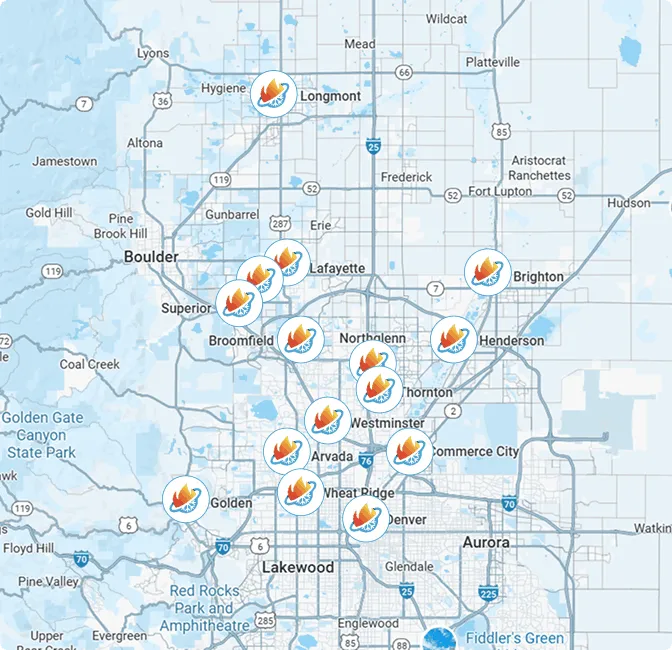
Service Areas

Testimonials
Neighbors trust Quality Heating & Air for honest work and fair pricing.
Service Areas