When a Mini Split Beats Central AC for Your Century Home
## Why Adding Cooling Without Ductwork Options Compared Matters for Century Home Owners in Thornton, CO
Adding cooling without ductwork options compared side by side is the fastest way to find the right fit for an older home — here is a quick breakdown:
| Option | Best For | Efficiency | Disruption | | --- | --- | --- | --- | | Ductless mini-split | Whole-home or zoned cooling | SEER 16-28+ | Very low (3" wall hole) | | Window AC unit | Single room, renters | SEER 10-15 | Low (window only) | | Portable AC | Temporary, no-window rooms | SEER 8-12 | None | | High-velocity small-duct | Historic homes, aesthetics | SEER 14-18 | Moderate | | Whole house fan | Cool-night climates | N/A | Low |
For most century homes in Thornton, a ductless mini-split is the strongest long-term choice — it avoids costly ductwork, preserves original architecture, and delivers efficient zoned comfort room by room.
You love your older home's character — the original woodwork, the plaster walls, the craftsmanship that just does not exist in newer construction. But come July, the upstairs turns into a sauna while one room stays cold, and the idea of tearing into those walls to run ductwork feels like a renovation nightmare.
You are not alone. Many homes built before 1970 were never designed for central air conditioning, and retrofitting a full duct system can be enormously disruptive and expensive. The good news is that today's ductless technology has matured to the point where it solves exactly this problem — without touching a single original plaster wall.
Central air systems can lose up to 30% of their cooling power through duct leaks, gaps, and poor insulation alone, according to U.S. Department of Energy estimates. In a century home with no existing ductwork, you would be paying to install that loss from day one. Ductless systems sidestep the problem entirely by delivering cooled air directly to each room through a connection no bigger than a 3-inch hole in the wall.
This guide walks you through every realistic option for cooling a home without ductwork — how they compare on efficiency, noise, cost of ownership, and fit for older Colorado homes — so you can make a confident, informed decision.
Adding cooling without ductwork options compared: Mini-Splits vs. Portable Units
When we look at adding cooling without ductwork options compared for a permanent residence, the "big three" usually come down to ductless mini-splits, window units, and portable ACs. While all three provide relief from the Colorado heat, their long-term value and performance vary wildly.
| Feature | Ductless Mini-Split | Window AC Unit | Portable AC Unit | | --- | --- | --- | --- | | Efficiency (SEER) | 16 to 28+ | 10 to 15 | 8 to 12 | | Noise Level | 19–32 dB (Whisper) | 50–60 dB (Loud) | 52–60 dB (Very Loud) | | Technology | Inverter-driven | Single-stage | Single-stage | | Lifespan | 15–20 years | 5–10 years | 3–7 years | | Aesthetics | Sleek wall/ceiling mount | Blocks window view | Takes up floor space |
Ductless Mini Split Systems are the "undisputed champions" of efficiency. Unlike window or portable units that cycle on and off abruptly, mini-splits use inverter technology. This allows the compressor to speed up or slow down smoothly, maintaining a constant temperature while using up to 40% less energy than many conventional systems.
Portable units should often be considered a "last resort." Because they typically exhaust air through a single hose, they create negative pressure, pulling hot outdoor air into your home through cracks and gaps. If you are looking for a whisper-quiet environment, mini-splits can operate as low as 19 decibels—that is literally quieter than a library.
Adding cooling without ductwork options compared for historic preservation
For owners of Victorian or Craftsman homes in places like Eastlake, the biggest fear is the "sledgehammer factor." Traditional central air requires bulky 12-inch ducts that force you to drop ceilings or build unsightly "soffits" that ruin original crown molding.
When adding cooling without ductwork options compared for historic preservation, ductless systems win on subtlety. The installation is non-invasive, requiring only a small three-inch hole to connect the indoor unit to the outdoor condenser. This protects your original plaster walls and preserves the architectural integrity of the home. Whether you choose a wall-mounted unit, a floor console, or a ceiling cassette, Mini Split Systems Eastlake CO allow you to keep the vintage charm while enjoying modern comfort.
Adding cooling without ductwork options compared for energy efficiency
Efficiency is where the math really starts to favor ductless technology. Traditional ducted systems are prone to "duct loss"—cooling power that leaks into your attic or crawlspace before it ever reaches your living room. Ductless systems deliver 100% of the cooling directly to the zone where it is needed.
Furthermore, ENERGY STAR certified mini-split heat pumps use up to 60% less energy than standard electric radiators and feature multi-stage filtration. This means you aren't just cooling the air; you are scrubbing it of dust and allergens. For families in McKay Landing, choosing Mini Split Systems McKay Landing CO ensures that your home stays efficient even as Colorado's utility rates fluctuate.
Why Ductless Systems Outperform Central Air in Older Homes
In older homes, "one size fits all" cooling rarely works. Century homes often suffer from poor insulation and "thermal bridging," where heat transfers easily through old brick or wood frames. Central air relies on a single thermostat, which often results in a freezing basement and a sweltering second floor.
We use Manual J load calculations to ensure every system is sized perfectly for the specific room it serves. This avoids the common mistake of "oversizing," which leads to short-cycling, wasted energy, and poor humidity control. By using Mini Split Service Westminster CO, you ensure your system is calibrated for the unique airflow needs of an older layout.
Ductless systems also excel at dehumidification. Because the inverter-driven compressors can run at low speeds for longer periods, they pull more moisture out of the air than a standard central AC unit that kicks on and off rapidly.
Benefits of Zoned Cooling in Multi-Story Houses
The "thermostat wars" are a common occurrence in multi-story homes. Heat naturally rises, making the upper bedrooms significantly warmer than the kitchen or living room. Ductless systems provide the ultimate solution: zoned cooling.
Each indoor unit operates independently. This means you can:
- Cool only the bedrooms at night. - Keep the home office at a crisp 68 degrees while the rest of the house stays at 74. - Turn off cooling entirely in unused guest rooms.
Occupancy-based cooling is one of the most effective ways to slash your monthly bills. If you need a Mini Split Tune Up Arvada CO to ensure your zones are performing at peak efficiency, regular maintenance is key to keeping those individual thermostats responsive.
Alternative Solutions: High-Velocity Systems and Whole House Fans
While mini-splits are our top recommendation, there are other adding cooling without ductwork options compared that might fit specific needs.
High-Velocity Small-Duct (SDHV) Systems: These use two-inch flexible "mini-ducts" that can be snaked through existing wall cavities like electrical wiring. They are nearly invisible, using small round vents instead of large grilles. They remove about 30% more moisture than conventional systems, which is great for humid days, though they typically have lower SEER ratings (14-18) than high-end mini-splits.
Whole House Fans: In Colorado’s climate, where we often have cool summer nights, a whole house fan can be a game-changer. It works by "night flushing"—pulling cool evening air through open windows and exhausting hot air out through the attic. While it won't help during a 95-degree afternoon, it can reduce your AC usage by 50-90% during the shoulder seasons. For homeowners considering these hybrids, a Mini Split Tune Up Wheat Ridge CO can help ensure your primary cooling system isn't working harder than it needs to.
Maintenance and Longevity of Ductless Infrastructure
Ductless systems are built to last, often reaching a 20-year lifespan with proper care. However, because they don't use a massive central filter, the individual filters in each "head" need more frequent attention.
- Monthly Maintenance: You should wash the dust filters in your indoor units every 4 to 8 weeks. It only takes a few minutes and keeps the airflow unrestricted. - Annual Professional Tune-ups: We recommend a professional inspection once a year to check refrigerant levels, clean the outdoor coils, and ensure the condensate drains are clear.
Neglecting maintenance can lead to reduced efficiency and "iced-over" coils. If you are in the Superior area, scheduling a Mini Split Tune Up Superior CO is the best way to protect your investment and ensure your system is ready for the first heatwave of the year.
Frequently Asked Questions about Ductless Cooling
Can a ductless system cool my entire century home?
Absolutely. While many people think of mini-splits for single rooms or additions, "multi-zone" systems are designed for whole-home coverage. A single outdoor condenser can power up to five or eight indoor air handlers. This allows you to create a customized cooling network across every floor of your home. For residents in Interlocken, Mini Split Systems Interlocken CO provide a comprehensive solution that rivals any central air system in power and exceeds it in control.
What are the installation requirements for older electrical panels?
Older homes often have 60-amp or 100-amp service, which might struggle with the addition of a modern HVAC system. During our assessment, we check if your panel can handle the new load. In some cases, an amperage upgrade to 200-amps is necessary to support the dedicated circuits required for the outdoor unit. If you are planning a Mini Split Replacement Northglenn CO, we can coordinate the electrical requirements to ensure your home remains safe and code-compliant.
Are there federal tax credits for ductless heat pumps in 2025?
Yes! Under the Inflation Reduction Act, homeowners can claim a federal tax credit of 30% of the project cost, up to $2,000 annually, for high-efficiency heat pump installations through 2032. When you combine this with local utility rebates from providers like Xcel Energy, the long-term ROI becomes even clearer. We stay up-to-date on all Mini Split Service Westminster CO incentives to help our customers maximize their savings.
Choosing a Specialized HVAC Partner in Thornton
Choosing the right system is only half the battle; the quality of the installation determines whether that system actually hits its rated SEER efficiency. At Quality Heating and Air, we specialize in the unique challenges of Colorado homes—from high-altitude equipment adjustments to the low-humidity needs of Northglenn and Thornton.
We take a customer-centric approach, treating every century home like our own. We don't just "slap a unit on the wall." We carefully plan the placement for optimal airflow, aesthetics, and service access.
Conclusion
Your century home is a piece of history, but your comfort shouldn't be a thing of the past. When adding cooling without ductwork options compared, it is clear that ductless mini-splits offer the best balance of efficiency, architectural preservation, and zoned comfort. By eliminating duct loss and allowing for room-by-room control, you can finally end the "thermostat wars" and enjoy a home that is as cool as it is charming.
Ready to see how a ductless system can transform your home? Schedule your consultation for Mini Split Systems with our expert team today.

Testimonials
Neighbors trust Quality Heating & Air for honest work and fair pricing.
Really happy with my overall experience. They worked neatly, quickly, and taught me MUCH along the way. Gave great advice, helped me with a side concern, that was holding me up; and finished in time for my Dentist visit. I would highly recommend this business, and the price was a pure blessing. GREAT local company and I wasn't bribed for my review 🙃 thx guys!
Bonnie B.
Fred was very knowledgeable, he repaired an old rusted iron pipe that was part of the original house build. I thought the repair would be more costly than what Fred qouted me including parts and labor. Fred made the repair after 5pm, after getting the necessary parts and he was very clean because he put down a cloth on the bathroom floor while working. I would highly recommend Fred for service in the future and I will use Quality's services again in the future.
Chris S.
Fred did a wonderful job diagnosing our air conditioning issue, presenting options available, and installing the new unit we needed. In addition to being a truly nice person, Fred was very knowledgable and professional, and we highly recommend him. Thank you Fred!
James D.
Fred was great and explained our issues we had and fixes we needed in an easy to understand way. Will ask for him next time.
Justin F.
Great service, Fred was able to show up the same day we had a problem and get everything fixed. Very knowledgeable and did not pressure us to spend money we didn’t need to spend. I would recommend to a friend without question.
Kyle F.
Fred Gottschalk performed a miracle with the furnace. He is by far the most knowledgeable HVAC professional I know to date. He knew everything about my furnace and replaced an old blower. The blower is far superior over the OEM one. I did the right thing choosing Fred!
Marty P.
I had an amazing experience with Fred Gottschalk! From the moment he came in to the moment he left he was very personable and made me feel good about my decision to call this company for assistance. I love the fact that they prioritize a personal touch making sure whoever comes to your door will remain your tech every time you call in. One thing he told me that gained my trust is that he will take care of my furnace the way he would want someone to take care of his granny’s. Thank you Quality heating and air, and thank you Fred!
Monica G.
Our technician Fred was excellent. Arrived on time, communicated well and was very knowledgable. Highly recommend and will continue to use these guys.
Nancy S.
Fred was great! He was friendly and informative, answered all of our questions and even got along with our cat (also named Fred). Would highly recommend!
Sadie P.
Highly recommend. Easy scheduling process and our technician Fred was on time, very professional, and knowledgeable on all things in the mechanical world. Took time to educate us and fix the issues we had.
Scott F.
Really happy with my overall experience. They worked neatly, quickly, and taught me MUCH along the way. Gave great advice, helped me with a side concern, that was holding me up; and finished in time for my Dentist visit. I would highly recommend this business, and the price was a pure blessing. GREAT local company and I wasn't bribed for my review 🙃 thx guys!
Bonnie B.
Fred was very knowledgeable, he repaired an old rusted iron pipe that was part of the original house build. I thought the repair would be more costly than what Fred qouted me including parts and labor. Fred made the repair after 5pm, after getting the necessary parts and he was very clean because he put down a cloth on the bathroom floor while working. I would highly recommend Fred for service in the future and I will use Quality's services again in the future.
Chris S.
Fred did a wonderful job diagnosing our air conditioning issue, presenting options available, and installing the new unit we needed. In addition to being a truly nice person, Fred was very knowledgable and professional, and we highly recommend him. Thank you Fred!
James D.
Fred was great and explained our issues we had and fixes we needed in an easy to understand way. Will ask for him next time.
Justin F.
Great service, Fred was able to show up the same day we had a problem and get everything fixed. Very knowledgeable and did not pressure us to spend money we didn’t need to spend. I would recommend to a friend without question.
Kyle F.
Fred Gottschalk performed a miracle with the furnace. He is by far the most knowledgeable HVAC professional I know to date. He knew everything about my furnace and replaced an old blower. The blower is far superior over the OEM one. I did the right thing choosing Fred!
Marty P.
I had an amazing experience with Fred Gottschalk! From the moment he came in to the moment he left he was very personable and made me feel good about my decision to call this company for assistance. I love the fact that they prioritize a personal touch making sure whoever comes to your door will remain your tech every time you call in. One thing he told me that gained my trust is that he will take care of my furnace the way he would want someone to take care of his granny’s. Thank you Quality heating and air, and thank you Fred!
Monica G.
Our technician Fred was excellent. Arrived on time, communicated well and was very knowledgable. Highly recommend and will continue to use these guys.
Nancy S.
Fred was great! He was friendly and informative, answered all of our questions and even got along with our cat (also named Fred). Would highly recommend!
Sadie P.
Highly recommend. Easy scheduling process and our technician Fred was on time, very professional, and knowledgeable on all things in the mechanical world. Took time to educate us and fix the issues we had.
Scott F.
Really happy with my overall experience. They worked neatly, quickly, and taught me MUCH along the way. Gave great advice, helped me with a side concern, that was holding me up; and finished in time for my Dentist visit. I would highly recommend this business, and the price was a pure blessing. GREAT local company and I wasn't bribed for my review 🙃 thx guys!
Bonnie B.
Fred was very knowledgeable, he repaired an old rusted iron pipe that was part of the original house build. I thought the repair would be more costly than what Fred qouted me including parts and labor. Fred made the repair after 5pm, after getting the necessary parts and he was very clean because he put down a cloth on the bathroom floor while working. I would highly recommend Fred for service in the future and I will use Quality's services again in the future.
Chris S.
Fred did a wonderful job diagnosing our air conditioning issue, presenting options available, and installing the new unit we needed. In addition to being a truly nice person, Fred was very knowledgable and professional, and we highly recommend him. Thank you Fred!
James D.
Fred was great and explained our issues we had and fixes we needed in an easy to understand way. Will ask for him next time.
Justin F.
Great service, Fred was able to show up the same day we had a problem and get everything fixed. Very knowledgeable and did not pressure us to spend money we didn’t need to spend. I would recommend to a friend without question.
Kyle F.
Fred Gottschalk performed a miracle with the furnace. He is by far the most knowledgeable HVAC professional I know to date. He knew everything about my furnace and replaced an old blower. The blower is far superior over the OEM one. I did the right thing choosing Fred!
Marty P.
I had an amazing experience with Fred Gottschalk! From the moment he came in to the moment he left he was very personable and made me feel good about my decision to call this company for assistance. I love the fact that they prioritize a personal touch making sure whoever comes to your door will remain your tech every time you call in. One thing he told me that gained my trust is that he will take care of my furnace the way he would want someone to take care of his granny’s. Thank you Quality heating and air, and thank you Fred!
Monica G.
Our technician Fred was excellent. Arrived on time, communicated well and was very knowledgable. Highly recommend and will continue to use these guys.
Nancy S.
Fred was great! He was friendly and informative, answered all of our questions and even got along with our cat (also named Fred). Would highly recommend!
Sadie P.
Highly recommend. Easy scheduling process and our technician Fred was on time, very professional, and knowledgeable on all things in the mechanical world. Took time to educate us and fix the issues we had.
Scott F.
Really happy with my overall experience. They worked neatly, quickly, and taught me MUCH along the way. Gave great advice, helped me with a side concern, that was holding me up; and finished in time for my Dentist visit. I would highly recommend this business, and the price was a pure blessing. GREAT local company and I wasn't bribed for my review 🙃 thx guys!
Bonnie B.
Fred was very knowledgeable, he repaired an old rusted iron pipe that was part of the original house build. I thought the repair would be more costly than what Fred qouted me including parts and labor. Fred made the repair after 5pm, after getting the necessary parts and he was very clean because he put down a cloth on the bathroom floor while working. I would highly recommend Fred for service in the future and I will use Quality's services again in the future.
Chris S.
Fred did a wonderful job diagnosing our air conditioning issue, presenting options available, and installing the new unit we needed. In addition to being a truly nice person, Fred was very knowledgable and professional, and we highly recommend him. Thank you Fred!
James D.
Fred was great and explained our issues we had and fixes we needed in an easy to understand way. Will ask for him next time.
Justin F.
Great service, Fred was able to show up the same day we had a problem and get everything fixed. Very knowledgeable and did not pressure us to spend money we didn’t need to spend. I would recommend to a friend without question.
Kyle F.
Fred Gottschalk performed a miracle with the furnace. He is by far the most knowledgeable HVAC professional I know to date. He knew everything about my furnace and replaced an old blower. The blower is far superior over the OEM one. I did the right thing choosing Fred!
Marty P.
I had an amazing experience with Fred Gottschalk! From the moment he came in to the moment he left he was very personable and made me feel good about my decision to call this company for assistance. I love the fact that they prioritize a personal touch making sure whoever comes to your door will remain your tech every time you call in. One thing he told me that gained my trust is that he will take care of my furnace the way he would want someone to take care of his granny’s. Thank you Quality heating and air, and thank you Fred!
Monica G.
Our technician Fred was excellent. Arrived on time, communicated well and was very knowledgable. Highly recommend and will continue to use these guys.
Nancy S.
Fred was great! He was friendly and informative, answered all of our questions and even got along with our cat (also named Fred). Would highly recommend!
Sadie P.
Highly recommend. Easy scheduling process and our technician Fred was on time, very professional, and knowledgeable on all things in the mechanical world. Took time to educate us and fix the issues we had.
Scott F.
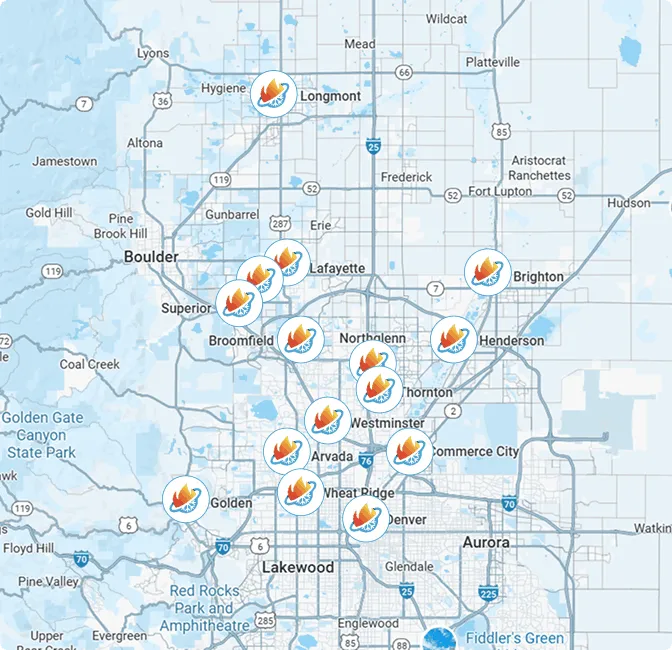
Service Areas

Testimonials
Neighbors trust Quality Heating & Air for honest work and fair pricing.
Service Areas