Behind the Scenes: How We Prep Our Trucks for Peak Winter Emergency Calls
The Urgent Shift from Cooling to Heating
With early fall officially upon us, the immediate focus shifts rapidly for our team at Quality Heating & Air, which is why we are taking you behind the scenes: how we prep our trucks for peak winter emergency calls. The transition from summer cooling to winter heating readiness requires a massive, complete overhaul of our onboard inventory. We do not wait for the snow to fly to start thinking about your furnace. Instead, our internal decision point happens right now during a comprehensive inventory audit, where we decide exactly what goes on every single service truck. If you are looking for reliable heating services, you should know that true emergency readiness begins weeks before you ever have to make a phone call.
During the summer months, our service vans are packed to the roof with air conditioning capacitors, contactors, refrigerant, and condensate pump supplies. But as the season turns, those parts take up valuable real estate that must be dedicated to heating components. The early fall audit is a rigorous process. We completely empty the shelves of our vehicles, clean the storage bins, and restock them from the ground up with winter-specific gear.
What the Early Fall Audit Includes:
• Summer stock removal: Offloading excess AC components to make room for bulky heating parts.
• Bin reorganization: Moving high-frequency winter parts to the most accessible shelves in the van.
• Tool calibration: Checking combustion analyzers, carbon monoxide detectors, and gas leak sniffers to ensure they are perfectly calibrated for heating season.
• Inventory minimums: Setting strict baseline quantities for every sensor, switch, and motor we carry.
This systematic shift ensures that when a Quality Heating & Air technician pulls into your driveway, they are driving a mobile warehouse perfectly tailored to the exact season you are experiencing.
Why We Can't Wait for the First Freeze
In our years of keeping local homes comfortable, our technicians have seen firsthand how notoriously unpredictable the weather in Northglenn CO can be during the transition seasons. We experience rapid fall temperature swings where a sunny, mild afternoon can plummet into freezing temperatures overnight. These sudden drops catch many homeowners completely off guard. If your furnace has been sitting idle since last spring, asking it to suddenly perform under freezing conditions puts a massive strain on the system.
Waiting for the first freezing night to stock up our trucks guarantees delayed service. When the temperature drops rapidly, heating companies across the region receive hundreds of calls at the exact same time. If a company waits until that morning to figure out what parts they need, they are already too late.
Our methodology ensures that when the first harsh cold snap hits, our response is immediate and fully equipped. We track historical weather data and repair trends from previous years to forecast exactly what parts will fail first. By treating early fall as the true start of heating season internally, we build a buffer of readiness. You do not have to worry about whether we are prepared for the cold; we have been ready for weeks.
The Anatomy of a Fully Stocked Winter Service Van
Pulling back the curtain on our service vans reveals a highly organized system designed for one specific goal: fixing your system fast. The parts we load during the early fall audit are not chosen at random. Based on the patterns we see often in Northglenn homes, we prioritize the exact high-failure parts that are most likely to leave you without heat.
These specific components are non-negotiable for our winter truck stock because they are the lifeline of your heating system. We maintain strict organization and logistics to keep these parts easily accessible, ensuring our technicians spend their time fixing your unit rather than digging through messy bins.
Top High-Failure Furnace Parts We Stock:
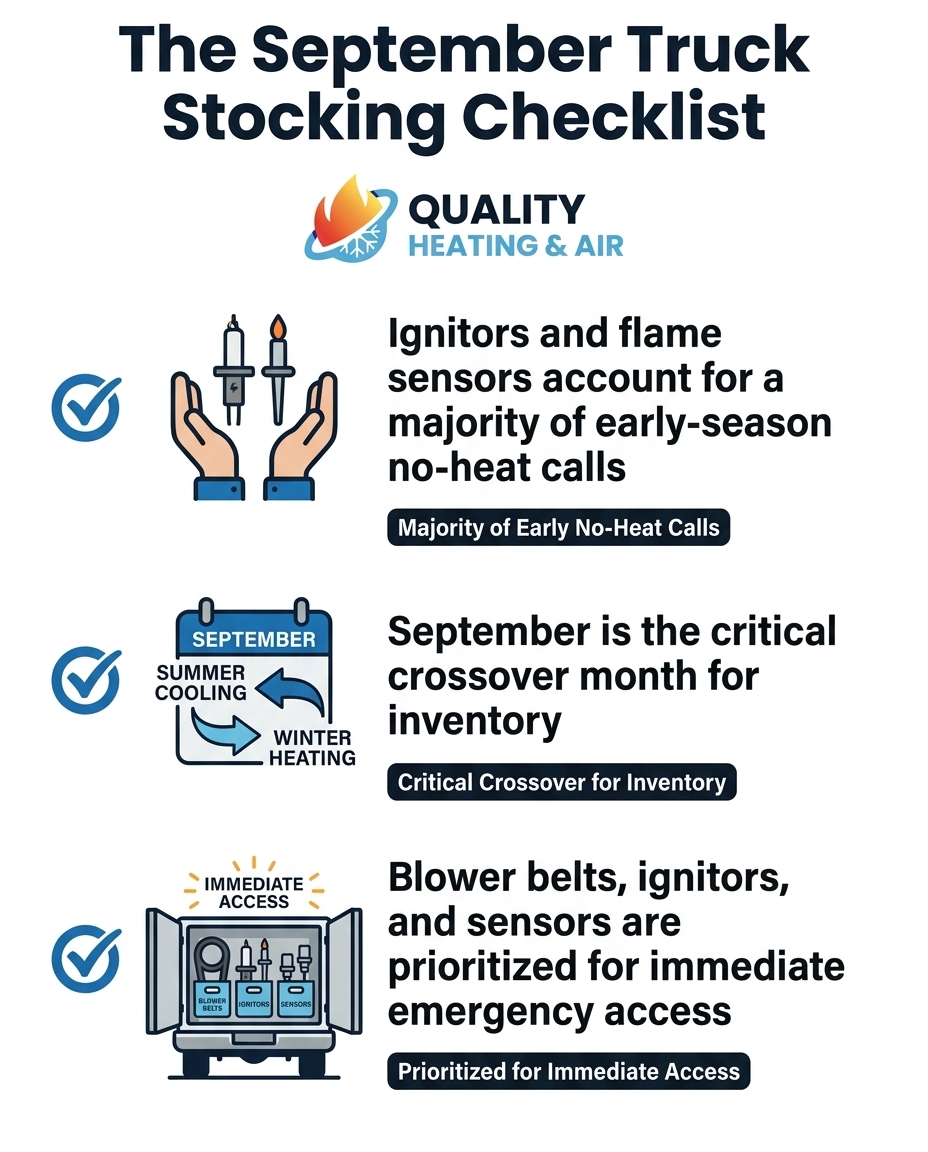
• Furnace ignitors: The delicate components that light the gas burner. They become brittle over time and frequently snap during the first startup of the year.
• Flame sensors: A safety device that tells the system a fire is actually burning. If it gets dirty or fails, the furnace shuts down immediately.
• Blower belts: Rubber belts that dry out and crack over the summer, often snapping as soon as the blower motor kicks into high gear.
• Pressure switches: Sensors that ensure exhaust gases are venting safely. Cold weather and condensation can cause these to stick or fail.
• Limit switches: Safety controls that prevent the furnace from overheating.
By showcasing this transparency and readiness, we want to prove to you that our technicians arrive fully stocked. This eliminates the frustrating wait times for common parts that plague so many winter service calls.
What Actually Breaks When the Temperature Drops
Understanding why we stock these specific parts requires looking at the mechanical stress heating systems face during the initial startup phase. A furnace sits dormant for months in a dusty basement or utility closet. When the thermostat suddenly calls for intense heat, moving parts that have been stationary are forced into rapid motion, and electrical components are hit with sudden voltage.
Environmental factors also play a massive role in system performance and sensor reliability, a pattern our team deals with frequently. If you want to understand more about the regional environmental impacts, it helps to know how dry air and altitude affect HVAC performance. The lack of humidity and the specific atmospheric conditions can cause rubber components like blower belts to dry rot faster, leading to a direct failure if pre-season maintenance was skipped.
The Vulnerability of Ignition Systems
In our daily service calls, the most common culprits behind early-season breakdowns are furnace ignitors, flame sensors, and blower belts. The hot surface ignitor acts like the filament in an old lightbulb. It gets incredibly hot to ignite the gas. Over years of use, the material becomes brittle. After a summer of inactivity, the sudden surge of electricity and heat during the first cold night often causes a weakened ignitor to crack completely. Once it cracks, the furnace will not light.
Similarly, the flame sensor sits directly in the path of the burner flame. Over time, it builds up a layer of microscopic carbon and oxidation. A dirty flame sensor cannot detect the fire, so as a safety precaution, it shuts down the entire heating cycle within seconds of starting. This results in a furnace that clicks on, fires up briefly, and then immediately turns off.
Beating the Supply House Bottleneck
One of the biggest secrets in the HVAC industry is the chaos that occurs at local supply houses during the first major temperature drop. When a freezing front moves in, hundreds of local technicians suddenly realize they do not have the right parts on their trucks. They all head to the exact same supply houses at 7:00 AM. The result is a massive bottleneck, long lines, and backordered parts.
A technician's skill is completely useless if they have to wait overnight for a supply house to open, or worse, wait days for a part to be shipped.
• Technician diagnoses the problem but lacks the part. — Our Pre-Stocked Approach: Technician diagnoses the problem and has the part in the van.
• Technician leaves your home to stand in line at a supplier. — Our Pre-Stocked Approach: Technician walks out to the driveway and grabs the component.
• You wait hours (or days) in a freezing house. — Our Pre-Stocked Approach: Your heat is restored during the initial visit.
• Supply house is sold out of common ignitors. — Our Pre-Stocked Approach: Our bins were fully stocked in early fall.
At Quality Heating & Air, our early fall preparation bypasses these bottlenecks entirely. We purchase our winter inventory in bulk before the rush begins. This inventory investment is a direct investment in your comfort. We refuse to let our customers' safety rely on whether a third-party warehouse happens to have a switch in stock on a busy Tuesday morning.
First-Time Fixes: The Real Measure of Emergency Readiness
In our industry, the "first-time fix rate" is the percentage of service calls where the problem is completely resolved on the very first visit, without the technician needing to leave and come back. This metric is the true measure of emergency readiness. When your house is dropping into the 40s indoors, you do not want a diagnosis—you want heat.
Having the right parts on hand prevents families from being left in the cold overnight. During a bitter winter cold snap last year, one local homeowner reached out when their heater failed completely, leaving the family rapidly losing warmth. Because our Quality Heating & Air van was already stocked with the correct ignition components, our technician arrived quickly and completed the repair immediately. The heater was fully restored on that first visit, preventing the family from being left in the freezing cold overnight.
True reliability is engineered weeks in advance, not just at the front door. Our internal logistics—auditing the vans, organizing the bins, tracking the inventory in Northglenn CO—directly result in restored heat and peace of mind for you. We measure our success by how quickly you can take off your winter coat inside your own living room.
Beyond Furnaces: Comprehensive Heating Readiness
While forced-air furnaces are incredibly common, we know from experience that local homes utilize a variety of heating technologies. Preparation means being ready for all of them. Our inventory audit extends far beyond basic furnace parts to include specialized components for hydronic and radiant heating systems.
If your home relies on hot water to stay warm, you need a team equipped for complex, multi-system setups. During our early fall overhaul, we load specific zone valves, circulator pumps, and aquastats. This ensures our technicians can handle a diverse range of calls in Northglenn CO without missing a beat. If you require specialized boiler services, our trucks are loaded and organized to support those intricate systems just as thoroughly as a standard furnace.
This commitment to full-spectrum heating solutions means we do not just prep for the easy jobs. We prep for the complex, multi-zone failures that require specialized knowledge and highly specific parts.
Partnering for Winter Reliability
While we are incredibly proud of how ready we are for emergencies, avoiding those emergencies altogether is always the best outcome. We put massive effort into our truck stock in early fall, but we also encourage homeowners to partner with us through proactive maintenance.
Professional pre-season inspections are the best way to catch a brittle ignitor or a frayed blower belt before it snaps. Routine maintenance allows a technician to clean the flame sensor, test the safety switches, and lubricate moving parts on your schedule—not at 2:00 AM on a freezing weekend.
You can match our internal readiness with your own home preparation by scheduling a tune-up. An HVAC maintenance plan ensures that your system receives the deep cleaning and professional oversight it needs to run safely and efficiently all winter long. We have the parts ready if things go wrong, but a thorough inspection often ensures those parts stay right where they are—in our bins.
Frequently Asked Questions About Winter Heating Repairs
What are the most common furnace repairs during the first freeze?
In our experience, the most frequent issues involve furnace ignitors, flame sensors, and blower belts failing. Because these parts sit idle all summer, the sudden demand of a freezing night often causes brittle components to crack or dirty sensors to fail. Routine cleaning usually prevents these specific breakdowns.
Why did my furnace stop working when it got cold?
Your furnace likely experienced a startup failure due to mechanical stress or a safety lockout. When temperatures drop, systems run longer and harder, exposing hidden weaknesses like a clogged filter, a weak capacitor, or a failing pressure switch. The system shuts itself down to prevent a fire hazard or carbon monoxide leak.
How long does it take to fix a furnace in an emergency?
Most common repairs take between one and two hours if the technician has the part on hand. Because we stock high-failure parts directly on our trucks, we aim to complete the vast majority of repairs on the very first visit. If a rare proprietary part must be ordered, it can take longer, but we always prioritize getting your heat back online.
What parts of a furnace need to be replaced most often?
Filters, ignitors, and flame sensors require the most frequent attention. Filters should be changed every 1 to 3 months, while ignitors and sensors often need replacement or professional cleaning every few years. Keeping up with these minor replacements prevents major motor failures down the road.
Why is my furnace blower running but not producing heat?
This usually indicates that the ignition sequence failed, but the fan is still running to clear the vents. It is often caused by a cracked ignitor, a tripped limit switch, or a gas supply issue. Turn the system off at the thermostat and call for service so a professional can safely diagnose the burner assembly.
How does proactive inventory stocking prevent heating repair delays?
Proactive stocking means the technician brings the warehouse to your driveway. Instead of waiting for a supply house to open or paying expedited shipping fees for a part, the technician simply walks out to the van, grabs the component, and fixes the heater instantly.
Ensure Your Home is as Ready as Our Trucks
There is a profound peace of mind that comes from knowing the right parts are already organized, stocked, and on the way to your home before you even dial the phone. We take our early fall inventory seriously because your winter safety depends on it. Do not wait for the first freezing night to find out if your heater is up to the task. Take the clear next step for securing your home's winter comfort by exploring an HVAC maintenance plan today, and let us make sure your system is as ready for the cold as we are.

Testimonials
Neighbors trust Quality Heating & Air for honest work and fair pricing.
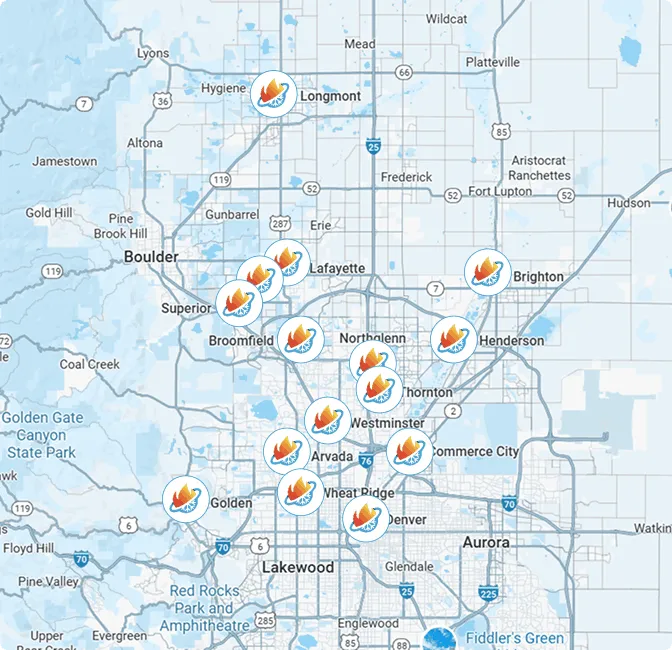
Service Areas