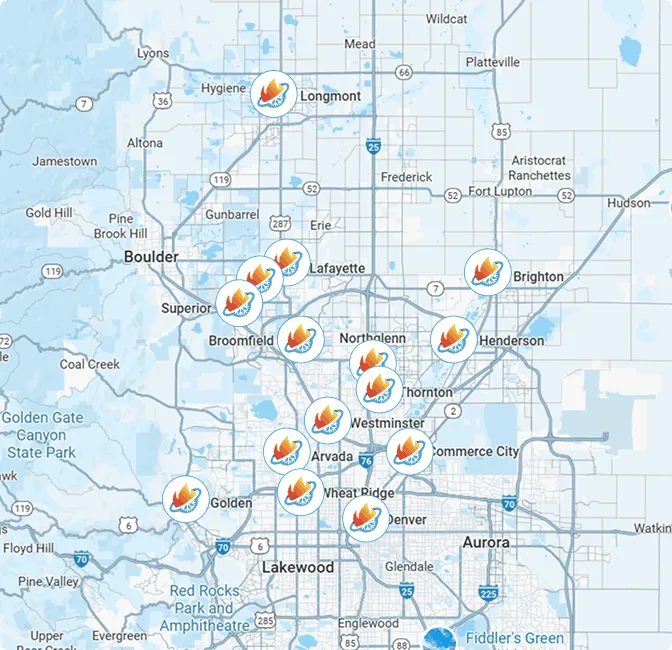
Myth vs. Reality: Why Closing HVAC Vents in Unused Rooms Actually Damages Your Heating System
The Temptation to Shut Vents Before Winter Hits
Closing HVAC vents in unused rooms doesn't save energy — it actually makes your heating system work harder and risks serious mechanical damage. It is a common misconception that shutting the register in a guest bedroom or an empty basement will redirect that warm air to the spaces you actually use. After all, if you turn off a light switch in an empty room, you save electricity. Why wouldn't your furnace work exactly the same way?
If you are looking to optimize your home's efficiency, understanding how your equipment actually breathes is the first step. For professional guidance on optimizing your setup, exploring comprehensive heating services can keep your equipment running safely all season long.
The Light Switch Fallacy
Most homeowners in Northglenn, CO, understandably want to keep their utility bills manageable as the cold weather approaches. The logic seems flawless: block the heat from entering an empty room, and the furnace will use less fuel to heat the rest of the house. However, modern central heating systems are not designed with individual room switches in mind. They are engineered as a complete, closed-loop network.
When you close a vent, you are not telling the furnace to produce less heat or pump less air. Instead, you are actively blocking the physical exit path for the air the system is already generating. This creates an immediate concrete problem: you are unknowingly causing severe pressure imbalances inside your ductwork. The simplest, most effective decision you can make today to protect your furnace's heat exchanger is to walk through your home and ensure every single supply and return vent is fully open and unblocked by furniture.
Your Home's Respiratory System: How Airflow Actually Works
To understand why closing registers is harmful, it helps to think of your home's ductwork as a respiratory system. Your furnace is the heart and lungs, and the ducts are the airways. If you block a major airway, your lungs have to push much harder to exhale the same amount of oxygen. Your heating system operates on the exact same principle.
At Quality Heating & Air, we prioritize transparent education because we want you to understand the "why" behind your equipment. Modern HVAC blower motors are calibrated to push a fixed, specific volume of air, measured in Cubic Feet per Minute (CFM). The system is carefully sized so that the blower motor matches the exact square footage and duct layout of your home.
The Danger of Static Pressure Increase
When you shut a vent, the blower motor does not slow down. It still attempts to push that same fixed CFM through the remaining open vents. This creates a severe static pressure increase inside the ductwork. The air backs up, creating resistance against the blower motor. To learn more about the physics behind this, you can read our guide on how ductwork and vents impact system airflow.
Here is a breakdown of how restricted airflow compares to a healthy, open system:
• All Vents Open — Airflow Resistance: Low (Normal) — Blower Motor Impact: Operates smoothly, uses standard electricity.
• 1-2 Vents Closed — Airflow Resistance: Moderate — Blower Motor Impact: Motor works harder, runs hotter, draws more power.
• Multiple Vents Closed — Airflow Resistance: High (Dangerous static pressure increase) — Blower Motor Impact: Severe strain, high risk of overheating and mechanical failure.
The Hidden Danger of Furnace Short-Cycling
The immediate mechanical risk of restricting your home's airflow is a phenomenon known as short-cycling. This occurs when your furnace turns on, runs for just a few minutes, shuts off abruptly, and then turns right back on again. It is a clear sign that the system is suffocating and overheating.
During a typical November pre-winter cold snap, your furnace needs to run in steady, even cycles to maintain a comfortable temperature. When vents are closed, the heat generated by the burners cannot escape into the rooms fast enough. Instead, that intense heat gets trapped inside the furnace cabinet.
How Overheating Damages Your Equipment
Here is the step-by-step process of what happens when closed vents cause your system to overheat:
1. Heat buildup: The restricted airflow prevents the blower from pushing the freshly heated air out of the furnace cabinet.
2. Limit switch trips: A built-in safety sensor (the high limit switch) detects that the internal temperature has reached a dangerously high level.
3. Emergency shutdown: The limit switch immediately shuts off the burners to prevent a fire, even though your thermostat is still calling for heat.
4. Rapid restart: Once the cabinet cools down a few minutes later, the furnace tries to start again, only to overheat and shut down immediately.
If this short-cycling continues, the constant expansion and contraction from rapid temperature swings can cause the heat exchanger to crack. A cracked heat exchanger is not only an expensive repair, but it is also a serious safety hazard that can leak carbon monoxide into your living space. Furthermore, repeated short-cycling can cause the system to go into a hard lockout. A furnace lockout during a Northglenn deep freeze will leave your home entirely without heat when you need it most, requiring a professional reset.

How Closed Vents Increase Duct Leakage and Energy Waste
The most persistent myth about shutting vents is that it lowers your utility bills. In reality, the exact opposite is true. The Department of Energy has noted that closing vents can actually increase duct leakage by up to 20 to 30 percent. This happens entirely because of the static pressure increase we discussed earlier.
When the blower motor forces a high volume of air against closed registers, that pressurized air has to go somewhere. It will always find the path of least resistance. In most homes, ductwork is not perfectly airtight. There are small seams, joints, and micro-leaks where the metal or flex-duct connects.
Where Does the Wasted Air Go?
By closing vents, you are actively pushing your expensive, heated air through those tiny leaks. Here is how the process wastes energy:
1. Pressure builds: The closed vent blocks the normal exit, causing the duct to inflate slightly like a balloon.
2. Seams separate: The increased pressure forces the joints in the ductwork to expand, widening any existing small leaks.
3. Air escapes: Conditioned air is violently pushed out of the ducts and into unconditioned spaces, such as your attic, crawlspace, or inside the wall cavities.
4. Motor overworks: Because the heated air isn't reaching the thermostat, the room stays cold, signaling the furnace to run even longer.
Ultimately, you end up paying to heat your attic or crawlspace while the blower motor consumes more electricity trying to overcome the resistance. The perceived savings of not heating a guest room are entirely wiped out by the energy wasted through duct leakage and an overworked motor.
The Impact on Comfort and Air Circulation
Beyond the mechanical strain and energy waste, closing vents severely disrupts the overall comfort of your home. Your heating system was designed with a specific load calculation. The engineers who sized your ductwork determined exactly how much air needs to enter and leave each room to maintain a consistent, comfortable temperature throughout the house.
When you alter that calculation by shutting registers, you create a domino effect of comfort issues. The most immediate result is the creation of cold spots and drafty rooms. Because the static pressure increase forces air out of leaks, other rooms may not receive enough airflow, leaving your living room freezing while the hallway is boiling hot.
Air Quality and Stagnation
Furthermore, closing off a room stops the natural circulation of air. A healthy home in Northglenn, CO, relies on continuous airflow to filter out dust, pet dander, and airborne contaminants. When you shut the vent and close the door to a guest bedroom, the air in that room becomes stagnant. Over time, this lack of circulation can lead to musty odors, a buildup of allergens, or even moisture accumulation on the windows.
The filtration factor: Your furnace filter can only clean the air that actually makes it back to the return vents. Stagnant rooms trap pollutants. If you are noticing excessive dust or stuffiness in certain areas of your home, keeping your vents open is a critical step in improving your overall indoor air quality.
Better Strategies for Managing Unused Rooms
If your goal is to manage the temperature in your home efficiently without damaging your equipment, there are much safer and more effective methods than blocking your vents. You can achieve better comfort and efficiency by working with your system rather than fighting against it.
Here is a checklist of better strategies to manage the airflow in your home:
• Keep all vents open: Walk through your home and ensure every single supply register and return grille is fully open.
• Remove furniture blockages: Check that couches, rugs, or heavy drapes are not sitting directly on top of or in front of your vents. Even a partially blocked vent causes a static pressure increase.
• Upgrade to a smart thermostat: Modern smart thermostats with remote room sensors can detect which rooms are occupied and balance the heating cycles naturally, without restricting airflow.
• Leave doors slightly ajar: If you must keep a guest room door closed, ensure there is at least an inch of clearance under the door so return air can still circulate back to the main hallway.
• Consider professional zoning: If you truly want different temperatures in different parts of the house, a professional HVAC zoning system uses motorized dampers and bypass ducts to control airflow safely without straining the blower motor.
Keep Your Airflow Moving This Winter
The short answer is that a balanced, fully open HVAC system is cheaper to run, provides better comfort, and lasts significantly longer. Your furnace is a complex machine that relies heavily on unrestricted airflow to function safely. By keeping all your vents open, you prevent overheating, reduce duct leakage, and protect your heat exchanger from premature failure.
As you tackle your November pre-winter preparations, take five minutes to check every register in your home. If you notice that your furnace is already short-cycling or if certain rooms remain stubbornly cold despite the vents being open, it is time for a professional assessment. Securing an HVAC maintenance plan ensures that your blower motor, limit switches, and ductwork are thoroughly inspected and optimized before the harshest winter weather arrives.
Frequently Asked Questions
Does closing vents save money on heating?
No, closing vents does not save money on heating bills. It actually increases the static pressure inside your ductwork, which forces your blower motor to work harder and consume more electricity. Additionally, the increased pressure pushes heated air out through tiny leaks in your ducts, meaning you end up paying to heat unconditioned spaces like your attic or walls.
Is it bad to close vents in unused rooms?
Yes, it is highly detrimental to your HVAC system. Closing vents disrupts the carefully calculated airflow balance that your system requires to operate safely. This restriction traps heat inside the furnace cabinet, leading to overheating, short-cycling, and severe mechanical strain on the blower motor.
Why is my furnace short-cycling?
Short-cycling usually happens when the furnace overheats and the internal safety limit switch shuts the system down prematurely. Restricted airflow—often caused by closed vents, a dirty air filter, or blocked return grilles—prevents the heat from escaping the cabinet. The furnace turns off to prevent a fire, cools down, and then quickly turns back on, repeating the cycle.
How many vents can I safely close?
The safest number of vents to close is zero. Modern forced-air systems are designed to operate with all vents fully open to maintain proper static pressure and air volume (CFM). Closing even one or two vents can begin to unnecessarily strain the blower motor and reduce the overall efficiency of the system.
Does closing vents redirect air to other rooms?
While it may seem like closing a vent pushes more air to other rooms, it actually just creates resistance. The blower motor cannot easily redirect that air; instead, the air backs up, increasing pressure inside the ductwork. This pressure forces the air out through leaks in the duct seams rather than smoothly delivering it to the open registers.
Can closed vents cause my heat exchanger to crack?
Yes, closed vents are a leading indirect cause of cracked heat exchangers. Because closed vents restrict airflow, the heat generated by the furnace cannot dissipate into your home. The trapped heat causes the metal heat exchanger to rapidly expand and contract during short-cycling, eventually leading to stress cracks that can leak carbon monoxide.
What is static pressure in an HVAC system?
Static pressure is the resistance to airflow within your home's ductwork. Think of it like blood pressure for your heating system. When vents are open and filters are clean, static pressure is normal and the blower motor easily pushes air. When vents are closed, static pressure spikes, making it incredibly difficult for the system to circulate air.

Testimonials
Neighbors trust Quality Heating & Air for honest work and fair pricing.
Service Areas