Preparing Heating Systems for Freezing Temps: What Professionals Look For Before the First Deep Freeze

The Hidden Risks of the First Major Winter Freeze
With the sudden arrival of late fall weather, preparing heating systems for freezing temps is the single most important step you can take before the snow flies. It happens almost every year in Colorado: a relatively mild, sunny afternoon quickly gives way to a bitter, biting evening. This drastic weather shift forces your furnace to jump from sitting idle to running at maximum capacity overnight. In our experience at Quality Heating & Air, if your equipment has been neglected over the summer and early fall, this sudden stress often leads to short-cycling, poor airflow, or a system that just blows cold air.
Our team sees firsthand how our high-altitude, dry climate realities make these sudden temperature drops incredibly harsh on residential HVAC equipment. The critical window to transition your home from mild-weather usage to deep-freeze readiness is right now, just before the November first deep freeze hits. Waiting until the temperatures plummet means risking a complete system failure on the exact night you need warmth the most.
Just last season, our dispatch team responded to a local homeowner who found out the hard way when their heater stopped working entirely during a sudden cold snap. One of our technicians was dispatched quickly to their chaotic household, diagnosing and repairing the heater so the family wasn't left in the cold. Proactive preparation prevents these stressful emergencies. By scheduling professional heating services and securing a reliable heating maintenance plan, you ensure your equipment is physically ready to handle whatever the winter weather brings.
Understanding the Load Demand on Your Furnace
In our years of servicing Northglenn, CO, we've noticed that when the temperature drops rapidly, your home begins losing heat at an accelerated rate. Your furnace must work overtime to combat this rapid heat loss. Load demand refers to the amount of energy and effort your system must exert to maintain the temperature set on your thermostat. During mild weather, your furnace might only run for ten minutes at a time. During a deep freeze, it may run almost continuously.
This continuous operation acts as a stress test for your entire heating system. Minor, unnoticed airflow restrictions—like a slightly dirty filter or a blocked return vent—exacerbate into complete system failures under high load. When the furnace cannot pull in enough cold air or push out enough warm air, the internal heat exchanger overheats. This triggers a safety mechanism that shuts the burners off prematurely, a frustrating cycle known as short-cycling. Short-cycling not only leaves your home feeling chilly, but it also causes excessive wear and tear on the blower motor and ignition components.
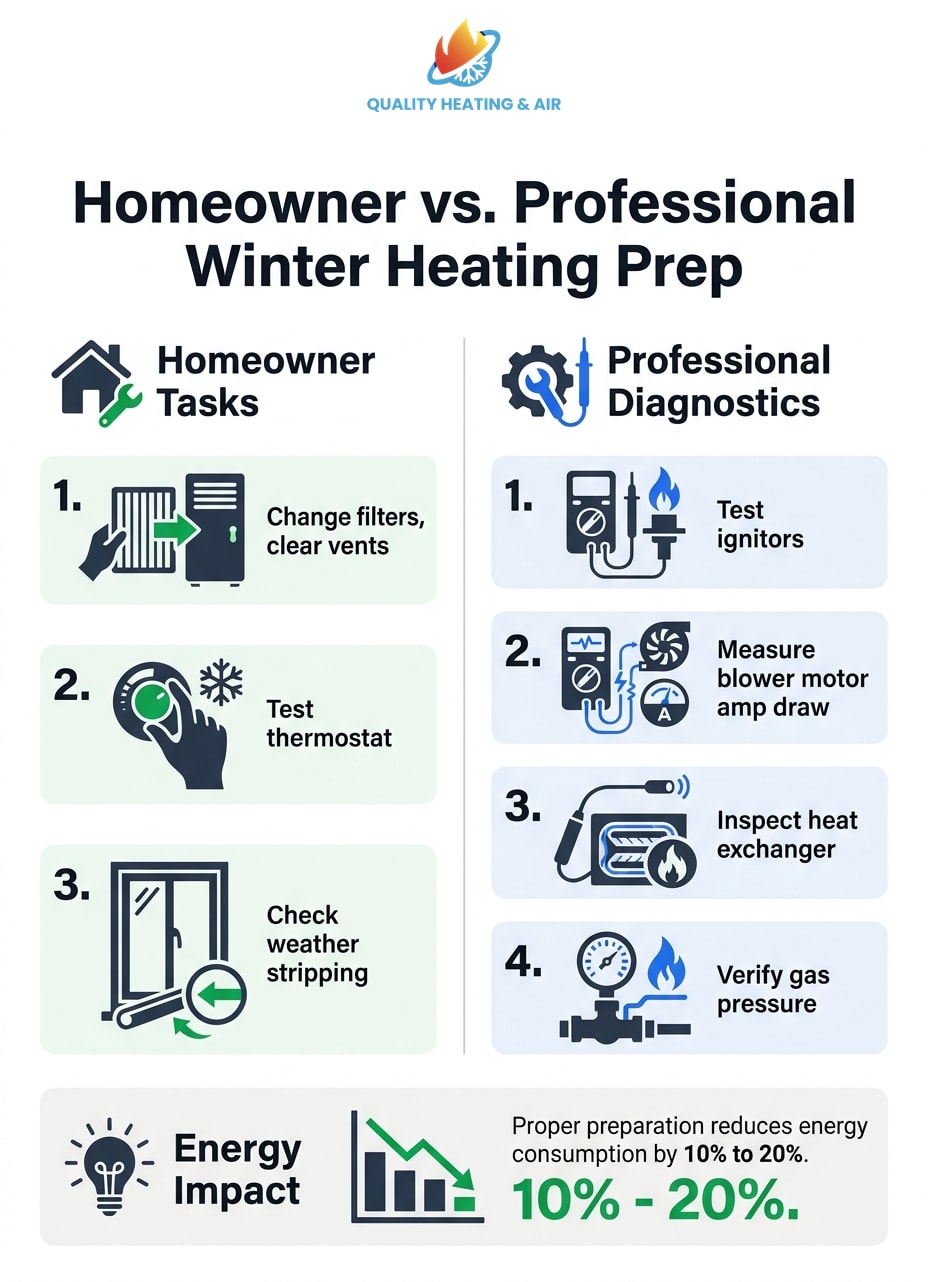
The U.S. Department of Energy notes that proper HVAC preparation and maintenance can reduce energy consumption by 10% to 20%. When your system breathes easily and operates without restriction, it uses far less fuel to keep your living space comfortable.
• Run Cycle Length — Mild Fall Weather: Short, infrequent cycles (10-15 minutes) — Extreme Winter Freeze: Long, nearly continuous operation
• Airflow Importance — Mild Fall Weather: Moderate; system can often compensate — Extreme Winter Freeze: Critical; slight restrictions cause overheating
• Component Stress — Mild Fall Weather: Low wear and tear on motors and ignitors — Extreme Winter Freeze: High thermal stress and continuous electrical draw
• Energy Consumption — Mild Fall Weather: Minimal fuel and electricity usage — Extreme Winter Freeze: Maximum load, highest potential for energy waste
Safe Homeowner Readiness vs. Professional Diagnostics
As you prepare for the November first deep freeze, our technicians always advise customers to understand the clear boundary between safe, do-it-yourself home preparation and complex professional diagnostic work. There are several vital steps you can take right now to help your system run smoothly, but crossing the line into technical repairs can be dangerous and often voids manufacturer warranties.
Safe Homeowner Tasks:
• Replacing air filters: A clean filter is the easiest way to protect your blower motor and improve your indoor air quality solutions. We recommend checking your filter monthly and replacing it the moment it looks gray or clogged.
• Clearing vents and registers: Walk through every room in your house and ensure that rugs, furniture, and curtains are not blocking the supply or return vents. Restricted vents force your furnace to work twice as hard.
• Checking weather stripping: Inspect the seals around your doors and windows. Stopping drafts reduces the overall heating load on your furnace, allowing it to cycle off more frequently.
• Testing your thermostat: Switch your thermostat to "heat" early in the season to ensure the system actually responds and turns on.
What Homeowners Should NEVER Do:
• Handling gas valves: Never attempt to adjust gas pressure or modify the gas line feeding your furnace. This requires specialized gauges and professional licensing.
• Testing electrical components: Do not probe circuit boards, capacitors, or internal wiring. The voltage inside a furnace can cause serious injury.
• Internal furnace diagnostics: Removing the blower compartment door to bypass safety switches or clean the heat exchanger is strictly professional territory.
What Technicians Inspect During a Deep-Freeze Diagnostic
When you hire a licensed professional to evaluate your system before the cold sets in, they aren't just wiping off dust. A true deep-freeze diagnostic involves testing the specific components that take the most abuse during continuous winter operation. Here is exactly what our Quality Heating & Air technicians look for when servicing homes in Northglenn, CO:
1. Ignition System Health: The technician inspects the ignitor and flame sensor. These components often fail silently during mild weather. A dirty flame sensor will shut down the entire furnace because the system cannot verify that a safe flame has been established. Cleaning or replacing these parts prevents a sudden outage at midnight.
2. Electrical Connections: Constant heating and cooling cause metal components to expand and contract, which can slowly loosen internal wiring over time. Loose connections cause intermittent failures and can even pose a fire hazard. Our team responded to a no-heat call during a winter cold snap where a customer learned this the hard way. Our technician inspected the unit, identified that internal wires had been left completely disconnected during a previous installation by another contractor, and properly secured everything so the heating system worked perfectly again.
3. Blower Motor Amp Draw: The technician uses a multimeter to measure the electrical current (amp draw) of the blower motor. If the motor is drawing too much power, it indicates that the internal bearings are wearing out or the motor is fighting a severe airflow restriction. Catching this early prevents the motor from burning out entirely.
4. Heat Exchanger Integrity: The heat exchanger is the metal shield that separates the breathable air in your home from the toxic combustion gases inside the furnace. Technicians meticulously check this component for micro-cracks or rust. A cracked heat exchanger compromises your family's safety and requires immediate attention.
Transparent diagnostics mean our technicians will explain why they are checking the amp draw or the gas pressure, rather than just handing you a bill. Understanding the health of these internal parts gives you real confidence in your system's reliability.
Preparing Alternative Systems for Extreme Cold
Not all homes rely on traditional forced-air gas furnaces. We service many properties in Northglenn, CO that utilize alternative heating technologies facing the exact same winter extremes, but requiring entirely different preparation strategies. Whether you rely on hot water or electricity, high-load demand requires proactive inspection.
Radiant and Boiler Systems:
Homes with radiant floor heating or baseboard radiators depend on boilers to circulate hot water. The specific winterization needs for these systems involve checking water pressure, testing the pressure relief valves, and bleeding trapped air from the radiator lines. Air bubbles in a radiant system prevent hot water from circulating properly, leaving certain rooms freezing cold. Scheduling professional boiler services before a freeze ensures the system maintains proper pressure and doesn't suffer from a frozen or burst pipe when the temperature drops.
Heat Pump Systems:
Heat pumps are incredibly efficient, but they operate differently than gas furnaces. Because they extract heat from the outside air, the outdoor unit is prone to frost buildup during a deep freeze. Heat pumps rely on a specific defrost cycle to melt this ice. A professional must check the defrost control board, the reversing valve, and the outdoor sensors to ensure the system can successfully clear itself of ice. If the defrost cycle fails, the outdoor coil will encase itself in a solid block of ice, and the system will stop producing heat entirely.
The Value of Transparent Technical Troubleshooting
In our daily operations, we constantly emphasize the massive difference between a basic "fall tune-up" and comprehensive, transparent technical troubleshooting. A basic tune-up often consists of a quick visual inspection and a filter change. Transparent troubleshooting involves hooking up digital gauges, testing electrical tolerances, and verifying that the system meets the manufacturer's exact specifications for the November first deep freeze.
Identifying the root cause of an issue early can save a system from premature failure. Recently, one of our senior technicians visited a local homeowner facing a complete furnace failure that seemed destined to require a costly replacement. Instead of just condemning the unit, our team took the time to diagnose the actual root cause and performed a highly targeted repair. The unit was successfully restored, saving the homeowner a tremendous amount of money and avoiding an unnecessary replacement.
That is the core value of Quality Heating & Air's transparent diagnostics. When a technician walks you through exactly what was checked, what the readings mean, and why it matters for winter reliability, you gain total peace of mind. You aren't just hoping your furnace will survive the winter; you know it will. For readers wanting more technical depth on this process, exploring resources on diagnosing your fall heating startup can provide further insights into how professionals keep your home safe.
Frequently Asked Questions About Winter Heating Prep
How do I prepare my heating system for extreme cold?
We recommend that you handle the basic airflow tasks yourself and leave the internal mechanics to a professional. Change your air filters, clear all vents and registers of obstructions, and check your doors for drafts. Then, schedule a professional diagnostic to ensure the ignition, electrical, and gas systems in Northglenn, CO are ready for heavy use.
What happens to a furnace during a deep freeze?
During a deep freeze, your furnace runs continuously under maximum load to combat the rapid heat loss in your home. This constant operation stresses the blower motor and heat exchanger. If there are any airflow restrictions, this heavy load can trigger the system to overheat and begin short-cycling.
At what temperature should I worry about my furnace freezing?
Furnaces themselves don't typically freeze, but extreme cold (temperatures dropping below freezing) stresses the mechanical components. On high-efficiency condensing furnaces, the PVC condensation drain lines can freeze if they are exposed to unconditioned spaces, which will cause the furnace to shut down safely.
Should I leave my heat on during a freeze?
Yes, absolutely. Maintaining a consistent indoor temperature prevents your home's internal plumbing pipes from freezing and bursting. Additionally, turning the heat off and letting the house get extremely cold forces the furnace to work twice as hard to recover that lost heat once you turn it back on.
How do you winterize a furnace?
Homeowners can winterize their homes by managing filters, checking weather stripping, and ensuring unrestricted airflow around the house. Professionals winterize the furnace itself by inspecting the ignition sequence, measuring electrical draw, cleaning the flame sensor, and verifying safe gas pressure.
Why do heating systems often fail during the first major temperature drop?
Heating systems often fail because minor, unnoticed issues from mild weather suddenly become critical failures when the system is forced to run at full capacity overnight. A slightly dirty flame sensor or a weak capacitor might survive a ten-minute run cycle in October, but it will fail during a three-hour run cycle in November.
Secure Your Comfort Before the Cold Settles In
Bridging the gap between mild fall weather and extreme winter conditions requires proactive attention. A reliable heating system does more than just warm your house; it provides security on the coldest nights of the year. Preparing heating systems for freezing temps means taking action before the November first deep freeze arrives.
At Quality Heating & Air, we encourage you to explore professional maintenance options to ensure your system is thoroughly evaluated by a licensed technician. A comprehensive, authoritative overview of your equipment's health, combined with safe homeowner readiness steps, is the best way to protect your property. Secure your comfort today by scheduling your seasonal heating maintenance plan before the severe cold settles in.

Testimonials
Neighbors trust Quality Heating & Air for honest work and fair pricing.
Service Areas