AC Repair Near Me: Navigating Fall Transitions and Furnace Startup Safety
Is Your HVAC System Ready for the Fall Transition?
Are you searching for reliable home maintenance tips and troubleshooting advice because your heating system is acting up on the first chilly day of the season? At Quality Heating & Air, our team typically fields dozens of calls the morning the first October cold snap arrives. Many Northglenn homeowners switch their thermostats from cooling to heating, only to be greeted by strange odors, unusual noises, or a system that refuses to stay running. This seasonal pivot is a critical time for your home's climate control system. After sitting dormant for months, a furnace requires a smooth transition to operate safely and efficiently throughout the winter.
Understanding the difference between a harmless seasonal quirk and a serious mechanical hazard is the first step in protecting your home. For comprehensive HVAC services, homeowners need a clear baseline of what to expect during that initial startup. By identifying the root causes of burning smells and short-cycling, you can make an informed, confident decision about whether to simply open a window or immediately shut down the unit and call a professional.
Why Does My Furnace Smell Like Burning Dust?
One of the most common and alarming experiences during the early fall transition is a distinct burning odor spreading through the house within minutes of turning on the heat. Fortunately, in the vast majority of cases, this scent is completely harmless. Throughout the long summer cooling season, your furnace sits idle. During this time, household dust, pet dander, and microscopic airborne particles settle onto the heat exchanger, burners, and surrounding internal components.
In our years of servicing homes across the Colorado Front Range, we've found that our region's distinctively dry air significantly exacerbates this household dust accumulation. Without high humidity to weigh particles down, dust circulates freely and coats inactive heating components. When the thermostat finally calls for heat and the burners ignite, those accumulated particles are instantly incinerated by the high temperatures of the heat exchanger. The resulting scent is simply the physical process of that debris burning off and being pushed through your ductwork by the blower motor. Ensuring you have a brand-new, clean air filter installed before this initial startup can help minimize the amount of debris circulating, but it will not entirely prevent the burn-off of dust already settled inside the unit.
Identifying Normal Dust Burn-Off
• Distinct dusty scent: The odor resembles warm, dry dust or a hot radiator, rather than acrid smoke or melting plastic.
• Rapid dissipation: The smell should peak within the first few minutes of operation and fade quickly, especially if you open a few windows for ventilation.
• No smoke alarms triggered: A well-maintained system burning off a standard layer of summer dust will not produce visible smoke or trigger your home's smoke detectors.
How Long Should a Furnace Smell When First Turned On?
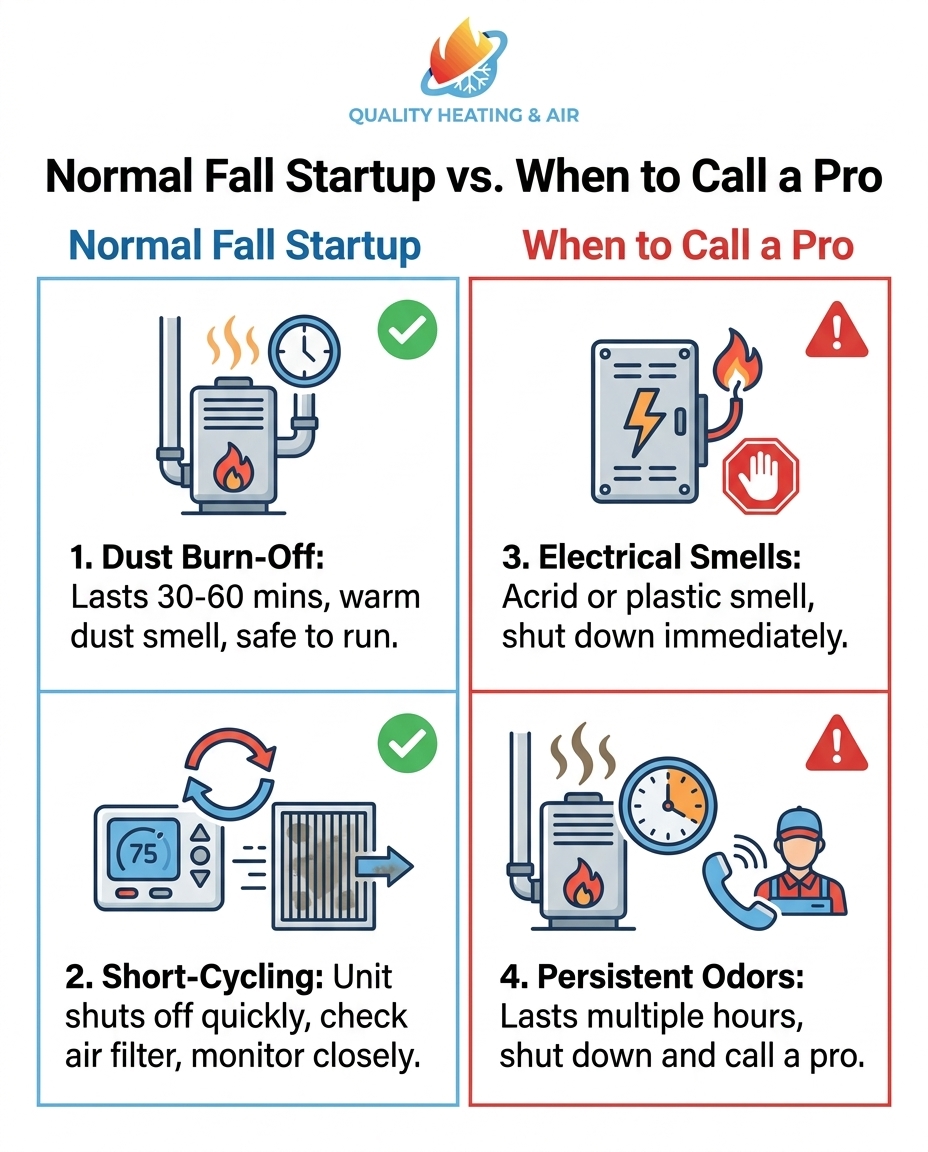
While dust burn-off is a normal part of the seasonal transition, establishing a clear timeline is vital for home safety. Under typical conditions, a harmless burning dust smell should completely dissipate within 30 to 60 minutes of the system's first full heating cycle. If the odor lingers for several hours, or if it disappears and returns every time the system cycles on over the next few days, it is no longer a standard seasonal adjustment. Persistent smells often indicate a compromised heat exchanger, a failing blower motor, or an electrical fault.
Knowing exactly what you are smelling can save your equipment from catastrophic damage. Electrical burning smells, which often mimic the scent of melting plastic or ozone, indicate overheating wires or failing capacitors. If you notice these warning signs, or if you suspect an electrical issue tied to your cooling components, professional AC repair and cooling services should be your next step before the damage spreads through the shared air handler.
When to Shut Down and Call a Pro
• Smell persists beyond 60 minutes — Likely Cause: Clogged filter, excessive debris, or failing motor — Required Action: Turn off thermostat, check filter, call for inspection
• Melting plastic or electrical burning — Likely Cause: Overheating wires, failing capacitor, or short circuit — Required Action: Shut down immediately at the breaker, call a professional
• Rotten egg or sulfur smell — Likely Cause: Natural gas leak — Required Action: Evacuate the home, call the gas company and an HVAC expert
• Loud rattling or banging alongside smell — Likely Cause: Cracked heat exchanger or delayed ignition — Required Action: Shut down immediately, request emergency diagnostic
Why Is My Heating System Turning On and Off Quickly?
Another frequent issue encountered during the early fall transition is a behavior known as short-cycling. Short-cycling occurs when the heating system ignites and begins to warm the house, but shuts down prematurely before reaching the target temperature set on the thermostat. It may then attempt to restart a few minutes later, repeating the frustrating on-and-off loop indefinitely.
The most common culprit behind short-cycling is restricted airflow, which triggers the system's high-limit safety switch. The high-limit switch is a critical safety device designed to measure the internal temperature of the furnace. If the blower motor cannot push enough air over the heat exchanger to keep it cool, the internal temperature spikes to dangerous levels. The high-limit switch detects this overheating and instantly cuts power to the burners to prevent a fire or a cracked heat exchanger. A pattern we see often during our fall maintenance visits is a severely clogged air filter left over from the summer cooling season. Dirty filters, blocked return vents, or too many closed supply registers are the primary restrictors of this vital airflow.
The Danger of Restricted Airflow
• Decreased efficiency: Short-cycling forces the system to consume maximum energy for startup without delivering sustained, efficient heat to the home.
• Structural risk: Trapping excess heat inside the unit repeatedly stresses the metal of the heat exchanger, leading to microscopic cracks over time.
• Component wear and tear: Constantly starting and stopping places immense strain on the igniter, flame sensor, and blower motor, drastically shortening their operational lifespans.
How Does High Altitude Affect HVAC Combustion Safety?
For Northglenn CO area homes, fall troubleshooting requires an understanding of how our specific geography impacts heating equipment. Gas furnaces are engineered to require a highly precise mixture of oxygen and fuel to burn cleanly and safely. At sea level, the air is dense and packed with oxygen. However, at the specific elevation of the Northglenn area—approximately 5,300 feet above sea level—the air is significantly thinner. This lower air density alters the combustion ratio, meaning less oxygen is pulled into the burner assembly per cubic foot of air.
If a furnace is not properly calibrated for high altitude, this lack of oxygen leads to incomplete combustion. Incomplete combustion is a serious hazard that produces excessive soot buildup, lowers heating efficiency, and drastically increases the risk of carbon monoxide production. A system struggling to breathe at high altitude may exhibit delayed ignition (a small boom or puff when starting) or frequent short-cycling as safety sensors detect improper flames. Because our team at Quality Heating & Air specializes in tuning and diagnosing high-altitude combustion systems, we know firsthand how to adjust your equipment to maintain the perfect fuel-to-oxygen ratio, guaranteeing peak safety and performance despite the thinner mountain air.
Wrapping Up Cooling Season: Addressing Lingering AC Issues
While the focus naturally shifts to heating as the temperatures drop, the fall transition is actually the most strategic time to address any cooling issues that were ignored during the late summer months. Many modern HVAC systems share the same central air handler, blower motor, and ductwork for both heating and cooling. A vibrating blower motor or a failing electrical relay that caused minor AC headaches in August can easily evolve into a complete furnace breakdown in November.
Addressing these lingering issues now ensures a safe shutdown of the cooling side and a verified, safe startup for the heating side. For example, our technicians recently visited a historic 1900 home in the area that experienced lingering AC issues late in the cooling season. Our thorough diagnostic visit provided the homeowner with a clear path forward, explaining the necessary work step-by-step and addressing a post-install electrical hiccup safely and efficiently. Proactive attention prevents small seasonal issues from compounding.
1. Inspect the shared blower compartment: Ensure the motor is clean, lubricated (if applicable), and free of excessive summer dust buildup.
2. Clear the condensate drain: Algae and debris from summer humidity can clog the drain line; clearing it now prevents winter backups.
3. Test electrical connections: Tighten any loose wires or failing capacitors that struggled through the heavy summer workload.
4. Enroll in proactive care: Securing a routine AC maintenance plan guarantees that both sides of your climate control system receive the seasonal attention they require.
Repair vs. Replacement for Aging HVAC Systems
If your fall troubleshooting efforts reveal that the burning smells aren't just dust, or the short-cycling is due to a cracked heat exchanger rather than a dirty filter, you may face a larger decision. Aging HVAC systems eventually reach a point where they are beyond economical repair. Signs that your equipment has reached the end of its lifespan include frequent, compounding breakdowns, safety compromises like carbon monoxide risks, and an inability to keep the home comfortable regardless of how long the unit runs.
When facing a major system failure, it is crucial to get a comprehensive quote that looks at both the heating and cooling sides of the system simultaneously. Upgrading to modern, high-efficiency equipment can permanently resolve chronic short-cycling, eliminate altitude-related combustion concerns, and dramatically improve indoor air quality. We recently helped a local homeowner who requested a comprehensive quote for both AC and furnace replacement. By walking them through the options for a modern heat pump—which may qualify for federal tax credits or local utility incentives—and a high-efficiency furnace, our team ensured the customer gained complete confidence in the proposed solution. To make these unexpected fall replacements more manageable, exploring flexible financing options allows you to prioritize safety and comfort without delay.
Frequently Asked Questions About Fall HVAC Troubleshooting
For more in-depth seasonal strategies and comprehensive system advice, explore our AC maintenance and service guide. Here are direct answers to the most common questions homeowners ask during the fall heating transition:
Is it safe to run a furnace if it smells like burning?
It is generally safe if the odor is a brief, dusty smell during the very first heating cycle of the season. This is simply the burn-off of summer dust accumulation. However, it becomes highly unsafe if the smell persists for hours, resembles melting plastic or electrical wiring, or is accompanied by visible smoke. In those instances, shut the system down immediately at the thermostat and call a professional.
Why is my furnace turning on and off quickly?
This behavior, known as short-cycling, is usually caused by restricted airflow triggering the system's high-limit safety switch. When the furnace cannot push enough air through the system, it overheats and shuts down to prevent damage. You should check and replace dirty air filters immediately, and ensure all return and supply vents are fully open and unobstructed.
How do I know if my flame sensor is dirty?
A dirty flame sensor typically causes the furnace to ignite briefly, produce a visible flame, and then immediately shut down within a few seconds. The sensor fails to detect the flame through the layer of carbon buildup, prompting the safety board to cut the gas supply. Because this involves the combustion assembly, it requires professional cleaning to restore proper safety operation.
Should I schedule AC repair in the fall?
Yes, addressing cooling issues in the fall prevents them from worsening over the winter months while the system sits idle. Because the AC and furnace share critical components like the blower motor and control boards, a lingering cooling issue can quickly disrupt your heating performance. Fixing it now ensures the system is perfectly ready for the first hot day next spring.
What is included in a fall HVAC maintenance checklist?
A thorough fall maintenance visit goes far beyond simply changing the air filter. It includes inspecting the heat exchanger for microscopic cracks, testing all safety limit switches, checking combustion ratios for high-altitude performance, and cleaning the burner assembly. This comprehensive approach ensures the system operates safely, efficiently, and reliably throughout the coldest months of the year.
Secure Your Home's Comfort and Safety This Fall
Navigating the transition from cooling to heating doesn't have to be a stressful experience. Recognizing the difference between normal, temporary dust burn-off and a serious electrical or combustion hazard is the key to maintaining a secure environment for your family. Never ignore a burning smell that persists beyond the first hour of operation, and don't allow a short-cycling system to continually overwork itself into a permanent breakdown.
If your heating system is exhibiting unusual behaviors, strange odors, or struggling to keep your home comfortable during the first cold snaps, the smartest move is to consult with a local expert for a thorough diagnostic check. A clear, non-alarmist understanding of normal startup behaviors versus dangerous symptoms helps you confidently decide whether to let the system run or call for a professional inspection.

Testimonials
Neighbors trust Quality Heating & Air for honest work and fair pricing.
Service Areas