
Furnace Installation in Louisville, CO
Furnace Installation in Louisville, CO
A properly installed furnace is the backbone of year-round comfort for Louisville, CO homes. With cold Front Range winters, sudden temperature swings, and higher elevation effects on gas appliances, choosing the right furnace and installation process matters.
Why proper furnace installation matters in Louisville, CO
Louisville experiences cold winters and occasional sub-freezing nights. Homes here also tend to be well sealed for energy efficiency, which affects combustion air and ventilation needs. A correctly sized, professionally installed furnace will:
- Deliver consistent warmth throughout your home
- Run more efficiently and lower seasonal heating costs
- Reduce cycles and premature wear
- Meet local code and high-elevation requirements for gas appliances
- Improve indoor air quality and safety through proper venting and combustion testing
Common furnace installation situations in Louisville, CO
Homeowners typically seek installation for one of several reasons:
- Full replacement of an aging or unsafe furnace
- Upsizing or downsizing after home remodels or energy-efficiency upgrades
- Switching fuel types (for example converting from electric resistance to high-efficiency natural gas)
- Upgrading to high-efficiency condensing furnaces that require new venting and condensate drainage
- Installing a new system in renovated or newly built homes where ductwork or return placement must be designed
Initial assessment and right-sized equipment
A reliable installation starts with a detailed home assessment:
- A certified technician performs a load calculation (Manual J) to determine how much heating capacity your home actually needs. This prevents oversized units that short cycle or undersized units that struggle on the coldest nights.
- Evaluations include insulation levels, window types, orientation, number of occupants, and recent upgrades that affect heat loss or gain.
- Based on the load calculation and duct layout, the technician recommends a furnace model and efficiency level that balances comfort, operating cost, and long-term value.
Ductwork and venting considerations
Proper duct and vent design are critical for performance:
- Duct sizing and layout are checked and, if needed, redesigned to ensure balanced airflow and even room temperatures. In older Louisville homes, ducts may require sealing or partial replacement to reduce leakage and improve efficiency.
- High-efficiency condensing furnaces use PVC venting for exhaust and require a slope and drain for condensate. That often means routing new venting or relocating the furnace for proper drainage.
- Combustion air requirements are assessed for tight, energy-efficient homes. In some cases, mechanical fresh-air intake or makeup air provisions are necessary to comply with code and ensure safe combustion.
- At Louisville elevations, gas furnace operation can need adjustment. The installer confirms input settings and manifold pressure match local altitude recommendations from the manufacturer.
Professional installation steps
A typical installation follows a standardized sequence to minimize disruption and ensure code compliance:
- Pre-install planning and parts ordering based on the assessment
- Protection of floors and furnishings before crews arrive
- Safe shutdown and removal of the old furnace, including proper disposal
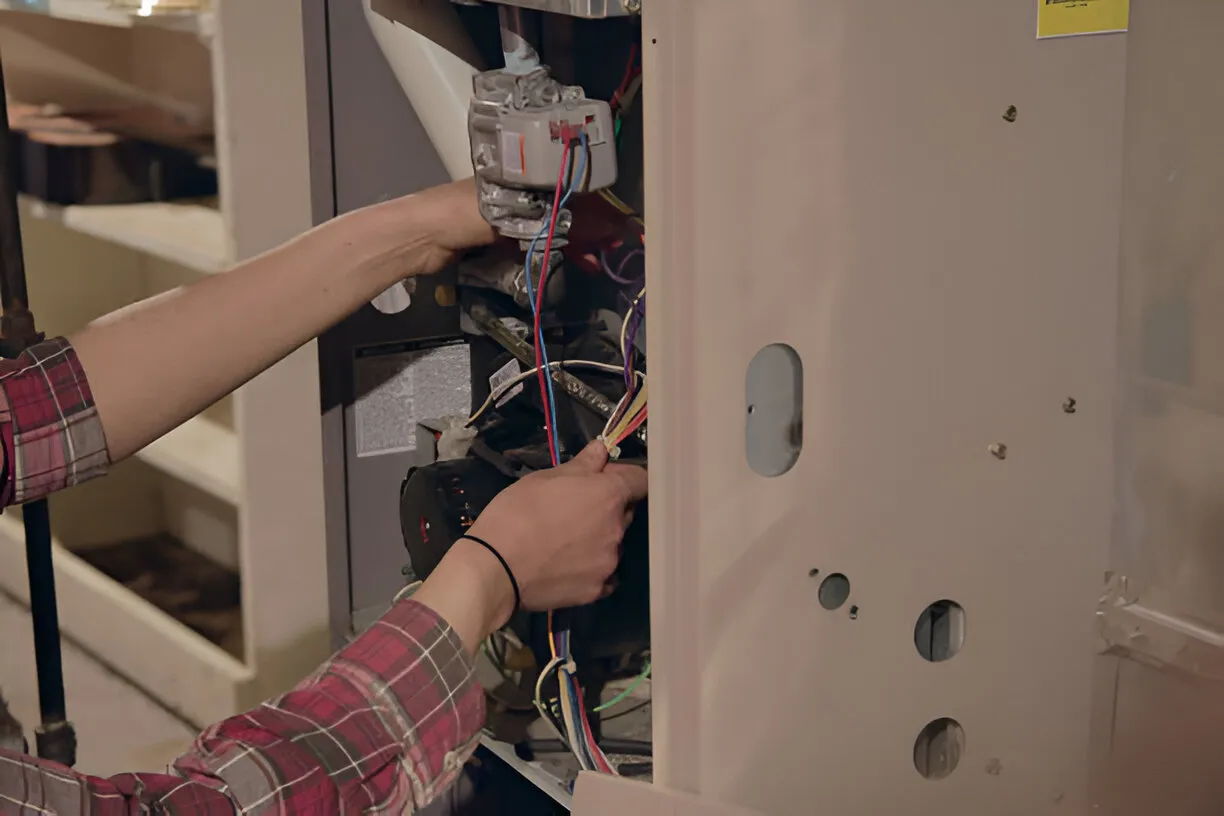
- Placement and secure mounting of the new furnace and any new venting or flue
- Connection to fuel, electrical, condensate, and thermostat controls
- Duct modifications, sealing, and any necessary insulation upgrades
- Initial power-up and system checkout
Crews work methodically to maintain a clean work area and restore any disturbed finishes when possible.
Safety and efficiency commissioning
After physical installation, thorough commissioning ensures safe, efficient operation:
- Combustion analysis and carbon monoxide testing confirm proper combustion and venting.
- Static pressure and airflow checks verify duct performance so the furnace delivers designed airflow without excessive resistance.
- Thermostat calibration and zoning checks ensure accurate temperature control.
- Safety devices such as limit switches, rollout switches, and gas shutoff valves are tested.
- For condensing furnaces, condensate drain function and trap integrity are verified.
- The homeowner receives a walkthrough that explains system operation and recommended maintenance items.
Manufacturer warranty enrollment and documentation
Warranty protection matters. Typical steps include:
- Providing and reviewing the manufacturer’s warranty information and any registration requirements
- Completing registration paperwork or online enrollment on the homeowner’s behalf at installation when applicable
- Issuing a work-order that documents model and serial numbers, installation date, and service records — all useful if warranty service becomes necessary
- Explaining what is covered by the manufacturer warranty (parts and manufacturing defects) versus any labor warranty provided by the installer
Keeping the installation paperwork, receipts, and registration confirmation is important for future claims or home resale.
Brands supported
Many homeowners prefer reputable brands known for reliability and local serviceability. Typical brands supported include:
- Trane
- Carrier
- Lennox
- Daikin
- Amana
- Honeywell controls and thermostats
- Rheem and Goodman (common replacements)Installer knowledge of these brands ensures proper installation, correct part selection, and accurate warranty processing.
What homeowners can expect on installation day
On the day of installation, expect a professional, organized process:
- Technicians arrive within a scheduled window and identify themselves
- Work areas are protected with drop cloths and shoe covers
- The old furnace is safely disconnected and removed
- Crews communicate any unexpected issues (for example, required duct repairs or vent relocation) and document recommended next steps
- After installation, technicians run all safety and performance checks and leave your home tidy
- You receive a tour of system operation, filter locations, thermostat settings, and warranty paperwork
Plan for installers to be on site for several hours depending on the scope of work. Clear access to the equipment area helps the process go smoothly.
Long-term benefits and maintenance tips
A professionally installed furnace delivers better comfort, lower heating bills, and longer equipment life. To protect that investment:
- Schedule an annual pre-winter tune-up to keep burners, controls, and filters in top condition
- Replace or clean filters every 1 to 3 months depending on use and filter type
- Keep supply registers and returns unobstructed
- Install and maintain carbon monoxide detectors near sleeping areas
- Consider duct sealing and insulation improvements to enhance overall system efficiency
A correctly specified and installed furnace tuned for Louisville, CO conditions will provide dependable warmth, safe operation, and peak efficiency through many winters.
Promotions
Save on seasonal system checks from a local team that treats your home like our own.

Testimonials
Neighbors trust Quality Heating & Air for honest work and fair pricing.