Quality Heating and Air Reviews: Technical Diagnostics for Fall Furnace Troubleshooting

The Initial Fall Furnace Startup: Recognizing Normal vs. Abnormal Symptoms
Your thermostat clicks, the blower kicks on, and instead of a comforting wave of warm air, you are hit with a harsh burning odor—or worse, the system abruptly shuts down after just a minute. When searching for home maintenance tips and troubleshooting during the first chilly weeks of the year, the biggest challenge is determining whether these initial symptoms are simply normal dust burn-off or a dangerous mechanical failure requiring an immediate professional shutdown. Understanding what happens inside your heating system is the first step toward a safe and comfortable winter.
During that crucial October pre-winter heating startup, your system is waking up from months of dormancy. This transition period is the critical window for identifying mechanical faults before freezing weather sets in and emergency situations arise. In our years of servicing HVAC systems across Northglenn, our team at Quality Heating & Air has seen exactly how valuable understanding your system's mechanics can be. We believe true brand trust is built on transparent, technical diagnostics rather than guesswork. To see how a meticulous diagnostic approach makes a difference for our local neighbors, you can read Quality Heating and Air reviews.
Addressing these early warning signs requires a neutral, expert perspective. There is no need for alarmism when you first notice a strange smell or an odd cycling pattern, but there is a strict need for safety. By learning to distinguish between routine startup quirks and genuine mechanical hazards, you protect your equipment from unnecessary wear and ensure your home remains safe throughout the coldest months.
The Sequence of Operations: What Happens Inside Your Furnace
To accurately troubleshoot your heating system, you first need to understand its sequence of operations. This is the step-by-step mechanical process your furnace undergoes every single time it receives a call for heat. When a heating system fails, this sequence acts as a diagnostic roadmap for our technicians, allowing them to pinpoint exactly where the process broke down.
The standard startup sequence follows these precise steps:
1. Thermostat Call for Heat: The cycle begins when the indoor temperature drops below your set point, sending a low-voltage signal to the furnace control board.
2. Draft Inducer Motor Engagement: Before any gas is released, a small fan called the draft inducer turns on. This clears out any lingering combustion gases from the heat exchanger and ensures the flue is clear for safe venting.
3. Pressure Switch Verification: A safety switch verifies that the draft inducer is creating the proper negative pressure. If the flue is blocked (by a bird's nest, debris, or ice), this switch will not close, and the furnace will safely halt the startup sequence.
4. Igniter Activation: Once airflow is verified, the hot surface igniter receives electrical current and glows orange-hot (or a spark igniter begins clicking), preparing to light the fuel.
5. Gas Valve Opening and Flame Verification: The gas valve opens, releasing fuel across the igniter. A flame sensor immediately checks for the presence of a steady fire. If no flame is detected within a few seconds, the system shuts the gas valve off to prevent a dangerous buildup of raw gas.
6. Blower Motor Circulation: After the heat exchanger warms up—usually taking about 30 to 60 seconds—the main blower motor engages to push air over the hot metal and distribute warmth throughout your home.
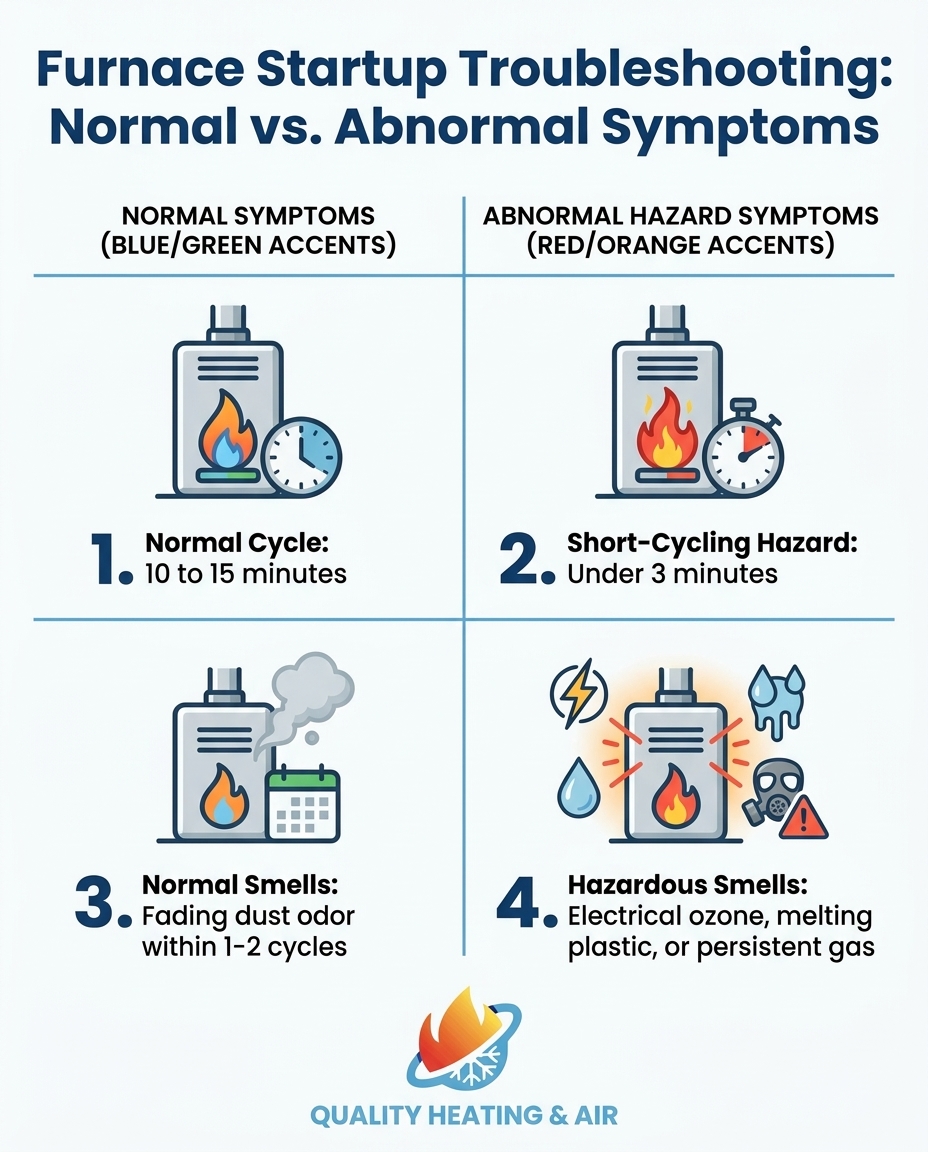
Under normal conditions, a standard furnace cycle should last 10 to 15 minutes to properly distribute heat and maintain a consistent indoor temperature. Understanding this sequence is strictly educational; it helps you communicate effectively with a technician, but it does not serve as a guide for opening sealed components or bypassing safety switches yourself.
Decoding Furnace Smells: Dust Burn-Off or Mechanical Hazard?
One of the most common concerns we hear during the initial fall startup is a distinct burning odor spreading through the vents. In most cases, this is a harmless physical reaction. Over the long summer months, microscopic particles of dust, pet dander, and skin cells settle directly onto the cold metal of your heat exchanger. When those burners ignite for the first time in October, that settled debris instantly incinerates.
This normal dust burn-off typically dissipates within the first one to two heating cycles. However, not all smells are harmless. Contrasting normal odors with hazardous ones is crucial for home safety. If you detect certain chemical or electrical smells, you must immediately power down the unit at the thermostat and the breaker.
Use this diagnostic table to evaluate initial startup odors:
• Dusty / Musty Burning — Likely Cause: Summer dust accumulation burning off the heat exchanger. — Expected Timeline: Fades within 1 to 2 standard cycles. — Required Action: Monitor the system; ensure the home is ventilated if sensitive to smells.
• Electrical / Ozone — Likely Cause: Overheating blower motor, failing capacitor, or frayed wiring. — Expected Timeline: Does not fade; worsens as the system runs. — Required Action: Power down immediately. Requires professional electrical diagnostics.
• Melting Plastic — Likely Cause: Foreign object in the ductwork or melting wire insulation. — Expected Timeline: Persistent and highly toxic. — Required Action: Power down immediately. Do not run the system until cleared.
• Rotten Eggs / Sulfur — Likely Cause: Raw natural gas leak or failing gas valve. — Expected Timeline: Immediate and dangerous. — Required Action: Evacuate the home, call the utility company, and contact a technician.
When a heating system emits an odor that falls into the hazardous categories above, the right next step is always professional intervention. Ignoring an electrical or gas-related smell can lead to catastrophic equipment failure or severe safety risks.
Diagnosing Furnace Short-Cycling: The Three-Minute Rule
If your furnace fires up, produces heat for a brief moment, and then abruptly shuts down, you are likely experiencing a mechanical issue known as short-cycling. A key diagnostic metric our team watches for is the three-minute rule: any furnace cycle duration dropping under 3 minutes is a definitive red flag that the system is protecting itself from internal damage.
Short-cycling is incredibly hard on your equipment. Rapid on-and-off cycling forces the motors to start repeatedly, drawing excessive electrical current and accelerating mechanical wear and tear. Over time, a furnace that is allowed to short-cycle will experience premature blower motor failure and a cracked heat exchanger. Addressing this early is a core component of any comprehensive HVAC maintenance plan.
Common Triggers for Rapid Shut-Offs
• Severely clogged air filters: When a filter is packed with dirt, it restricts the return air entering the system. Without enough cool air flowing over the heat exchanger, the internal temperature spikes rapidly. The high-limit switch detects this dangerous overheating and trips the system off to prevent a fire.
• Blocked or closed supply vents: Closing vents in unused rooms alters the static pressure of your ductwork. This creates a bottleneck, trapping hot air inside the furnace cabinet and once again tripping the high-limit safety switch.
• Dirty flame sensors: If the flame sensor becomes coated in carbon buildup, it cannot detect the burner flame. The control board assumes the gas is not igniting and shuts the valve down within seconds to prevent raw gas from pooling in your home.
Understanding these triggers helps you recognize that short-cycling is not a nuisance—it is a critical safety mechanism doing its job. When the system repeatedly shuts down under the three-minute mark, it is actively preventing its own destruction.
Safe Homeowner Checks vs. Professional Interventions
When you encounter a startup issue, it is vital to know where safe homeowner maintenance ends and where licensed professional work begins. There are several safe, basic checks you can perform before calling for backup, which can sometimes resolve minor airflow or power issues.
Safe troubleshooting steps include:
• Verifying thermostat settings: Ensure the system is actually set to "Heat" and that the temperature is set at least three degrees above the current room temperature. Check the batteries if the screen is blank.
• Changing the air filter: A fresh, clean filter is the number one defense against overheating and short-cycling. Always check this first if your system is shutting down prematurely.
• Ensuring all vents are open: Walk through your home and verify that rugs, furniture, or heavy curtains are not blocking your return grilles or supply registers.
However, there is a hard line you must never cross. Explicitly, you must never open the sealed combustion chamber, attempt to clean a delicate flame sensor with improper tools, or tamper with the gas valves. Furthermore, attempting to bypass safety switches—like wiring around a tripping limit switch to force the heat to stay on—is a critical fire hazard.
When a heating system fails due to internal sensor errors, failing draft inducers, or gas pressure irregularities, the right next step is professional diagnostics. Licensed technicians carry the multimeters, manometers, and specialized training required to safely test these highly volatile components without putting your home at risk.
Building Trust Through Transparent Heating Diagnostics
The anxiety of a failing furnace is often compounded by the fear of an expensive replacement. A thorough, transparent diagnostic process is the antidote to that anxiety, preventing unnecessary full-system replacements when a targeted repair will suffice.
Just last fall, our service team helped a Northglenn homeowner who faced a situation where their system failed completely during a cold snap. They feared a costly, brand-new furnace purchase was inevitable because of the severity of the shutdown. Instead of pushing an equipment replacement, our transparent diagnostic process revealed the true root cause. By walking the homeowner through the exact failing component—rather than guessing or assuming the worst—our technician successfully repaired the existing unit. This exact approach saved the customer from unnecessary expenses and spared them the headache of buying a new unit.
This level of transparency is a core brand differentiator for us at Quality Heating & Air. When a professional takes the time to explain every step of the repair process and provides honest recommendations, you gain peace of mind. You learn exactly what a dirty sensor looks like compared to a critically cracked heat exchanger. Accurate root-cause analysis not only prevents frustration but also ensures that when major repairs, replacements, or qualifying energy rebates are genuinely on the table, you have clear bid comparisons and a foundation of fair, honest guidance to rely on.
Preparing for Winter Extremes: System Transitions
As the seasons shift, your entire HVAC infrastructure undergoes significant stress. Here in Northglenn, our technicians see firsthand how Colorado's extreme temperature swings mean that October nights frequently drop near or below freezing, demanding immediate furnace reliability. This abrupt nature of seasonal temperature drops forces systems to switch from cooling to heating rapidly, leaving no room for delayed maintenance.
Before you completely shut down your summer equipment, it is important to finalize any lingering warm-weather system needs. If your cooling system was struggling in September, evaluating your air conditioning solutions now prevents a nasty surprise next spring. Addressing AC maintenance and service before covering the condenser for winter ensures the entire climate control ecosystem is balanced.
Proactive testing during this transition phase prevents emergency no-heat situations during the first hard freeze. When you know both sides of your HVAC system have been evaluated, cleaned, and verified by a professional, you gain the ultimate peace of mind. A verified, fully operational system means you can sleep soundly, knowing your home will remain safe and warm regardless of how drastically the outdoor temperature plummets.
Frequently Asked Questions About Furnace Startup
Why does my heater smell like burning when I first turn it on?
The most common cause of a burning smell during the first startup is dust and debris incinerating on the heat exchanger. Over the summer, particles settle inside the unit, and the initial heat cycle burns them off. This dusty odor is completely normal and should fade within one to two cycles. If the smell resembles melting plastic or electrical ozone, shut the system down immediately.
Why is my furnace short cycling?
Short-cycling occurs when a furnace turns on but shuts down before reaching the desired temperature, typically to protect itself from overheating. The most frequent culprits are severely clogged air filters restricting airflow, blocked vents, or a dirty flame sensor failing to detect ignition. Repeated short-cycling causes severe wear and tear and requires prompt attention to prevent permanent motor damage.
How long should a normal furnace cycle be?
A normal, healthy furnace cycle should last between 10 and 15 minutes to adequately warm the home and distribute air evenly. If your system runs for 20 to 30 minutes constantly, it may be undersized or struggling against extreme cold. Conversely, if the furnace cycle duration is dropping under 3 minutes, the system is short-cycling and requires immediate diagnostic attention.
When should I turn my furnace off if it smells?
You should immediately turn your furnace off if the odor resembles melting plastic, burning wires (an ozone smell), or rotten eggs (sulfur). A dusty or musty smell is normal for the first run of the season, but chemical, electrical, or gas-like odors indicate an active hazard. Power the unit down at the thermostat and breaker, and contact a professional.
Is it safe to run a furnace that keeps shutting off?
No, it is not safe to continually run a furnace that repeatedly shuts down after just a minute or two. This rapid shutting off is the system's safety limit switch tripping to prevent a fire or a gas buildup. Forcing the system to run in this state can crack the heat exchanger or burn out the blower motor, turning a minor repair into a major replacement.
Securing Reliable Heating Before the Freeze
Navigating the initial fall startup of your heating system comes down to understanding the mechanics behind the symptoms. Knowing the critical difference between harmless dust burn-off and hazardous short-cycling empowers you to make smart, safe decisions for your home. When your furnace cycle duration drops under 3 minutes, or persistent electrical odors fill the air, recognizing those red flags early is your best defense against winter breakdowns.
Trusting a local expert ensures that you receive safe, transparent diagnostics rather than high-pressure sales tactics. A clear mechanical explanation of your system's health, combined with safe homeowner-level checks, provides true peace of mind. If your system is exhibiting any mechanical red flags during its October startup, do not wait for the first blizzard to strike. Secure your home's comfort by scheduling professional heating services today, ensuring your family stays safe and warm all season long.

Testimonials
Neighbors trust Quality Heating & Air for honest work and fair pricing.
Service Areas