The Vintage Homeowner's Guide to Ductless Mini Split Systems
## I'm considering a ductless system for my older home. What are the mini split pros and cons for older homes in Thornton?
Mini split pros and cons for older homes come down to a simple trade-off: these ductless systems are easier to install and more energy-efficient than traditional HVAC, though they involve visible indoor units and specific electrical considerations.
Quick Answer: Mini Split Pros and Cons for Older Homes
Pros:
- No ductwork needed - only a 3-inch wall hole required - Up to 30% more energy-efficient than traditional HVAC systems - Zoned comfort lets you heat or cool individual rooms - Quiet operation - some units run as low as 24 decibels - Preserves plaster walls, trim, and historic architectural features - Works as both a heater and air conditioner year-round - Can improve indoor air quality with advanced filtration
Cons:
- Visible wall-mounted indoor units may not suit every interior style - Older homes may need electrical panel upgrades before installation - Performance can drop in extreme cold without a supplemental heat source - Poor insulation in older homes can reduce overall efficiency - Multiple units needed for whole-home coverage
Older homes have a lot going for them - character, craftsmanship, and charm you just can't find in new construction. But keeping them comfortable? That's a different story. If your Thornton home was built before central air conditioning became standard, you've probably dealt with rooms that are too hot in summer, too cold in winter, and energy bills that seem way too high for the comfort you're actually getting.
Ductless mini split systems have become one of the most popular solutions for exactly this problem. They sidestep the biggest obstacle in older homes - the lack of ductwork - without requiring you to tear open walls or sacrifice the features that make your home special. But they're not a perfect fit for every situation, and it's worth understanding the full picture before making a decision.
Understanding Ductless Technology for Historic Properties
To understand why these systems are such a game-changer for vintage properties, we first need to look at how they work. A Mini Split system consists of two main parts: an outdoor compressor (or condenser) and one or more indoor air-handling units.
Unlike traditional central air that forces air through a maze of metal ducts, mini splits use thin refrigerant lines to move heat. In the summer, the indoor unit absorbs heat from your room and sends it outside. In the winter, the process reverses, pulling heat from the outdoor air to warm your home.
The "secret sauce" of modern mini splits is inverter technology. Traditional HVAC systems are either 100% on or 100% off, which leads to uncomfortable temperature swings and high energy usage. Inverters work more like a dimmer switch, constantly adjusting the compressor speed to meet the exact cooling or heating needs of the room. This makes them incredibly efficient for older homes that might have drafty windows or uneven layouts.
The Major Mini Split Pros and Cons for Older Homes
When we talk about mini split pros and cons for older homes, the biggest "pro" is often the preservation of the home itself. Installing traditional ductwork in a 1920s bungalow or a mid-century ranch often means lowering ceilings, creating unsightly bulkheads, or tearing into original plaster and lath walls.
Mini splits bypass this destruction. Because the indoor and outdoor units are connected by a small bundle of cables and pipes, we only need to drill a three-inch hole in an exterior wall. This allows us to keep your historic crown molding and decorative plaster intact.
Energy Efficiency Comparison
| Feature | Traditional Ducted HVAC | Ductless Mini Split | | --- | --- | --- | | Energy Loss | 20% - 30% via duct leaks | Near 0% (no ducts) | | Cooling Efficiency | Typically 14 - 20 SEER2 | Up to 28.5 - 30 SEER2 | | Heating Efficiency | Varies | Up to 18 HSPF2 | | Zoning | Whole-house (all or nothing) | Room-by-room control |
By eliminating ductwork, you eliminate the energy loss associated with leaky, uninsulated ducts in attics or crawlspaces. This is why Mini Split Systems Far Horizons are often cited as being up to 30% more efficient than traditional systems.
Weighing the Mini Split Pros and Cons for Older Homes: Efficiency vs. Aesthetics
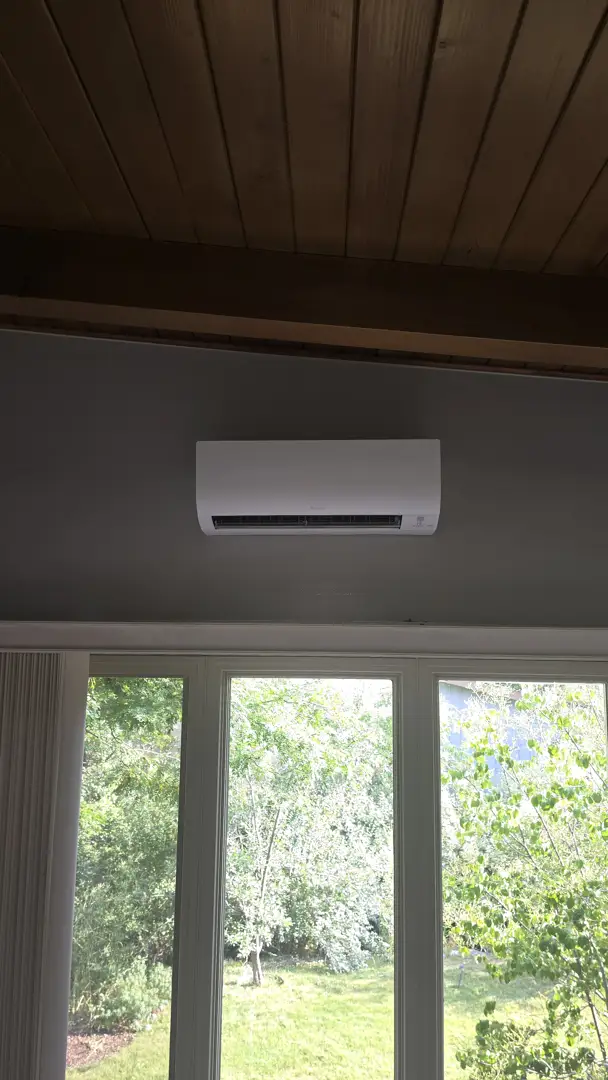
We know that for many vintage homeowners, aesthetics are a major concern. The most common "con" is the visibility of the indoor unit. While modern units are sleek and designed to blend in, they are still mounted on the wall.
However, the trade-off is unparalleled comfort through zoning. In an older home, you might have a sunroom that's sweltering or a bedroom above the garage that's freezing. With a mini split, you can set the temperature for that specific room without affecting the rest of the house.
Furthermore, these systems are "whisper-quiet." High-quality indoor units can operate at sound levels as low as 24 decibels—that's quieter than a whisper or rustling leaves. If you're currently using a noisy window unit that rattles your window frames, a Mini Split Replacement Denver will feel like a massive upgrade in peace and quiet.
Are the Mini Split Pros and Cons for Older Homes Different in Cold Climates?
In Colorado, we have to talk about the cold. Modern mini splits are heat pumps, meaning they handle both heating and cooling. Some homeowners worry that they won't keep up when the temperature drops in Thornton or Northglenn.
While it's true that older heat pump technology struggled in sub-zero weather, today’s "hyper-heat" models are designed for extreme temperatures. They feature a defrost mode to prevent ice buildup on the outdoor coil and can provide reliable heat even when it's well below freezing outside.
That said, if your older home has very poor insulation, the system will have to work harder. In some cases, we recommend keeping your existing radiators or furnace as a supplemental heat source for those rare, record-breaking cold snaps. If your system ever struggles during a freeze, professional Mini Split Repair Westminster can ensure your sensors and defrost cycles are working correctly.
Why Ductless Systems Outperform Traditional HVAC in Vintage Layouts
Traditional HVAC was designed for modern homes with "open concepts" and plenty of space for large metal trunks. Older homes often have "closed" floor plans with many small rooms and thick walls.
In these layouts, a central system often fails to distribute air evenly. You end up with "hot spots" and "cold spots." Mini splits solve this by placing the air handler exactly where the comfort is needed.
When comparing Central AC vs Ductless Mini Split Comparison, mini splits almost always win on flexibility. You can start by installing a unit in the primary bedroom and add more units to other rooms later. This scalability is perfect for homeowners who are renovating their vintage properties one room at a time.
Mini splits generally offer higher SEER ratings (up to 30 SEER), making them the more energy-efficient choice for long-term savings. If you're dealing with a complex layout, Mini Split Installation Repair Brighton experts can help determine the best placement for maximum airflow.
Installation and Maintenance: What to Expect in an Older Structure
The installation process for a mini split is significantly less invasive than a ducted system. As mentioned, we only need a three-inch hole to connect the indoor and outdoor components. Most installations can be completed in a single day.
However, there are two "older home" factors to consider:
1. Electrical Upgrades: Many historic homes in Northglenn still have 60-amp or 100-amp electrical panels. A multi-zone mini split system may require an upgrade to a 200-amp panel to handle the load. 2. Wall Construction: Mounting a unit on plaster and lath requires a bit more care than mounting on modern drywall. We ensure the mounting brackets are securely anchored to the studs to prevent any damage to your vintage walls.
Maintenance is straightforward but essential. You should clean the filters in each indoor unit every month—just rinse them in the sink and let them dry. For the technical side, we recommend an annual Mini Split Tune Up Thornton to check refrigerant levels, clear the condensate drain lines, and inspect the outdoor compressor.
Preserving Your Home's Character During Installation
If you're worried about a wall-mounted unit clashing with your Victorian wallpaper, you have options!
- Ceiling Cassettes: These sit flush with the ceiling, with only a small grille visible. - Floor-Standing Units: These look similar to a modern radiator and can be placed low on the wall, often tucked under windows. - Concealed Duct Units: For attic or basement conversions, we can hide a small air handler and run very short, hidden ducts to nearby rooms.
When we plan your Mini Split Replacement Brighton, we look for creative conduit placement—often running the lines along the exterior or hiding them behind decorative downspouts—to keep your home's curb appeal intact.
Maximizing Comfort and Resale Value in Thornton
Does a mini split increase your home's value? In most cases, yes. Homebuyers today are looking for energy efficiency and modern comfort. Adding a high-efficiency cooling system to a home that previously relied on window units or had no AC at all is a major selling point.
Beyond the temperature, mini splits offer improved indoor air quality. Traditional ducts can act as "dust collectors," circulating pet dander, pollen, and dust throughout the house every time the fan kicks on. Ductless systems feature advanced, multi-stage filtration that traps these allergens right at the source.
When you look at the Mini Split Installation Longmont options, you'll see units with high SEER2 ratings. These ratings aren't just numbers; they represent significant monthly savings on utility bills, which is a benefit that stays with the home for the next 15 to 20 years.
Frequently Asked Questions about Mini Splits in Older Homes
Do mini splits use a lot of electricity in drafty homes?
Because of their inverter technology, mini splits are actually very efficient in drafty homes compared to traditional systems. They adjust their output in real-time rather than constantly cycling on and off. However, we always recommend sealing air leaks around old windows and adding attic insulation to get the most out of your investment.
Will installing a mini split devalue my historic home?
Quite the opposite! While some purists may dislike the look of a wall unit, the majority of buyers value the "invisible" benefit of modern climate control and lower utility bills. Using low-profile mounting options or ceiling cassettes can help satisfy even the most design-conscious buyers.
Can a mini split handle humidity in a vintage basement?
Yes! Mini splits are excellent at dehumidifying. When they run in cooling mode, they naturally pull moisture from the air. Many models even have a dedicated "dry mode" that focuses specifically on removing humidity without over-cooling the room—perfect for those damp Colorado basements.
Conclusion
At Quality Heating and Air, we believe that living in a vintage home shouldn't mean sacrificing modern comfort. Navigating the mini split pros and cons for older homes is about finding the right balance between preserving history and embracing efficiency.
Whether you're looking to cool a single "problem room" or want a whole-home solution that respects your property's architectural integrity, we're here to help. From Northglenn to Thornton, we treat every home like our own, ensuring your system is sized correctly and installed with the care your historic house deserves.
Ready to see how ductless technology can transform your home? Visit our Mini Split Main Page to learn more or schedule a consultation today!

Testimonials
Neighbors trust Quality Heating & Air for honest work and fair pricing.
Really happy with my overall experience. They worked neatly, quickly, and taught me MUCH along the way. Gave great advice, helped me with a side concern, that was holding me up; and finished in time for my Dentist visit. I would highly recommend this business, and the price was a pure blessing. GREAT local company and I wasn't bribed for my review 🙃 thx guys!
Bonnie B.
Fred was very knowledgeable, he repaired an old rusted iron pipe that was part of the original house build. I thought the repair would be more costly than what Fred qouted me including parts and labor. Fred made the repair after 5pm, after getting the necessary parts and he was very clean because he put down a cloth on the bathroom floor while working. I would highly recommend Fred for service in the future and I will use Quality's services again in the future.
Chris S.
Fred did a wonderful job diagnosing our air conditioning issue, presenting options available, and installing the new unit we needed. In addition to being a truly nice person, Fred was very knowledgable and professional, and we highly recommend him. Thank you Fred!
James D.
Fred was great and explained our issues we had and fixes we needed in an easy to understand way. Will ask for him next time.
Justin F.
Great service, Fred was able to show up the same day we had a problem and get everything fixed. Very knowledgeable and did not pressure us to spend money we didn’t need to spend. I would recommend to a friend without question.
Kyle F.
Fred Gottschalk performed a miracle with the furnace. He is by far the most knowledgeable HVAC professional I know to date. He knew everything about my furnace and replaced an old blower. The blower is far superior over the OEM one. I did the right thing choosing Fred!
Marty P.
I had an amazing experience with Fred Gottschalk! From the moment he came in to the moment he left he was very personable and made me feel good about my decision to call this company for assistance. I love the fact that they prioritize a personal touch making sure whoever comes to your door will remain your tech every time you call in. One thing he told me that gained my trust is that he will take care of my furnace the way he would want someone to take care of his granny’s. Thank you Quality heating and air, and thank you Fred!
Monica G.
Our technician Fred was excellent. Arrived on time, communicated well and was very knowledgable. Highly recommend and will continue to use these guys.
Nancy S.
Fred was great! He was friendly and informative, answered all of our questions and even got along with our cat (also named Fred). Would highly recommend!
Sadie P.
Highly recommend. Easy scheduling process and our technician Fred was on time, very professional, and knowledgeable on all things in the mechanical world. Took time to educate us and fix the issues we had.
Scott F.
Really happy with my overall experience. They worked neatly, quickly, and taught me MUCH along the way. Gave great advice, helped me with a side concern, that was holding me up; and finished in time for my Dentist visit. I would highly recommend this business, and the price was a pure blessing. GREAT local company and I wasn't bribed for my review 🙃 thx guys!
Bonnie B.
Fred was very knowledgeable, he repaired an old rusted iron pipe that was part of the original house build. I thought the repair would be more costly than what Fred qouted me including parts and labor. Fred made the repair after 5pm, after getting the necessary parts and he was very clean because he put down a cloth on the bathroom floor while working. I would highly recommend Fred for service in the future and I will use Quality's services again in the future.
Chris S.
Fred did a wonderful job diagnosing our air conditioning issue, presenting options available, and installing the new unit we needed. In addition to being a truly nice person, Fred was very knowledgable and professional, and we highly recommend him. Thank you Fred!
James D.
Fred was great and explained our issues we had and fixes we needed in an easy to understand way. Will ask for him next time.
Justin F.
Great service, Fred was able to show up the same day we had a problem and get everything fixed. Very knowledgeable and did not pressure us to spend money we didn’t need to spend. I would recommend to a friend without question.
Kyle F.
Fred Gottschalk performed a miracle with the furnace. He is by far the most knowledgeable HVAC professional I know to date. He knew everything about my furnace and replaced an old blower. The blower is far superior over the OEM one. I did the right thing choosing Fred!
Marty P.
I had an amazing experience with Fred Gottschalk! From the moment he came in to the moment he left he was very personable and made me feel good about my decision to call this company for assistance. I love the fact that they prioritize a personal touch making sure whoever comes to your door will remain your tech every time you call in. One thing he told me that gained my trust is that he will take care of my furnace the way he would want someone to take care of his granny’s. Thank you Quality heating and air, and thank you Fred!
Monica G.
Our technician Fred was excellent. Arrived on time, communicated well and was very knowledgable. Highly recommend and will continue to use these guys.
Nancy S.
Fred was great! He was friendly and informative, answered all of our questions and even got along with our cat (also named Fred). Would highly recommend!
Sadie P.
Highly recommend. Easy scheduling process and our technician Fred was on time, very professional, and knowledgeable on all things in the mechanical world. Took time to educate us and fix the issues we had.
Scott F.
Really happy with my overall experience. They worked neatly, quickly, and taught me MUCH along the way. Gave great advice, helped me with a side concern, that was holding me up; and finished in time for my Dentist visit. I would highly recommend this business, and the price was a pure blessing. GREAT local company and I wasn't bribed for my review 🙃 thx guys!
Bonnie B.
Fred was very knowledgeable, he repaired an old rusted iron pipe that was part of the original house build. I thought the repair would be more costly than what Fred qouted me including parts and labor. Fred made the repair after 5pm, after getting the necessary parts and he was very clean because he put down a cloth on the bathroom floor while working. I would highly recommend Fred for service in the future and I will use Quality's services again in the future.
Chris S.
Fred did a wonderful job diagnosing our air conditioning issue, presenting options available, and installing the new unit we needed. In addition to being a truly nice person, Fred was very knowledgable and professional, and we highly recommend him. Thank you Fred!
James D.
Fred was great and explained our issues we had and fixes we needed in an easy to understand way. Will ask for him next time.
Justin F.
Great service, Fred was able to show up the same day we had a problem and get everything fixed. Very knowledgeable and did not pressure us to spend money we didn’t need to spend. I would recommend to a friend without question.
Kyle F.
Fred Gottschalk performed a miracle with the furnace. He is by far the most knowledgeable HVAC professional I know to date. He knew everything about my furnace and replaced an old blower. The blower is far superior over the OEM one. I did the right thing choosing Fred!
Marty P.
I had an amazing experience with Fred Gottschalk! From the moment he came in to the moment he left he was very personable and made me feel good about my decision to call this company for assistance. I love the fact that they prioritize a personal touch making sure whoever comes to your door will remain your tech every time you call in. One thing he told me that gained my trust is that he will take care of my furnace the way he would want someone to take care of his granny’s. Thank you Quality heating and air, and thank you Fred!
Monica G.
Our technician Fred was excellent. Arrived on time, communicated well and was very knowledgable. Highly recommend and will continue to use these guys.
Nancy S.
Fred was great! He was friendly and informative, answered all of our questions and even got along with our cat (also named Fred). Would highly recommend!
Sadie P.
Highly recommend. Easy scheduling process and our technician Fred was on time, very professional, and knowledgeable on all things in the mechanical world. Took time to educate us and fix the issues we had.
Scott F.
Really happy with my overall experience. They worked neatly, quickly, and taught me MUCH along the way. Gave great advice, helped me with a side concern, that was holding me up; and finished in time for my Dentist visit. I would highly recommend this business, and the price was a pure blessing. GREAT local company and I wasn't bribed for my review 🙃 thx guys!
Bonnie B.
Fred was very knowledgeable, he repaired an old rusted iron pipe that was part of the original house build. I thought the repair would be more costly than what Fred qouted me including parts and labor. Fred made the repair after 5pm, after getting the necessary parts and he was very clean because he put down a cloth on the bathroom floor while working. I would highly recommend Fred for service in the future and I will use Quality's services again in the future.
Chris S.
Fred did a wonderful job diagnosing our air conditioning issue, presenting options available, and installing the new unit we needed. In addition to being a truly nice person, Fred was very knowledgable and professional, and we highly recommend him. Thank you Fred!
James D.
Fred was great and explained our issues we had and fixes we needed in an easy to understand way. Will ask for him next time.
Justin F.
Great service, Fred was able to show up the same day we had a problem and get everything fixed. Very knowledgeable and did not pressure us to spend money we didn’t need to spend. I would recommend to a friend without question.
Kyle F.
Fred Gottschalk performed a miracle with the furnace. He is by far the most knowledgeable HVAC professional I know to date. He knew everything about my furnace and replaced an old blower. The blower is far superior over the OEM one. I did the right thing choosing Fred!
Marty P.
I had an amazing experience with Fred Gottschalk! From the moment he came in to the moment he left he was very personable and made me feel good about my decision to call this company for assistance. I love the fact that they prioritize a personal touch making sure whoever comes to your door will remain your tech every time you call in. One thing he told me that gained my trust is that he will take care of my furnace the way he would want someone to take care of his granny’s. Thank you Quality heating and air, and thank you Fred!
Monica G.
Our technician Fred was excellent. Arrived on time, communicated well and was very knowledgable. Highly recommend and will continue to use these guys.
Nancy S.
Fred was great! He was friendly and informative, answered all of our questions and even got along with our cat (also named Fred). Would highly recommend!
Sadie P.
Highly recommend. Easy scheduling process and our technician Fred was on time, very professional, and knowledgeable on all things in the mechanical world. Took time to educate us and fix the issues we had.
Scott F.
Service Areas

Testimonials
Neighbors trust Quality Heating & Air for honest work and fair pricing.
Service Areas