How to Get Paid for Upgrading Your Colorado HVAC

## How Colorado Homeowners Are Getting Paid to Upgrade Their HVAC
Colorado energy rebates for HVAC upgrades are available right now through a combination of federal and state programs that can cover a significant portion — or even the full cost — of installing a high-efficiency heat pump or other qualifying equipment in your home.
Here is a quick look at what is available:
| Upgrade Type | Maximum Rebate | | --- | --- | | Cold-climate heat pump (HVAC) | Up to $8,000 | | Heat pump water heater | Up to $1,750 | | Electrical panel upgrade | Up to $4,000 | | Insulation and air sealing | Up to $1,600 | | Total household maximum (HEAR) | Up to $14,000 |
- Low-income households (at or below 80% AMI): Up to 100% of project costs covered - Moderate-income households (80–150% AMI): Partial coverage, typically up to 50% - All equipment must be ENERGY STAR certified - Rebates are applied at the point of sale — no waiting for a tax refund
Heating and cooling account for roughly half of the energy used in a typical Colorado home. With temperatures that can swing 40 to 50 degrees in a single day, your HVAC system works harder here than almost anywhere else in the country. That means higher utility bills and more wear on your equipment over time.
The good news is that the federal Inflation Reduction Act created two major rebate programs — the Home Electrification and Appliance Rebates (HEAR) and the Home Efficiency Rebates (HER) — both of which are now active in Colorado and managed by the Colorado Energy Office. These programs are designed to lower the upfront cost of switching to high-efficiency electric HVAC equipment, and they work through a straightforward point-of-sale model that reduces what you pay on the day of installation.
Whether you are a homeowner in Thornton, Northglenn, or the surrounding Denver metro area, understanding these programs is the first step toward a more comfortable home and a lower monthly energy bill.
Understanding Colorado Energy Rebates for HVAC Upgrades
The landscape of Energy Efficient HVAC has changed dramatically thanks to the Inflation Reduction Act. Colorado is leading the way in distributing these federal funds to help homeowners transition away from fossil-fuel-based heating and cooling. These programs aren't just about saving money; they are part of a larger state goal to reduce carbon emissions and modernize the power grid. For us in the Thornton and Northglenn areas, this means access to cutting-edge technology that handles our altitude and climate better than ever before.
HEAR vs. HER Programs
While both programs aim to lower your energy bills, they take different paths to get there:
1. Home Electrification and Appliance Rebates (HEAR): This program is all about "swapping." It focuses on replacing gas or propane appliances with electric versions. If you are looking to install a cold-climate heat pump or a heat pump water heater, HEAR is likely the program you'll use. It is strictly income-qualified, prioritizing low-to-moderate-income families. 2. Home Efficiency Rebates (HER): This program focuses on the "whole home." Rather than looking at a single appliance, it looks at how much energy your entire house saves. To qualify for HER rebates, a project must typically achieve at least a 20% reduction in energy usage. This is often the better route for homeowners performing major retrofits, such as combining a new HVAC system with extensive insulation and air sealing.
The Point-of-Sale Rebate Model
The most exciting part of these colorado energy rebates for hvac upgrades is the "point-of-sale" model. In the past, you might have had to pay the full price of a furnace or AC unit upfront, then mail in a form and wait months for a check.
With the current Colorado Energy Office programs, the rebate is applied as an upfront discount on your invoice. As your contractor, we handle the bulk of the administrative work through the state's portal. This means if you qualify for an $8,000 rebate on a heat pump, that amount is deducted directly from your bill before you ever pay us. It makes high-efficiency comfort immediately affordable for families who might not have thousands of dollars sitting in a savings account.
Income Eligibility and AMI Tiers for Maximum Savings
To ensure the money goes where it's needed most, the rebate amounts are tied to your household income relative to your local Area Median Income (AMI). AMI varies by county, so a family in Thornton (Adams County) might have a different threshold than a family in a rural county.
| Household Income Level | Percentage of Project Cost Covered | Maximum HEAR Rebate | | --- | --- | --- | | Low-Income (≤ 80% AMI) | 100% (up to caps) | $14,000 | | Moderate-Income (80-150% AMI) | 50% (up to caps) | $14,000 | | Above 150% AMI | Limited to Tax Credits/Utility Rebates | N/A |
Low-Income vs. Moderate-Income Tiers
If your household earns less than 80% of the AMI, you are in the "Low-Income" tier. For many, this covers the entire cost of a new heat pump installation, including the labor and equipment, up to the $8,000 cap. If you fall between 80% and 150% of the AMI, you are in the "Moderate-Income" tier. In this case, the rebate will cover half of the total project cost, up to the individual equipment caps. Verification is handled through an online portal where you'll provide basic documentation like tax returns or pay stubs.
Community Priority Participants
Colorado also recognizes "Community Priority Participants." This is a unique pathway that allows certain professionals—like teachers, first responders, active military, and even restaurant or retail staff in some mountain communities—to access higher rebate tiers even if their income is slightly above the standard limits. This is part of the state's effort to keep essential workers living in the communities they serve, especially in high-cost areas.
Qualifying Equipment and Maximum Rebate Amounts
Not every piece of equipment qualifies for these massive savings. The equipment must meet strict efficiency standards, typically requiring ENERGY STAR certification or meeting NEEP (Northeast Energy Efficiency Partnerships) cold-climate specifications. Choosing an AC System for Colorado Altitude and Climate requires looking at how these units perform when the air gets thin and the temperatures drop below zero.
Qualifying Equipment for Colorado Energy Rebates for HVAC Upgrades
- Cold-Climate Heat Pumps: These are the "gold standard" for our region. They are designed to provide 100% of your home's heat even when it's sub-zero outside. These qualify for the maximum $8,000 rebate. - Standard Heat Pumps: If you are installing a unit that might need a backup heat source for the coldest nights, you can still receive up to $3,000. - Heat Pump Water Heaters: These units are incredibly efficient, often 3 to 4 times more efficient than traditional electric tanks. You can get up to $1,750 back.
Electrical Panels and Weatherization
One of the biggest hurdles to going all-electric is an outdated electrical panel. Many older homes in Thornton and Northglenn have 60-amp or 100-amp service, which isn't enough to power a modern heat pump and an induction stove.
- Electrical Panel Upgrades: If your HVAC upgrade requires a new panel (typically moving to 200-amp service), the HEAR program offers up to $4,000 to cover that cost. - Weatherization: A high-efficiency furnace or heat pump can't do its job if the air is leaking out of your attic. You can receive up to $1,600 for air sealing and insulation. This is vital because How Colorado Dry Air Affects Indoor Air Quality is often exacerbated by leaky homes that let in dust and pollutants.
Stacking Incentives and the Colorado Heat Pump Tax Credit
One of the best strategies for Colorado homeowners is "stacking." This means taking the state-administered federal rebates and adding them to local utility incentives and federal tax credits.
- 25C Federal Tax Credit: Even if you use a rebate, you may still be eligible for the 2000 federal tax credit for heat pumps. Just remember that you must subtract the rebate amount from the total cost before calculating your tax credit. - Utility Rebates: Providers like Black Hills Energy often offer additional cash back for smart thermostats or high-efficiency cooling. Some even offer virtual home energy assessments that give you $100 cash back just for participating!
Colorado Heat Pump Tax Credit vs. HEAR
It’s important to distinguish between the HEAR rebate and the Colorado Heat Pump Tax Credit. The state tax credit is available to all Coloradans, regardless of income. Like the HEAR rebate, it is usually passed through the contractor as an upfront discount. To qualify, the heat pump must be designed to meet at least 80% of the home's annual heating load. This is a great "safety net" for those whose income is too high for the HEAR program but who still want to save on a new system.
Local Utility Rebates
Local utilities are eager to help you reduce your "peak demand." By installing a heat pump or a smart thermostat, you help the utility manage the grid. Many local providers offer:
- Bill credits for installing ENERGY STAR equipment. - Free energy kits containing LED bulbs and weatherstripping. - Rebates for "beneficial electrification"—the process of switching from gas to electric.
Current Funding Status and Regional Deadlines
As of May 2026, the funding for these programs is in high demand. It is important to know that these funds are distributed on a first-come, first-served basis.
Region 1 vs. Region 2 Availability
The Colorado Energy Office divided the state into two regions.
- Region 1 (Front Range): This includes Adams, Weld, Denver, and other metropolitan counties. Due to the high population density and massive interest, the HEAR Single-Family Program for Region 1 officially closed to new applications after April 27, 2026. - Region 2 (Rest of State): Funding may still be available in more rural counties, but it is being monitored closely.
What does this mean for you? If you missed the Region 1 deadline, don't panic. Funding is often replenished in cycles, and other programs like the HER (Home Efficiency) or the Colorado Heat Pump Tax Credit remain active. We recommend checking the state's HEAR Program Dashboard frequently to see when new funds are released.
Mobile Homes and Multifamily Opportunities
The state has carved out specific tracks for residents who are often overlooked:
- Manufactured/Mobile Homes: Residents of mobile homes can qualify for HER rebates up to $16,000 if the upgrades achieve 35% energy savings. - Multifamily Buildings: If you own or live in a large apartment building, there are retrofitting incentives ranging from $2,000 to $8,000 per unit, provided at least 50% of the residents meet income requirements.
Navigating the Application with a Registered Contractor
You cannot simply buy a heat pump at a big-box store and claim these rebates. The program requires you to work with a registered contractor who is trained in the state's specific requirements and has access to the Neighborly Software portal.
How to Apply for Colorado Energy Rebates for HVAC Upgrades
1. Eligibility Check: Use the state's online tools to verify your AMI tier. 2. Home Assessment: We come to your home to evaluate your current system, electrical capacity, and insulation levels. 3. Project Proposal: We create a formal proposal in the state's portal. This "reserves" your rebate money so it doesn't disappear while we are waiting for parts to arrive. 4. Installation: We install your new high-efficiency system to ENERGY STAR standards. 5. Verification: We submit photos and invoices to the state to finalize the rebate.
Required Documentation and Verification
To keep things moving, have these items ready:
- A government-issued photo ID. - Proof of homeownership (like a property tax statement). - For renters: A signed Landlord Authorization Form. - Income verification (tax returns or proof of participation in programs like LEAP or SNAP).
Frequently Asked Questions about Colorado HVAC Rebates
Can I combine HEAR and HER rebates for the same unit?
No. Federal rules prevent "double-dipping" with these specific grant funds for the exact same piece of equipment. However, you can use HEAR for your heat pump and HER for a whole-home weatherization project, provided they are treated as separate projects with separate energy-saving goals.
Do I have to wait for tax season to get my money?
No! That is the beauty of the point-of-sale model. The rebate amount is taken off your invoice immediately. We, the contractor, wait for the reimbursement from the state, while you enjoy the savings and the comfort of your new system right away.
Are renters eligible for these HVAC upgrades?
Yes! Renters can absolutely benefit from these programs. However, because the equipment becomes a permanent part of the property, you must have written permission from your landlord. The state provides a specific form for this. It’s a win-win: the landlord gets a higher property value, and you get lower monthly utility bills.
Conclusion
Navigating colorado energy rebates for hvac upgrades can feel overwhelming, but the financial rewards are well worth the effort. By switching to a high-efficiency heat pump, you aren't just saving money today—you are "future-proofing" your home against rising energy costs and Colorado's unpredictable weather.
At Quality Heating and Air, we pride ourselves on being your local Thornton HVAC experts. We don't just install equipment; we help you navigate the entire rebate process from start to finish. Our team understands the specific challenges of the Northglenn and Thornton climates, ensuring your new system is sized perfectly for your home's needs.
Ready to see how much you can save? Start your energy-efficient upgrade today and let us help you claim the rebates you deserve.

Testimonials
Neighbors trust Quality Heating & Air for honest work and fair pricing.
Really happy with my overall experience. They worked neatly, quickly, and taught me MUCH along the way. Gave great advice, helped me with a side concern, that was holding me up; and finished in time for my Dentist visit. I would highly recommend this business, and the price was a pure blessing. GREAT local company and I wasn't bribed for my review 🙃 thx guys!
Bonnie B.
Fred was very knowledgeable, he repaired an old rusted iron pipe that was part of the original house build. I thought the repair would be more costly than what Fred qouted me including parts and labor. Fred made the repair after 5pm, after getting the necessary parts and he was very clean because he put down a cloth on the bathroom floor while working. I would highly recommend Fred for service in the future and I will use Quality's services again in the future.
Chris S.
Fred did a wonderful job diagnosing our air conditioning issue, presenting options available, and installing the new unit we needed. In addition to being a truly nice person, Fred was very knowledgable and professional, and we highly recommend him. Thank you Fred!
James D.
Fred was great and explained our issues we had and fixes we needed in an easy to understand way. Will ask for him next time.
Justin F.
Great service, Fred was able to show up the same day we had a problem and get everything fixed. Very knowledgeable and did not pressure us to spend money we didn’t need to spend. I would recommend to a friend without question.
Kyle F.
Fred Gottschalk performed a miracle with the furnace. He is by far the most knowledgeable HVAC professional I know to date. He knew everything about my furnace and replaced an old blower. The blower is far superior over the OEM one. I did the right thing choosing Fred!
Marty P.
I had an amazing experience with Fred Gottschalk! From the moment he came in to the moment he left he was very personable and made me feel good about my decision to call this company for assistance. I love the fact that they prioritize a personal touch making sure whoever comes to your door will remain your tech every time you call in. One thing he told me that gained my trust is that he will take care of my furnace the way he would want someone to take care of his granny’s. Thank you Quality heating and air, and thank you Fred!
Monica G.
Our technician Fred was excellent. Arrived on time, communicated well and was very knowledgable. Highly recommend and will continue to use these guys.
Nancy S.
Fred was great! He was friendly and informative, answered all of our questions and even got along with our cat (also named Fred). Would highly recommend!
Sadie P.
Highly recommend. Easy scheduling process and our technician Fred was on time, very professional, and knowledgeable on all things in the mechanical world. Took time to educate us and fix the issues we had.
Scott F.
Really happy with my overall experience. They worked neatly, quickly, and taught me MUCH along the way. Gave great advice, helped me with a side concern, that was holding me up; and finished in time for my Dentist visit. I would highly recommend this business, and the price was a pure blessing. GREAT local company and I wasn't bribed for my review 🙃 thx guys!
Bonnie B.
Fred was very knowledgeable, he repaired an old rusted iron pipe that was part of the original house build. I thought the repair would be more costly than what Fred qouted me including parts and labor. Fred made the repair after 5pm, after getting the necessary parts and he was very clean because he put down a cloth on the bathroom floor while working. I would highly recommend Fred for service in the future and I will use Quality's services again in the future.
Chris S.
Fred did a wonderful job diagnosing our air conditioning issue, presenting options available, and installing the new unit we needed. In addition to being a truly nice person, Fred was very knowledgable and professional, and we highly recommend him. Thank you Fred!
James D.
Fred was great and explained our issues we had and fixes we needed in an easy to understand way. Will ask for him next time.
Justin F.
Great service, Fred was able to show up the same day we had a problem and get everything fixed. Very knowledgeable and did not pressure us to spend money we didn’t need to spend. I would recommend to a friend without question.
Kyle F.
Fred Gottschalk performed a miracle with the furnace. He is by far the most knowledgeable HVAC professional I know to date. He knew everything about my furnace and replaced an old blower. The blower is far superior over the OEM one. I did the right thing choosing Fred!
Marty P.
I had an amazing experience with Fred Gottschalk! From the moment he came in to the moment he left he was very personable and made me feel good about my decision to call this company for assistance. I love the fact that they prioritize a personal touch making sure whoever comes to your door will remain your tech every time you call in. One thing he told me that gained my trust is that he will take care of my furnace the way he would want someone to take care of his granny’s. Thank you Quality heating and air, and thank you Fred!
Monica G.
Our technician Fred was excellent. Arrived on time, communicated well and was very knowledgable. Highly recommend and will continue to use these guys.
Nancy S.
Fred was great! He was friendly and informative, answered all of our questions and even got along with our cat (also named Fred). Would highly recommend!
Sadie P.
Highly recommend. Easy scheduling process and our technician Fred was on time, very professional, and knowledgeable on all things in the mechanical world. Took time to educate us and fix the issues we had.
Scott F.
Really happy with my overall experience. They worked neatly, quickly, and taught me MUCH along the way. Gave great advice, helped me with a side concern, that was holding me up; and finished in time for my Dentist visit. I would highly recommend this business, and the price was a pure blessing. GREAT local company and I wasn't bribed for my review 🙃 thx guys!
Bonnie B.
Fred was very knowledgeable, he repaired an old rusted iron pipe that was part of the original house build. I thought the repair would be more costly than what Fred qouted me including parts and labor. Fred made the repair after 5pm, after getting the necessary parts and he was very clean because he put down a cloth on the bathroom floor while working. I would highly recommend Fred for service in the future and I will use Quality's services again in the future.
Chris S.
Fred did a wonderful job diagnosing our air conditioning issue, presenting options available, and installing the new unit we needed. In addition to being a truly nice person, Fred was very knowledgable and professional, and we highly recommend him. Thank you Fred!
James D.
Fred was great and explained our issues we had and fixes we needed in an easy to understand way. Will ask for him next time.
Justin F.
Great service, Fred was able to show up the same day we had a problem and get everything fixed. Very knowledgeable and did not pressure us to spend money we didn’t need to spend. I would recommend to a friend without question.
Kyle F.
Fred Gottschalk performed a miracle with the furnace. He is by far the most knowledgeable HVAC professional I know to date. He knew everything about my furnace and replaced an old blower. The blower is far superior over the OEM one. I did the right thing choosing Fred!
Marty P.
I had an amazing experience with Fred Gottschalk! From the moment he came in to the moment he left he was very personable and made me feel good about my decision to call this company for assistance. I love the fact that they prioritize a personal touch making sure whoever comes to your door will remain your tech every time you call in. One thing he told me that gained my trust is that he will take care of my furnace the way he would want someone to take care of his granny’s. Thank you Quality heating and air, and thank you Fred!
Monica G.
Our technician Fred was excellent. Arrived on time, communicated well and was very knowledgable. Highly recommend and will continue to use these guys.
Nancy S.
Fred was great! He was friendly and informative, answered all of our questions and even got along with our cat (also named Fred). Would highly recommend!
Sadie P.
Highly recommend. Easy scheduling process and our technician Fred was on time, very professional, and knowledgeable on all things in the mechanical world. Took time to educate us and fix the issues we had.
Scott F.
Really happy with my overall experience. They worked neatly, quickly, and taught me MUCH along the way. Gave great advice, helped me with a side concern, that was holding me up; and finished in time for my Dentist visit. I would highly recommend this business, and the price was a pure blessing. GREAT local company and I wasn't bribed for my review 🙃 thx guys!
Bonnie B.
Fred was very knowledgeable, he repaired an old rusted iron pipe that was part of the original house build. I thought the repair would be more costly than what Fred qouted me including parts and labor. Fred made the repair after 5pm, after getting the necessary parts and he was very clean because he put down a cloth on the bathroom floor while working. I would highly recommend Fred for service in the future and I will use Quality's services again in the future.
Chris S.
Fred did a wonderful job diagnosing our air conditioning issue, presenting options available, and installing the new unit we needed. In addition to being a truly nice person, Fred was very knowledgable and professional, and we highly recommend him. Thank you Fred!
James D.
Fred was great and explained our issues we had and fixes we needed in an easy to understand way. Will ask for him next time.
Justin F.
Great service, Fred was able to show up the same day we had a problem and get everything fixed. Very knowledgeable and did not pressure us to spend money we didn’t need to spend. I would recommend to a friend without question.
Kyle F.
Fred Gottschalk performed a miracle with the furnace. He is by far the most knowledgeable HVAC professional I know to date. He knew everything about my furnace and replaced an old blower. The blower is far superior over the OEM one. I did the right thing choosing Fred!
Marty P.
I had an amazing experience with Fred Gottschalk! From the moment he came in to the moment he left he was very personable and made me feel good about my decision to call this company for assistance. I love the fact that they prioritize a personal touch making sure whoever comes to your door will remain your tech every time you call in. One thing he told me that gained my trust is that he will take care of my furnace the way he would want someone to take care of his granny’s. Thank you Quality heating and air, and thank you Fred!
Monica G.
Our technician Fred was excellent. Arrived on time, communicated well and was very knowledgable. Highly recommend and will continue to use these guys.
Nancy S.
Fred was great! He was friendly and informative, answered all of our questions and even got along with our cat (also named Fred). Would highly recommend!
Sadie P.
Highly recommend. Easy scheduling process and our technician Fred was on time, very professional, and knowledgeable on all things in the mechanical world. Took time to educate us and fix the issues we had.
Scott F.
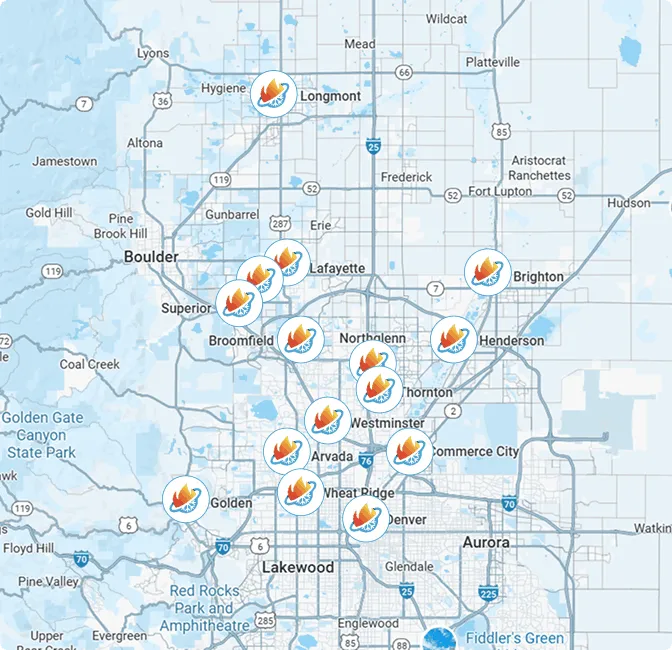
Service Areas

Testimonials
Neighbors trust Quality Heating & Air for honest work and fair pricing.
Service Areas