How to Apply for Energy Rebates in Colorado: Beginner's Mistakes to Avoid

## Why Knowing How to Apply for Energy Rebates in Colorado Can Save You Thousands
How to apply for energy rebates in Colorado is something many Thornton homeowners are searching for right now — and for good reason. Colorado currently offers several active rebate programs that can significantly reduce the cost of upgrading to high-efficiency heating, cooling, and other home energy systems.
Here is a quick overview of the core steps:
1. Check your eligibility — Confirm your home type and household income relative to your county's Area Median Income (AMI). 2. Find a registered contractor — You must work with a contractor registered in the program to receive rebates. 3. Apply online — Your contractor will walk you through an income verification application. 4. Complete a home assessment — A professional assessment identifies which upgrades qualify. 5. Sign a Project Proposal — Your contractor submits this for rebate reservation before any work begins. 6. Get your upgrades installed — The rebate is applied as a discount on your project cost, not a check in the mail.
Many Colorado homeowners leave thousands of dollars on the table simply because they don't know where to start, miss a key step, or work with a contractor who isn't registered in the program. The Colorado Home Energy Rebate Program alone can provide up to $14,000 per household for qualifying upgrades like cold climate heat pumps, heat pump water heaters, and electrical panel upgrades — and the program is expected to run through 2029 or until funds are spent.
But the process has real rules, real deadlines, and real pitfalls. This guide walks you through everything you need to know, including the beginner mistakes that cause applications to get delayed or denied.
Know your how to apply for energy rebates in colorado terms:
- colorado energy rebates for hvac upgrades - colorado heat pump incentive programs
Understanding the Main Colorado Energy Rebate Programs
Navigating the landscape of home energy incentives in Colorado can feel like trying to read a map of the Rocky Mountains in a blizzard. There are multiple programs funded by federal, state, and utility sources, each with its own set of rules, boundaries, and qualification criteria. Let's break down the primary programs available to residents in the Front Range, including Thornton, Northglenn, and Denver.
The Home Electrification and Appliance Rebates (HEAR) Program
The HEAR program, funded by the federal Inflation Reduction Act, was designed to provide robust point-of-sale discounts on high-efficiency electric appliances and electrical upgrades. It offers up to $14,000 per household for qualifying low- to moderate-income families.
However, there is an incredibly important update for Front Range homeowners: The HEAR Single-Family Program for Region 1 (which includes our Front Range communities of Thornton, Northglenn, and Denver) closed after April 27, 2026, due to overwhelming demand. While single-family homes in our area can no longer access new HEAR reservations, the program remains open for multifamily buildings and manufactured homes in certain capacities, and we must look to alternative programs to secure your savings.
The Home Efficiency Rebates (HER) Program
While HEAR focuses on individual appliance installations, the HER program focuses on whole-home energy performance. HER rebates are designed for projects that achieve significant, measurable energy savings (at least 20% to 35% or greater).
- Manufactured and Mobile Homes: Under the HER program, manufactured or mobile homes can qualify for up to $16,000 in rebates if the household is below 80% AMI and achieves a 35% or greater reduction in energy use. - Multifamily Buildings: Large multifamily buildings (50,000+ square feet) can qualify for massive retrofitting incentives—up to $8,000 per unit or a maximum of $400,000 per building—making this a fantastic option for property owners in Denver and Northglenn.
Colorado’s Affordable Residential Energy (CARE) Program
If you are an income-qualified homeowner or tenant, the CARE program is one of the best resources available. Rather than a traditional post-purchase rebate, CARE provides completely free energy-efficiency upgrades. This includes a no-cost home energy audit followed by free installation of insulation, air sealing, LED lighting, low-flow showerheads, and even qualifying high-efficiency furnaces or water heaters.
Utility-Specific Rebates: Xcel Energy
For residents in Thornton, Northglenn, and Denver, Xcel Energy is the primary utility provider. Xcel Energy offers a wide array of residential rebates for heating, cooling, smart thermostats, and home insulation. These programs run independently of the state programs, meaning you don't have to worry about the state's Region 1 HEAR closure to take advantage of Xcel's generous rebates.
Can Renters Participate?
Yes! Renters are fully eligible to participate in many of these programs, including CARE and the HER program. However, there is a strict requirement: renters must obtain written permission from their property owner using an official Landlord Authorization Form before any assessments or installations can begin.
Here is a quick comparison table to help you keep these programs straight:
| Program | Best For | Max Rebate Value | Front Range Availability (June 2026) | | --- | --- | --- | --- | | HEAR (Single-Family) | High-efficiency electric appliances | Up to $14,000 | Closed (as of April 27, 2026) | | HER (Manufactured Homes) | Whole-home energy savings (35%+) | Up to $16,000 | Active | | HER (Large Multifamily) | Buildings over 50,000 sq ft | Up to $400,000 per building | Active | | CARE Program | Income-qualified weatherization | Free upgrades & audits | Active (Participating counties) | | Xcel Energy Rebates | HVAC, smart thermostats, insulation | Varies by equipment | Active (All Xcel customers) |
How to Apply for Energy Rebates in Colorado for Heat Pumps and HVAC
If you are looking to upgrade your home comfort system, cold climate heat pumps are the gold standard. They handle both heating and cooling seamlessly, even during Colorado's harsh winter dips.
To qualify for state and utility rebates, your new system must meet strict technical standards:
- ENERGY STAR Certification: The equipment must be certified by ENERGY STAR. - SEER2 Ratings: The system must meet specific efficiency thresholds. To understand how these ratings impact your comfort and savings, check out our guide on What SEER2 Rating Should I Look For. - Cold Climate Performance: Heat pumps must be rated to perform efficiently at low temperatures (often down to -5°F or lower) to qualify for the highest tier of incentives.
To learn more about why these systems are ideal for our local climate, read about the Heat Pump Advantages Over Traditional HVAC.
Step-by-Step: How to Apply for Energy Rebates in Colorado
Now that you know what programs are out there, let’s look at the exact steps required to successfully apply for and receive your rebates.
Step 1: Schedule a Professional Home Energy Assessment
Before you buy a single piece of equipment or sign a contract, you must have a home energy assessment completed. For programs like HER or local EECBG grants, this assessment is a strict prerequisite. An energy advisor will perform a blower door test and inspect your insulation to pinpoint exactly where your home is losing energy. This ensures that any subsequent upgrades are tailored to deliver the maximum possible energy savings. Learn more about planning these upgrades in our guide to Energy Efficient HVAC.
Step 2: Choose a Registered Contractor
You cannot hire just any contractor if you want to claim state rebates. The Colorado Energy Office requires homeowners to work exclusively with registered contractors who have been vetted and trained on the program's strict guidelines. When you work with an approved partner, they will handle the heavy lifting of the application process for you.
Step 3: Verify Your Income and Apply
Your registered contractor will provide you with a link to the official online application portal. Here, you will submit your proof of income (such as your most recent 1040 tax return) or verify your automatic eligibility through existing assistance programs.
Step 4: Secure Your Rebate Reservation
Once your income is verified and your home assessment is complete, your contractor will submit a Project Proposal to the state database. This step is critical: the contractor must secure a formal rebate reservation before any physical installation work begins. If the work starts before the reservation is approved, you will lose the rebate entirely.
Step 5: Complete the Installation
With the rebate reservation safely locked in, your contractor will install your new high-efficiency heat pump, insulation, or ventilation systems.
Step 6: Enjoy Your Discounted Invoice
Because these programs operate as point-of-sale discounts, you don't have to pay full price upfront and wait months for a rebate check. The contractor will apply the approved rebate amount directly to your invoice as a discount. The contractor is then reimbursed directly by the state or utility program.
Avoiding Common Pitfalls When You Learn How to Apply for Energy Rebates in Colorado
Even with the best intentions, it is easy to make a mistake that disqualifies your project. Here are the most common pitfalls we see Front Range homeowners make:
1. The DIY Trap: Many homeowners love a good weekend project, but attempting to self-install insulation or heat pumps will instantly disqualify you from state rebates. DIY projects are typically only eligible for material costs (no labor) under very narrow local programs, and major HVAC installations must always be performed by licensed, registered professionals. 2. Ignoring Regional Closures: As mentioned, the HEAR Single-Family program for Region 1 (Front Range) is closed. If a contractor promises you thousands of dollars in HEAR single-family rebates in Thornton or Northglenn, they are misinformed. Working with an up-to-date local team ensures you don't build a project plan around expired funding. 3. The 90-Day Clock: Once your online application is approved, you have exactly 90 days to connect it to an active Project Proposal with a registered contractor. If you wait too long, your application expires, and you'll have to start the income verification process all over again. 4. Skipping the Assessment: Installing a gorgeous new heat pump before getting your official home energy assessment will retroactively disqualify you from performance-based rebate programs. Always get the assessment done first!
To make sure your new system is perfectly designed for our unique local climate, take a look at our Colorado Climate HVAC Guide 2026.
Eligibility and Income Verification Rules
To ensure that taxpayer-funded incentives reach the families who need them most, Colorado's rebate programs rely on strict income brackets tied to your county's Area Median Income (AMI).
The AMI Brackets
Your eligibility and the percentage of the project cost covered depend heavily on where your household falls on the AMI scale:
- Low-Income (Below 80% AMI): Households in this bracket qualify for the highest rebate percentages—often covering up to 100% of the cost of certain weatherization upgrades or major appliance discounts. - Moderate-Income (80% to 150% AMI): Households in this bracket are eligible for significant partial rebates, usually covering up to 50% of the project cost. - Above 150% AMI: While these households do not qualify for income-restricted state rebates, they can still take full advantage of Xcel Energy utility rebates and federal tax credits.
How Income is Calculated
The state reviews your household’s gross annual income. This is the total amount earned by all adult members of the household before any taxes or deductions are taken. When applying, you will need to provide:
- Your most recent federal 1040 tax return (specifically looking at your Adjusted Gross Income). - Recent W2s or pay stubs if your financial situation has changed. - Proof of household size (minor children count as household members, even though they do not contribute to the income).
Categorical Eligibility: The Fast Track
If you or someone in your household is already enrolled in an approved state or federal assistance program, you can bypass the lengthy income documentation process. This is known as "categorical eligibility." Programs that grant automatic qualification include:
- SNAP (Supplemental Nutrition Assistance Program) - LEAP (Low-Income Energy Assistance Program) - TANF (Temporary Assistance for Needy Families) - Medicaid - SSI (Supplemental Security Income)
Frequently Asked Questions about Colorado Energy Rebates
Can renters apply for energy rebates in Colorado?
Absolutely! Renters are fully eligible to participate in programs like CARE and the HER program. Because energy-efficiency upgrades directly lower utility bills, renters stand to gain massive financial benefits. To apply, you must submit a completed Landlord Authorization Form signed by the property owner. This form gives the contractor permission to perform the home assessment and complete the physical installations on the property.
How do state rebates stack with federal tax credits and utility incentives?
One of the best ways to maximize your savings is by "stacking" different incentives together. While you cannot combine HEAR and HER rebates for the exact same physical equipment, you can stack state rebates with:
- Federal 25C Tax Credits: Homeowners can claim a federal tax credit of up to 30% of the cost of qualified heat pumps (up to a maximum of $2,000 annually). - Xcel Energy Rebates: You can combine your state-level discounts with Xcel Energy's utility rebates, driving your out-of-pocket costs down even further.
To learn more about designing the ultimate, cost-effective comfort system for our local weather patterns, check out our guide on the Best HVAC Setup for Colorado Weather Extremes.
What happens if my region's funding runs out?
This is a highly relevant question in 2026. Because the HEAR Single-Family program for Region 1 (Front Range) has closed, local homeowners might worry they are completely out of luck. Fortunately, there are excellent backup plans:
- Xcel Energy Programs: Xcel's rebate budgets are separate from state funding and remain highly active. - Federal Tax Credits: The 25C tax credits are federally funded and scheduled to remain active through 2032. - The HER Program: Whole-home efficiency rebates for multifamily and manufactured homes are still moving forward.
Our team can help you look at alternative pathways to ensure you still get excellent savings on your home upgrades.
Conclusion
Navigating the rules of how to apply for energy rebates in colorado doesn't have to be a headache. While regional program updates like the Region 1 HEAR closure require a shift in strategy, there are still incredible opportunities to save money on high-efficiency upgrades through Xcel Energy, federal tax credits, and the HER program.
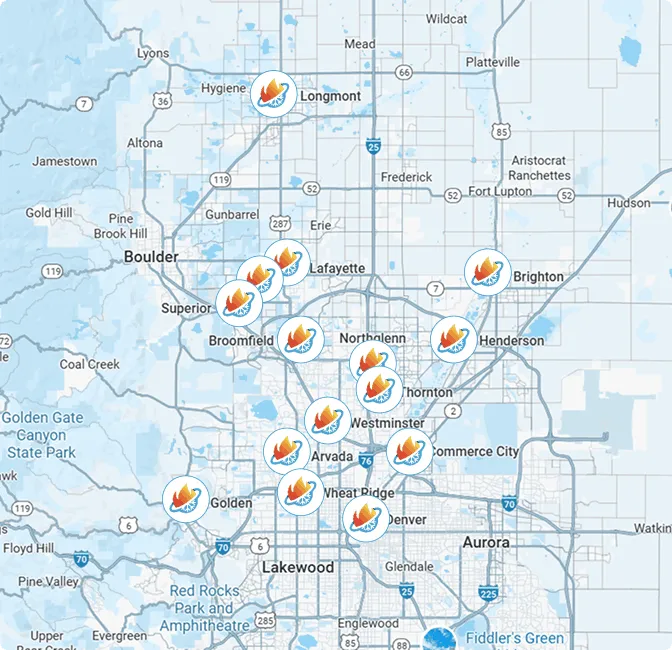
At Quality Heating and Air, we are proud to serve our neighbors in Thornton, Northglenn, Denver, and the surrounding Front Range communities. We treat every home like our own, offering transparent, honest communication and expert workmanship. We can help you navigate the home assessment process, select the perfect ENERGY STAR certified equipment for our local climate, and ensure you maximize every single dollar of available utility and federal savings.
Ready to make your home more comfortable and energy-efficient? Contact us today to explore your options and schedule your professional consultation! Learn more about what we do on our Quality Heating and Air Services page.

Testimonials
Neighbors trust Quality Heating & Air for honest work and fair pricing.
Service Areas