Which Water Heater Wins the Battle for Your Bathroom
## Which Water Heater Is Right for Your Thornton Home?
The tankless vs tank water heater comparison is one of the most common decisions homeowners face when it's time to replace an aging system. Both types can reliably heat your water — but they work in very different ways, and the right choice depends on your household size, budget, and how much hot water you actually use.
Here's a quick side-by-side look at the key differences:
| Feature | Tank Water Heater | Tankless Water Heater | | --- | --- | --- | | How it works | Stores and pre-heats 40-80 gallons | Heats water on demand, no storage | | Lifespan | 10-12 years | 20+ years | | Energy efficiency | 80-95% | 95-99% | | Hot water supply | Limited by tank size | Continuous (with proper sizing) | | Space required | Large (5-6 ft tall, 2 ft wide) | Compact (wall-mounted, ~2 ft x 1 ft) | | Upfront cost | Lower | Higher | | Best for | High simultaneous demand, lower budgets | Energy efficiency, space savings, long-term value |
Heating water accounts for roughly 18% of a home's energy use — so this decision has a real impact on your monthly utility bills. For Colorado homeowners dealing with cold winters and rising energy costs, understanding the tradeoffs between these two systems is more important than ever.
Whether you're replacing a failing unit or planning ahead, this guide walks you through everything you need to know to make a confident, informed choice.
Understanding the Tankless vs Tank Water Heater Comparison
When we look at the tankless vs tank water heater comparison, we aren't just looking at two different shapes of metal boxes. We are looking at two entirely different philosophies of home comfort.
A traditional storage tank is like a large pot of water kept simmering on the stove all day, just in case you need a cup of tea. It is reliable and simple, but it wastes energy keeping that water hot even when you’re asleep at 2:00 AM. This is what we call "standby energy loss."
On the other hand, a tankless unit is more like a high-powered electric kettle that only turns on when you flip the switch. It uses a heat exchanger to flash-heat water as it flows through the unit. Because there is no tank, there is no standby loss. For many of our neighbors in the Northglenn and Thornton areas, this shift toward efficiency is a major selling point. If you are curious about how these systems fit into different home styles, our water heaters commerce city co guide offers some great local insights.
How Traditional Storage Tanks Work
Traditional water heaters are the most common sight in Colorado basements. These units consist of a heavily insulated steel cylinder that typically holds between 40 and 80 gallons of water. Whether you use gas or electricity, the system works around the clock to maintain a set temperature (usually between 120°F and 140°F).
One term you’ll hear us mention is the "recovery rate." This is how fast the tank can reheat a full volume of water after it's been drained by a long shower or a load of laundry. Standard gas tanks can usually recover about 40 gallons per hour, while electric tanks are a bit slower, recovering roughly 20 gallons per hour. For more on these classic systems, check out our water heaters brighton co guide.
The Mechanics of a Tankless vs Tank Water Heater Comparison
Tankless heaters, often called "on-demand" or "instantaneous" heaters, don't store water at all. Instead, when you turn on a hot water faucet, a flow sensor detects the movement of water and activates the heating source—either a high-powered gas burner or an electric element.
In a gas-fired tankless unit, the burner can blast up to 199,000 BTUs of heat into a copper heat exchanger. This allows the unit to raise the temperature of the water instantly as it passes through. While it’s a more complex piece of machinery, it’s also much smaller—about the size of a carry-on suitcase. As we move through 2026, more homeowners are opting for these space-saving designs, which you can read more about in our water heaters broomfield co guide 2026.
Performance and Lifespan: Which System Lasts Longer?
If you are looking at this as a long-term investment, lifespan is where the tankless vs tank water heater comparison really leans in one direction. A traditional tank water heater typically lasts between 8 and 12 years. The main enemy of the tank is corrosion; because water sits in the tank constantly, minerals and oxygen eventually eat away at the steel lining.
Tankless water heaters are built to last much longer, often ranging from 15 to 20 years, with some well-maintained units reaching the 25-to-30-year mark. Since they don’t store water, they aren't as prone to the same rust and scale issues that plague tanks. If your current unit is hitting that 10-year milestone, it might be time to look at our water heater replacement longmont guide to see if an upgrade makes sense for you.
Managing Simultaneous Hot Water Usage
Performance is measured in Gallons Per Minute (GPM). This is where the "battle for the bathroom" gets interesting. A tank water heater can deliver a large amount of hot water all at once because the water is already heated and waiting. You can often run two showers and the dishwasher simultaneously without a problem—until the tank runs dry.
A tankless unit provides "endless" hot water, but it has a "limitless" flow rate. Most residential tankless units deliver between 2 and 5 GPM. If you try to run too many things at once, the unit may struggle to keep the water at the target temperature. For larger families in Aurora, we often recommend high-capacity models or even installing two units to handle peak demand. You can find more sizing tips in our best water heater aurora co guide.
Reliability and Warranty Considerations
Reliability often comes down to maintenance. Tankless units are composed of many serviceable parts. If a single component fails, we can often replace just that part rather than the whole unit. Traditional tanks are simpler, but when the tank itself leaks, the entire unit must be replaced.
Warranties reflect this durability. While a standard tank might have a 6-to-10-year warranty, many tankless manufacturers offer 12-to-15-year protection on the heat exchanger. Working with a reputable water heater company arvada guide ensures that your installation meets the manufacturer's requirements to keep that warranty valid.
Efficiency and Maintenance Requirements
| Maintenance Task | Tank Water Heater | Tankless Water Heater | | --- | --- | --- | | Flushing | Annual sediment flush | Annual descaling (vinegar flush) | | Component Check | Anode rod (every 3-5 years) | Air and water filters | | Energy Factor (UEF) | 0.60 - 0.90 | 0.80 - 0.99 | | Standby Loss | Yes | No |
Efficiency is the primary reason homeowners switch to tankless. For homes that use 41 gallons or less of hot water daily, tankless units can be 24%–34% more energy efficient than conventional tanks. Even in high-use homes (around 86 gallons per day), they are still 8%–14% more efficient. If you’re considering an electric route, you’ll find more details in our article on the best electric water heater.
Impact of Hard Water on Your Tankless vs Tank Water Heater Comparison
In Thornton and the surrounding Colorado areas, hard water is a reality we have to manage. Mineral buildup (scale) is the "silent killer" of water heaters. In a tank, sediment settles at the bottom, creating an insulating layer that makes the burner work harder and eventually causes the tank to overheat and crack.
In a tankless unit, scale can clog the narrow passages of the heat exchanger. If you have hard water, annual descaling is non-negotiable. Without it, a tankless unit’s lifespan can drop significantly. We often recommend pairing a tankless system with a water softener to protect your investment. For a deeper dive into these issues, see our water heater problems thornton guide.
Routine Care for Longevity
Maintenance doesn't have to be a headache, but it must be consistent. For tanks, we recommend testing the Temperature and Pressure (T&P) valve and checking the anode rod—a sacrificial rod that "attracts" corrosion to keep it away from the tank walls.
For tankless units, you should clean the air intake filter and perform a vinegar flush once a year to remove calcium deposits. If you're in Clayton and notice your system isn't performing quite right, our water heater maintenance guide clayton co and water heater not working in clayton co resources can help you troubleshoot.
Choosing the Right Fit for Your Colorado Home
Choosing between the two often comes down to your home's infrastructure. If you are replacing an old tank with a new tank, it’s usually a "plug-and-play" situation. However, switching to tankless often requires upgrades. You might need a larger gas line (tankless units need a lot of fuel all at once) and new stainless steel or PVC venting.
Because tankless units are wall-mounted, they can save about 9 square feet of floor space. This is a game-changer for homeowners in Louisville who want to reclaim a closet or basement corner. If you're looking for an expert to evaluate your home's setup, check out our water heater contractor louisville co guide.
Sizing for Household Needs
Sizing a tank is easy: how many people live there? A family of four usually needs a 50-gallon tank. Sizing a tankless unit is about "peak demand." We look at how many faucets might be running at once and the temperature of the groundwater.
In Colorado, our groundwater is very cold in the winter (often 40°F–50°F). This means the heater has to work much harder to reach 120°F than it would in Florida. We always suggest oversizing a tankless unit slightly for our climate to ensure you don't get a "cold water sandwich" during a snowy January morning. Our best water heater westminster guide offers more tips on local sizing.
Operational Considerations
While the upfront investment for a tankless system is higher, the monthly savings can be significant. Some homeowners see their water-heating costs drop by up to 40%. Over the 20-year lifespan of the unit, the system often pays for itself through lower utility bills and fewer replacements. If your current heater is making strange sounds, it might be a sign that it's time to weigh these costs; see our water heater making noise in gateway co for more info.
Frequently Asked Questions about Water Heaters
Is it worth switching from a tank to a tankless water heater?
For many homeowners, the answer is yes—especially if you plan on staying in your home for at least 5 to 10 years. The combination of endless hot water, space savings, and lower monthly bills makes it a great long-term move. If you are in Applewood and looking for a local perspective, our best water heater company in applewood co resource is a great place to start.
Can a tankless water heater provide enough water for a large family?
Absolutely, as long as it is sized correctly. For a large family with three or more bathrooms, we typically recommend a unit with a high GPM rating (7.0 to 9.0 GPM) or even a "manifold" system where two heaters work together. For more on handling high demand in Longmont, check out the water heaters longmont co guide.
Which water heater is better for cold climates like Colorado?
Both can work well, but they face different challenges. Tanks lose more heat to the cold basement air (standby loss), while tankless units have to work harder to heat the frigid incoming groundwater. Proper insulation and choosing a unit with a high BTU rating are key for Colorado winters.
Conclusion
At Quality Heating and Air, we believe that home comfort should be simple and stress-free. Whether you decide that a traditional storage tank fits your budget or a modern tankless system fits your lifestyle, our team is here to ensure the job is done right. We’ve served the Thornton and Northglenn communities for years with a commitment to integrity, transparent service, and treating every home as if it were our own.
Ready to end the battle for your bathroom? Whether you need a repair, a flush, or a brand-new installation, we are here to help. Explore our full range of Water Heaters services and let’s find the perfect solution for your home today.

Testimonials
Neighbors trust Quality Heating & Air for honest work and fair pricing.
Really happy with my overall experience. They worked neatly, quickly, and taught me MUCH along the way. Gave great advice, helped me with a side concern, that was holding me up; and finished in time for my Dentist visit. I would highly recommend this business, and the price was a pure blessing. GREAT local company and I wasn't bribed for my review 🙃 thx guys!
Bonnie B.
Fred was very knowledgeable, he repaired an old rusted iron pipe that was part of the original house build. I thought the repair would be more costly than what Fred qouted me including parts and labor. Fred made the repair after 5pm, after getting the necessary parts and he was very clean because he put down a cloth on the bathroom floor while working. I would highly recommend Fred for service in the future and I will use Quality's services again in the future.
Chris S.
Fred did a wonderful job diagnosing our air conditioning issue, presenting options available, and installing the new unit we needed. In addition to being a truly nice person, Fred was very knowledgable and professional, and we highly recommend him. Thank you Fred!
James D.
Fred was great and explained our issues we had and fixes we needed in an easy to understand way. Will ask for him next time.
Justin F.
Great service, Fred was able to show up the same day we had a problem and get everything fixed. Very knowledgeable and did not pressure us to spend money we didn’t need to spend. I would recommend to a friend without question.
Kyle F.
Fred Gottschalk performed a miracle with the furnace. He is by far the most knowledgeable HVAC professional I know to date. He knew everything about my furnace and replaced an old blower. The blower is far superior over the OEM one. I did the right thing choosing Fred!
Marty P.
I had an amazing experience with Fred Gottschalk! From the moment he came in to the moment he left he was very personable and made me feel good about my decision to call this company for assistance. I love the fact that they prioritize a personal touch making sure whoever comes to your door will remain your tech every time you call in. One thing he told me that gained my trust is that he will take care of my furnace the way he would want someone to take care of his granny’s. Thank you Quality heating and air, and thank you Fred!
Monica G.
Our technician Fred was excellent. Arrived on time, communicated well and was very knowledgable. Highly recommend and will continue to use these guys.
Nancy S.
Fred was great! He was friendly and informative, answered all of our questions and even got along with our cat (also named Fred). Would highly recommend!
Sadie P.
Highly recommend. Easy scheduling process and our technician Fred was on time, very professional, and knowledgeable on all things in the mechanical world. Took time to educate us and fix the issues we had.
Scott F.
Really happy with my overall experience. They worked neatly, quickly, and taught me MUCH along the way. Gave great advice, helped me with a side concern, that was holding me up; and finished in time for my Dentist visit. I would highly recommend this business, and the price was a pure blessing. GREAT local company and I wasn't bribed for my review 🙃 thx guys!
Bonnie B.
Fred was very knowledgeable, he repaired an old rusted iron pipe that was part of the original house build. I thought the repair would be more costly than what Fred qouted me including parts and labor. Fred made the repair after 5pm, after getting the necessary parts and he was very clean because he put down a cloth on the bathroom floor while working. I would highly recommend Fred for service in the future and I will use Quality's services again in the future.
Chris S.
Fred did a wonderful job diagnosing our air conditioning issue, presenting options available, and installing the new unit we needed. In addition to being a truly nice person, Fred was very knowledgable and professional, and we highly recommend him. Thank you Fred!
James D.
Fred was great and explained our issues we had and fixes we needed in an easy to understand way. Will ask for him next time.
Justin F.
Great service, Fred was able to show up the same day we had a problem and get everything fixed. Very knowledgeable and did not pressure us to spend money we didn’t need to spend. I would recommend to a friend without question.
Kyle F.
Fred Gottschalk performed a miracle with the furnace. He is by far the most knowledgeable HVAC professional I know to date. He knew everything about my furnace and replaced an old blower. The blower is far superior over the OEM one. I did the right thing choosing Fred!
Marty P.
I had an amazing experience with Fred Gottschalk! From the moment he came in to the moment he left he was very personable and made me feel good about my decision to call this company for assistance. I love the fact that they prioritize a personal touch making sure whoever comes to your door will remain your tech every time you call in. One thing he told me that gained my trust is that he will take care of my furnace the way he would want someone to take care of his granny’s. Thank you Quality heating and air, and thank you Fred!
Monica G.
Our technician Fred was excellent. Arrived on time, communicated well and was very knowledgable. Highly recommend and will continue to use these guys.
Nancy S.
Fred was great! He was friendly and informative, answered all of our questions and even got along with our cat (also named Fred). Would highly recommend!
Sadie P.
Highly recommend. Easy scheduling process and our technician Fred was on time, very professional, and knowledgeable on all things in the mechanical world. Took time to educate us and fix the issues we had.
Scott F.
Really happy with my overall experience. They worked neatly, quickly, and taught me MUCH along the way. Gave great advice, helped me with a side concern, that was holding me up; and finished in time for my Dentist visit. I would highly recommend this business, and the price was a pure blessing. GREAT local company and I wasn't bribed for my review 🙃 thx guys!
Bonnie B.
Fred was very knowledgeable, he repaired an old rusted iron pipe that was part of the original house build. I thought the repair would be more costly than what Fred qouted me including parts and labor. Fred made the repair after 5pm, after getting the necessary parts and he was very clean because he put down a cloth on the bathroom floor while working. I would highly recommend Fred for service in the future and I will use Quality's services again in the future.
Chris S.
Fred did a wonderful job diagnosing our air conditioning issue, presenting options available, and installing the new unit we needed. In addition to being a truly nice person, Fred was very knowledgable and professional, and we highly recommend him. Thank you Fred!
James D.
Fred was great and explained our issues we had and fixes we needed in an easy to understand way. Will ask for him next time.
Justin F.
Great service, Fred was able to show up the same day we had a problem and get everything fixed. Very knowledgeable and did not pressure us to spend money we didn’t need to spend. I would recommend to a friend without question.
Kyle F.
Fred Gottschalk performed a miracle with the furnace. He is by far the most knowledgeable HVAC professional I know to date. He knew everything about my furnace and replaced an old blower. The blower is far superior over the OEM one. I did the right thing choosing Fred!
Marty P.
I had an amazing experience with Fred Gottschalk! From the moment he came in to the moment he left he was very personable and made me feel good about my decision to call this company for assistance. I love the fact that they prioritize a personal touch making sure whoever comes to your door will remain your tech every time you call in. One thing he told me that gained my trust is that he will take care of my furnace the way he would want someone to take care of his granny’s. Thank you Quality heating and air, and thank you Fred!
Monica G.
Our technician Fred was excellent. Arrived on time, communicated well and was very knowledgable. Highly recommend and will continue to use these guys.
Nancy S.
Fred was great! He was friendly and informative, answered all of our questions and even got along with our cat (also named Fred). Would highly recommend!
Sadie P.
Highly recommend. Easy scheduling process and our technician Fred was on time, very professional, and knowledgeable on all things in the mechanical world. Took time to educate us and fix the issues we had.
Scott F.
Really happy with my overall experience. They worked neatly, quickly, and taught me MUCH along the way. Gave great advice, helped me with a side concern, that was holding me up; and finished in time for my Dentist visit. I would highly recommend this business, and the price was a pure blessing. GREAT local company and I wasn't bribed for my review 🙃 thx guys!
Bonnie B.
Fred was very knowledgeable, he repaired an old rusted iron pipe that was part of the original house build. I thought the repair would be more costly than what Fred qouted me including parts and labor. Fred made the repair after 5pm, after getting the necessary parts and he was very clean because he put down a cloth on the bathroom floor while working. I would highly recommend Fred for service in the future and I will use Quality's services again in the future.
Chris S.
Fred did a wonderful job diagnosing our air conditioning issue, presenting options available, and installing the new unit we needed. In addition to being a truly nice person, Fred was very knowledgable and professional, and we highly recommend him. Thank you Fred!
James D.
Fred was great and explained our issues we had and fixes we needed in an easy to understand way. Will ask for him next time.
Justin F.
Great service, Fred was able to show up the same day we had a problem and get everything fixed. Very knowledgeable and did not pressure us to spend money we didn’t need to spend. I would recommend to a friend without question.
Kyle F.
Fred Gottschalk performed a miracle with the furnace. He is by far the most knowledgeable HVAC professional I know to date. He knew everything about my furnace and replaced an old blower. The blower is far superior over the OEM one. I did the right thing choosing Fred!
Marty P.
I had an amazing experience with Fred Gottschalk! From the moment he came in to the moment he left he was very personable and made me feel good about my decision to call this company for assistance. I love the fact that they prioritize a personal touch making sure whoever comes to your door will remain your tech every time you call in. One thing he told me that gained my trust is that he will take care of my furnace the way he would want someone to take care of his granny’s. Thank you Quality heating and air, and thank you Fred!
Monica G.
Our technician Fred was excellent. Arrived on time, communicated well and was very knowledgable. Highly recommend and will continue to use these guys.
Nancy S.
Fred was great! He was friendly and informative, answered all of our questions and even got along with our cat (also named Fred). Would highly recommend!
Sadie P.
Highly recommend. Easy scheduling process and our technician Fred was on time, very professional, and knowledgeable on all things in the mechanical world. Took time to educate us and fix the issues we had.
Scott F.
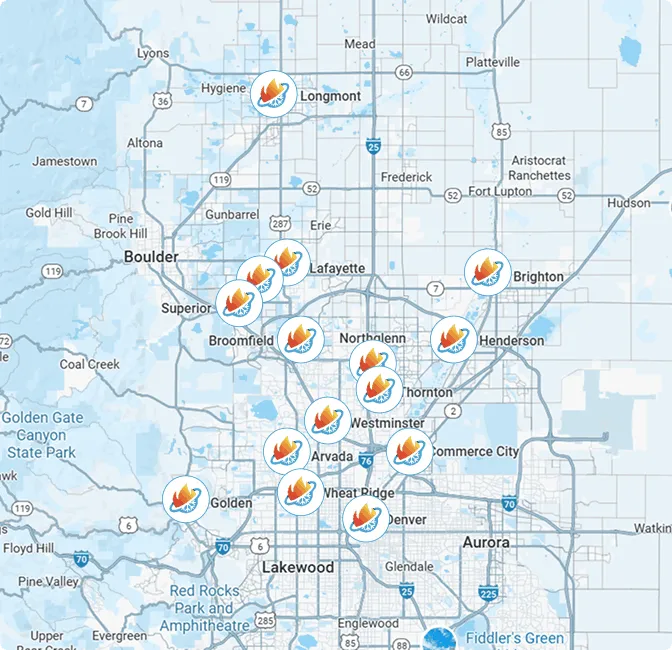
Service Areas

Testimonials
Neighbors trust Quality Heating & Air for honest work and fair pricing.
Service Areas