Does My Westminster Retail Space Need a Dedicated 24-Hour HVAC Service Contract?

Is a 24-Hour HVAC Contract Necessary for Your Retail Business?
Are you prepared for the sudden drop in foot traffic if your store's air conditioning fails during the peak of August late-summer heat? When evaluating operational expenses, many store managers eventually ask: Does my Westminster retail space need a dedicated 24-hour HVAC service contract? It is a critical question that pits the immediate cost of a service agreement against the looming operational risk of a sudden equipment failure. Commercial cooling systems that have been running continuously since May are highly susceptible to sudden breakdowns by late summer, right when back-to-school shoppers are filling the aisles.
For a comprehensive approach to protecting your commercial building's climate control, our team at Quality Heating & Air recommends exploring professional HVAC services as the first step for any retail manager looking to secure their operational continuity.
How High-Altitude Sun and Late-Summer Heat Impact Retail Storefronts
The problem: Commercial HVAC systems in Colorado face a unique set of environmental stressors. In our years of experience servicing storefronts throughout Westminster and Northglenn, we've seen firsthand how high-altitude sun intensity exacerbates indoor heat gain, particularly for spaces with large display windows facing south or west. This solar radiation acts like a greenhouse, forcing rooftop units to work overtime just to maintain a baseline temperature.
The cause: When a system runs without a break from late spring through late summer, the mechanical components experience severe wear and tear. Belts fray, condenser coils accumulate dust and cottonwood debris, and refrigerant levels may slowly deplete. Because the system never gets a chance to rest, these minor inefficiencies compound. The high-altitude UV exposure also degrades exterior insulation and wiring faster than in lower-elevation climates.
The solution: Generic, reactive maintenance often misses the specific wear-and-tear caused by these regional conditions. A proactive approach is required to identify the subtle signs of system fatigue before they cascade into a total shutdown. By understanding how the local climate interacts with your building's architecture, you can better anticipate when your equipment is reaching its breaking point.
The Compounding Effect of Continuous Summer Operation
Systems running non-stop since late spring reach critical wear points by late summer. What starts as a slightly dirty air filter or a marginally low refrigerant charge forces the compressor to run hotter and longer. Over weeks of continuous operation, this added strain degrades internal components.
• Elevated head pressure: Dirty coils prevent heat from escaping, raising the internal pressure of the system and straining the compressor.
• Electrical fatigue: Contactors and capacitors degrade faster when subjected to constant cycling during extreme heatwaves.
• Airflow restriction: Clogged filters and failing blower motors reduce the volume of cold air reaching the sales floor, causing the system to run indefinitely.
When a strained system finally breaks down during peak business hours, the indoor temperature spikes rapidly, directly impacting the environment in Westminster retail districts.
Assessing Foot Traffic Abandonment and Inventory Risks
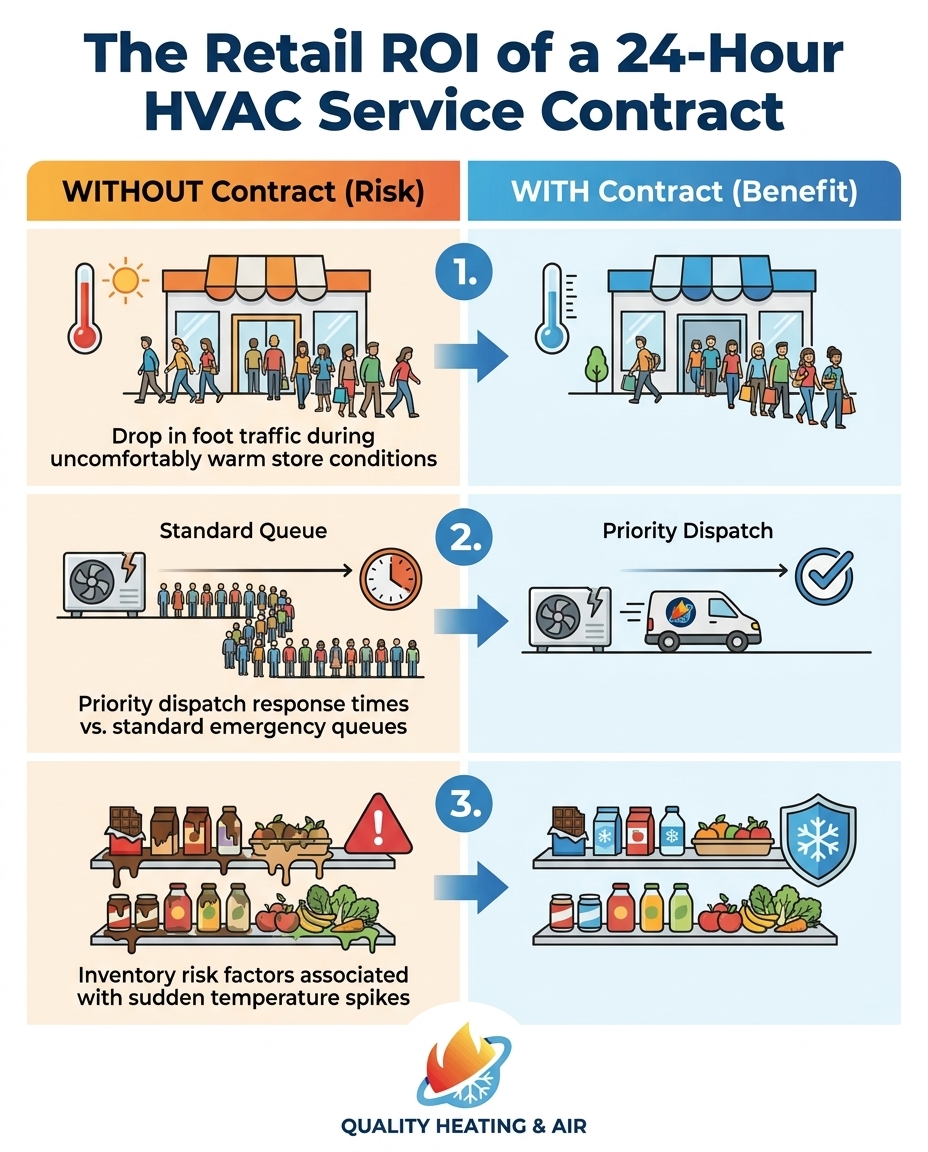
Translating mechanical failure into business impact is the most crucial step in evaluating operational risk. When the air conditioning fails during the August late-summer heat, the consequences extend far beyond the cost of a repair ticket. Industry data consistently shows that retail sales drop significantly when store temperatures exceed comfortable levels. Shoppers are highly sensitive to their environment; if a store is uncomfortably warm, the natural response is to leave and seek a more comfortable location.
This phenomenon, known as foot traffic abandonment, can devastate a day's revenue targets. Furthermore, an uncomfortable environment damages long-term brand perception. Customers who have a negative, sweaty experience in your store are less likely to return, even after the system is repaired. Rapid access to commercial air conditioning repairs directly correlates to revenue protection, minimizing the window of time your business is exposed to these walk-outs.
The Revenue Impact of Uncomfortable Shopping Environments
Beyond lost foot traffic, sudden temperature spikes pose a severe threat to sensitive inventory. Many retail spaces carry goods that require strict climate control.
• Cosmetics and skincare: High temperatures can cause emulsions to separate, lipsticks to melt, and active ingredients to degrade, rendering the products unsellable.
• Specialty foods and perishables: Even non-refrigerated specialty foods can spoil or lose quality if ambient store temperatures climb too high.
• Boutique apparel: High humidity levels accompanying a cooling failure can leave fabrics feeling damp and smelling musty, ruining the premium shopping experience.
• Electronics: Excessive ambient heat can cause display models and sensitive electronic inventory to overheat or suffer shortened lifespans.
Shoppers shorten their browsing time when a store is uncomfortably warm, shifting their focus from discovery and purchasing to simply exiting the building. Protecting your inventory and your customer experience requires a system that won't fail when you need it most.
What a Dedicated 24-Hour HVAC Service Contract Actually Covers
A dedicated commercial contract is fundamentally a revenue protection strategy, not just a standard maintenance checklist. When you secure a contract, you are purchasing operational predictability. Quality Heating & Air's reliable, rapid-response dispatch and tailored maintenance plans are designed specifically to prevent revenue loss for local businesses.
Our technicians recently highlighted this dynamic during a commercial installation project when a business owner was comparing multiple bids. The deciding factor for them wasn't just the initial installation scope, but our thorough explanation of equipment differences and the subsequent tailored maintenance plan that ensured long-term reliability. A proper contract demystifies the repair process and puts your business at the front of the line.
1. Priority Emergency Scheduling: Contract holders skip the standard queue. When peak seasonal breakdowns flood dispatch centers, businesses with a contract receive faster emergency response times compared to new callers.
2. Comprehensive System Inspections: Technicians perform deep-dive evaluations of critical components, checking electrical tolerances, refrigerant pressures, and mechanical wear that generic checkups miss.
3. Rapid Diagnostics: Because the service team is already familiar with your building's layout, equipment history, and specific quirks, they spend less time troubleshooting and more time fixing the issue.
4. Predictable Maintenance Cadence: Regularly scheduled visits catch failing components before they cause full system shutdowns, keeping your store comfortable year-round.
For retail managers looking to lock in this level of security, establishing a dedicated HVAC maintenance plan is the most effective way to safeguard against unexpected downtime.
Priority Dispatch vs. Standard Scheduling
The difference between standard scheduling and priority dispatch becomes painfully clear during a heatwave. Standard callers may wait days for a technician when dispatch boards are full. Contract holders receive guaranteed response windows, providing operational predictability for store managers in Westminster retail districts. This rapid identification of cooling issues minimizes operational downtime and keeps your doors open.
Weighing Operational Downtime Against Preventative Maintenance
Making an informed decision requires comparing the unpredictable costs and delays of reactive emergency calls with the controlled, predictable nature of proactive maintenance. Reactive repairs often happen at the worst possible time, forcing managers to scramble for solutions while watching foot traffic dwindle. Proactive maintenance puts the control back in your hands.
Deferred maintenance has cascading effects on overall equipment lifespan. A clogged filter might seem minor, but it forces the blower motor to work harder, which draws more amperage, which can eventually fry electrical components or cause the compressor to fail entirely. As a team that fields these frantic late-summer calls, we know that understanding what happens when you call for 24-hour AC service in Westminster illustrates the immense value of having a dedicated team already familiar with your building's unique HVAC architecture.
• Response Time — Reactive Approach (No Contract): Subject to standard queue; potential multi-day waits during peak heatwaves. — Proactive Approach (Service Contract): Priority dispatch; guaranteed response windows to minimize downtime.
• Equipment Lifespan — Reactive Approach (No Contract): Shortened due to compounding wear-and-tear and deferred maintenance. — Proactive Approach (Service Contract): Maximized through regular cleaning, lubrication, and calibration.
• Business Impact — Reactive Approach (No Contract): High risk of foot traffic abandonment and potential inventory damage. — Proactive Approach (Service Contract): Controlled environment ensures consistent customer comfort and sales.
• Technician Familiarity — Reactive Approach (No Contract): New technicians must spend time learning the building's layout and system history. — Proactive Approach (Service Contract): Assigned teams know the equipment, leading to faster, more accurate repairs.
Calculating Your Retail Space's Risk Profile
To determine if a contract is right for you, identify your store's peak traffic hours and calculate how an outage during those times impacts daily sales targets. Next, assess the condition and age of your current HVAC equipment. Older systems, or systems that have historically struggled during the August late-summer heat, carry a much higher likelihood of failure and strongly justify the security of a dedicated agreement.
Transitioning Commercial Systems from Summer Cooling to Winter Heating
A comprehensive commercial contract provides year-round protection, extending far beyond just summer air conditioning. Westminster is known for extreme temperature swings, transitioning quickly from intense late-summer heatwaves to freezing winter conditions. This volatility necessitates reliable, year-round climate control to protect your building and your customers.
Servicing the heating system before the first major cold snap is just as critical as preparing the AC for summer. Commercial rooftop units often house both heating and cooling components, and the transition period is the perfect time to inspect heat exchangers, test ignition sequences, and calibrate thermostats. Receiving expert maintenance advice tailored to your specific commercial property ensures that your transition is seamless.
In one instance during a sudden winter freeze, our rapid response team encountered a commercial furnace that had failed due to improper wiring left by a previous installer. We were able to correctly connect all necessary wires, restoring heat before the building's internal temperature dropped to critical levels. Having access to reliable emergency heating service protects the store during winter extremes, preventing frozen pipes and maintaining a welcoming environment for holiday shoppers across Westminster retail districts.
Frequently Asked Questions About Commercial HVAC Contracts
Is a commercial HVAC maintenance agreement worth it for a small retail store?
Yes, a maintenance agreement is highly valuable for small retail stores because it acts as a revenue protection tool. Small stores often operate with tighter margins, making the loss of foot traffic during an outage particularly damaging. A contract ensures priority service, minimizing downtime and protecting temperature-sensitive inventory from sudden climate shifts.
What does a 24-hour HVAC service contract actually cover?
A comprehensive 24-hour service contract typically covers priority emergency dispatch, routine preventative maintenance inspections, and rapid diagnostic services. It ensures that contract holders skip the standard waiting queue during peak breakdown seasons. Additionally, it provides regular check-ups to clean coils, replace filters, and identify worn components before they fail.
How quickly can emergency AC repair respond to a retail outage in Westminster?
Response times vary based on demand, but contract holders are guaranteed priority dispatch, significantly reducing wait times compared to standard callers. During extreme August heat, standard service calls can take days to fulfill, while contracted emergencies are routed to the front of the line. This rapid response is critical for minimizing the duration of uncomfortable store conditions.
What happens to retail foot traffic if the AC goes out?
Retail foot traffic drops sharply when indoor temperatures exceed comfortable levels, as shoppers naturally abandon uncomfortably warm environments. Customers will shorten their browsing time, leading to fewer impulse purchases and lower overall sales volume. Prolonged outages can also damage a store's reputation, making customers hesitant to return during future heatwaves.
How often should commercial HVAC systems in retail spaces be serviced?
Commercial HVAC systems in retail spaces should be serviced at least twice a year, typically in the spring before cooling season and in the fall before heating season. Facilities with high foot traffic, large glass facades, or continuous operating hours may require quarterly inspections. Regular servicing ensures optimal efficiency and catches minor wear before it causes a major breakdown.
Protect Your Retail Operations with a Tailored Maintenance Plan
Securing a dedicated service contract is ultimately about protecting your inventory and maintaining a welcoming, comfortable environment for your shoppers. The cost of a sudden outage—measured in lost sales, abandoned carts, and damaged goods—far outweighs the predictable investment of proactive care. Evaluating your specific risk profile, including your store's peak hours and inventory vulnerability, is the smartest first step for any retail manager. By consulting with a local expert like Quality Heating & Air, you can establish a maintenance plan tailored precisely to the demands of your Westminster retail districts location, ensuring your doors stay open and your customers stay comfortable.

Testimonials
Neighbors trust Quality Heating & Air for honest work and fair pricing.
Service Areas