Seasonal Home Maintenance Checklist: Earning Quality Heating and Air Reviews Through Trusted Diagnostics

Facing the First Fall Freeze: When to Trust Your Furnace
When your thermostat reads 62 degrees on an otherwise sunny afternoon, the sudden chill in your living room means one thing: the first October early-freeze has arrived, and it is time to execute your seasonal home maintenance checklist. You flip the switch to "heat," but instead of immediate comfort, you are met with a lingering burning dust smell and sudden, unfamiliar clanking from the blower motor. At Quality Heating & Air, our team typically sees a massive surge of service calls during this exact moment of uncertainty—it is a universal homeowner experience. Your heating system has been dormant for months, and asking it to suddenly perform at peak capacity often reveals hidden issues. Understanding what is normal versus what requires a professional eye is the cornerstone of seasonal readiness. Homeowners rely on Quality Heating and Air reviews to find trusted local expertise when they need reliable heating repair and installation services before winter.
The anxiety of a strange furnace noise is rarely just about comfort; it is about safety and reliability. When the temperature drops, you need absolute certainty that your equipment will run efficiently through the night. Many homeowners hesitate to call for an inspection because they are unsure if a burning smell is just temporary dust or a serious electrical fault. This is where a proactive, professional approach changes the dynamic. By understanding exactly how your system reacts to its first major operational cycle of the season, you can make informed decisions about your home's comfort infrastructure.
A comprehensive seasonal home maintenance checklist goes far beyond simply raking leaves or cleaning gutters. It requires a focused look at the mechanical systems that keep your indoor environment safe. When you prioritize a thorough diagnostic evaluation before the deep freeze sets in, you eliminate the guesswork. You transition from hoping your furnace will survive the winter to knowing it has been professionally calibrated, cleaned, and cleared for the demanding months ahead.
The Front Range Climate Challenge: How Rapid Temp Drops Stress Your HVAC
Living in the Northglenn / Front Range area means accepting a highly volatile weather pattern. In our years of servicing local homes, we regularly see the toll it takes when this region experiences rapid temperature drops of 30 to 40 degrees within a single 24-hour period. These extreme shifts place an immense physical burden on your home's heating, ventilation, and air conditioning equipment. A generic seasonal home maintenance checklist often fails to account for the sheer suddenness of these demands, leaving homeowners vulnerable to unexpected breakdowns.
When a furnace sits unused from May through September, the internal components settle. Lubricants in the blower motor can thicken, dust accumulates heavily across the heat exchanger, and electrical capacitors lose their regular cycling rhythm. Suddenly demanding high-capacity heat during a massive temperature swing forces these dormant components to expand rapidly. The metal of the heat exchanger heats up and expands, belts are suddenly pulled taut, and the blower motor is asked to push heavy, cold air through your ductwork. This sudden stress is exactly why proactive, reliable HVAC service is essential for managing extreme seasonal temperature swings safely.
The mechanical reality of sudden freezes:
• Thermal shock: Rapidly heating a cold metal heat exchanger tests the integrity of the metal, potentially exposing microscopic cracks.
• Lubrication friction: Bearings that have sat still for months experience higher initial friction, which can lead to premature wear if not inspected.
• Electrical load: The initial startup requires a massive surge of electricity to turn the heavy blower wheel, stressing aging wiring and capacitors.
Addressing these regional climate challenges requires more than just changing a filter. It requires a technician who understands how the specific local weather patterns impact mechanical longevity. A proactive approach to these sudden temperature drops is the only way to ensure uninterrupted comfort, preventing the dreaded mid-winter emergency call when the system finally gives out under the strain.
Normal Furnace Startup Signs vs. When to Call a Professional
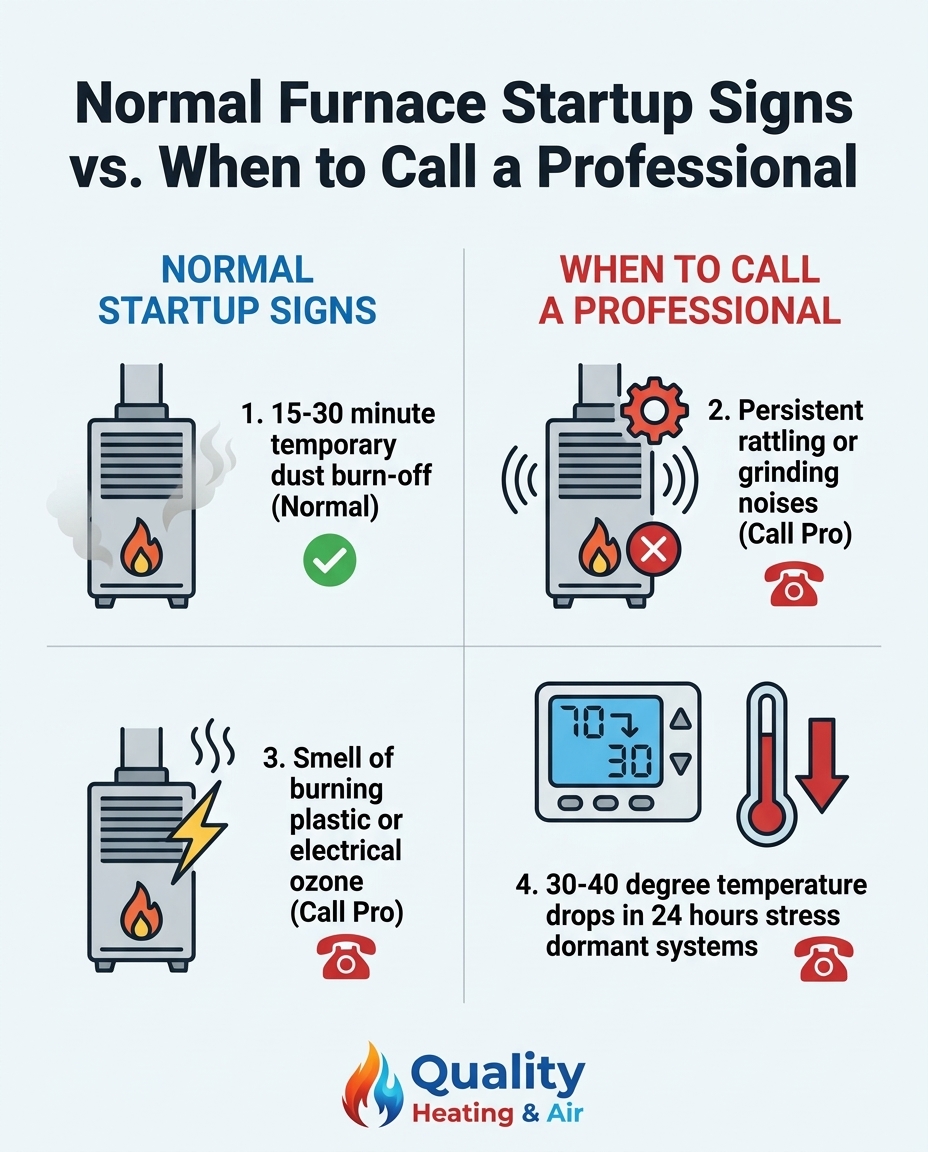
When that October early-freeze forces your hand and you turn on the furnace, knowing the difference between harmless startup behaviors and mechanical red flags is vital. A primary component of any seasonal home maintenance checklist is observing the first 30 minutes of heating operation. This initial window tells you exactly how the system handled its summer hibernation.
Harmless Dust Burn-Off
The most common cause of panic during a fall startup is a distinct burning smell coming through the vents. In most cases, this is entirely normal. Over the summer, household dust, pet dander, and microscopic debris settle directly onto the furnace's heat exchanger. When the burners ignite for the first time, this layer of organic material simply burns off. This temporary odor typically lasts less than an hour, is not accompanied by loud bangs or physical vibrations, and is a standard part of the transition from summer cooling to fall heating.
Mechanical Red Flags
However, there is a firm threshold for when a homeowner must immediately shut down the system at the thermostat and seek professional calibration. If the burning smell resembles melting plastic, electrical ozone, or acrid smoke, this is not a normal dust burn-off. Furthermore, persistent grinding, metal-on-metal rattling, or high-pitched squealing noises indicate severe mechanical distress. These sounds often point to failing blower motor bearings, unbalanced wheels, or loose internal components that can cause catastrophic damage if allowed to continue running.
• Light burning dust smell (under 45 mins) — Likely Cause: Summer dust burning off the heat exchanger — Required Action: Monitor; normal operation
• Smell of melting plastic or electrical ozone — Likely Cause: Failing wiring, overheated motor, or electrical short — Required Action: Turn off immediately; call a professional
• Clicking sound before ignition — Likely Cause: Normal spark igniter operation — Required Action: Monitor; normal operation
• Loud booming or banging on startup — Likely Cause: Delayed gas ignition (gas buildup before lighting) — Required Action: Turn off immediately; call a professional
• Grinding or squealing from the cabinet — Likely Cause: Failing blower motor bearings or loose fan belt — Required Action: Turn off immediately; call a professional
Your Complete Seasonal Home Maintenance Checklist for Fall
To fully protect your property as the Northglenn / Front Range weather turns hostile, a structured approach is necessary. A robust seasonal home maintenance checklist focuses heavily on winterization, indoor air quality, and fire safety. Completing these tasks ensures that your home is sealed against the cold and your equipment is primed for the heavy workload ahead.
While some tasks are purely cosmetic, the most critical items on your list directly impact your family's safety and your utility bills. Proper preparation reduces the heating load on your furnace, allowing it to run shorter cycles and consume less energy. Here is the essential checklist to complete before the deep freeze arrives:
• Replace HVAC air filters: A clogged filter forces the blower motor to work twice as hard to pull air through the system. Installing a fresh, high-quality pleated filter ensures proper airflow, prevents overheating, and improves indoor air quality.
• Test all smoke and carbon monoxide detectors: This is absolutely critical when running combustion-based heating systems like natural gas furnaces. Verify that every detector has fresh batteries and responds instantly to the test button.
• Clear vents and registers: Over the summer, it is easy to accidentally place rugs, heavy furniture, or decorative items over floor registers. Walk through every room and ensure all return and supply vents have at least two feet of clear space for unobstructed airflow.
• Seal drafts and check weatherstripping: Inspect the perimeters of your doors and windows. Replacing worn weatherstripping and applying fresh caulk to drafty areas significantly reduces the heating load on your HVAC system.
• Finalize summer system transitions: Ensure your outdoor condenser is cleared of fallen leaves and debris. This is also the ideal time to wrap up any routine AC maintenance and service tasks before the unit sits idle under the winter snow.
By systematically addressing these areas, you create a stable, efficient environment that supports your heating system rather than fighting against it.
The Value of Transparent Diagnostics in Earning Your Trust
When preparing for the October early-freeze, we know the difference between a superficial check-up and a comprehensive diagnostic assessment is profound. A quick glance at the furnace might confirm that it turns on, but it does nothing to verify the internal safety of the unit. True professional service is rooted in transparent diagnostics, where technicians look deeply into the system's mechanics and communicate their findings clearly, without relying on confusing industry jargon or high-pressure sales tactics.
A comprehensive diagnostic involves rigorous testing. Technicians meticulously inspect the heat exchanger for microscopic cracks that could leak carbon monoxide. They test the electrical connections to ensure capacitors are holding the correct charge and verify that the burners are igniting smoothly without delayed combustion. This level of detail is a commitment to your safety and long-term comfort.
For example, our team recently helped a homeowner who found themselves navigating competing bids from different companies for a complex system installation. By walking the customer through the competing bids step-by-step, explaining the specific differences in equipment sizing and ductwork requirements honestly, we built complete trust. This transparent approach demystifies the HVAC process. When a technician shows you exactly what they are testing, explains why a specific electrical reading matters, and provides clear options, you gain the confidence needed to make informed decisions about your home's infrastructure.
Proactive Upgrades and Long-Term Reliability for Older Homes
Maintaining comfort in older homes presents unique challenges, especially in the Northglenn / Front Range area where historic properties frequently feature aging ductwork and legacy electrical systems. These older setups require specialized knowledge to assess safely. The wiring may not be equipped to handle the sudden electrical draw of a modern blower motor, and the ductwork may have developed leaks over decades of use. Standard seasonal home maintenance checklists often overlook these nuanced variables.
Strategic, proactive upgrades can significantly prolong the life of existing equipment in older properties. For instance, our technicians recently assisted a homeowner in an older Northglenn house who needed trustworthy repairs and upgrades after noticing their system struggling to turn on. By recommending and installing a start assist—a device that provides a safe, stored jolt of energy to help the compressor start without overdrawing from aging wiring—alongside a thorough furnace assessment, our team maintained responsive communication and earned the customer's complete trust for future home improvement projects.
Establishing this kind of reliable professional partnership early in the season prevents catastrophic mid-winter emergencies. Rather than waiting for a legacy system to fail on a zero-degree night, proactive diagnostics identify weak points while they are still easily repairable. Enrolling in a preventative maintenance plan is one of the smartest investments an owner of an older home can make. It ensures that your system receives consistent, documented care year after year, keeping aging components running efficiently and safely.
Schedule Your Pre-Winter Inspection with Confidence
As the October early-freeze sets in, taking control of your home's seasonal readiness offers unparalleled peace of mind. Knowing that your heating system has been professionally vetted means you can face the deep Colorado freeze without anxiety over sudden breakdowns or safety hazards. The key is to act proactively before the first major snowstorm limits appointment availability.
Whether your home requires final air conditioning solutions for the season to prepare the condenser for winter, or immediate heating diagnostics to address a rattling blower motor, a trusted local team is ready to help. Prioritize your seasonal home maintenance checklist today, and experience the confidence that comes from honest, transparent, and expert service.
Frequently Asked Questions
What should be on a fall home maintenance checklist?
A comprehensive fall checklist should prioritize sealing drafts, testing safety detectors, and servicing your heating equipment. You must replace your HVAC air filters, ensure all supply and return vents are unblocked by furniture, and check the weatherstripping around doors and windows. Most importantly, scheduling a professional furnace diagnostic ensures the mechanical systems are safe to operate before freezing temperatures arrive.
Is a burning smell normal when turning on the heat for the first time?
Yes, a light burning dust smell is generally normal during the first 15 to 30 minutes of operation. This occurs because household dust and debris settle on the heat exchanger over the summer and burn off upon initial ignition. However, if the smell resembles burning plastic, electrical ozone, or lasts longer than an hour, you should turn off the system immediately and seek professional help.
Why is my furnace making a rattling noise?
A rattling noise usually indicates a mechanical issue within the blower motor assembly or loose internal cabinet hardware. It can be caused by unbalanced blower wheels, failing motor bearings, or a loose fan belt vibrating against the metal housing. Because these issues can lead to severe component damage if ignored, rattling sounds should always be evaluated by a technician.
When should I call a professional for furnace noises?
You should call a professional the moment you hear loud banging, persistent grinding, or high-pitched squealing coming from your HVAC cabinet. While a soft clicking before ignition or the gentle hum of air movement is normal, aggressive metal-on-metal sounds indicate mechanical failure. Shutting the system down and calling for an inspection prevents minor part failures from turning into expensive total system replacements.
How do you prepare a house for winter in Colorado?
Preparing a Colorado home for winter requires addressing both the building envelope and the mechanical heating systems due to extreme temperature swings. Homeowners should disconnect exterior hoses to prevent pipe bursts, seal exterior air leaks to reduce heating loads, and ensure their attic insulation is adequate. Crucially, the furnace must be professionally inspected to handle the rapid 30-to-40-degree temperature drops common in the region.
What does a professional furnace diagnostic actually include?
A professional diagnostic goes far beyond a visual once-over, focusing on safety, efficiency, and mechanical integrity. Technicians will inspect the heat exchanger for dangerous cracks, test the electrical capacitors and wiring for proper voltage, and verify that gas pressures and burner ignition are operating flawlessly. They will also check the blower motor's amp draw to ensure it isn't overworking, providing a transparent report of your system's exact condition.

Testimonials
Neighbors trust Quality Heating & Air for honest work and fair pricing.
Service Areas