Addressing the Unique HVAC Demands of Wheat Ridge's Historic Commercial Spaces
The Hidden Strain on Historic Commercial HVAC Systems in Late Summer
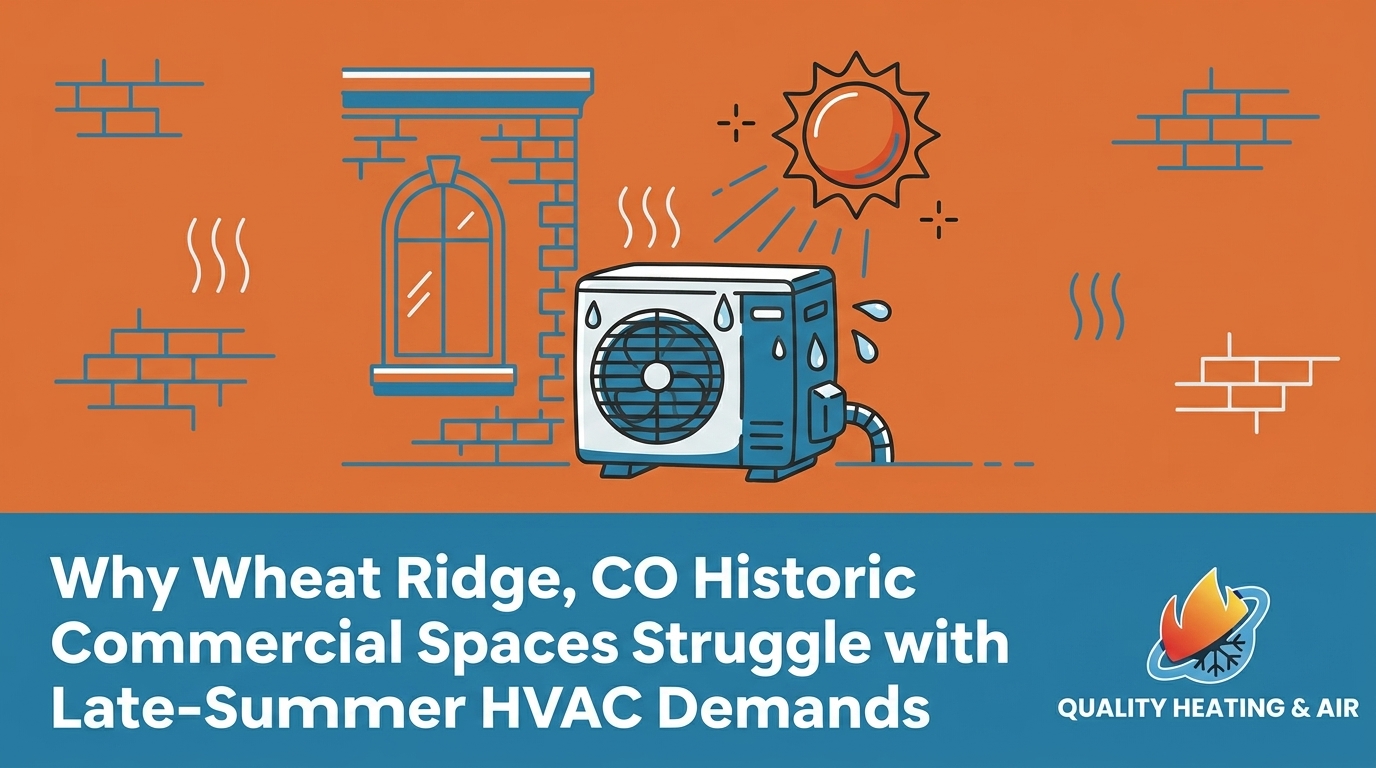
It is late August, and as the back-to-school transition begins, despite running continuously, the air conditioning in your older building simply cannot keep up with the heat. The ambient temperature inside continues to climb, leaving tenants uncomfortable and property managers frustrated. When addressing the unique HVAC demands of Wheat Ridge's historic commercial spaces, one of the most common issues our team at Quality Heating & Air sees is severe late August end-of-season cooling strain. The core conflict lies between the high-capacity output of modern cooling equipment and the physical limitations of aging, historic infrastructure.
If you are managing an older property and dealing with uneven cooling, exploring professional commercial HVAC services is the first crucial step toward a permanent solution.
Property owners often face a difficult reality when cooling performance degrades drastically at the end of the summer season. The system that worked adequately in June suddenly struggles to maintain a consistent temperature across different floors or suites. This drop in performance forces a major decision point: determining if the poor airflow requires a complete, invasive ductwork retrofit, or if the existing layout can be safely modified to handle modern demands.
Understanding this challenge requires looking at the physical realities of aging commercial infrastructure. Historic buildings were simply not designed with modern climate control in mind. Their ventilation shafts, original ducting, and structural envelopes were built for a different era of airflow. When you pair these older architectural features with the intense demands of an extended summer cooling season, the resulting strain on the HVAC system becomes unavoidable. Recognizing the root cause of this strain is the key to protecting both your equipment and the historical integrity of your property.
Why High-Static Modern Air Conditioners Overwhelm Older Ductwork
Modern commercial air conditioners are highly efficient, powerful machines designed to move large volumes of air rapidly. However, our technicians often find that this mechanical power creates a severe mismatch when connected to historic duct systems. Older ductwork was typically sized for gravity-fed heating or low-velocity systems, meaning the physical dimensions of the ducts are significantly smaller than what today's equipment requires.
The role of CFM and static pressure: Airflow is measured in cubic feet per minute (CFM). Modern high-static pressure units are engineered to push a massive CFM through a building to achieve rapid cooling. When you force this high volume of air through undersized, aging ducts, the static pressure inside the system spikes dramatically. This is similar to trying to force water from a fire hose through a garden hose—the pressure backs up, stressing the entire system.
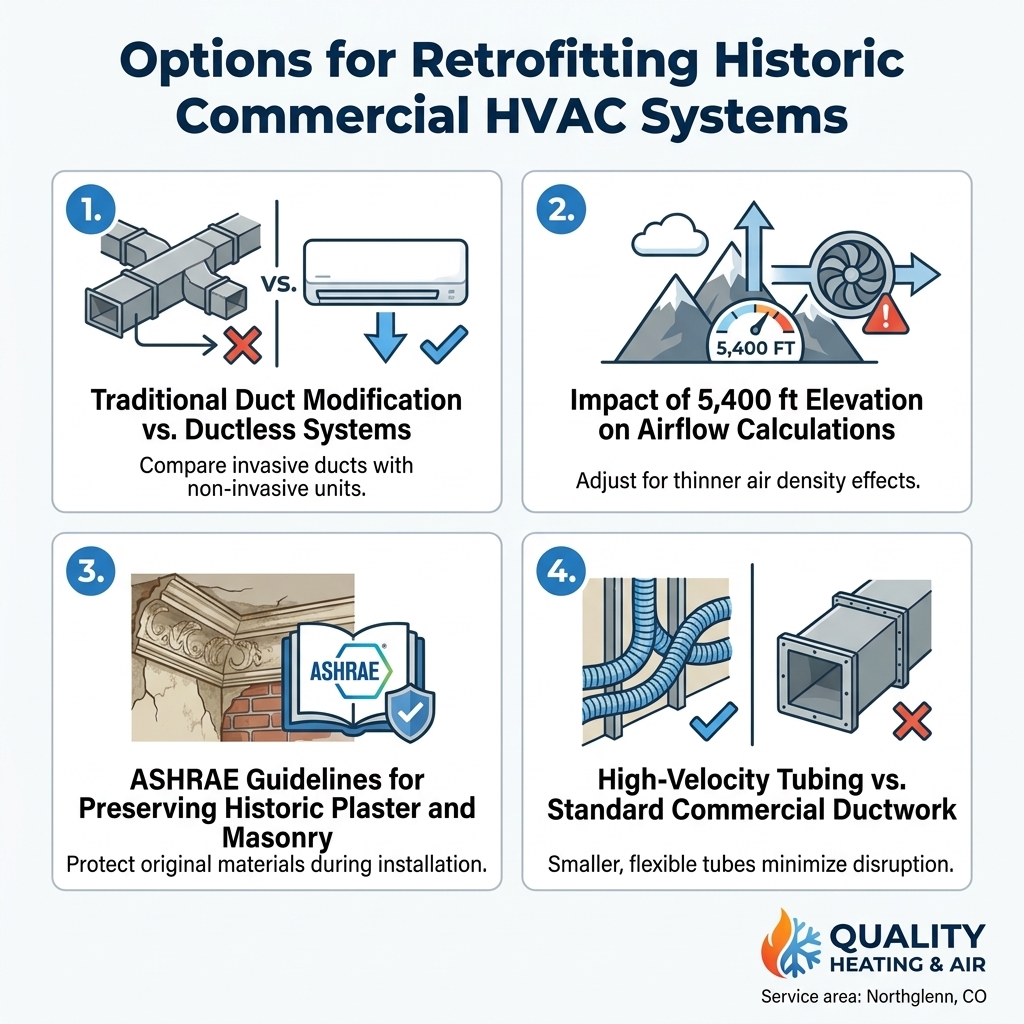
Over-pressurizing deteriorating ductwork leads to a cascade of operational failures. The excess pressure often causes old seals to rupture, resulting in massive air leaks behind walls or in crawlspaces. You end up paying to cool the structural voids of the building rather than the occupied tenant spaces. Furthermore, ASHRAE guidelines for historic buildings specifically warn against exceeding the structural capacity of original ventilation pathways, as high-velocity air can damage fragile materials and create excessive noise.
The Risks of Upgrading Equipment Without Assessing Ductwork
Connecting a modern, high-efficiency cooling unit directly to 80-year-old ducts often results in immediate system hiccups, frozen evaporator coils, or severe electrical strain on the blower motor. The new equipment will constantly short-cycle because it cannot push air fast enough to operate properly.
At Quality Heating & Air, we frequently see situations where property owners assume a failing system requires a complete unit replacement, only to discover that the root cause is a ductwork mismatch. In one local Wheat Ridge instance during a sudden temperature swing, a property owner believed their furnace was completely dead and needed full replacement. A thorough root-cause diagnosis by our team revealed the existing unit was actually repairable, saving the owner from an unnecessary installation. This same logic applies to late-summer cooling in historic commercial properties: a holistic system assessment of the ductwork must happen before you ever consider replacing the main cooling unit. Upgrading the box outside without addressing the pipes inside is a recipe for premature equipment failure.
The Mechanics of Airflow: How Elevation Impacts Wheat Ridge Properties
In our years serving Northglenn and the surrounding Denver metro, we've seen how local geography plays a massive, often overlooked role in how commercial HVAC systems perform. The local elevation of approximately 5,400 feet results in significantly lower air density compared to sea level. This thinner air fundamentally changes the physics of how heat is transferred and removed from a building.
Why air density matters for cooling: Because the air is thinner, it carries less thermal energy per cubic foot. To achieve the same cooling effect as a system at sea level, an HVAC blower motor at high altitude must move a greater volume of air over the evaporator coils. This requirement places even more demand on the blower and pushes even more air through those already undersized historic ducts.
Standard, out-of-the-box commercial AC configurations often fail to account for both altitude and historic duct limitations simultaneously. If a contractor simply looks at the square footage of a building and installs a standard unit, the system will almost certainly underperform. The lower air density requires highly precise HVAC load calculations to ensure adequate cooling capacity without triggering the static pressure issues mentioned earlier.
Addressing these complex variables often requires custom airflow balancing and specialized indoor air quality solutions tailored for older commercial spaces. Technicians must carefully adjust fan speeds, evaluate return air pathways, and sometimes install variable-speed blowers that can adapt to the specific resistance of the building's historic architecture. Without this regional calibration, your system will work harder, consume more energy, and still leave your building warm.
How Local Climate Accelerates Thermal Load on Historic Masonry
The physical structure of historic buildings interacts directly with our regional climate, creating a unique set of challenges as the summer progresses. Many older commercial properties in the area feature beautiful historic brick and stone facades. While visually striking, these dense materials lack modern insulation, allowing heat to transfer directly into the building envelope.
The impact of cumulative thermal load: As local Colorado HVAC professionals, our team knows how intense dry air, high-altitude sun exposure, and extreme seasonal temperature swings impact a building. During the early summer, the cool nights allow the brick and stone to release stored heat. However, as we reach late August, the sustained high temperatures and shorter overnight cooling periods create a cumulative thermal load. The masonry absorbs solar radiation all day and never fully cools down at night. By late summer, the building itself acts like a massive radiator, constantly radiating heat into the interior spaces.
This relentless heat transfer forces the HVAC system to run longer, more frequent cycles to maintain a set temperature. The dry air combined with high heat exacerbates the cooling challenge, as older buildings are naturally drafty and constantly pull in hot, dry outside air. The resulting late August end-of-season cooling strain is not just a sign of an aging air conditioner; it is the result of the building's structural thermal mass overwhelming the mechanical cooling capacity.
To combat this, property managers must look beyond just the thermostat. Understanding how your specific building's masonry absorbs and retains heat is critical for designing an HVAC schedule and system configuration that can handle the late-summer peak without breaking down.
Evaluating Your Property: Modification vs. Complete Retrofit
When late-summer cooling issues become unmanageable, property owners face a critical decision: should you attempt to modify the existing infrastructure, or is a complete mechanical retrofit necessary? This evaluation requires a deep dive into the physical state of your building.
What an expert assessment entails:
• Ductwork integrity testing: Technicians measure the exact static pressure and search for hidden leaks behind plaster walls.
• Structural limit evaluation: Assessing whether the original joists and framing can support the weight and vibration of modern air handlers.
• Hazard identification: Older properties frequently contain asbestos in original duct wraps or floor tiles, which dictates how invasive the work can be.
• Code compliance review: Ensuring any exterior modifications or rooftop additions meet current municipal standards.
Navigating local building codes and State Historic Preservation Office (SHPO) guidelines adds a layer of complexity to any commercial project. Our team at Quality Heating & Air has spent years navigating the unique structural nuances and building codes of the area's historic properties, ensuring that any proposed solution aligns with preservation standards. We know exactly which modifications trigger historic reviews and how to design systems that remain compliant.
There are scenarios where a complete mechanical overhaul, including heating system retrofitting, is unavoidable—usually when original ducts have completely collapsed or pose a hazard. However, many buildings can achieve excellent comfort through strategic modifications. In a recent scenario involving a historic property needing summer HVAC installation, the owner sought competitive pricing. By providing a detailed assessment that clearly explained the structural differences and necessary code compliance compared to other rushed quotes, we ensured the installation was completed efficiently and correctly. Having a professional explain these different operational scenarios before any demolition begins is the only way to protect your investment.
Preserving Architectural Integrity with Non-Invasive Cooling Solutions
For many Wheat Ridge historic commercial properties, tearing out original plaster ceilings or cutting through old-growth timber to install massive sheet metal ducts is simply not an option. Fortunately, the HVAC industry has developed highly effective, non-invasive cooling solutions that bypass the need for extensive demolition while still providing robust commercial-grade comfort.
Modern alternatives to traditional ductwork:
• Ductless technology: Installing ductless mini split systems allows you to deliver targeted, zoned cooling directly to specific rooms or suites. These systems require only a small three-inch hole in the wall to connect the indoor air handler to the outdoor compressor, completely preserving historic plaster, masonry, and architectural charm.
• High-velocity HVAC systems: These systems use a specialized air handler to push cooled air through flexible, small-diameter tubing (often just two inches wide). This tubing can be snaked through existing wall cavities, closets, and floor joists without altering the building's aesthetic.
• Variable Refrigerant Flow (VRF): A commercial-scale solution that uses refrigerant lines instead of air ducts to move heat around a building, offering incredible efficiency and minimal structural impact.
Weighing the Financial and Structural Benefits
When our team consults with property managers to evaluate these non-invasive options, we emphasize looking beyond the initial equipment price. You must weigh the structural preservation benefits against the cost of the hardware. A traditional ducted retrofit might seem straightforward on paper, but once you factor in the costs of asbestos abatement, plaster repair, repainting, and lost tenant revenue during a lengthy construction phase, non-invasive systems often prove to be the smarter long-term investment.
Providing a logical framework for this decision is crucial. We always advise property owners to review a detailed mini split vs central AC cost comparison that factors in the unique structural hurdles of their specific historic building. These modern alternatives not only protect the architecture but also provide superior energy efficiency by eliminating the energy loss associated with leaky, uninsulated historic ducts.
Partner with a Local Expert for Your Historic Building's HVAC Needs
Successfully cooling an older commercial building requires far more than just purchasing the largest air conditioner available. It requires a deep understanding of how to match modern HVAC loads to historic building capabilities, especially when dealing with the realities of high altitude and dense masonry.
At Quality Heating & Air, we believe a realistic, expert assessment is the crucial first step to solving that frustrating late August end-of-season cooling strain. By evaluating the integrity of your current ductwork and exploring non-invasive alternatives, you can achieve modern comfort without sacrificing the historical character of your property. We encourage property owners to schedule a professional evaluation with our team to fully understand their retrofitting options before the next heat wave arrives.
Frequently Asked Questions
How do you add AC to an old commercial building?
Adding AC to an older building usually involves installing non-invasive systems like ductless mini-splits or high-velocity HVAC units. These technologies use small refrigerant lines or flexible tubing that can be routed through existing wall cavities. This approach avoids the extensive demolition required to install traditional, large sheet metal ductwork.
What is the best HVAC system for a historic building?
The best system depends entirely on the building's specific structural limits, but ductless systems and Variable Refrigerant Flow (VRF) systems are highly recommended. They provide exceptional, zoned climate control without requiring major alterations to historic plaster or masonry. An expert assessment is required to determine which technology aligns with the property's layout and preservation codes.
Can you put central air in a historic building?
Yes, you can install central air in a historic building, but it often requires specialized high-velocity systems rather than standard commercial AC units. Standard units push too much air for old, undersized ducts to handle, leading to pressure issues and leaks. High-velocity systems are specifically designed to deliver central cooling through small, flexible tubes that fit inside historic wall spaces.
Why is my older building's AC struggling at the end of summer?
End-of-summer AC struggles are usually caused by cumulative thermal load on the building's masonry, combined with the strain of modern equipment pushing air through undersized ducts. As historic brick and stone absorb heat all season without cooling down at night, the building acts like a radiator. This forces the HVAC system to run continuously, highlighting any inefficiencies in the aging ductwork.
How do you navigate building codes when upgrading historic HVAC systems?
Navigating building codes requires working with an HVAC contractor who is familiar with local municipal standards and State Historic Preservation Office (SHPO) guidelines. Upgrades must often be designed so that exterior equipment is hidden from the street view and interior modifications do not destroy original architectural features. A thorough code compliance review should always precede any physical work.
What are the best non-invasive cooling options for historic properties?
The most effective non-invasive options include ductless mini-split systems and small-duct high-velocity (SDHV) systems. Both methods bypass the need to tear open ceilings and walls for large return and supply trunks. They offer energy-efficient cooling while strictly preserving the historical integrity and aesthetics of the commercial space.

Testimonials
Neighbors trust Quality Heating & Air for honest work and fair pricing.
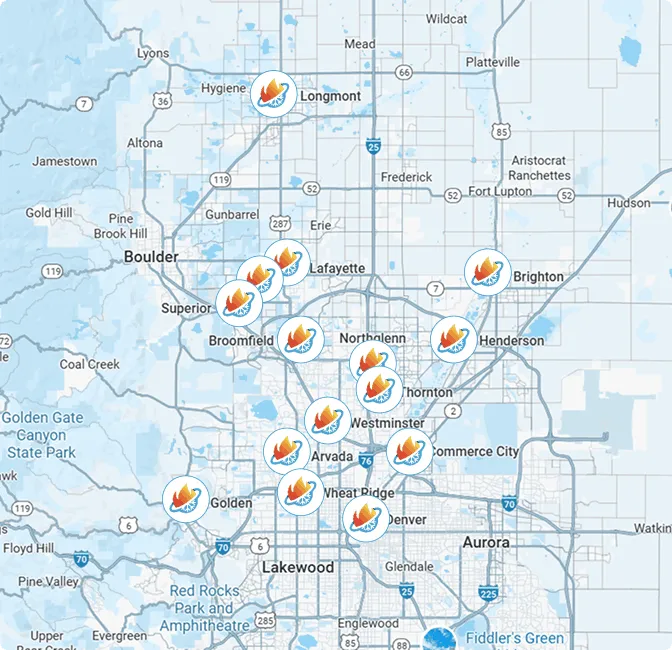
Service Areas