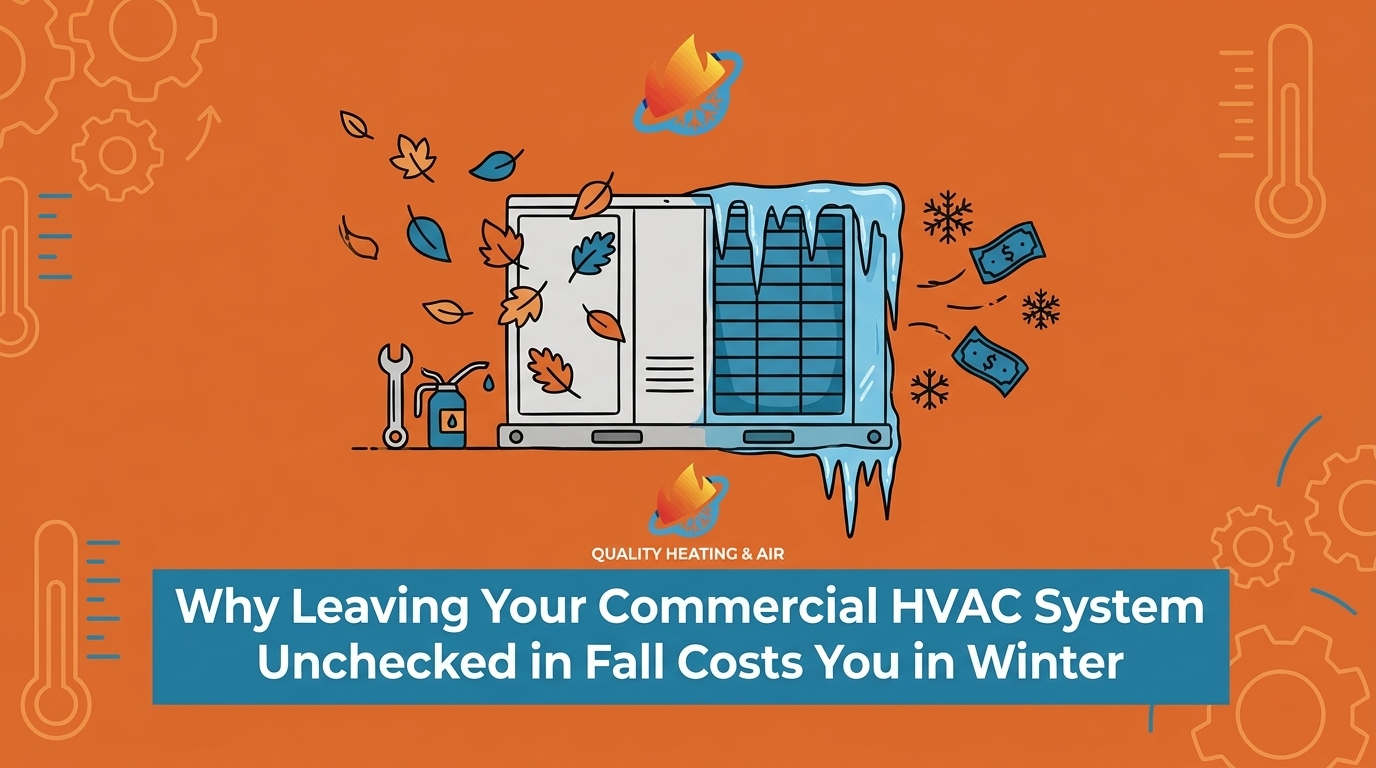
Why Leaving Your Commercial HVAC System Unchecked in Fall Costs You in Winter
The Hidden Operational Risks of Skipping Fall Facility Prep
Your building's climate control might seem fine right now, but understanding exactly why leaving your commercial HVAC system unchecked in fall costs you in winter is a lesson our team at Quality Heating & Air sees too many facility managers learn during a freezing emergency. You are constantly balancing a tight maintenance budget against operational needs, and when looking at early fall tune-ups, it is incredibly tempting to view them as an unnecessary expense rather than a critical risk mitigation strategy. However, the reality our technicians face every year when servicing Northglenn CO commercial properties is that minor mechanical inconsistencies ignored in September compound rapidly as the weather turns.
In our routine fall inspections, we find that a seemingly insignificant issue—like a slightly misaligned sensor, a degrading contactor, or a loose blower belt—does not stay minor for long. By December, when the system is forced to run non-stop to combat freezing temperatures, that small inefficiency transforms into a catastrophic mechanical failure. We know firsthand that modern commercial heating services require precise, proactive calibration to handle the sudden, heavy heating loads of a Colorado winter. The equipment must be tuned to manage intense thermal stress without drawing excess amperage or triggering safety lockouts. The most effective way to lock in system reliability before the first hard freeze hits is by implementing a comprehensive HVAC maintenance plan that prioritizes technical diagnostics over reactive repairs.
How Colorado's September Temperature Swings Mask Mechanical Strain
The September to December transition in Colorado is notoriously harsh on mechanical equipment. In Northglenn, our crews constantly navigate the rapid 30-degree daily temperature swings that are incredibly common during early fall. These dramatic atmospheric shifts force commercial rooftop units to rapidly alternate between cooling the building during warm afternoons and heating the space during chilly nights. This constant back-and-forth cycling causes hidden wear and tear on vital components, stressing contactors, blower belts, and fan motors far more than steady, single-mode operation.
We frequently hear from property managers who assume that once they wrap up their summer AC maintenance and service, the building is adequately prepared for the rest of the year. This is a dangerous misconception that leaves critical infrastructure vulnerable. Early fall is not just a routine seasonal switch where you simply flip the thermostat from "cool" to "heat." It is the critical calibration window where our technicians must prepare the heating elements, verify gas pressure, and test defrost cycles for extreme winter demand.
The Illusion of Normal Operation
During mild fall days, commercial HVAC systems often appear to function perfectly normally, effectively masking deteriorating components. Because the outdoor weather remains relatively temperate, the HVAC equipment only needs to run in short, brief cycles to maintain the target indoor temperature. This short cycling prevents the system from being pushed to its operational limits, which means deep-seated mechanical flaws—like failing capacitors, cracked heat exchangers, or degraded bearing lubrication—do not reveal themselves. It is only when the system is forced to run continuously during a hard freeze that we see these hidden strains cause the equipment to break down completely.
The Mechanical Domino Effect: From Dirty Sensors to Total Shutdowns
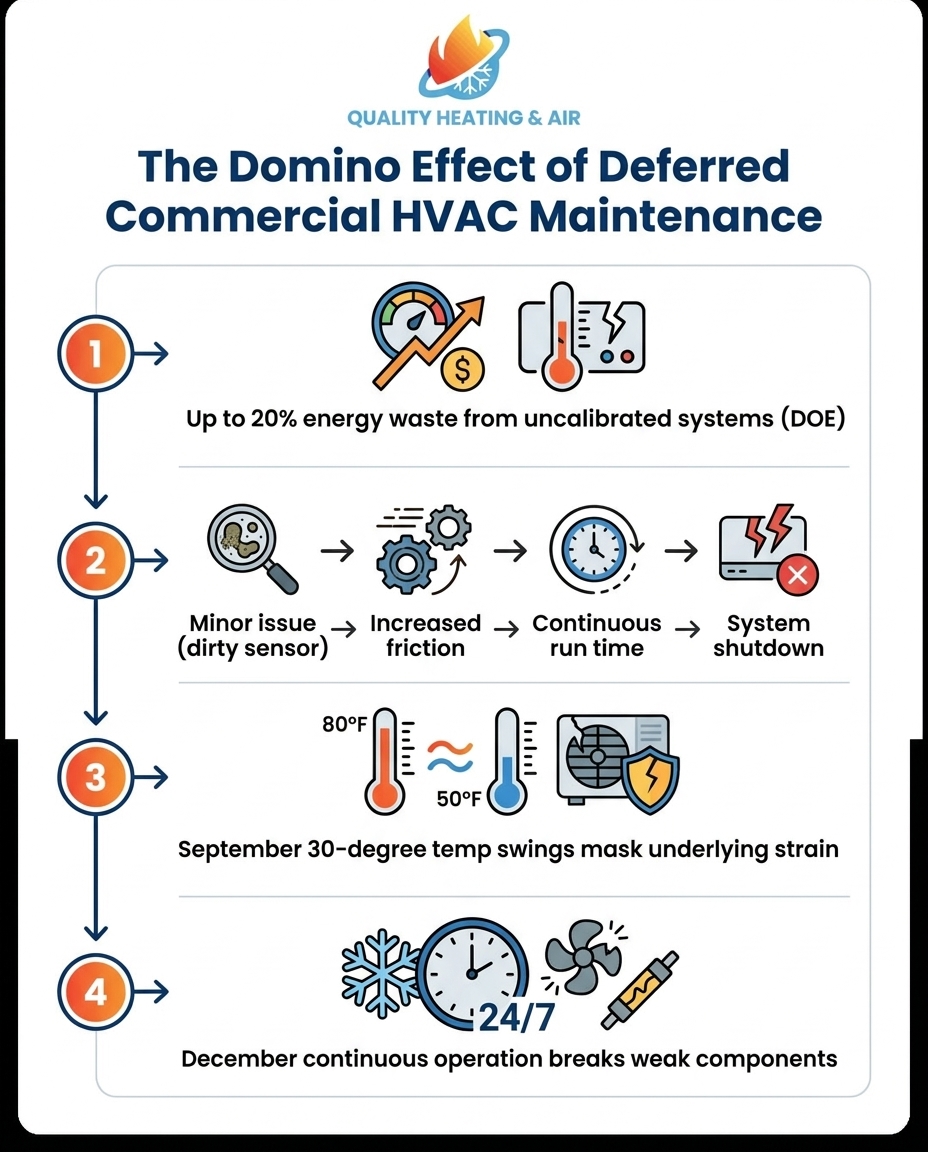
A total commercial HVAC failure rarely happens overnight. Instead, it is the final result of a mechanical domino effect where one small, deferred maintenance item triggers a chain reaction of compounding stress throughout the entire system. Understanding this step-by-step progression highlights exactly why our team stresses early intervention for facility managers.
1. Data Misinterpretation: The failure cycle often begins with a seemingly minor issue, such as a dirty flame sensor or an uncalibrated commercial thermostat. When these delicate components are compromised by dust or electrical drift, they force the system's main control board to misread the actual temperature and operational data.
2. Increased Physical Friction: As the system struggles to compensate for bad data, physical components begin to suffer the consequences. Loose blower belts begin to slip, and failing electrical contactors increase the electrical draw. This adds unnecessary physical friction and electrical resistance to the entire system, causing motors to run hotter than designed.
3. Compounding Inefficiency: The minor inefficiencies compound rapidly. The primary blower motor has to work significantly harder to push air through dirty commercial filters, while the heat exchanger struggles to reach the correct temperature. The system begins to overwork, consuming excess energy while delivering subpar, uneven heating to the building zones.
4. Safety Shutdowns and Total Failure: Eventually, the overworked components overheat or trigger internal safety mechanisms, resulting in a total system shutdown. For example, during a recent winter freeze, our emergency dispatch team responded to a local commercial customer experiencing a complete heating failure. One of our technicians discovered that previous incorrect wiring connections had gone unnoticed during milder weather. Once the system was pushed to its limits by the cold, the poor connections caused a total operational failure. The technician quickly identified the wiring issue and connected everything properly, restoring heat, but a proactive fall check would have caught this anomaly before the building ever got cold.
Diagnosing the root cause of these minor issues early prevents the need for total unit replacements later in the season. Addressing a slipping belt in September is a minor operational task; replacing a burned-out blower motor in December is a major facility emergency.
The Extreme Strain of Continuous Winter Operation
There is a massive operational difference between the intermittent cycling of mild fall weather and the grueling, continuous operation required during a severe December freeze. In our years of serving Northglenn CO commercial properties, we've seen how they face unique geographical challenges due to high-altitude winter conditions and the reality of sudden, deep hard freezes. The dry air and lower atmospheric pressure at this elevation fundamentally change the thermodynamics of heating a large commercial space. The equipment is required to generate more heat for much longer periods just to maintain a baseline comfortable indoor environment.
When an uncalibrated system is forced to run 24/7 to combat sub-zero external temperatures, the operational risks skyrocket. Facility managers face the immediate threat of frozen plumbing infrastructure, severe business downtime, damaged inventory, and the exorbitant fees associated with emergency dispatch calls. According to data from the Building Owners and Managers Association (BOMA), unplanned emergency repairs result in significantly higher operational costs and business disruption compared to scheduled preventive maintenance.
Why 24/7 Run Times Break Weak Components
Components that easily survived 30-minute operational cycles in the fall will rapidly overheat and fail under continuous winter loads. When a commercial furnace or rooftop unit runs non-stop, the internal temperatures of the motors, bearings, and heat exchangers remain elevated for hours on end. This constant, unrelenting heat accelerates lubrication breakdown and thermal stress. If the system was not properly lubricated, cleaned, and calibrated by a professional in September, the physical friction within the moving parts increases exponentially during freezing temperatures. What started as a minor wear-and-tear issue quickly escalates into a catastrophic motor failure or a cracked heat exchanger in a matter of days.
Protecting Critical Infrastructure: Rooftop Units and Boilers
Commercial heating relies heavily on heavy-duty equipment, each with its own specific set of vulnerabilities when exposed to harsh winter conditions. Both commercial rooftop units and boiler systems require specific, targeted fall checks from experienced technicians to ensure they survive the season without failing.
• Commercial Rooftop Units (RTUs) — Winter Vulnerabilities: Exposed directly to harsh winter winds, freezing precipitation, and extreme temperature drops that can freeze internal mechanisms. — Critical Fall Calibration Checks: Inspecting weather stripping, calibrating economizers, checking electrical contactors, and verifying defrost cycle operation.
• Commercial Boiler Systems — Winter Vulnerabilities: Vulnerable to pressure imbalances and localized freezing within the facility's plumbing infrastructure if water temperatures drop. — Critical Fall Calibration Checks: Testing pressure relief valves, flushing sediment, calibrating aquastats, and verifying pump circulation efficiency.
Our maintenance crews know that commercial rooftop units are uniquely exposed to the elements. Sitting unprotected on top of the building, they bear the full brunt of freezing winds and snow accumulation, making structural integrity and defrost mechanisms absolutely critical for survival. Conversely, commercial boiler systems require precise internal calibration to maintain consistent water temperatures and pressure throughout a massive network of pipes. An uncalibrated boiler can fail to push hot water to the furthest reaches of a building, leading to localized freezing and disastrous burst pipes. Ensuring these heavy-duty systems are meticulously prepped in the fall is non-negotiable for protecting your building's core infrastructure.
The Ripple Effect on Indoor Air Quality and Energy Waste
The consequences of deferred commercial maintenance extend far beyond mechanical breakdowns; they have a direct and severe impact on your building's operational efficiency and the health of its occupants. According to data from the U.S. Department of Energy (DOE), routine maintenance can reduce HVAC energy consumption by up to 20%. In our experience, when commercial systems are left unchecked, dirty evaporator coils and severely clogged commercial air filters force blower motors to work significantly harder just to push air through the ductwork. This excess strain translates directly into wasted electricity, causing utility bills to spike unnecessarily during the winter months.
Furthermore, as commercial buildings are sealed tightly against the cold winter air, poor ventilation exacerbates existing problems. Without proper, calibrated airflow, dust, allergens, and airborne pathogens become trapped inside the facility, severely degrading the environment. Connecting clean, precisely calibrated systems to your maintenance schedule ensures a healthier, more productive environment for employees, tenants, and customers. Prioritizing indoor air quality through routine filter changes and duct inspections simultaneously keeps energy waste to an absolute minimum while protecting the people inside your building.
Why Transparent Diagnostics Are Your Best Defense
One of the biggest hurdles facility managers face is the persistent stigma that maintenance inspections are just an excuse for an "upsell." At Quality Heating & Air, our team's commitment to transparent diagnostics eliminates this concern entirely by focusing on data-driven, clear communication. We believe that empowering facility managers with exact, step-by-step explanations of their equipment's status is the ultimate defense against winter breakdowns.
For instance, during a recent summer evaluation, one of our technicians thoroughly inspected a customer's commercial furnace performance, clearly explained all potential concerns regarding aging components, and outlined the available options without pressure. This level of knowledgeable service allows property managers to understand the exact return on investment (ROI) of proactive care. Navigating the September to December transition requires a technician who doesn't just check boxes on a clipboard, but who actively explains findings so you can budget effectively. Making informed, data-backed decisions in September is the only proven way to prevent reactive, chaotic panic in December.
Frequently Asked Questions About Commercial Winter Prep
What happens if you don't service your commercial HVAC before winter?
Skipping fall service significantly increases the risk of catastrophic mechanical failures, energy waste, and emergency downtime. Minor issues like dirty sensors or loose belts compound under the extreme strain of continuous winter operation, eventually causing the system to shut down entirely. Without proactive calibration, facility managers often face frozen pipes, tenant complaints, and poor indoor air quality when the weather turns freezing.
How do you prepare a commercial HVAC system for a hard freeze?
Preparing a commercial HVAC system for a hard freeze requires a professional technician to calibrate thermostats, inspect heat exchangers, and test all safety controls. The process involves verifying that defrost cycles on rooftop units are fully operational and that boiler pressures are perfectly balanced. This comprehensive check ensures the equipment can handle continuous 24/7 run times without overheating or breaking down under the stress.
How often should a commercial HVAC system be serviced?
We strongly recommend that a commercial HVAC system be professionally serviced at least twice a year, typically in the early spring and early fall. These transitional periods allow technicians to prepare the equipment for the heavy cooling loads of summer and the intense heating demands of winter. Facilities with specialized requirements, high occupancy, or older equipment may require quarterly maintenance checks to ensure optimal reliability year-round.
What is included in a comprehensive commercial HVAC fall maintenance check?
A comprehensive fall check includes inspecting and cleaning the burner assembly, testing flame sensors, lubricating moving parts, and replacing commercial-grade air filters. Technicians will also calibrate the thermostat, inspect the heat exchanger for structural cracks, and measure electrical voltage on all motors and contactors. This thorough evaluation identifies hidden wear and tear before it can cause a system failure during the harsh winter months.
Why do commercial rooftop units fail during extreme cold?
Commercial rooftop units fail during extreme cold primarily because they are exposed directly to freezing winds and precipitation, which can freeze internal components if the defrost cycle is uncalibrated. Additionally, the continuous operation required to heat a building during sub-zero temperatures causes weak, unlubricated parts to overheat and break. Rapid temperature drops can also cause older belts to become brittle and snap under heavy operational loads.
Can deferred maintenance void my commercial HVAC warranty?
Yes, neglecting routine professional maintenance can absolutely void a commercial HVAC manufacturer's warranty. Most manufacturers stipulate that the equipment must be serviced annually by a licensed technician to keep the warranty agreement valid and active. If a major component like a heat exchanger or compressor fails, the manufacturer will typically request documented service records before approving the warranty claim.
Take Control of Your Winter Facility Operations
Small, deferred fall maintenance items are often the direct, underlying cause of catastrophic winter breakdowns. As we have seen, ignoring a minor calibration issue in September allows mechanical stress to compound rapidly, ultimately leading to total system shutdowns when your Northglenn CO commercial properties need heat the most. A clear, technically sound fall inspection validates proactive maintenance over the chaos of emergency repairs, keeping your facility running smoothly through the harshest weather.
Our team at Quality Heating & Air encourages facility managers to explore their options for professional evaluation before the deep freeze sets in. By partnering with our experts to establish a structured, transparent maintenance plan, you can lock in system reliability, protect your commercial infrastructure, and ensure a safe, comfortable environment for everyone who relies on your building.

Testimonials
Neighbors trust Quality Heating & Air for honest work and fair pricing.
Service Areas