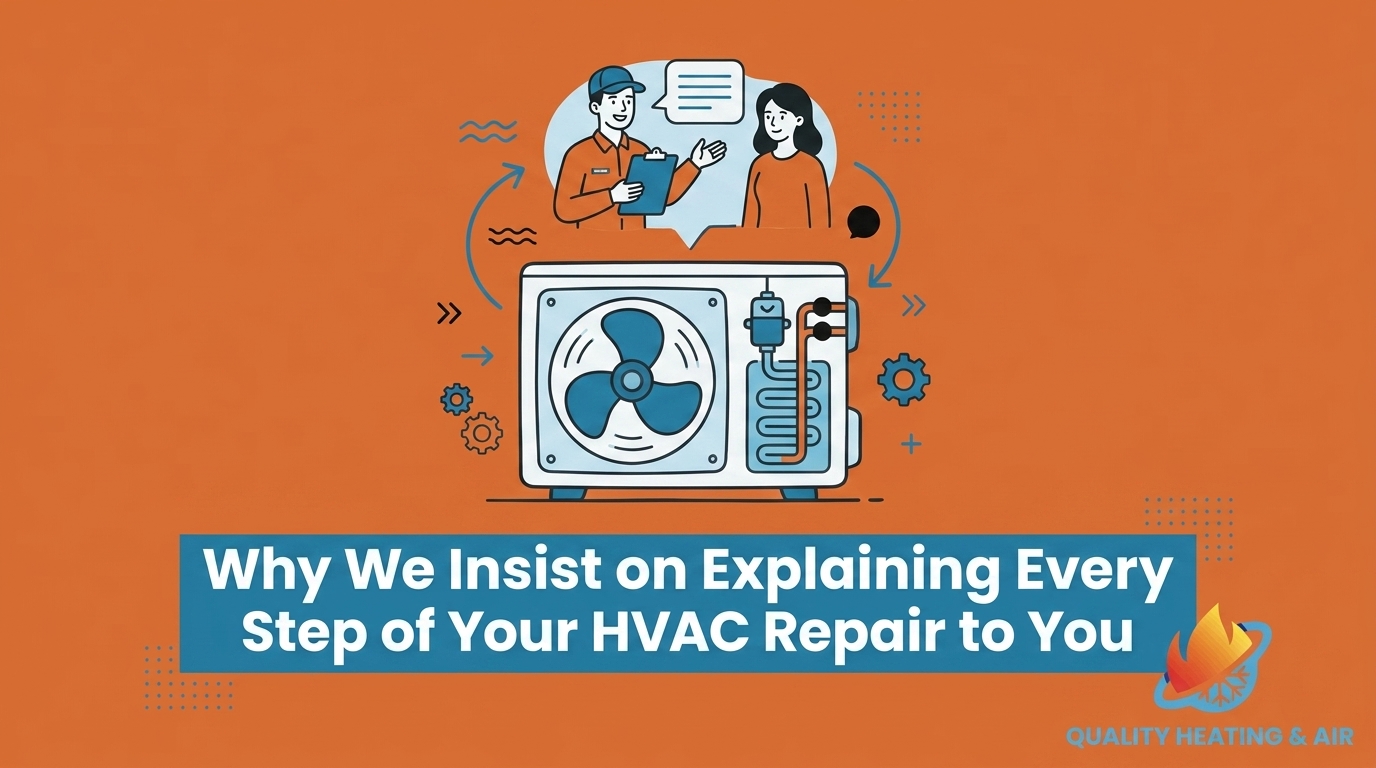
Why We Insist on Explaining Every Step of Your HVAC Repair to You
The Anxiety of the Unexplained Repair Bill
Your air conditioning system suddenly stops blowing cold air during a period of late-summer August heavy usage, and while the sweltering indoor heat is stressful enough, nothing compares to the frustration of receiving a vague invoice with zero explanation. That is exactly why we insist on explaining every step of your HVAC repair to you. A typical pattern we see in the home service industry is the transactional service call: a technician arrives, spends fifteen minutes poking around the equipment, replaces a part, hands over a bill, and leaves. You are left staring at a total at the bottom of the page, a scribbled note about a replaced component, and a lingering sense of doubt about what actually happened.
When you need reliable HVAC services, you deserve more than just a quick fix—you deserve complete clarity. The anxiety of home repairs rarely comes from the mechanical failure itself; it comes from the unknown. Homeowners worry they are paying for parts they do not need, or that the system is going to break down again the following week because the underlying issue was never addressed. We believe that an educated homeowner is an empowered homeowner.
To cure this anxiety, we rely on a process known as the diagnostic hand-off. Instead of keeping our testing methods a secret, we actively involve you in the discovery process. We want you to see what we see, understand how your equipment operates, and know exactly where your hard-earned money is going. This shift from a transactional visit to an educational diagnostic completely changes the dynamic of a repair call, turning a stressful breakdown into an opportunity to learn how to better protect your home comfort system.
Fixing the Symptom vs. Curing the Root Cause
There is a massive technical and financial difference between merely replacing a broken part and understanding why that part broke in the first place. In the mechanical world, a failed component is almost always a symptom of a larger, hidden problem. If a technician only treats the symptom, you are guaranteed a repeat failure in the near future.
The quick fix: Swapping out a blown capacitor or thawing a frozen evaporator coil without asking "why" is the fastest way to get the cold air flowing again. However, if the technician fails to notice that severely restricted airflow caused the blower motor to overheat and short out that capacitor, the new part will suffer the exact same fate. Rushed contractors often miss these underlying issues because they are pressured to move on to the next call. When they skip the root cause analysis, you end up paying for multiple service visits and multiple parts when one thorough diagnostic would have solved the problem permanently.
One local homeowner reached out for a second opinion after a previous contractor diagnosed a catastrophic failure and insisted on a full system replacement. By taking the time to trace the failure back to its origin, we diagnosed the actual root cause and successfully repaired the existing furnace unit. This saved the customer a massive headache and reinforced why treating the root cause is always the superior approach.
Identifying the True Culprit Behind the Breakdown
Tracing a failure back to its origin requires patience and comprehensive system testing. We do not just look at the part that stopped working; we look at the entire ecosystem of your heating and cooling equipment. A proper diagnosis involves measuring electrical draw, checking static pressure, evaluating ductwork sizing, and analyzing refrigerant levels. When you need air conditioning repairs, this holistic testing approach ensures that we catch the hidden stress points before they cause a domino effect of mechanical failures.
The Hidden Costs of Rushed Diagnostics
Treating only the symptom leads to recurring issues that drain your wallet over time. An accurate root-cause diagnosis protects your long-term investment. To illustrate how symptoms and root causes differ, consider these common mechanical failures:
• Blown dual-run capacitor — The Hidden Root Cause (The "Why"): Overheating blower motor due to a clogged air filter — The Long-Term Solution: Replace capacitor AND correct the airflow restriction
• Frozen indoor evaporator coil — The Hidden Root Cause (The "Why"): Low refrigerant charge from a micro-leak in the copper line — The Long-Term Solution: Locate and seal the leak, then recharge the system
• Furnace short-cycling (turning off quickly) — The Hidden Root Cause (The "Why"): Dirty flame sensor failing to detect the burner ignition — The Long-Term Solution: Clean the sensor assembly and verify proper gas pressure
• Compressor failure (hard lockout) — The Hidden Root Cause (The "Why"): Chronic electrical surges or undersized electrical wiring — The Long-Term Solution: Install a hard start kit or upgrade the dedicated circuit
The Diagnostic Hand-Off: Our Standard Operating Procedure
Our commitment to absolute transparency means we want to give you a clear standard to hold any contractor to. You should never feel left in the dark about what you are paying for. To guarantee this level of clarity, the Quality Heating & Air standard operating procedure dictates a specific, step-by-step process for every single service visit. This is how we ensure the diagnostic hand-off is executed flawlessly every time.
1. Identifying the symptom and listening to your experience: Before we touch a single tool, we listen to you. You know your house better than anyone. If you heard a strange grinding noise last Tuesday, or if the back bedroom has always been five degrees warmer than the hallway, those details are critical clues. We start by documenting exactly what you have observed.
2. Finding the root cause through rigorous testing: We move beyond the obvious failure and test the system as a whole. We check the electrical components, the airflow dynamics, and the mechanical linkages to find out exactly why the primary part gave out.
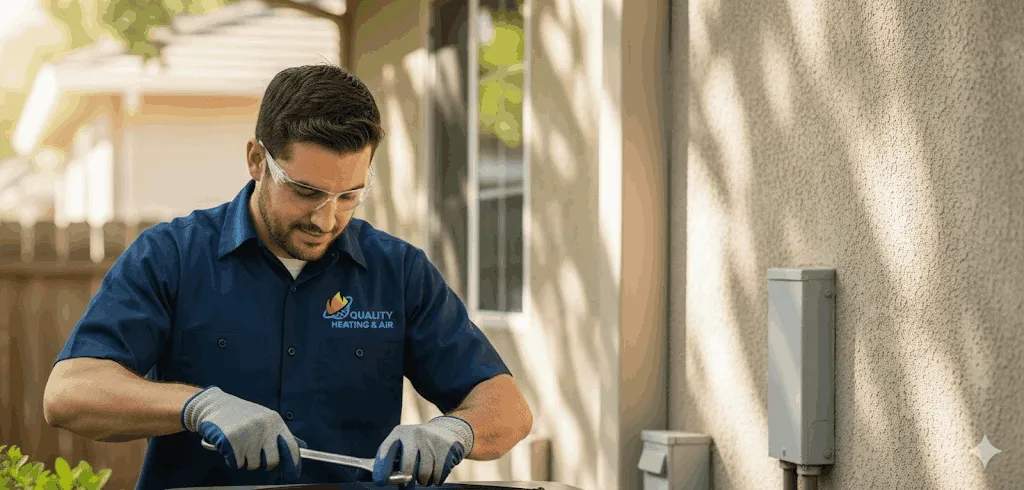
3. Physically walking you to the equipment: We do not just tell you what is broken; we show you. We will invite you to the utility closet, the basement, or the backyard to physically look at the failed component. We will point out the scorch mark on the control board or the excessive dust buildup on the blower wheel so you can see the evidence with your own eyes.
4. Explaining the "why" and how to prevent it: Finally, we explain the mechanics of the failure in plain, everyday language. We discuss how the system is supposed to function, why it deviated from that baseline, and what specific steps we can take together to prevent it from happening again moving forward.
One local homeowner called for routine system checks and was surprised when our technician arrived on time, walked them through every single check, and explained the system's condition thoroughly. That level of education left them feeling pleased and empowered rather than confused. This dedication to education is a major part of the difference between family-owned and corporate HVAC providers. We prioritize your understanding over rushing to the next appointment.

How Education Prevents Future Breakdowns in Colorado
Understanding how your specific environment impacts your mechanical equipment is a massive advantage. Operating an HVAC system in Northglenn CO comes with unique environmental challenges that directly affect how often your equipment needs attention. The combination of our dry climate, high altitude, and extreme seasonal temperature swings creates an environment where airborne dust is a constant battle. When homeowners understand this dynamic, they are far better equipped to protect their investment.
Ten extra minutes of education during a service call often prevents simple user errors, such as neglecting filter changes during peak seasons. When a technician explains exactly how a clogged filter forces the blower motor to pull harder—increasing electrical consumption and heat buildup—the standard chore of swapping a filter suddenly makes perfect sense. It is no longer just a recommendation; it is a clear, logical step to prevent a thousand-dollar repair.
Battling Airborne Dust and System Strain
The dry air in our region means that dust, pet dander, and particulate matter stay airborne longer and get pulled into your return vents at a high volume. If your filter is not up to the task, or if it is left in place too long, that dust bypasses the media and coats the indoor evaporator coil. A dirty coil cannot absorb heat effectively. This forces the outdoor compressor to run longer cycles, accelerating component wear and driving up your monthly utility bills. Restricted airflow is the number one enemy of any forced-air system, and in a dusty environment, that restriction happens quickly.
The Power of Proactive Homeowner Habits
Once you understand the "why" behind system maintenance, simple daily actions become powerful preventative tools. Extending the lifespan of your equipment through informed daily use includes checking your filter monthly rather than waiting for a calendar reminder, keeping the area around your outdoor condenser clear of tall grass and debris, and ensuring that your indoor supply vents are fully open. Closing vents in unused rooms actually increases static pressure and makes the blower motor work harder, a fact that most homeowners only learn through a transparent diagnostic conversation.
Empowering Homeowners Through Preventative Knowledge
Knowledge is unequivocally the most effective preventative maintenance tool in existence. A technician can clean and calibrate your system once or twice a year, but you are the one living with the equipment every single day. When you know what a healthy system sounds like, feels like, and smells like, you become the first line of defense against catastrophic failures. An educated homeowner catches minor hiccups before they evolve into major, expensive disasters.
We recently serviced a furnace for a local customer to ensure it was ready for efficient operation. We serviced the unit, explained the entire process to them, and provided specific maintenance tips for their home's layout. As a result, their system is running efficiently, and they received valuable advice on daily upkeep that will keep their equipment healthy for years to come.
Understanding Your System's Normal Rhythms
Recognizing the baseline performance of a healthy system allows you to spot early warning signs immediately. You should be familiar with the normal hum of the compressor, the sound of the blower motor engaging, and the volume of air coming from your registers. If you notice a deviation from these normal rhythms, it is time to investigate. By enrolling in a preventative maintenance plan, you ensure that a professional is regularly checking these baselines, but your daily observations are just as valuable.
Watch for these early warning signs:
• Unusual noises: Grinding, squealing, or rattling sounds indicate loose belts, failing bearings, or unbalanced fan blades.
• Short cycling: If the unit turns on and off rapidly without reaching the set temperature, it is struggling with airflow or a faulty sensor.
• Inconsistent temperatures: Hot and cold spots throughout the house often point to ductwork issues or a failing blower motor.
• Spiking utility bills: A sudden, unexplained jump in your energy usage means the system is working overtime to produce the same amount of comfort.
• Strange odors: Musty smells can indicate biological growth on the coil, while electrical odors require immediate professional attention.
Building Trust That Outlasts a Single Service Call
Homeowners deserve to know exactly what they are paying for, without exception. The psychological reassurance of transparency cannot be overstated. When a contractor takes the time to show you the broken part, explain the mechanics of the failure, and offer a logical solution, the anxiety of the service call evaporates. You are no longer at the mercy of a stranger's invoice; you are an active participant in the care of your home.
The core of the Quality Heating & Air standard operating procedure is establishing that a true HVAC partner prioritizes education over a quick sale. We do not want to just fix your equipment today and disappear. We want to be the trusted advisors you rely on for the next decade. Building that kind of long-term relationship requires honesty, patience, and a willingness to share our expertise openly. When we empower you with knowledge, we build a foundation of trust that outlasts any single repair.
Experience a Transparent Approach to Home Comfort
The diagnostic hand-off is more than just a customer service policy; it is a better way to manage your home comfort. By identifying the root cause, physically showing you the failed component, and explaining how to prevent future issues, we eliminate the stress of the unknown. You deserve to work with a team that values your understanding and respects your investment.
If your system is acting up, or if you simply want a second opinion from a contractor who will actually explain the "why," we invite you to experience an educational, pressure-free service call. Whether you need a seasonal tune-up or a complex heating repair, reach out to us for an honest evaluation. We will walk you through every step of the process, ensuring you have the clarity and confidence you need to keep your home comfortable all year long.
Frequently Asked Questions
What should an HVAC technician do during a service call?
A thorough technician should inspect the entire system, not just the part that failed. They should check electrical connections, measure airflow, verify refrigerant levels, and clean critical components. Most importantly, they should explain their findings to you clearly and show you any parts that require replacement.
How do I know if my HVAC contractor is honest?
An honest contractor will gladly show you the broken component and explain exactly why it failed. They will answer your questions patiently without using high-pressure sales tactics or rushing you into a decision. Transparency in pricing and a willingness to provide a written, detailed estimate are also strong indicators of integrity.
What questions should I ask an HVAC repairman?
Always ask what the root cause of the failure was, rather than just what part broke. Ask how you can prevent the issue from happening again, and request to see the damaged component. You should also ask if the repair comes with any warranties on parts or labor.
Why is my AC freezing up in late summer?
Air conditioners typically freeze due to severely restricted airflow or low refrigerant levels. In late summer, the most common culprit is a clogged air filter that has accumulated dust and debris over months of heavy usage. When air cannot flow over the indoor coil, the condensation freezes solid.
How can a homeowner verify a broken HVAC part?
You can verify a broken part by asking the technician to perform a physical demonstration, known as the diagnostic hand-off. Ask them to show you the multimeter reading for a failed electrical component or point out the physical damage on a mechanical part. A reputable technician will always be happy to prove their diagnosis.

Testimonials
Neighbors trust Quality Heating & Air for honest work and fair pricing.
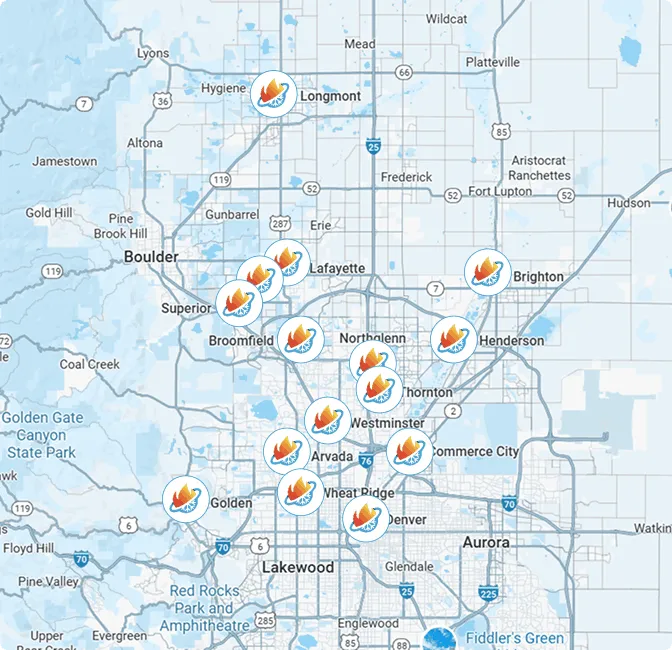
Service Areas