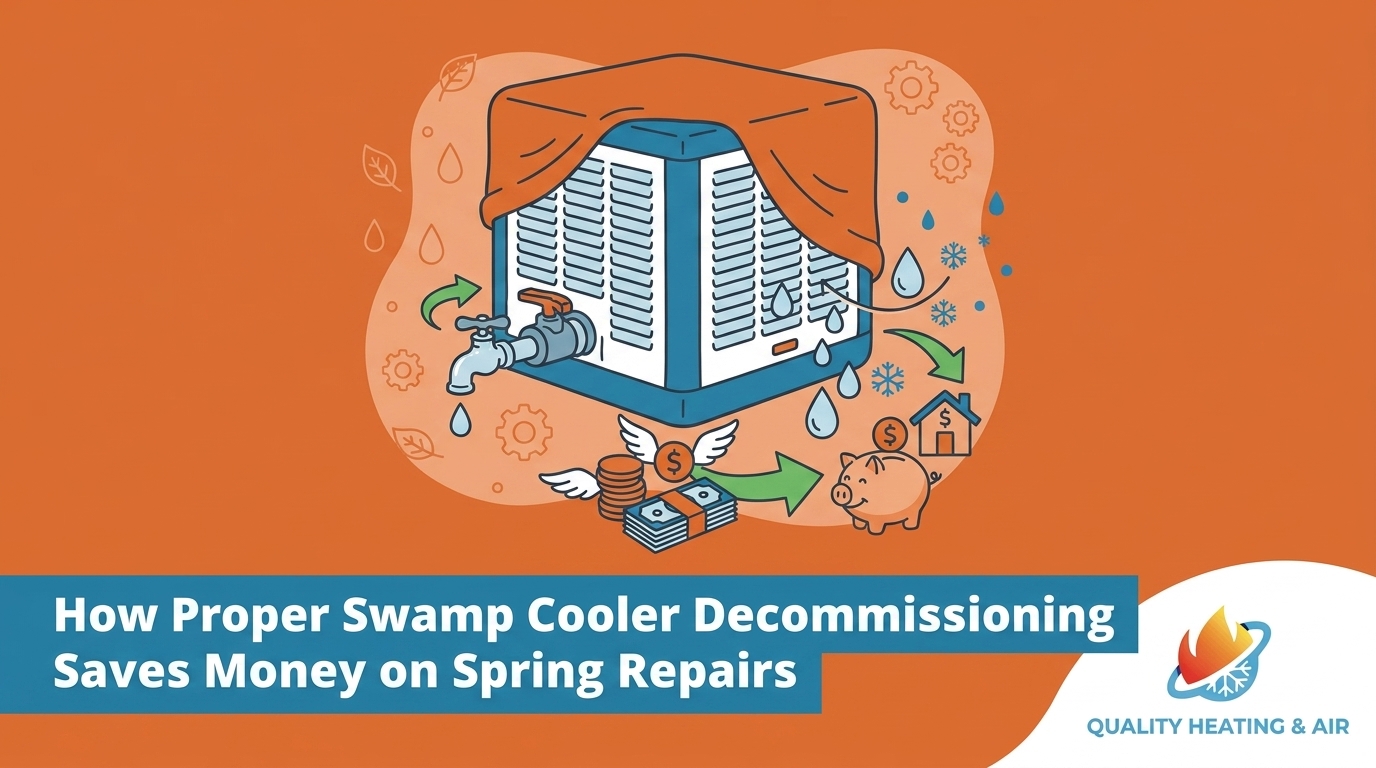
How Proper Swamp Cooler Decommissioning Saves Money on Spring Repairs
Navigating the Late-Summer Shift: Why Thermostat Shutdowns Fall Short
As August draws to a close and the late-summer to early fall transition begins, understanding how proper swamp cooler decommissioning saves money on spring repairs is critical for homeowners. The most common mistake we see is assuming that simply turning the thermostat to "off" means the cooling system is ready for winter. While the fan motor stops spinning and the pump stops moving water, the physical plumbing and internal components remain fully pressurized and saturated. Leaving water trapped in these systems creates a ticking time bomb as freezing temperatures approach. Making the decision to invest in a professional winterization rather than relying on a simple thermostat shutoff is the single most effective way to protect your evaporative cooler from catastrophic mechanical failure.
Ready to protect your system? Schedule your air conditioning services or explore our HVAC maintenance plan today.
The illusion of safety provided by a blank thermostat screen often catches homeowners off guard. When you power down the unit from inside the house, the external water supply valve remains open. The copper or plastic lines running across your roof or up the side of your home are still filled with water. The media pads are still soaking wet, and the bottom reservoir pan contains gallons of standing water.
To understand why this is so dangerous, we have to look at the physical realities of outdoor HVAC equipment. Evaporative coolers rely on a constant supply of fresh water to function. During the summer, this continuous flow keeps the system flushed and operational. However, once the ambient temperatures drop and the water sits idle, that same lifeblood becomes the system's greatest vulnerability.
Professional decommissioning is not just a matter of flipping a switch or throwing a canvas cover over the unit. It is a comprehensive mechanical process that completely isolates the equipment from its water source, purges all residual moisture from the plumbing, and secures the internal components against the harsh realities of winter weather. By taking proactive steps now, you prevent the compounding damage that turns a routine spring startup into a massive repair project.
The Physics of the First Freeze on Roof-Mounted Units
The underlying problem: Many homeowners underestimate the destructive power of freezing water, especially when it comes to delicate plumbing components located on top of their homes. Roof-mounted evaporative coolers are fully exposed to ambient weather conditions, lacking the ambient radiant heat that ground-level units sometimes receive from the foundation of a house.
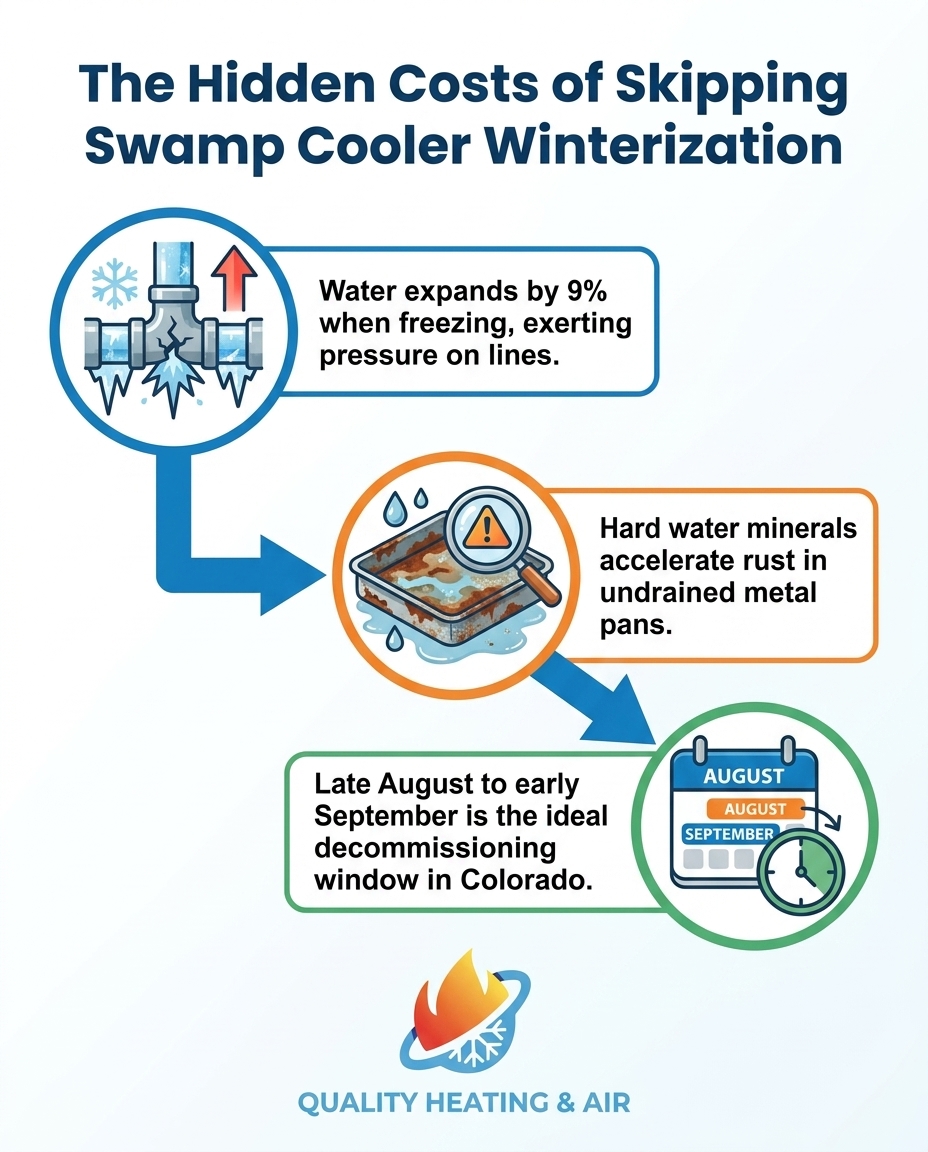
The mechanical cause: Water is one of the few substances on earth that expands when it transitions from a liquid to a solid state. Specifically, water expands by approximately 9% when it freezes. While 9% might not sound like a massive increase, it occurs within the rigid confines of copper tubing, brass fittings, and hard plastic supply lines. This expansion exerts thousands of pounds of pressure per square inch (PSI) against the walls of the plumbing. Because the water has nowhere to go, the pressure forces the material to stretch until it eventually splits, cracks, or shatters.
The professional solution: Understanding how quickly the first freezing temperatures can hit the Denver metro area—often arriving unpredictably early in late September—makes proactive late-summer action critical. A professional shutdown removes the catalyst for this damage entirely by completely evacuating the water from the system.
Vulnerable Components in Freezing Temperatures
• Copper Supply Lines: While durable against heat and general wear, thin-walled copper tubing will split down the middle when the water inside freezes solid.
• Polyurethane and Plastic Tubing: These materials become incredibly brittle in sub-zero temperatures. Freezing water will cause them to shatter or crack at the connection joints.
• Float Valves: The delicate brass and plastic mechanisms that regulate water levels in the pan are easily destroyed by expanding ice, leading to massive leaks when the water is turned back on.
• Water Pumps: If the internal housing of the recirculating pump is left full of water, the freezing action will crack the plastic casing and destroy the internal impeller.
The transition from a warm September afternoon to a freezing overnight low happens rapidly. If the system is still pressurized when that first cold snap hits, the damage is done in a matter of hours. By the time the ice thaws the next day, the structural integrity of the cooler's plumbing has been compromised, though you likely won't realize it until you attempt to start the system months later.
Colorado's Hard Water: The Catalyst for Winter Rust
The damage caused by improper winterization goes far beyond the immediate threat of freezing temperatures. In Northglenn CO, the local water supply contains high levels of dissolved minerals, primarily calcium and magnesium. While this hard water is perfectly safe for daily household use, it is highly destructive to HVAC equipment when left unmanaged.
During the summer cooling season, your evaporative cooler constantly cycles fresh water, which helps dilute these minerals. However, when the system is shut off at the thermostat and the reservoir pan is left full of stagnant water, a damaging chemical process begins. As the water slowly evaporates over the dry winter months, it leaves behind a highly concentrated sludge of calcium carbonate and magnesium.
This mineral buildup acts as a catalyst for severe oxidation. When concentrated hard water sits against galvanized steel or metal components for six to eight months, it aggressively eats away at the protective coatings. This process, known as galvanic corrosion, turns minor surface wear into deep, structural rust. What might have been a perfectly functional reservoir pan in August can easily become a rusted-out sieve by April.
We see the aftermath of this neglect constantly. For example, one homeowner in Northglenn reached out during a recent summer when their swamp cooler completely failed to hold water. They needed a full replacement and comprehensive cleanup after years of hard water damage and skipped winterizations had degraded the old system beyond repair. Our team replaced the unit and followed up to ensure everything was functioning well, but this scenario is entirely preventable with proactive late-summer maintenance.
The Visual Progression of Hard Water Damage
• Late Summer (Shutoff) — Condition of the Swamp Cooler Pan: Pan is full of water; minor mineral scaling visible on the edges.
• Mid-Winter — Condition of the Swamp Cooler Pan: Water partially evaporated; thick, chalky white calcium deposits form a crust over the metal.
• Late Winter — Condition of the Swamp Cooler Pan: Oxidation accelerates beneath the mineral scale; rust begins to flake away the protective metal coating.
• Spring Startup — Condition of the Swamp Cooler Pan: Structural failure; the pan has rusted through, resulting in massive leaks across the roof.
Skipping a professional cleanup and drain-down means you are voluntarily allowing these corrosive elements to sit and multiply. A proper decommissioning service removes this stagnant water, clears out the existing mineral scale, and leaves the pan completely dry, halting the oxidation process in its tracks.
Stagnant Water and Springtime Indoor Air Quality
The underlying problem: Mechanical damage and rusted parts are highly visible consequences of poor winterization, but there is an equally severe, invisible threat: degraded air quality. Evaporative coolers rely on thick media pads—often made of aspen wood fibers or rigid corrugated cellulose—to cool the air. When the system is shut down improperly, these pads are left completely saturated.
The biological cause: A dark, enclosed swamp cooler housing combined with wet, stagnant media pads creates the ultimate breeding ground for biological growth. Mold, mildew, and airborne bacteria thrive in these exact conditions. Over the course of the winter, even as temperatures fluctuate, these microorganisms establish deep root systems within the fibers of the cooler pads. The stagnant water left in the bottom pan also becomes a petri dish for bacterial growth.
The professional solution: When spring arrives and you turn the system back on, the fan immediately draws air through these contaminated pads and pushes it directly into your home's ductwork. This blasts concentrated mold spores and musty odors into your living spaces, triggering allergies and respiratory irritation. By investing in proper winterization, technicians ensure the system is dry and sterile. If you want to maintain a healthy home environment year-round, pairing a proper shutdown with comprehensive indoor air quality solutions ensures your family breathes clean air regardless of the season.
Signs Your IAQ Was Compromised Over Winter
• Musty odors: A distinct "dirty sock" or damp earth smell blowing through the vents during the first few days of spring operation.
• Increased dust: Degraded, rotting aspen pads break down over the winter and blow fine particulate matter into the home.
• Allergy flare-ups: Unexplained sneezing, coughing, or asthma symptoms that coincide with turning on the cooling system.
• Visible discoloration: Black or green spotting on the interior vents or around the cooler housing itself.
What a Professional Late-Summer Shutdown Actually Looks Like
A proper shutdown goes far beyond flipping a switch; it requires mechanical disconnection, thorough cleaning, and specialized knowledge of HVAC fluid dynamics. Because evaporative systems are hard-plumbed into your home's main water supply, attempting to winterize the unit without the proper tools or experience often results in isolated pockets of water being left behind in hidden valves.
Based on what our technicians see on late-summer service routes, the most severe damage usually happens when a homeowner attempts a DIY drain but fails to clear the water from the internal pump housing or the primary supply line. Professional technicians follow a strict, multi-point protocol to ensure absolute safety.
Another local customer recently requested comprehensive checks and explanations for their cooling system before the season ended. Our technicians performed the necessary evaluations, explained the process clearly, and provided information on different operational scenarios. Educating homeowners on the exact condition of their equipment is a core part of this service, ensuring there are no surprises when the weather warms up again.
The Professional Decommissioning Process
While we strongly advise against attempting this work yourself due to the risks of working on pitched roofs and handling pressurized plumbing, it is helpful to understand exactly what a professional shutdown entails:
• Complete Water Isolation: Technicians locate the primary shutoff valve—often located deep in a crawlspace or utility closet—and physically disconnect the supply line to ensure no accidental water flow can occur during the winter.
• Pneumatic Line Purging: Gravity alone is rarely enough to clear a water line. Professionals use compressed air to blow out the copper or plastic tubing, ensuring not a single drop of water remains to freeze and expand.
• Reservoir Evacuation and Cleaning: The bottom pan is completely drained. Technicians then scrub away late-summer mineral scaling, removing the calcium deposits that cause winter rust.
• Component Inspection: The float valve, pump, and belt drive are inspected for wear. Identifying a frayed belt or a failing motor now means it can be noted and scheduled for replacement during your routine AC and cooling maintenance in the spring, rather than causing an emergency breakdown on the first hot day.
• Weatherproofing: The system is sealed with a tightly fitted, heavy-duty cover to prevent snow, ice, and winter debris from entering the housing and damaging the internal components.
Preparing the Entire Home for Seasonal Changes
Decommissioning the swamp cooler is only one half of the late-summer HVAC transition. Colorado is famous for its "shoulder seasons"—those unpredictable weeks in September and October where you might need air conditioning on a Tuesday and a roaring furnace by Thursday.
Because the weather shifts so rapidly, treating your cooling and heating systems as completely separate entities often leaves you vulnerable to sudden cold snaps. The most efficient and secure way to manage this transition is to bundle your evaporative cooler shutdown with your heating system preparation.
When a technician is already at your home properly securing the roof-mounted cooling unit, having them transition indoors to inspect the furnace burner, check the heat exchanger, and test the ignition system ensures uninterrupted comfort. It prevents the frantic rush of trying to book a heating service call on the morning of the first frost, while simultaneously guaranteeing your cooling system is safely put to bed for the winter.
Common Questions About Swamp Cooler Winterization
What happens if you don't winterize a swamp cooler?
Water left in the supply lines will freeze, expand by roughly 9%, and crack the pipes or shatter the plastic fittings. Additionally, water left in the reservoir pan will stagnate over the winter, causing severe rust and mineral degradation to the metal housing. This combination inevitably leads to major leaks, water damage to the roof, and the need for expensive part replacements in the spring.
When should I shut down my swamp cooler in Colorado?
Ideally, you should schedule your decommissioning in late August or early September. The process must be completed before the first freezing temperatures hit the area. Because the Denver metro and surrounding regions can experience unpredictable, early fall cold snaps, waiting until late October is highly risky and often results in freeze damage before the technician can arrive.
Do you have to drain a swamp cooler for winter?
Yes, completely draining the system is mandatory for winter survival. Even small amounts of residual water left in the pump housing, the float valve, or the supply lines can cause localized freezing. This localized expansion exerts enough pressure to crack brass fittings and split copper tubing, meaning a partial drain is just as dangerous as no drain at all.
Can a swamp cooler freeze?
While the mechanical housing and dry metal components themselves can easily withstand cold temperatures, any water left inside the unit, lines, or media pads will freeze solid. This freezing action is what destroys the system. Roof-mounted units are particularly vulnerable because they are exposed to harsh wind chills and ambient freezing temperatures from all sides.
Why is professional decommissioning recommended over DIY?
Professionals have the equipment to ensure all lines are completely blown out pneumatically and disconnected properly, leaving zero residual moisture. Furthermore, working on a pitched roof with specialized plumbing requires technical expertise. Technicians can also spot early signs of mechanical wear and address them before they compound over the winter, saving you from unexpected breakdowns in the spring.
Protect Your Cooling Investment Before Temperatures Drop
Properly decommissioning your evaporative cooler is the single best defense against rusted reservoir pans, split supply lines, and degraded indoor air quality. By taking action in late summer, you eliminate the physical risks of freezing water and hard water corrosion, ensuring your system is pristine and ready to operate when the heat returns.
Don't wait for the first unexpected freeze to test the durability of your plumbing. Be proactive and secure your equipment by enrolling in a comprehensive HVAC maintenance plan today. Our technicians are ready to provide the thorough, expert shutdown your system needs to survive the winter unscathed.

Testimonials
Neighbors trust Quality Heating & Air for honest work and fair pricing.
Service Areas