Preparing Your Northglenn Commercial Property for the Shift from Cooling to Heating
The Hidden Danger of Late-Summer Weather Swings on Building Systems
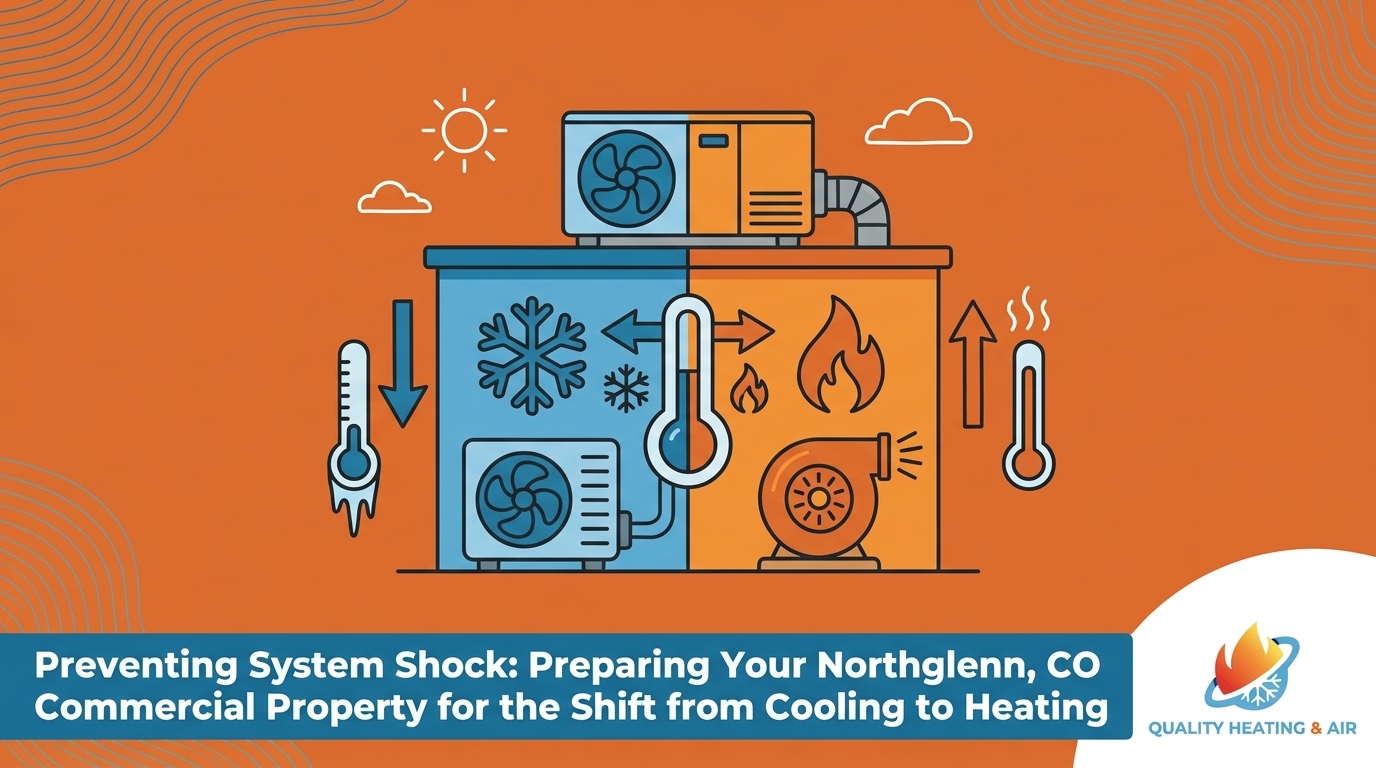
August weather along the Colorado Front Range is notoriously volatile, making Preparing Your Northglenn Commercial Property for the Shift from Cooling to Heating a critical priority for facility managers. Late summer often brings extreme diurnal temperature swings, where daytime highs soar into the 80s, only to plummet into the 40s overnight. In our years of servicing commercial properties, our team at Quality Heating & Air routinely sees the fallout of these rapid shifts: abruptly switching high-capacity rooftop units from active cooling to active heating causes severe mechanical stress known as "system shock." For those managing Northglenn mixed-use commercial properties, the decision point is clear. You must determine exactly when and how to sequence this seasonal transition to protect expensive equipment while maintaining tenant comfort.
If your facility requires a proactive approach to handle these complex temperature demands, scheduling our professional commercial heating services is the most effective way to safeguard your infrastructure before the deep freezes arrive.
Taking a reactive approach—waiting for the first freezing night to simply flip the building automation system from "cool" to "heat"—is a recipe for mechanical failure. Complex properties require simultaneous cooling and heating capabilities, especially during the volatile late-summer months. When a commercial rooftop unit is forced into an abrupt mode reversal, the internal components face rapid thermal expansion and contraction. In our experience, navigating this transition requires a calculated, phased strategy rather than a one-size-fits-all thermostat adjustment.
Understanding the Mechanics of Commercial HVAC System Shock
To fully grasp why a phased late-summer / back-to-school transition is so vital, our technicians often explain the mechanical realities of commercial heating and cooling equipment to our clients. System shock occurs when heavy-duty HVAC components are subjected to extreme, sudden changes in operational modes. When a rooftop unit has been pushing chilled air all afternoon and is suddenly triggered to fire up its heating elements a few hours later, the physical stress on the system is immense.
According to data from the U.S. Department of Energy, commercial HVAC systems account for approximately 40% of a commercial building's total energy consumption. When these systems operate inefficiently due to sudden mode switching, that energy usage spikes dramatically. More importantly, we consistently see the internal components—specifically the compressors and heat exchangers—bear the brunt of this abuse. Rapid thermal expansion and contraction can lead to microscopic cracks in heat exchangers or premature burnout of compressor motors, leading to total system failure.
The Cost of Short-Cycling
One of the primary symptoms of system shock our team diagnoses during the late-summer transition is short-cycling. This happens when rapid outdoor temperature fluctuations trick the building's thermostats into rapidly switching modes back and forth. The physical toll on commercial compressors is severe, as they are forced to start and stop before completing a full operational cycle.
• Compressor Motor — Normal Phased Operation: Runs in long, efficient cycles with proper oil return. — Short-Cycling Stress (System Shock): Overheats due to high starting currents; poor lubrication.
• Heat Exchanger — Normal Phased Operation: Gradual temperature changes prevent metal fatigue. — Short-Cycling Stress (System Shock): Rapid expansion and contraction leading to stress cracks.
• Blower Belts — Normal Phased Operation: Steady tension and predictable wear patterns. — Short-Cycling Stress (System Shock): Jerking starts and stops causing fraying and snapping.
• Energy Consumption — Normal Phased Operation: Stable baseline power draw. — Short-Cycling Stress (System Shock): Massive spikes in electrical demand during constant restarts.
The quick takeaway: Manual overrides by well-meaning staff during the first cold snap are dangerous. We always advise our clients against forcing a system into heating mode while the building retains high thermal mass from the afternoon sun, as it forces the equipment to work against itself and accelerates wear on every moving part.
Why Mixed-Use Facilities Face Unique Transition Vulnerabilities
Managing the seasonal shift is complicated enough in a single-purpose building, but in our experience, Northglenn mixed-use commercial properties face an entirely different level of vulnerability. A building that houses diverse tenants presents conflicting thermal demands. For example, a ground-floor retail space or restaurant with high foot traffic and commercial kitchens may still require active cooling late into the evening. Meanwhile, the second-story office spaces, exposed to the cooling night air through the roof, may simultaneously call for heat.
These differing zone demands create conflicting signals for the central building automation system. When the air conditioning system is forced to operate simultaneously with localized heating demands, the central plant is put under immense strain. The system attempts to satisfy both extremes, often leading to wasted energy and mechanical fatigue.
Here are the primary reasons our team knows a one-size-fits-all thermostat switch is impossible for mixed-use structures:
• Varying occupancy schedules: Retail spaces operate on different hours than corporate offices, altering the heat load unpredictably.
• Different internal heat gains: Server rooms, commercial kitchens, and crowded gyms generate massive internal heat that requires cooling regardless of the outside temperature.
• Solar load discrepancies: South-facing windows may bake in the late-summer sun, while north-facing zones sit in the shade and cool down rapidly.
• Ventilation requirements: Different commercial codes apply to different business types, meaning fresh air intake varies wildly from zone to zone.
Because of these variables, we help facility managers rely on sophisticated zone balancing rather than simply flipping a master switch from summer to winter modes.
A Phased Transition Protocol for Commercial Rooftop Units
Preventing system shock requires a highly deliberate, phased transition protocol. This is not a process that can be rushed, nor is it something building staff should attempt without licensed professional oversight. A proper late-summer / back-to-school transition involves testing and calibrating systems while the weather is still relatively mild, rather than waiting for an emergency.
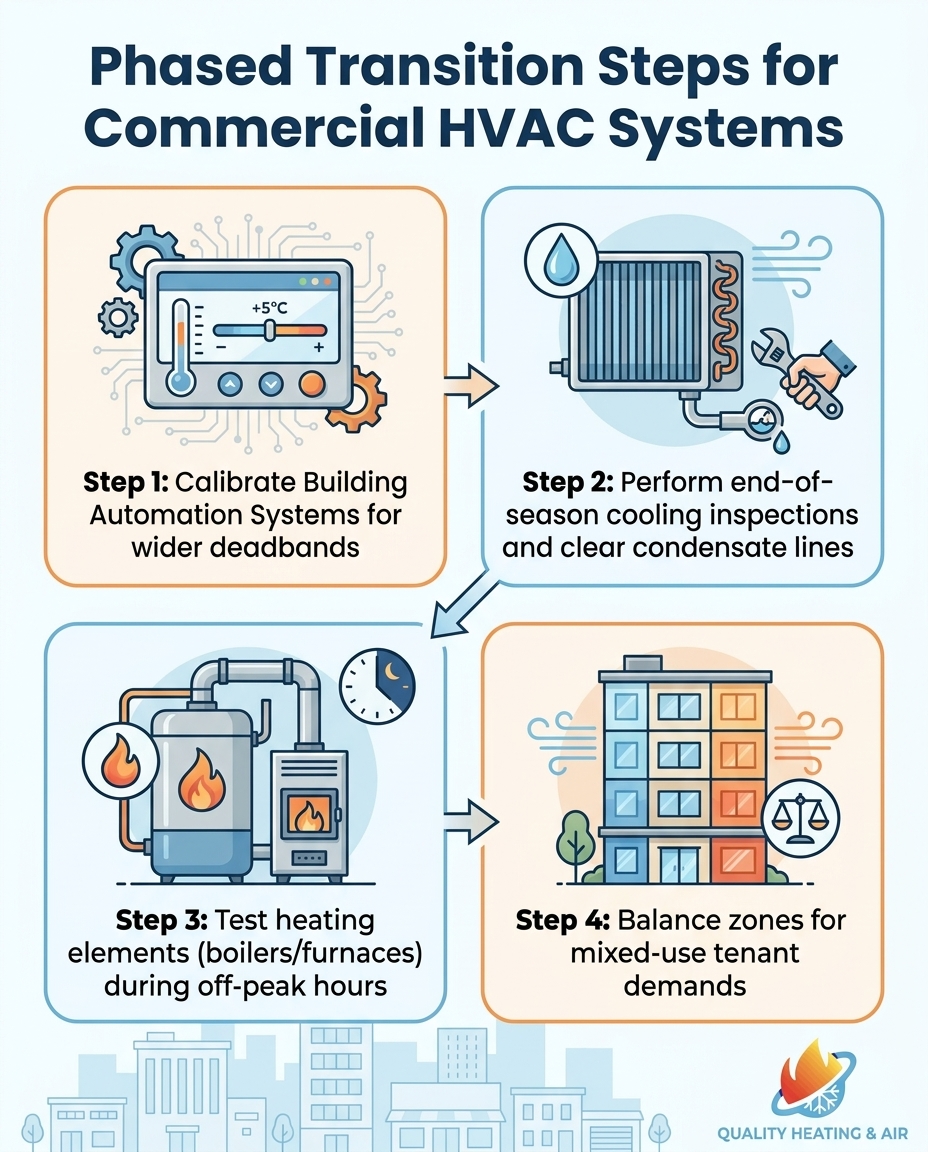
Our professional technicians approach this transition systematically. One of the first steps involves testing heating elements—such as commercial boilers and heavy-duty furnaces—during off-peak hours while the cooling system is still the primary active mode. This ensures that when the deep freeze finally arrives, the heating infrastructure is proven, primed, and ready to take over the load safely.
Calibrating Building Automation Systems (BAS)
The brain of your commercial HVAC system is the Building Automation System (BAS). Our team considers proper calibration to be the most effective defense against short-cycling and system shock.
1. Adjusting setpoints for transitional weather: We program the system to recognize the volatile late-summer temperature swings, preventing the system from overreacting to temporary afternoon heat spikes.
2. Implementing wider deadbands: A "deadband" is the temperature range where neither heating nor cooling is active. By widening this range during the transition weeks, the system allows the building to drift naturally, saving energy and preventing the equipment from rapidly switching modes.
3. Scheduling professional sensor calibration: Indoor and outdoor temperature sensors drift over time. If a sensor reads five degrees off, it can command the rooftop unit to fire up the heat while the rest of the building is still trying to cool down.
4. Systematic inspection of dampers and economizers: Economizers use outside air for "free cooling." Ensuring these dampers open and close precisely is vital for managing the crisp overnight air without engaging the mechanical cooling components.
Executing End-of-Season Cooling Checks Before the Freeze
Wrapping up the cooling season properly is just as important as firing up the heating system. The late-summer / back-to-school transition is the optimal time to perform end-of-season AC maintenance before the heavy cooling equipment sits dormant for the winter.
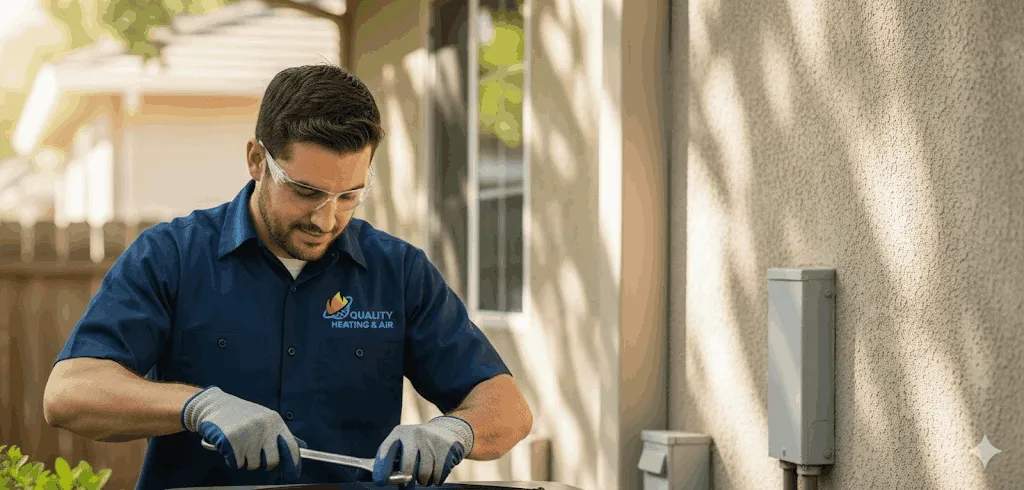
The value of professional oversight cannot be overstated. During a recent maintenance visit for a local Northglenn customer, our Quality Heating & Air technician performed thorough checks, explained the intricate details of the system's performance, and discussed various operational options. The customer was highly pleased with the punctuality and the educational explanations our team provided. This exact level of detailed assessment is required when executing end-of-season cooling checks. Facility managers need to understand exactly what condition their equipment is in before shifting modes.
One critical professional task our team handles is the clearing of condensate drains. During the summer, these lines pull gallons of moisture out of the building. If these lines are left full of standing water and a sudden overnight freeze hits, the water expands, cracking the PVC pipes and damaging the drain pans. When the system thaws, the resulting water damage to the commercial property can be extensive.
Essential End-of-Season Professional Checks We Perform:
• Condensate management: Flushing and clearing all drain lines and pans to prevent freeze-thaw damage.
• Coil inspections: Cleaning evaporator and condenser coils that have accumulated dust, pollen, and debris over the long summer months.
• Belt and bearing assessments: Checking blower belts for fraying and lubricating dry bearings to ensure smooth operation during the final cooling days.
• Refrigerant level verification: Ensuring the system is holding proper pressure before it goes into hibernation, preventing a nasty surprise next spring.
Establishing a Resilient Commercial Maintenance Strategy
Preventing system shock ultimately comes down to proactive, professional management. The unpredictable weather patterns of the Front Range demand a structured maintenance approach that mitigates the risks of sudden temperature swings. For Northglenn mixed-use commercial properties, relying on a reactive strategy is a massive financial liability.
At Quality Heating & Air, we bring deep local expertise in managing Colorado's extreme weather transitions specifically for complex commercial properties. Having our local experts—who understand the regional climate demands—oversee your transition ensures that your equipment is handled according to the specific environmental pressures of the area.
A resilient maintenance strategy does more than just prevent immediate breakdowns; it significantly extends the long-term lifespan of your equipment. By avoiding the mechanical stress of system shock, you preserve the integrity of compressors, heat exchangers, and blower motors. This structured approach provides facility managers with predictable operational costs, fewer tenant complaints, and the peace of mind that comes from knowing the building is prepared for whatever the late-summer weather brings.
Frequently Asked Questions About Commercial HVAC Transitions
How to prevent commercial HVAC system shock?
Preventing system shock requires a phased transition protocol managed by licensed professionals like our team at Quality Heating & Air. Instead of abruptly switching from cooling to heating, our technicians widen the building automation system's deadbands and test heating elements during off-peak hours. This gradual approach during the late-summer / back-to-school transition prevents rapid thermal expansion and short-cycling, protecting expensive compressors and heat exchangers from mechanical failure.
When should a mixed-use building switch from AC to heating?
In our experience, there is no single date to make the switch; it must be a gradual, zone-by-zone process. Because ground-floor retail may need cooling while top-floor offices need heat, the transition should begin when overnight temperatures consistently drop, but daytime highs remain warm. We use this window to calibrate sensors and adjust setpoints so the building can handle simultaneous demands without straining the central plant.
What are the steps to transition commercial HVAC for fall?
Our professional transition process involves several critical steps to ensure safety and efficiency. First, we calibrate the building automation system for wider temperature deadbands. Next, we perform end-of-season cooling checks, including clearing condensate lines to prevent freeze damage. Finally, we test boilers and furnaces during off-peak hours to ensure the heating infrastructure is ready before the first hard freeze hits.
How often should commercial HVAC be serviced?
We recommend comprehensive professional servicing at least twice a year, specifically during the spring and late-summer transitional periods. Mixed-use facilities or buildings with high-demand environments like server rooms or commercial kitchens often require quarterly maintenance. Consistent servicing ensures that moving parts are lubricated, sensors are calibrated, and potential failures are caught before they disrupt business operations.
Why is zone balancing uniquely difficult during Colorado's late summer?
Zone balancing is difficult because our region experiences massive diurnal temperature swings, often dropping 40 degrees from afternoon to night. A mixed-use building may have sun-baked, south-facing windows requiring heavy cooling, while shaded, north-facing zones become uncomfortably cold. Our professional technicians must carefully balance airflow, adjust economizers, and tune the automation system to prevent the heating and cooling systems from fighting each other.
Secure Your Facility's Comfort Before the Cold Sets In
Managing the seasonal shift in Northglenn mixed-use commercial properties does not have to be a source of stress. By understanding the risks of system shock and implementing a phased, professional transition strategy, facility managers can protect their equipment and ensure consistent tenant comfort. Acting before the late-summer weather turns into deep, unpredictable fall freezes is the key to avoiding catastrophic mechanical failures.
You deserve the peace of mind that comes with a clear, professional overview of your building's transition steps from a team that knows the Front Range inside and out. Don't wait for the first freezing night to find out if your system can handle the load. Secure a comprehensive HVAC maintenance plan with Quality Heating & Air today to safely switch your building's systems without failure, ensuring your property remains efficient and comfortable all season long.

Testimonials
Neighbors trust Quality Heating & Air for honest work and fair pricing.
Service Areas