The Great Cooling Debate: Mini Splits vs Window Units Compared

## The Real Difference Between Mini Splits and Window Units (And Which One Wins for Thornton Homes)
A mini split vs window unit comparison comes down to a few key factors: efficiency, comfort, noise, and long-term value. Here's a quick breakdown before we dive deeper:
| Factor | Mini Split | Window Unit | | --- | --- | --- | | Energy Efficiency | High (16–33 SEER2) | Lower (8–15 EER/CEER) | | Noise Level | 19–40 dB (whisper-quiet) | 50–60 dB (conversation level) | | Heating Capability | Yes (heat pump) | No (cooling only) | | Lifespan | 15–20 years | 5–10 years | | Installation | Professional required | DIY-friendly | | Portability | Permanent | Removable | | Federal Tax Credit | Up to $2,000 | None | | Window Blocked | No | Yes |
Most Thornton homeowners reach this question the same way: a window unit is humming away in a back bedroom, the electric bill keeps climbing, and someone wonders if there's a better option. There is — but "better" depends on your situation.
Window units have been the go-to budget cooling solution for generations. They're cheap upfront, easy to install, and you can take them with you when you move. But they block your view, make a lot of noise, and only cool one room at a time.
Mini splits, on the other hand, are quieter, more efficient, and can heat your home in winter too. The tradeoff is a higher upfront cost and the need for professional installation.
In this guide, we'll walk through every major difference so you can make the right call for your home and budget.
Understanding the Technology: Mini Split vs Window Unit Comparison
When we look at a mini split vs window unit comparison, we are really looking at two different eras of engineering. While both systems use the same basic refrigeration cycle to remove heat from your home, the way they deliver that cooling—and the technology driving them—couldn't be more different.
How Ductless Systems Operate
A Mini Split System consists of two primary components: an indoor air-handling unit and an outdoor condenser. These are connected by a small conduit housing the power cable, refrigerant lines, and a condensate drain.
The magic of these systems lies in their "ductless" nature. Because the cooling happens right at the air handler, there are no ducts to leak air. Research shows that typical homes lose 20-30% of their cooling capability through leaky or uninsulated ductwork. By eliminating ducts, mini splits ensure that every bit of cold air you pay for actually reaches your living space.
Furthermore, mini splits offer true zone control. You can have multiple indoor units connected to a single outdoor condenser, allowing us to set different temperatures for the kitchen, the master bedroom, and the home office. This means you aren't wasting energy cooling empty rooms.
The Mechanics of Window Units
Window units are self-contained systems, meaning all the components—the compressor, the fans, and the coils—are packed into one box that sits in your window frame. While this makes them portable, it also means the loudest part of the machine (the compressor) is sitting right inside your room.
Most standard window units use fixed-speed compressors. This technology is binary; it is either 100% on or 100% off. When the room gets too warm, the unit kicks on with a loud rumble, blasts cold air until the thermostat is satisfied, and then shuts off. This "on-off" cycling creates temperature swings and is far less efficient than modern alternatives.
Energy Efficiency and Performance Standards
Efficiency is where the mini split vs window unit comparison gets very interesting for your wallet. To understand the numbers, we look at SEER2 (Seasonal Energy Efficiency Ratio) for mini splits and CEER (Combined Energy Efficiency Ratio) for window units.
| Specification | Mini Split | Window Unit | | --- | --- | --- | | Efficiency Rating | Up to 33.1 SEER2 | 8–12 EER / 15 CEER (Max) | | Noise Level | 19–40 Decibels | 50–60 Decibels | | Expected Lifespan | 15–20 Years | 5–8 Years | | Energy Technology | Inverter (Variable Speed) | Fixed Speed (Standard) |
When comparing a Central AC vs Ductless Mini Split Comparison, mini splits often come out on top because of their incredible efficiency ratings. For example, a 12,000 BTU window unit might use 1,000 Watts per hour, while a high-efficiency mini split providing the same cooling might only pull 600 Watts.
Why Inverter Tech Wins the Mini Split vs Window Unit Comparison
The secret weapon of the mini split is inverter technology. Think of a standard window unit like a car that only has two settings: stopped or floor-it. That’s not a very efficient way to drive. An inverter-driven mini split is like cruise control. It modulates its power up and down to maintain a steady temperature.
Once the room reaches your desired setting, the mini split doesn't shut off. It slows down to a low-power "idle" state (sometimes as low as 300W). This prevents the energy-intensive "startup" surge that window units require every few minutes, leading to massive electricity savings over the course of a Colorado summer.
Performance in High-Altitude Climates
Living in Thornton means dealing with high altitude and low humidity. These factors influence how air conditioners perform. At higher altitudes, air is thinner, which can affect the heat transfer capabilities of HVAC equipment.
Mini splits are particularly well-suited for our climate because their variable-speed fans and advanced sensors can be calibrated to ensure optimal airflow and cooling capacity even when the air is thin. Because our humidity is generally low, we don't need the massive dehumidification power of a giant central system, making the precision of a mini split or a well-sized window unit ideal for local comfort.
Lifestyle Factors: Noise, Aesthetics, and Window Usability
Beyond the numbers, how these units affect your daily life is a huge part of the mini split vs window unit comparison.
Evaluating Long-Term Value in a Mini Split vs Window Unit Comparison
Window units are essentially temporary appliances. They have a lifespan of about 5 to 8 years, and they often end up in a landfill once they stop working. They also pose security risks; a window that is partially open to accommodate an AC unit is a vulnerable entry point for intruders.
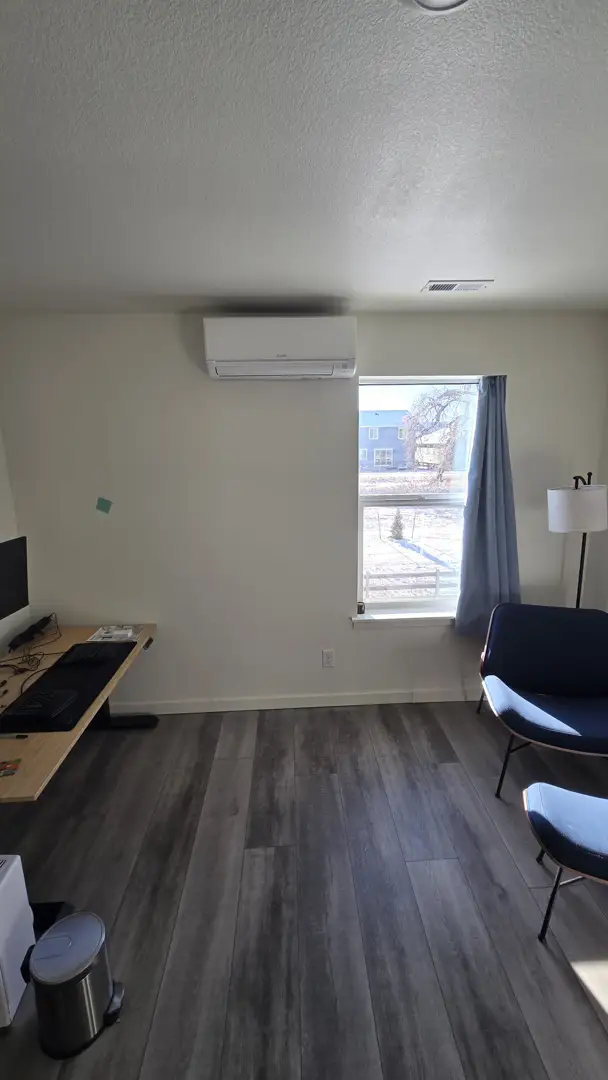
Mini splits are permanent home improvements. They are professionally mounted high on a wall or recessed into a ceiling, leaving your windows free to let in natural light and fresh air. Because they are permanent and highly efficient, they actually add to your property value. Potential buyers in Thornton see a ductless system as a premium feature, much like upgraded countertops or hardwood floors.
Furthermore, the noise difference is staggering. A window unit runs at 50-60 decibels, which is roughly the volume of a normal conversation. If you’re trying to watch a movie or sleep, that constant hum is a major distraction. A mini split indoor unit operates between 19 and 40 decibels. At its lowest setting, it is literally quieter than a whisper.
Year-Round Comfort and Heating Capabilities
In Colorado, we don't just worry about the heat; we have to survive the winters. Most window units are strictly for cooling. When October rolls around, you have to "grunt" that heavy unit out of the window and find a place to store it in the garage or basement.
Most Mini Split Systems are actually heat pumps. This means they can reverse the refrigeration cycle to provide heat. High-end models, like those featuring hyper-heating technology, can provide 100% heating capacity even when outdoor temperatures drop to -5°F, and continue operating down to -18°F.
This makes a mini split a "2-in-1" appliance. It can replace inefficient electric baseboard heaters or provide supplemental warmth to a chilly basement or sunroom, saving you money on your heating bill as well.
Installation and Maintenance Considerations
The installation process is perhaps the biggest fork in the road for the mini split vs window unit comparison.
Space and Room Size Capacity
Window units are great for small apartments or a single dorm-style room. However, they struggle with larger open-concept spaces or homes with multiple rooms. To cool a whole house with window units, you'd need one in every single room, which is both an eyesore and an electrical nightmare.
Mini splits offer incredible flexibility. We can install a single-zone system for a new home addition or a multi-zone system that covers your entire house. A single outdoor unit can often support up to eight indoor air handlers, each with its own thermostat. This allows for precise BTU sizing—matching the cooling power perfectly to the square footage of each room.
Environmental Impact and Incentives
If you are looking to reduce your carbon footprint, the mini split is the clear winner. Because they use less electricity and allow for "electrification" (moving away from gas-burning furnaces), they are much better for the environment.
The government and local utilities recognize this. Under the Inflation Reduction Act, homeowners can qualify for federal tax credits of up to $2,000 for installing qualifying heat pump mini splits. There are often local Thornton utility rebates available as well, which can significantly offset the initial investment. Window units, being temporary appliances, qualify for almost zero incentives.
Frequently Asked Questions about Room Cooling
Can a mini split cool an entire house?
Yes! While many people think of them as single-room solutions, multi-zone mini splits are designed for whole-home comfort. By placing indoor heads in high-traffic areas and bedrooms, you can create a comprehensive cooling and heating network. When you look at a Central AC vs Ductless Mini Split Comparison, you'll find that for homes without existing ductwork, a multi-zone mini split is often the most cost-effective and efficient way to achieve whole-home climate control.
Do window units cause air leaks?
Absolutely. No matter how much foam tape or accordion plastic you use, a window unit will never be perfectly airtight. These gaps allow expensive cooled air to leak out and hot Thornton air—along with dust, pollen, and insects—to leak in. Mini splits only require a small three-inch hole in the wall for the refrigerant lines, which is then professionally sealed and insulated, maintaining your home's "envelope" much more effectively.
Which system is better for Thornton homeowners?
For renters or those on a very tight short-term budget, a window unit is a functional "quick fix." However, for homeowners looking for a permanent, quiet, and energy-efficient upgrade, the mini split is superior in almost every category. It offers better climate resilience for our cold winters, lower monthly operating costs, and a much higher level of daily comfort.
Conclusion
The mini split vs window unit comparison clearly shows that while window units have a lower barrier to entry, mini splits are the "smarter long-term play." They offer whisper-quiet operation, incredible energy savings, and the added bonus of high-efficiency heating during our Colorado winters.
At Quality Heating and Air, we are your local Thornton HVAC experts. We believe that every home deserves personalized comfort. Whether you are looking to cool a single stubborn room or want to transition your entire home to an energy-efficient ductless system, we are here to help. We treat every home like our own, providing transparent guidance and expert installation to ensure you get the most out of your investment.
Ready to ditch the window unit rattle and upgrade your home's comfort? Explore our Mini Split Systems today and see how we can help you stay cool, quiet, and comfortable all year long.

Testimonials
Neighbors trust Quality Heating & Air for honest work and fair pricing.
Really happy with my overall experience. They worked neatly, quickly, and taught me MUCH along the way. Gave great advice, helped me with a side concern, that was holding me up; and finished in time for my Dentist visit. I would highly recommend this business, and the price was a pure blessing. GREAT local company and I wasn't bribed for my review 🙃 thx guys!
Bonnie B.
Fred was very knowledgeable, he repaired an old rusted iron pipe that was part of the original house build. I thought the repair would be more costly than what Fred qouted me including parts and labor. Fred made the repair after 5pm, after getting the necessary parts and he was very clean because he put down a cloth on the bathroom floor while working. I would highly recommend Fred for service in the future and I will use Quality's services again in the future.
Chris S.
Fred did a wonderful job diagnosing our air conditioning issue, presenting options available, and installing the new unit we needed. In addition to being a truly nice person, Fred was very knowledgable and professional, and we highly recommend him. Thank you Fred!
James D.
Fred was great and explained our issues we had and fixes we needed in an easy to understand way. Will ask for him next time.
Justin F.
Great service, Fred was able to show up the same day we had a problem and get everything fixed. Very knowledgeable and did not pressure us to spend money we didn’t need to spend. I would recommend to a friend without question.
Kyle F.
Fred Gottschalk performed a miracle with the furnace. He is by far the most knowledgeable HVAC professional I know to date. He knew everything about my furnace and replaced an old blower. The blower is far superior over the OEM one. I did the right thing choosing Fred!
Marty P.
I had an amazing experience with Fred Gottschalk! From the moment he came in to the moment he left he was very personable and made me feel good about my decision to call this company for assistance. I love the fact that they prioritize a personal touch making sure whoever comes to your door will remain your tech every time you call in. One thing he told me that gained my trust is that he will take care of my furnace the way he would want someone to take care of his granny’s. Thank you Quality heating and air, and thank you Fred!
Monica G.
Our technician Fred was excellent. Arrived on time, communicated well and was very knowledgable. Highly recommend and will continue to use these guys.
Nancy S.
Fred was great! He was friendly and informative, answered all of our questions and even got along with our cat (also named Fred). Would highly recommend!
Sadie P.
Highly recommend. Easy scheduling process and our technician Fred was on time, very professional, and knowledgeable on all things in the mechanical world. Took time to educate us and fix the issues we had.
Scott F.
Really happy with my overall experience. They worked neatly, quickly, and taught me MUCH along the way. Gave great advice, helped me with a side concern, that was holding me up; and finished in time for my Dentist visit. I would highly recommend this business, and the price was a pure blessing. GREAT local company and I wasn't bribed for my review 🙃 thx guys!
Bonnie B.
Fred was very knowledgeable, he repaired an old rusted iron pipe that was part of the original house build. I thought the repair would be more costly than what Fred qouted me including parts and labor. Fred made the repair after 5pm, after getting the necessary parts and he was very clean because he put down a cloth on the bathroom floor while working. I would highly recommend Fred for service in the future and I will use Quality's services again in the future.
Chris S.
Fred did a wonderful job diagnosing our air conditioning issue, presenting options available, and installing the new unit we needed. In addition to being a truly nice person, Fred was very knowledgable and professional, and we highly recommend him. Thank you Fred!
James D.
Fred was great and explained our issues we had and fixes we needed in an easy to understand way. Will ask for him next time.
Justin F.
Great service, Fred was able to show up the same day we had a problem and get everything fixed. Very knowledgeable and did not pressure us to spend money we didn’t need to spend. I would recommend to a friend without question.
Kyle F.
Fred Gottschalk performed a miracle with the furnace. He is by far the most knowledgeable HVAC professional I know to date. He knew everything about my furnace and replaced an old blower. The blower is far superior over the OEM one. I did the right thing choosing Fred!
Marty P.
I had an amazing experience with Fred Gottschalk! From the moment he came in to the moment he left he was very personable and made me feel good about my decision to call this company for assistance. I love the fact that they prioritize a personal touch making sure whoever comes to your door will remain your tech every time you call in. One thing he told me that gained my trust is that he will take care of my furnace the way he would want someone to take care of his granny’s. Thank you Quality heating and air, and thank you Fred!
Monica G.
Our technician Fred was excellent. Arrived on time, communicated well and was very knowledgable. Highly recommend and will continue to use these guys.
Nancy S.
Fred was great! He was friendly and informative, answered all of our questions and even got along with our cat (also named Fred). Would highly recommend!
Sadie P.
Highly recommend. Easy scheduling process and our technician Fred was on time, very professional, and knowledgeable on all things in the mechanical world. Took time to educate us and fix the issues we had.
Scott F.
Really happy with my overall experience. They worked neatly, quickly, and taught me MUCH along the way. Gave great advice, helped me with a side concern, that was holding me up; and finished in time for my Dentist visit. I would highly recommend this business, and the price was a pure blessing. GREAT local company and I wasn't bribed for my review 🙃 thx guys!
Bonnie B.
Fred was very knowledgeable, he repaired an old rusted iron pipe that was part of the original house build. I thought the repair would be more costly than what Fred qouted me including parts and labor. Fred made the repair after 5pm, after getting the necessary parts and he was very clean because he put down a cloth on the bathroom floor while working. I would highly recommend Fred for service in the future and I will use Quality's services again in the future.
Chris S.
Fred did a wonderful job diagnosing our air conditioning issue, presenting options available, and installing the new unit we needed. In addition to being a truly nice person, Fred was very knowledgable and professional, and we highly recommend him. Thank you Fred!
James D.
Fred was great and explained our issues we had and fixes we needed in an easy to understand way. Will ask for him next time.
Justin F.
Great service, Fred was able to show up the same day we had a problem and get everything fixed. Very knowledgeable and did not pressure us to spend money we didn’t need to spend. I would recommend to a friend without question.
Kyle F.
Fred Gottschalk performed a miracle with the furnace. He is by far the most knowledgeable HVAC professional I know to date. He knew everything about my furnace and replaced an old blower. The blower is far superior over the OEM one. I did the right thing choosing Fred!
Marty P.
I had an amazing experience with Fred Gottschalk! From the moment he came in to the moment he left he was very personable and made me feel good about my decision to call this company for assistance. I love the fact that they prioritize a personal touch making sure whoever comes to your door will remain your tech every time you call in. One thing he told me that gained my trust is that he will take care of my furnace the way he would want someone to take care of his granny’s. Thank you Quality heating and air, and thank you Fred!
Monica G.
Our technician Fred was excellent. Arrived on time, communicated well and was very knowledgable. Highly recommend and will continue to use these guys.
Nancy S.
Fred was great! He was friendly and informative, answered all of our questions and even got along with our cat (also named Fred). Would highly recommend!
Sadie P.
Highly recommend. Easy scheduling process and our technician Fred was on time, very professional, and knowledgeable on all things in the mechanical world. Took time to educate us and fix the issues we had.
Scott F.
Really happy with my overall experience. They worked neatly, quickly, and taught me MUCH along the way. Gave great advice, helped me with a side concern, that was holding me up; and finished in time for my Dentist visit. I would highly recommend this business, and the price was a pure blessing. GREAT local company and I wasn't bribed for my review 🙃 thx guys!
Bonnie B.
Fred was very knowledgeable, he repaired an old rusted iron pipe that was part of the original house build. I thought the repair would be more costly than what Fred qouted me including parts and labor. Fred made the repair after 5pm, after getting the necessary parts and he was very clean because he put down a cloth on the bathroom floor while working. I would highly recommend Fred for service in the future and I will use Quality's services again in the future.
Chris S.
Fred did a wonderful job diagnosing our air conditioning issue, presenting options available, and installing the new unit we needed. In addition to being a truly nice person, Fred was very knowledgable and professional, and we highly recommend him. Thank you Fred!
James D.
Fred was great and explained our issues we had and fixes we needed in an easy to understand way. Will ask for him next time.
Justin F.
Great service, Fred was able to show up the same day we had a problem and get everything fixed. Very knowledgeable and did not pressure us to spend money we didn’t need to spend. I would recommend to a friend without question.
Kyle F.
Fred Gottschalk performed a miracle with the furnace. He is by far the most knowledgeable HVAC professional I know to date. He knew everything about my furnace and replaced an old blower. The blower is far superior over the OEM one. I did the right thing choosing Fred!
Marty P.
I had an amazing experience with Fred Gottschalk! From the moment he came in to the moment he left he was very personable and made me feel good about my decision to call this company for assistance. I love the fact that they prioritize a personal touch making sure whoever comes to your door will remain your tech every time you call in. One thing he told me that gained my trust is that he will take care of my furnace the way he would want someone to take care of his granny’s. Thank you Quality heating and air, and thank you Fred!
Monica G.
Our technician Fred was excellent. Arrived on time, communicated well and was very knowledgable. Highly recommend and will continue to use these guys.
Nancy S.
Fred was great! He was friendly and informative, answered all of our questions and even got along with our cat (also named Fred). Would highly recommend!
Sadie P.
Highly recommend. Easy scheduling process and our technician Fred was on time, very professional, and knowledgeable on all things in the mechanical world. Took time to educate us and fix the issues we had.
Scott F.
Service Areas

Testimonials
Neighbors trust Quality Heating & Air for honest work and fair pricing.
Service Areas