How Quickly Can We Restore Heat to a Tenant's Unit During a Weekend Outage?

Facing a Weekend Heating Outage? Here Is What Property Managers Need to Know
Is there anything more stressful for a property management team than receiving a frantic Saturday morning call from a tenant with a dead furnace? When a sudden system failure happens, the immediate question is: how quickly can we restore heat to a tenant's unit during a weekend outage? Making the right decision in those first few minutes dictates how smoothly the rest of the weekend goes. You have to triage the complaint, communicate a realistic expected response time to the resident, and trigger an emergency dispatch protocol that actually works.
This urgency becomes especially critical during unpredictable September early fall cold snaps, when temperatures drop rapidly and properties are caught off guard. When you need fast, reliable HVAC services, understanding the exact timeline for emergency heating repair is critical for keeping your tenants safe and your property compliant.
Step-by-Step: The Weekend Emergency Response Timeline
Property managers cannot afford to operate in the dark when a tenant is freezing. Having a predictable, documented timeline for dispatch removes the guesswork and provides exactly what you need to tell your residents. A true emergency response follows a highly structured path to ensure rapid resolution for Northglenn CO area properties.
One local homeowner reached out during a bitter winter freeze when their heater failed, leaving the house completely cold. A technician was dispatched quickly, diagnosed the root cause, and repaired the unit on the spot, ensuring the residents were no longer left in the cold. We apply this exact same urgency and structured approach to our commercial and property management dispatch protocols.
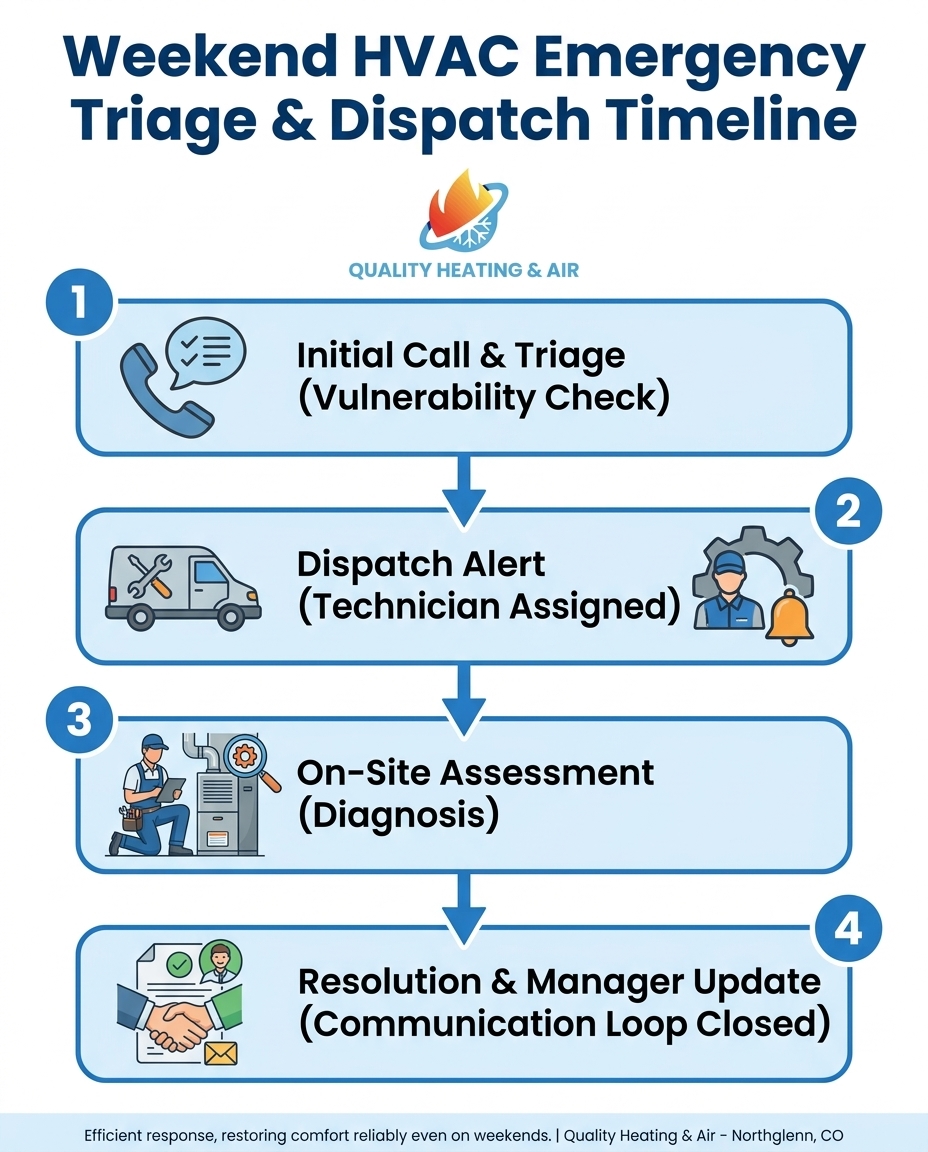
The 4-Phase Dispatch Process
• Initial Call & Triage: The process begins the moment the call comes in. Dispatchers evaluate the severity of the outage, cross-referencing vulnerability factors such as elderly tenants, infants, or severe weather conditions to assign the appropriate priority level.
• Dispatch Alert: Once triaged, the system alerts the closest available on-call technician. This immediate routing separates a true 24-hour heating emergency from a standard next-day service call.
• On-Site Assessment: The technician arrives at the property, interfaces with the tenant or maintenance staff, and performs a comprehensive diagnostic check to pinpoint the exact root cause of the furnace or boiler failure.
• Resolution & Manager Update: After completing the necessary repairs, the technician verifies the system is operating safely. The communication loop is then closed with a direct update to the property manager, detailing the fix and confirming that the unit is actively heating again.
How We Prioritize and Triage Tenant Heating Calls
Not all weekend service requests carry the same level of urgency. A proactive triage system is the backbone of effective property management support. Quality Heating & Air utilizes a dedicated triage system that specifically supports multi-family property managers by removing the guesswork from weekend dispatch. This ensures that the most critical, life-safety situations are handled first, protecting both the residents and the physical building infrastructure.
Evaluating Tenant Vulnerability
When sudden September early fall cold snaps hit, the indoor temperature of a multi-family unit can plummet rapidly. During the initial call, dispatchers actively screen for vulnerability factors. If a unit houses elderly residents, newborn infants, or individuals with specific medical vulnerabilities, that ticket is immediately bumped to the top of the queue. Protecting human health is always the primary driver of emergency prioritization.
Assessing Property Damage Risks
Beyond human safety, severe cold introduces massive structural risks to the property itself. A complete loss of heat in a building can quickly lead to frozen plumbing. If a pipe bursts due to a lack of ambient heat, a simple furnace repair suddenly escalates into catastrophic water damage affecting multiple units. Dispatchers weigh the outdoor ambient temperature against the building's insulation profile to determine how quickly a freeze-up might occur.
Handling Specialized Equipment
This rigorous triage process applies across all types of heating systems. Multi-family buildings often rely on complex, centralized heating infrastructure that requires specialized knowledge. Whether the property utilizes individual forced-air furnaces or requires intricate boiler repair services, the prioritization metrics remain consistent: protect the vulnerable and secure the property from cascading damage.
Navigating the Colorado Warranty of Habitability
For property managers, a weekend heating outage is more than an inconvenience—it is a strict legal liability. The Colorado Warranty of Habitability (CRS 38-12-505) outlines specific requirements for landlords regarding the prompt restoration of essential services, including heat. Delays in weekend vendor response can quickly put property management companies out of compliance, exposing them to legal friction and tenant disputes.
The Legal Urgency of Prompt Restoration
Under Colorado law, landlords are legally obligated to maintain premises in a habitable condition. A functional heating system during cold weather is a non-negotiable pillar of habitability. When an outage occurs in Northglenn CO area properties, the clock starts ticking. Property managers must demonstrate that they are taking immediate, actionable steps to resolve the issue. Relying on a vendor who cannot dispatch until Monday morning is a massive compliance risk.
Why Documentation Matters
Having a documented, predictable HVAC dispatch timeline helps property managers prove they are taking immediate action. When a tenant files a complaint, being able to show a time-stamped dispatch alert, an on-site assessment report, and a clear path to resolution provides immense legal protection. Partnering with a vendor who understands these B2B compliance pressures delivers the peace of mind necessary to navigate high-stress weekend outages.
• Initial Response Time — Standard Vendor Response: Next business day (Monday) — Dedicated Emergency Partner Response: Immediate weekend triage and dispatch
• Documentation — Standard Vendor Response: Verbal confirmation only — Dedicated Emergency Partner Response: Time-stamped alerts and digital reports
• Legal Liability Risk — Standard Vendor Response: High (extended habitability violation) — Dedicated Emergency Partner Response: Low (demonstrated immediate action)
The B2B Communication Loop: Keeping Property Managers Informed
One of the most significant frustrations property managers face is being left in the dark during a weekend emergency. You dispatch a vendor on Saturday afternoon, and by Sunday morning, you still have no idea if the tenant has heat. This lack of communication forces managers to field angry calls from residents without any concrete updates to provide. A transparent B2B communication loop, designed specifically for the needs of real estate partners, eliminates this blind spot entirely.
A recent service call highlights how vital clear communication is. A customer required comprehensive checks and information about their heating and cooling system options on very short notice. The responding technician arrived punctually, performed all necessary diagnostics, explained the various scenarios clearly, and provided the educational information needed for the customer to make a confident decision. We bring this exact level of detailed, step-by-step communication to our property management partners during every weekend dispatch.
The Three-Point Update System
To manage tenant anxiety effectively during September early fall cold snaps, property managers need real-time data. The communication loop should consist of three distinct touchpoints:
• The Dispatch Alert: Immediate notification that a technician is en route, providing an accurate ETA that the manager can pass along to the tenant.
• The Field Diagnosis: Once on-site, the technician reports the root cause of the failure directly to the property manager, outlining the necessary repair steps and seeking authorization if major component replacement is required.
• The Resolution Confirmation: A final update confirming that the system is fully operational, the ambient temperature is rising, and the work order is closed.
This level of transparency ensures that property managers remain in total control of the situation, even when they are miles away from the physical property.
Why Sudden Fall Cold Snaps Require Immediate Action
Not all heating emergencies happen in the dead of winter. In fact, some of the most critical outages occur during the unpredictable transitional seasons. The Northglenn and Denver metro area frequently experiences severe September temperature swings, dropping 30 to 40 degrees in a single day. These sudden weather shifts create a unique set of challenges for multi-family properties.
Properties Caught Off-Guard
During these early season cold snaps, many Northglenn CO area properties have not yet undergone their standard winterization or pre-season HVAC maintenance. Furnaces and boilers that have been sitting dormant for months are suddenly forced to turn on and run at maximum capacity to combat the freezing outdoor air. This immediate, high-load demand on untested equipment is a primary trigger for weekend mechanical failures.
The Risk of Rapid Temperature Drops
When the outside temperature plummets 40 degrees in an afternoon, the building envelope can only retain heat for so long. Rapid indoor temperature drops in multi-family buildings create a highly uncomfortable and potentially unsafe environment very quickly. Because the cold arrives so suddenly, tenants do not have time to prepare with space heaters or extra layers, making the urgency of a 24-hour HVAC partner absolutely crucial.
• Gradual Winter Cooling — Mechanical Strain: Systems cycle normally; maintenance usually completed. — Tenant Impact: Expected cold; tenants are prepared.
• Sudden Fall Cold Snap — Mechanical Strain: Dormant systems forced to run at 100% capacity instantly. — Tenant Impact: Unexpected rapid indoor temperature drop; high panic.
Immediate Steps Property Managers Should Take During a Weekend Outage
When the emergency line rings on a Saturday evening, taking swift, methodical action expedites the repair process and protects your property. Before triggering a dispatch during September early fall cold snaps, property managers should follow a specific protocol to ensure the HVAC technician has everything they need to resolve the issue quickly.
1. Confirm the outage at the source: Before escalating the call, have the tenant perform a basic check. Ask them to verify that the thermostat is set to "Heat," that the batteries are functioning, and that the main breaker for the furnace has not simply tripped. This eliminates false alarms.
2. Gather critical property information: Collect the exact unit number, building access codes, gate codes, and the tenant's direct phone number. Crucially, note any vulnerable tenant details (such as an infant in the home) so the dispatcher can apply the correct triage priority.
3. Communicate the action plan: Inform the tenant immediately that emergency dispatch has been triggered. Provide them with a realistic ETA based on your vendor's communication, which helps de-escalate panic and frustration.
4. Initiate the dispatch: Do not wait to see if the system resets itself. Reach out immediately to your dedicated HVAC partner and contact us for 24-hour dispatch to get a technician routed to the property.
Frequently Asked Questions About Weekend Tenant Heating Emergencies
What is the response time for weekend heating emergencies?
Response times vary based on triage priority, but true emergencies are typically addressed within hours. Dispatchers evaluate the severity of the outdoor temperatures and the specific vulnerability of the tenants to route technicians efficiently. For Northglenn CO area properties experiencing severe weather, these critical calls are pushed to the top of the queue for immediate on-site assessment.
How long does a landlord have to fix the heat in Colorado?
Under the Colorado Warranty of Habitability, landlords must address a lack of heat promptly and take immediate actionable steps to restore service. Specific timelines can depend on the severity of the weather and the risk to the tenants, making immediate vendor contact essential. Documenting your rapid dispatch timeline helps prove compliance with state regulations.
What is considered a heating emergency?
A true heating emergency is generally defined as a complete loss of heat during freezing temperatures, especially involving vulnerable individuals or a high risk of frozen property pipes. Additionally, any situation involving the smell of gas, sparking from the unit, or carbon monoxide alarms sounding constitutes an absolute, immediate emergency requiring a 24-hour response.
How do HVAC companies prioritize no-heat calls?
Calls are triaged based heavily on tenant vulnerability, such as advanced age, medical needs, or the presence of infants in the home. The severity of the outdoor temperatures and the potential for cascading property damage, like frozen plumbing, also elevate a call's priority. This structured triage ensures life-safety issues are always resolved first.
Can a tenant withhold rent if the heat is out over the weekend?
Colorado law has specific provisions regarding rent withholding, requiring written notice from the tenant and allowing the landlord a reasonable time to repair the issue. Rapid weekend dispatch and transparent communication help property managers avoid these legal complications entirely. By proving immediate action was taken, landlords protect their revenue and their legal standing.
Get Reliable Emergency Dispatch for Your Properties Today
Managing Northglenn CO area properties requires a dependable 24-hour partner before the next cold snap hits. A clear, actionable timeline and transparent communication satisfy both property managers and tenants, ensuring compliance and peace of mind. If you need a vendor who understands B2B urgency, how quickly can we restore heat to a tenant's unit during a weekend outage? Reach out to our team today to discuss partnership options or request emergency heating repair.

Testimonials
Neighbors trust Quality Heating & Air for honest work and fair pricing.
Service Areas