Feeling Crusty? How Dry Colorado Air Affects Your Heating System
## Why Dry Colorado Air and Your Heating System Are a Bigger Problem Than You Think
How dry Colorado air affects your heating system is something most Thornton homeowners don't think about until they're cranking the thermostat to 75 just to feel warm at 72. Colorado's semi-arid climate keeps outdoor humidity hovering between 25% and 30% year-round — and in the dead of winter, it can drop below 15%. That's drier than the Sahara Desert's average. When your furnace kicks on, it doesn't add any moisture to the air. It actually makes things worse, pulling humidity down even further inside your home.
The result? Your home feels colder than it actually is, your heating system runs longer, and your energy bills climb — all while you're walking around getting static-shocked by your own doorknobs.
Here's a quick look at the key ways dry air impacts your heating system:
- Your home feels colder than the thermostat says — dry air evaporates moisture from your skin, creating a chilling effect even at comfortable temperatures - Your furnace runs longer — it compensates for the perceived cold by cycling more frequently - Furnace filters clog faster — dry air keeps dust particles lightweight and airborne, where they get sucked straight into your system - Static electricity builds up — this can interfere with sensors and damage sensitive electronic components - Heat exchangers and seals wear out sooner — low humidity dries out gaskets and causes thermal stress on metal components - Ducts and structural materials can crack — wood, drywall, and ductwork all contract in low humidity, opening gaps that reduce system efficiency
How Dry Colorado Air Affects Your Heating System and Efficiency
When we talk about efficiency in Thornton, we usually focus on AFUE ratings or energy-saving settings. But in 2026, we’re seeing more homeowners realize that humidity is the "secret ingredient" to a high-performing system.
Physics is a bit of a bully in a dry climate. Humid air holds heat much better than dry air. When your indoor humidity is sitting at a measly 15%, the air loses heat rapidly. This forces your heating system into a marathon rather than a sprint. Because the air can't hold onto the warmth your furnace provides, the system has to run longer cycles to maintain the temperature set on your thermostat.
This leads to what we call the "thermostat creep." You feel a chill, so you bump the heat up. But because of the evaporative cooling effect—where the dry air pulls moisture off your skin, making you feel 4 degrees colder than it actually is—you never quite feel cozy. This extra runtime translates directly into higher energy consumption and a shorter lifespan for your equipment. If your furnace is working 20% harder just to fight off the Colorado "dry chill," you’re paying for heat that isn't sticking around.
More info about heating and air services
How Dry Colorado Air Affects Your Heating System Components
It isn't just your comfort that takes a hit; the "guts" of your furnace are under attack, too. Dry air is a major contributor to static electricity. In a high-altitude environment like Northglenn, static isn't just a nuisance that makes your hair stand up—it’s a mechanical stressor.
Modern furnaces are essentially high-powered computers. They rely on sensitive circuit boards, flame sensors, and electronic controls. Static electricity moving through your ductwork can actually "fry" these circuit boards or cause "ghost" readings on your thermostat.
Furthermore, low humidity causes rubber seals and gaskets to become brittle. When these components dry out, they can crack, leading to air leaks or even safety issues with combustion seals. The metal in your heat exchanger also experiences more stress. The rapid expansion and contraction (thermal cycling) caused by the furnace constantly turning on and off to combat heat loss can lead to microscopic fractures over time.
How Dry Colorado Air Affects Your Heating System Filters and Airflow
If you’ve noticed you’re dusting your TV stand every two days, you can blame the dry air. In a humid environment, moisture weights down dust, pollen, and pet dander, causing them to settle. In Colorado, these particles stay lightweight and buoyant. They float through your home like tiny invisible paragliders.
This creates a "Dust Cycle." Your furnace fan kicks on and sucks this airborne debris straight into your intake. Because the air is so dry, static electricity also acts like a magnet, pulling dust toward your vents and filters.
We recommend that Thornton residents inspect their air filters every two to three weeks during the winter. While a sea-level home might get away with a filter change every three months, a dry Colorado home often needs a fresh filter every 30 to 60 days. A clogged filter creates airflow resistance, putting immense strain on your blower motor. If the motor has to work harder to pull air through a wall of static-charged dust, it will eventually overheat or fail prematurely.
The High-Altitude Factor: Why Elevation Matters in 2026
Living at 5,000 feet (or higher if you’re up toward the foothills) changes the rules of HVAC. Air density at our elevation is about 20% lower than at sea level. This means there are fewer oxygen molecules available for your furnace to burn, and fewer air molecules for your blower to move.
Standard furnaces are typically rated for sea-level operation. For every 1,000 feet of elevation gain, a furnace can lose about 4% of its heating capacity. In Thornton, that’s a 20% hit right off the top! When you combine this capacity loss with the fact that dry air makes the home feel colder, your system is fighting an uphill battle from day one.
In 2026, many older homes in our area still use "atmospheric" furnaces. These units pull air from inside the home for combustion. For every cubic foot of air the furnace burns, it creates negative pressure, sucking in an equal amount of bone-dry, freezing outdoor air through gaps in your windows and doors. This process can reduce your indoor humidity by another 15-20% while the furnace is running. It’s a vicious cycle: the more you heat, the drier and leakier your home becomes.
More info about indoor air quality services
Signs Your Home is Suffering from Low Humidity
How do you know if how dry Colorado air affects your heating system is becoming a critical issue for your household? Sometimes the signs are written on your skin, and sometimes they are written on your walls.
| Symptom | Dry Air Impact (Low Humidity) | Balanced Air Benefit (30-50%) | | --- | --- | --- | | Static Electricity | Frequent shocks; frizzy hair; electronic interference | Minimal static; protected electronics | | Physical Comfort | Bloody noses; scratchy throat; itchy skin | Hydrated skin; easier breathing; better sleep | | Woodwork | Gaps in hardwood floors; creaking stairs; cracked furniture | Wood stays supple; tight joints; quiet floors | | Home Structure | "Spiderweb" cracks in drywall; peeling wallpaper | Stable materials; less structural shifting | | Thermostat | Setting it to 74+ to feel warm | Comfortable at 68-70 degrees | | Dust Levels | Constant "floaties" in sunbeams; fast-clogging filters | Dust settles faster; cleaner air; longer filter life |
If you notice your hardwood floors are developing gaps large enough to hold a credit card, or your crown molding is pulling away from the ceiling, your home is literally shrinking. This contraction doesn't just look bad—it creates air leaks in your ductwork and home envelope, making your heating system even less efficient.
Professional Solutions to Combat Arid Indoor Air
While putting a bowl of water near a vent or buying a dozen houseplants can help a tiny bit, they aren't a match for the Colorado climate. To truly protect your heating system and your comfort, you need a professional, integrated solution.
1. Whole-Home HumidifiersThese are the gold standard for Colorado living. Unlike portable units that you have to refill every five minutes (and only humidify one corner of a room), a whole-home system is installed directly into your HVAC ductwork.
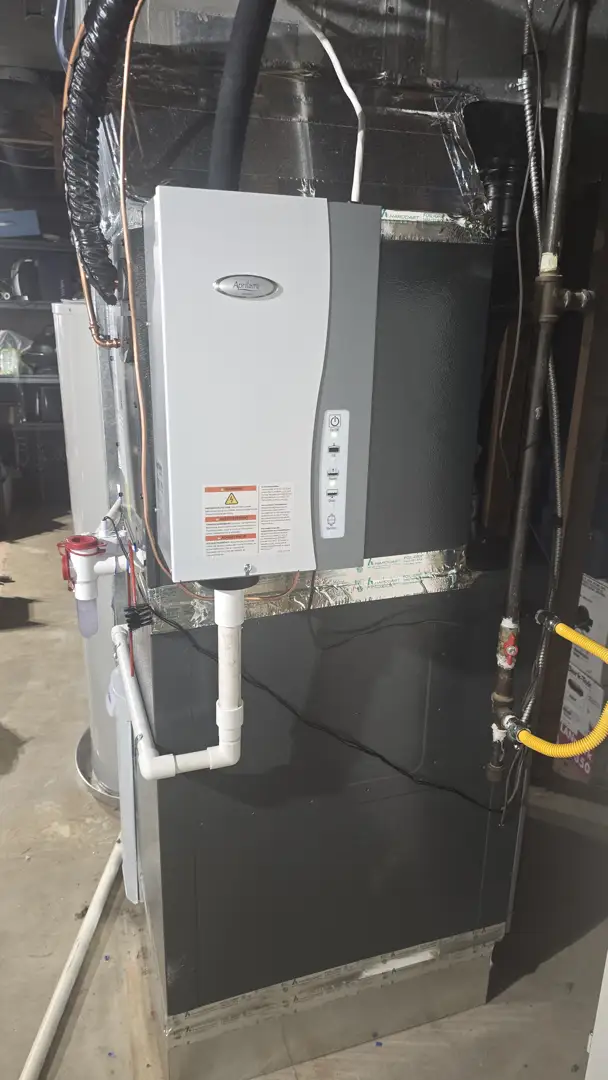
- Bypass Humidifiers: These use the pressure difference in your system to pull warm air through a water panel, adding moisture to the air as it circulates. - Steam Humidifiers: These are the heavy hitters. They boil water to create steam, which is then injected into the airflow. They work independently of the furnace running, making them incredibly effective for larger Thornton homes.
2. Smart Hygrometer MonitoringYou can't manage what you don't measure. Many modern thermostats now include built-in hygrometers that monitor your humidity levels in real-time. In 2026, we recommend keeping your home between 30% and 50% humidity. If you go higher, you risk window condensation and mold; if you go lower, you’re back to feeling "crusty."
3. Duct Sealing and WeatherstrippingNegative pressure we mentioned? By sealing the gaps in your ductwork and around your home’s "envelope" (doors and windows), you prevent the furnace from sucking in dry outdoor air. This keeps the moisture you do have inside where it belongs.
4. High-Efficiency Sealed Combustion FurnacesIf you’re looking to upgrade, a sealed combustion unit is a game-changer. These systems pull their combustion air from a pipe leading outdoors, meaning they don't steal the humidified air from inside your living room. This keeps your indoor humidity stable and your energy bills lower.
Frequently Asked Questions about Colorado Air Quality
What is the ideal indoor humidity for a Thornton home in winter?
The "sweet spot" for Colorado homes is between 30% and 50%. Most residents find that 35-40% is the perfect balance. This is enough to stop the static shocks and nosebleeds without causing moisture to bead up on your windows. If you start seeing fog or water droplets on your glass, turn the humidistat down a notch!
Why does my furnace make the air feel even drier?
Your furnace doesn't actually "burn" moisture out of the air, but it does two things that make it feel drier. First, warm air has a higher capacity to hold moisture than cold air, so when you heat it up, the relative humidity drops. Second, as the furnace runs, it often pulls in dry outdoor air to replace the air it uses for combustion and exhaust, effectively "diluting" any humidity you had left.
Can dry air actually increase my monthly energy bills?
Absolutely. Because of the evaporative cooling effect, dry air makes you feel colder. Most homeowners respond by turning the thermostat up 2 to 4 degrees. According to the Department of Energy, every degree you raise your thermostat can increase your heating bill by about 3%. If you’re bumping it up 4 degrees just to compensate for dry air, you’re paying significantly more every month.
Conclusion
At Quality Heating and Air, we’ve spent years helping our neighbors in Thornton, Northglenn, and Denver navigate the unique challenges of the Front Range climate. We know that a heating system is about more than just a furnace—it’s about the balance of temperature, airflow, and humidity.
Living in Colorado shouldn't mean feeling "crusty" all winter long. By addressing how dry Colorado air affects your heating system, you can enjoy a home that feels warmer, air that is cleaner, and a furnace that lasts years longer. Whether you need a seasonal tune-up to clear out dry-weather dust or you're ready to invest in a whole-home humidification system, we treat your home like our own.
Don't let the Colorado "Sahara" wear down your heater. Let’s get your home’s air balanced so you can finally put away the heavy lotion and the static spray.
More info about our comprehensive HVAC services

Testimonials
Neighbors trust Quality Heating & Air for honest work and fair pricing.
Really happy with my overall experience. They worked neatly, quickly, and taught me MUCH along the way. Gave great advice, helped me with a side concern, that was holding me up; and finished in time for my Dentist visit. I would highly recommend this business, and the price was a pure blessing. GREAT local company and I wasn't bribed for my review 🙃 thx guys!
Bonnie B.
Fred was very knowledgeable, he repaired an old rusted iron pipe that was part of the original house build. I thought the repair would be more costly than what Fred qouted me including parts and labor. Fred made the repair after 5pm, after getting the necessary parts and he was very clean because he put down a cloth on the bathroom floor while working. I would highly recommend Fred for service in the future and I will use Quality's services again in the future.
Chris S.
Fred did a wonderful job diagnosing our air conditioning issue, presenting options available, and installing the new unit we needed. In addition to being a truly nice person, Fred was very knowledgable and professional, and we highly recommend him. Thank you Fred!
James D.
Fred was great and explained our issues we had and fixes we needed in an easy to understand way. Will ask for him next time.
Justin F.
Great service, Fred was able to show up the same day we had a problem and get everything fixed. Very knowledgeable and did not pressure us to spend money we didn’t need to spend. I would recommend to a friend without question.
Kyle F.
Fred Gottschalk performed a miracle with the furnace. He is by far the most knowledgeable HVAC professional I know to date. He knew everything about my furnace and replaced an old blower. The blower is far superior over the OEM one. I did the right thing choosing Fred!
Marty P.
I had an amazing experience with Fred Gottschalk! From the moment he came in to the moment he left he was very personable and made me feel good about my decision to call this company for assistance. I love the fact that they prioritize a personal touch making sure whoever comes to your door will remain your tech every time you call in. One thing he told me that gained my trust is that he will take care of my furnace the way he would want someone to take care of his granny’s. Thank you Quality heating and air, and thank you Fred!
Monica G.
Our technician Fred was excellent. Arrived on time, communicated well and was very knowledgable. Highly recommend and will continue to use these guys.
Nancy S.
Fred was great! He was friendly and informative, answered all of our questions and even got along with our cat (also named Fred). Would highly recommend!
Sadie P.
Highly recommend. Easy scheduling process and our technician Fred was on time, very professional, and knowledgeable on all things in the mechanical world. Took time to educate us and fix the issues we had.
Scott F.
Really happy with my overall experience. They worked neatly, quickly, and taught me MUCH along the way. Gave great advice, helped me with a side concern, that was holding me up; and finished in time for my Dentist visit. I would highly recommend this business, and the price was a pure blessing. GREAT local company and I wasn't bribed for my review 🙃 thx guys!
Bonnie B.
Fred was very knowledgeable, he repaired an old rusted iron pipe that was part of the original house build. I thought the repair would be more costly than what Fred qouted me including parts and labor. Fred made the repair after 5pm, after getting the necessary parts and he was very clean because he put down a cloth on the bathroom floor while working. I would highly recommend Fred for service in the future and I will use Quality's services again in the future.
Chris S.
Fred did a wonderful job diagnosing our air conditioning issue, presenting options available, and installing the new unit we needed. In addition to being a truly nice person, Fred was very knowledgable and professional, and we highly recommend him. Thank you Fred!
James D.
Fred was great and explained our issues we had and fixes we needed in an easy to understand way. Will ask for him next time.
Justin F.
Great service, Fred was able to show up the same day we had a problem and get everything fixed. Very knowledgeable and did not pressure us to spend money we didn’t need to spend. I would recommend to a friend without question.
Kyle F.
Fred Gottschalk performed a miracle with the furnace. He is by far the most knowledgeable HVAC professional I know to date. He knew everything about my furnace and replaced an old blower. The blower is far superior over the OEM one. I did the right thing choosing Fred!
Marty P.
I had an amazing experience with Fred Gottschalk! From the moment he came in to the moment he left he was very personable and made me feel good about my decision to call this company for assistance. I love the fact that they prioritize a personal touch making sure whoever comes to your door will remain your tech every time you call in. One thing he told me that gained my trust is that he will take care of my furnace the way he would want someone to take care of his granny’s. Thank you Quality heating and air, and thank you Fred!
Monica G.
Our technician Fred was excellent. Arrived on time, communicated well and was very knowledgable. Highly recommend and will continue to use these guys.
Nancy S.
Fred was great! He was friendly and informative, answered all of our questions and even got along with our cat (also named Fred). Would highly recommend!
Sadie P.
Highly recommend. Easy scheduling process and our technician Fred was on time, very professional, and knowledgeable on all things in the mechanical world. Took time to educate us and fix the issues we had.
Scott F.
Really happy with my overall experience. They worked neatly, quickly, and taught me MUCH along the way. Gave great advice, helped me with a side concern, that was holding me up; and finished in time for my Dentist visit. I would highly recommend this business, and the price was a pure blessing. GREAT local company and I wasn't bribed for my review 🙃 thx guys!
Bonnie B.
Fred was very knowledgeable, he repaired an old rusted iron pipe that was part of the original house build. I thought the repair would be more costly than what Fred qouted me including parts and labor. Fred made the repair after 5pm, after getting the necessary parts and he was very clean because he put down a cloth on the bathroom floor while working. I would highly recommend Fred for service in the future and I will use Quality's services again in the future.
Chris S.
Fred did a wonderful job diagnosing our air conditioning issue, presenting options available, and installing the new unit we needed. In addition to being a truly nice person, Fred was very knowledgable and professional, and we highly recommend him. Thank you Fred!
James D.
Fred was great and explained our issues we had and fixes we needed in an easy to understand way. Will ask for him next time.
Justin F.
Great service, Fred was able to show up the same day we had a problem and get everything fixed. Very knowledgeable and did not pressure us to spend money we didn’t need to spend. I would recommend to a friend without question.
Kyle F.
Fred Gottschalk performed a miracle with the furnace. He is by far the most knowledgeable HVAC professional I know to date. He knew everything about my furnace and replaced an old blower. The blower is far superior over the OEM one. I did the right thing choosing Fred!
Marty P.
I had an amazing experience with Fred Gottschalk! From the moment he came in to the moment he left he was very personable and made me feel good about my decision to call this company for assistance. I love the fact that they prioritize a personal touch making sure whoever comes to your door will remain your tech every time you call in. One thing he told me that gained my trust is that he will take care of my furnace the way he would want someone to take care of his granny’s. Thank you Quality heating and air, and thank you Fred!
Monica G.
Our technician Fred was excellent. Arrived on time, communicated well and was very knowledgable. Highly recommend and will continue to use these guys.
Nancy S.
Fred was great! He was friendly and informative, answered all of our questions and even got along with our cat (also named Fred). Would highly recommend!
Sadie P.
Highly recommend. Easy scheduling process and our technician Fred was on time, very professional, and knowledgeable on all things in the mechanical world. Took time to educate us and fix the issues we had.
Scott F.
Really happy with my overall experience. They worked neatly, quickly, and taught me MUCH along the way. Gave great advice, helped me with a side concern, that was holding me up; and finished in time for my Dentist visit. I would highly recommend this business, and the price was a pure blessing. GREAT local company and I wasn't bribed for my review 🙃 thx guys!
Bonnie B.
Fred was very knowledgeable, he repaired an old rusted iron pipe that was part of the original house build. I thought the repair would be more costly than what Fred qouted me including parts and labor. Fred made the repair after 5pm, after getting the necessary parts and he was very clean because he put down a cloth on the bathroom floor while working. I would highly recommend Fred for service in the future and I will use Quality's services again in the future.
Chris S.
Fred did a wonderful job diagnosing our air conditioning issue, presenting options available, and installing the new unit we needed. In addition to being a truly nice person, Fred was very knowledgable and professional, and we highly recommend him. Thank you Fred!
James D.
Fred was great and explained our issues we had and fixes we needed in an easy to understand way. Will ask for him next time.
Justin F.
Great service, Fred was able to show up the same day we had a problem and get everything fixed. Very knowledgeable and did not pressure us to spend money we didn’t need to spend. I would recommend to a friend without question.
Kyle F.
Fred Gottschalk performed a miracle with the furnace. He is by far the most knowledgeable HVAC professional I know to date. He knew everything about my furnace and replaced an old blower. The blower is far superior over the OEM one. I did the right thing choosing Fred!
Marty P.
I had an amazing experience with Fred Gottschalk! From the moment he came in to the moment he left he was very personable and made me feel good about my decision to call this company for assistance. I love the fact that they prioritize a personal touch making sure whoever comes to your door will remain your tech every time you call in. One thing he told me that gained my trust is that he will take care of my furnace the way he would want someone to take care of his granny’s. Thank you Quality heating and air, and thank you Fred!
Monica G.
Our technician Fred was excellent. Arrived on time, communicated well and was very knowledgable. Highly recommend and will continue to use these guys.
Nancy S.
Fred was great! He was friendly and informative, answered all of our questions and even got along with our cat (also named Fred). Would highly recommend!
Sadie P.
Highly recommend. Easy scheduling process and our technician Fred was on time, very professional, and knowledgeable on all things in the mechanical world. Took time to educate us and fix the issues we had.
Scott F.
Service Areas

Testimonials
Neighbors trust Quality Heating & Air for honest work and fair pricing.
Service Areas