Diagnosing the Mid-July Commercial AC Failure: What to Expect When We Arrive

The Reality of a Sweltering Commercial Building
The afternoon sun is beating down, your commercial building is sweltering, and daily operations are slowly grinding to a halt. When temperatures spike indoors, you need answers fast. Diagnosing the mid-July commercial AC failure: what to expect when we arrive is the first step toward getting your facility back on track. A sudden loss of cooling in a commercial space is never just a minor inconvenience; it is an immediate threat to employee productivity, sensitive equipment, and customer comfort.
When our technicians pull up to your facility, we understand the urgency of the situation. The immediate tension of a failing cooling system often leads property managers to seek the fastest possible fix. However, rushing the diagnostic process is exactly how recurring breakdowns happen. To truly resolve the issue and protect your investment in your commercial HVAC services, we have to look past the most obvious symptoms and dig into the underlying mechanics of the system.
The Thermostat Illusion
One of the most common assumptions we encounter is that the wall thermostat will tell the whole story of the breakdown. A facility manager might look at the screen, see an error code or a high temperature reading, and assume the fix is as simple as recalibrating the device or swapping a single part. But in a complex commercial layout, the thermostat is merely a single data point in a much larger equation.
Our core methodology is built on the understanding that relying solely on the wall unit leads to misdiagnosis. A thermostat located in a shaded, interior hallway cannot accurately reflect the thermal reality of a sun-facing conference room or a densely packed server room. When we arrive to tackle a mid-July breakdown, we bypass these surface-level readings to initiate a comprehensive, multi-zone investigation. We set the expectation immediately: we are not here to put a temporary bandage on the system; we are here to map the entire cooling network and find the true root cause of the failure.
Why the Thermostat Only Tells Half the Story
To understand why our diagnostic process goes far beyond the wall control, you have to look at how commercial HVAC systems distribute air. Unlike a residential setup, a commercial building features vastly different zones with unique thermal loads. A large rooftop unit (RTU) pushes conditioned air through a massive network of ductwork, relying on variable air volume (VAV) boxes, automated dampers, and precise static pressure to deliver the right amount of cooling to specific areas.
Because of this complexity, the disparity between the thermostat temperature vs. actual multi-zone airflow can be staggering. The thermostat might read a perfectly normal 72 degrees in the main lobby, while a specific zone on the second floor experiences a total airflow failure, leaving occupants baking in 85-degree heat. If a technician only checks the thermostat and the main return air, they will miss the localized failure entirely.
The Danger of the Quick Fix
Applying a "quick fix" based on a single reading is a massive risk. If a system is low on refrigerant, simply topping it off without finding the leak guarantees another service call. If a zone is overheating because of a stuck damper, replacing the thermostat will do absolutely nothing to restore airflow. These surface-level repairs often result in repeat failures, costing you more in downtime and emergency air conditioning repair than a proper diagnostic would have in the first place.
True diagnostics require mapping the entire system's performance. We have to verify that the air leaving the rooftop unit is actually making it to the furthest registers in the building. To illustrate why this matters, consider the common discrepancies we find between what the system reports and what is actually happening in the building:
• Airflow Volume — Thermostat / Surface Reading: System reads "Fan On" — Actual Multi-Zone Reality: Crushed ductwork restricting 50% of air to the west wing.
• Temperature — Thermostat / Surface Reading: Main hallway reads 74°F — Actual Multi-Zone Reality: Sun-facing offices are hitting 82°F due to high thermal load.
• System Load — Thermostat / Surface Reading: Unit appears to be cycling normally — Actual Multi-Zone Reality: Compressor is short-cycling due to a hidden airflow restriction.
• Dampers — Thermostat / Surface Reading: Command sent to open dampers — Actual Multi-Zone Reality: Mechanical failure keeps dampers closed, starving the room of air.
Step 1: Evaluating the Rooftop Thermal Load
Our diagnostic process actually begins before the access panels on your equipment are even opened. When we arrive on site, the first step is assessing the ambient environment and the external thermal load acting on your rooftop unit. The physical environment plays a massive role in how hard your system has to work to reject heat.
This is especially critical in our region. Colorado's high-altitude environment features thinner air, which significantly reduces the heat exchange efficiency of condenser coils. The fan has to move a greater volume of this less-dense air to achieve the same cooling effect. Combine that with intense UV exposure baking down on dark commercial rooftops, and the ambient temperature immediately surrounding the RTU can easily exceed 120 degrees on a 90-degree day. This extreme environment puts immense strain on the compressor and blower motor.
When dealing with a mid-July failure, we follow a strict sequence to evaluate this exterior strain:
1. Ambient Temperature Assessment: We measure the actual temperature of the air entering the condenser coils. If the roof is reflecting massive amounts of heat back into the unit, the system may be tripping on high head pressure simply because it cannot breathe.
2. Visual Coil Inspection: We check the exterior condenser coils for severe dirt buildup, cottonwood debris, or hail damage. In a high-altitude environment, even a thin layer of dust can severely cripple the system's ability to reject heat.
3. Clearance and Exhaust Check: We ensure that no new structures, exhaust vents, or debris are creating a micro-climate of trapped hot air around the unit, which forces the system to recycle its own exhaust heat.
Step 2: Comprehensive Zone-by-Zone Airflow Mapping
Once the exterior thermal load is assessed, we move to the most critical phase of the diagnostic process: comprehensive zone-by-zone airflow mapping. This is where our transparent, multi-zone diagnostic approach truly sets us apart. We go far beyond the thermostat to find the true root cause of commercial cooling failures, minimizing your long-term downtime.
We systematically track airflow and temperature differentials across multiple zones in the building. Using specialized anemometers and thermal imaging, our technicians measure the exact volume and temperature of the air coming out of the registers in the hottest rooms, comparing it to the baseline data at the air handler. This meticulous tracking of the thermostat temperature vs. actual multi-zone airflow uncovers hidden issues that a basic visual inspection would miss.
Uncovering Hidden Mechanical Failures
This mapping process frequently reveals localized duct blockages, failing VAV dampers that are stuck in the closed position, or localized blower issues that are starving specific areas of the building. By isolating the exact zone where the airflow drops off, we can pinpoint mechanical failures hidden deep within the ceiling grid.
We frame this process as a logical, necessary investigation rather than an upsell tactic. It is the only way to protect you from paying for a surface-level misdiagnosis. Real-world results prove the value of this thoroughness. One local customer reached out during the spring when their AC wasn't working optimally across all zones. Our technicians serviced the system, mapped the airflow, explained everything clearly, and answered all their questions. By taking the time to map the zones properly, the system was left working better than ever before the brutal summer heat arrived.
Step 3: Inspecting Core Components Under Peak Strain
With the exterior environment assessed and the interior airflow mapped, we finally open the panels to inspect the core internal components of the rooftop unit. A mid-July heatwave pushes every mechanical and electrical part of your system to its absolute limit, and compounding multi-zone failures often trace back to a single overworked core component.
Our technicians methodically test the electrical components that bear the brunt of this strain. We inspect contactors for pitting or burn marks, as these high-voltage switches frequently weld shut or fail to engage when subjected to constant, heavy use. We test run capacitors to ensure they are delivering the precise microfarads required to keep the compressor and blower motors running efficiently. A weak capacitor will cause a motor to draw excessive amperage, eventually leading to a catastrophic burnout.
Refrigerant and Mechanical Verification
Next, we attach our digital gauges to check the refrigerant levels and operating pressures. We are looking for the exact superheat and subcooling measurements that indicate whether the condenser coils are effectively releasing heat and the evaporator coils are absorbing it. If the pressures are off, we don't just add refrigerant; we cross-reference those readings with the airflow data we gathered inside.
Often, what looks like a refrigerant issue is actually an airflow problem. If the blower motor is failing to move enough air across the indoor coil, the refrigerant won't absorb enough heat, leading to low pressure readings and frozen coils. This is why thorough AC maintenance and service requires a holistic view of the system. By inspecting these core components under peak strain, we ensure that the repair we recommend will actually hold up to the demands of your facility.
Step 4: Transparent Reporting and Next Steps
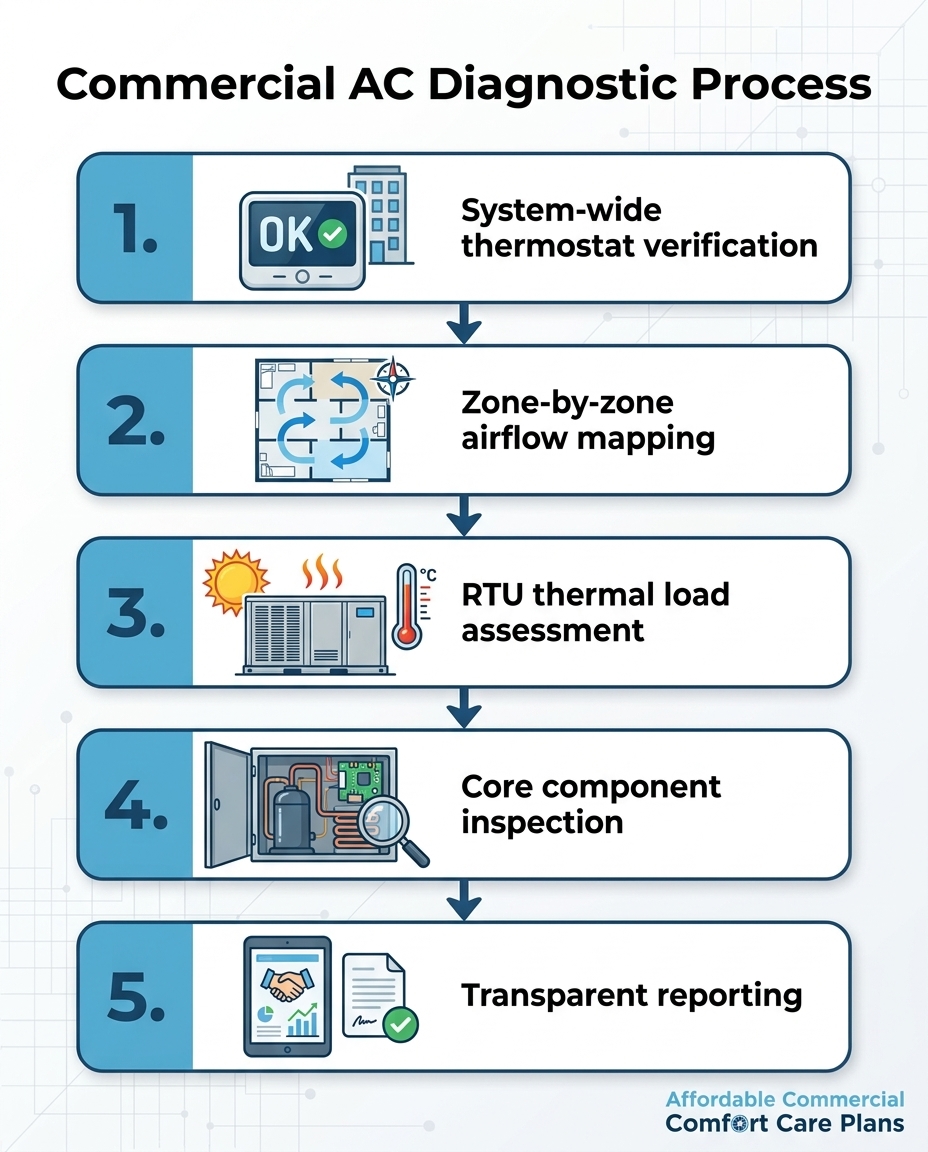
The final step of our diagnostic process is compiling all the data we have gathered and presenting it to you in a clear, actionable format. We believe that a diagnostic is only valuable if the facility manager completely understands the findings. We compile the data from the multi-zone mapping, the RTU thermal load assessment, and the internal component inspection into a comprehensive report.
We are committed to walking you through these findings clearly, without hiding behind dense technical jargon. We will show you the discrepancy between the thermostat temperature vs. actual multi-zone airflow, explain exactly which components are failing, and outline how the ambient roof temperature is impacting the system. Our goal is to give you the complete picture so you can make an informed decision for your business.
Building Long-Term Reliability
When we present repair options, we base our recommendations on long-term reliability rather than just a temporary patch. If a compressor is failing because of a crushed return duct, replacing the compressor without fixing the duct is a waste of your money. We provide solutions that address the root cause.
This thorough approach is exactly what our clients rely on. For example, one local customer managing an older property reached out in the spring with severe AC issues. Our team diagnosed the underlying electrical and mechanical strain, installed a start assist for the AC, and eventually integrated a new furnace to handle the building's unique loads. By addressing the root cause, both their AC and heating issues were permanently resolved.
Taking a proactive approach prevents the next mid-summer breakdown. Once the immediate repair is completed, we will discuss how a structured commercial AC maintenance plan can keep your system calibrated, your coils clean, and your airflow balanced year-round.
Frequently Asked Questions About Commercial AC Diagnostics
What does a commercial AC diagnostic include?
A proper commercial AC diagnostic includes a system-wide thermostat verification, zone-by-zone airflow and temperature mapping, and a comprehensive RTU thermal load assessment. Technicians will also inspect all core mechanical and electrical components, including capacitors, contactors, and refrigerant levels. This thorough process ensures that hidden issues in the ductwork or dampers are identified, rather than just guessing based on surface symptoms.
Why is my multi-zone AC not cooling evenly?
Uneven cooling in a multi-zone system is typically caused by imbalanced airflow, failing VAV dampers, or localized duct issues. A single thermostat cannot accurately regulate complex, multi-room thermal loads, meaning one side of the building might be freezing while the sun-facing side overheats. A comprehensive airflow mapping diagnostic is required to locate the exact point where the air distribution is failing.
How long does an HVAC diagnostic take?
The time required for an HVAC diagnostic depends heavily on the size of the facility and the number of zones involved. While a residential check might take an hour, a proper multi-zone commercial check takes significantly longer to ensure all VAV boxes, duct runs, and RTU components are tested. However, investing this time upfront saves hours of future downtime by preventing repeat failures and misdiagnoses.
Why is my commercial AC running but not cooling?
When a commercial AC runs constantly but fails to cool the space, the most common culprits are restricted airflow, frozen evaporator coils, or severe refrigerant issues. Additionally, extreme summer heat can impact the system's ability to reject heat outdoors, causing the compressor to run continuously without effectively dropping the indoor temperature. A technician must check both the indoor airflow and the outdoor heat exchange to find the exact failure point.
How does high-altitude heat affect commercial rooftop units?
High-altitude environments feature thinner air, which significantly reduces the efficiency of the condenser coils as the fan must move more air to reject the same amount of heat. Furthermore, intense UV exposure at higher elevations increases the ambient temperature of the dark rooftop and the unit itself. This combination places immense strain on the compressor and blower motor, increasing the likelihood of breakdowns during peak summer heatwaves.
Restoring Comfort and Protecting Your Operations
A proper, multi-zone diagnostic is not just a service call; it is a critical investment in your operational continuity. When your facility faces a mid-July cooling failure, guessing at the problem is a luxury your business cannot afford. By mapping the entire system and bypassing the illusion of the thermostat, we ensure that the true root cause is identified and resolved.
Our transparent process is designed to give you complete confidence in the repairs being made. You deserve to know exactly what is happening on your roof and in your ceiling grid. If your commercial building is struggling to maintain temperature, reach out to our team today to experience a diagnostic process built on thoroughness, honesty, and long-term reliability.

Testimonials
Neighbors trust Quality Heating & Air for honest work and fair pricing.
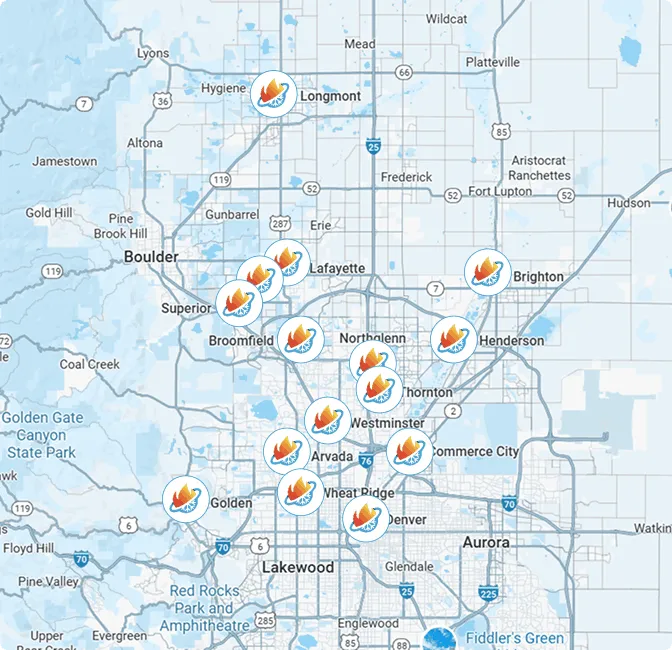
Service Areas