Can a Poorly Maintained Swamp Cooler Cause Indoor Air Quality Issues?
Are Your Commercial Swamp Coolers Blowing Musty Air?
Can a Poorly Maintained Swamp Cooler Cause Indoor Air Quality Issues? Yes, and if your commercial tenants are complaining about musty, humid air as the back-to-school transition begins, you might already be experiencing the consequences. By late summer, particularly as we move deep into August, neglected commercial swamp coolers transition from reliable cooling assets to significant liability risks. Months of continuous operation take a toll on these systems, and what started as a refreshing breeze in June often turns into a damp, unpleasant draft by the end of the season.
Commercial property managers face a clear decision point at this stage of the year: ignore these tenant complaints and hope the cooler weather arrives soon, or invest in immediate end-of-season maintenance. Brushing off the issue often leads to escalating complaints, potential health concerns for occupants, and long-term damage to the building's interior. Professional intervention is the fastest, most effective way to restore proper indoor air quality services and protect the health and comfort of everyone inside your Northglenn CO commercial spaces.
The Short Answer: How Evaporative Coolers Directly Impact Air Quality
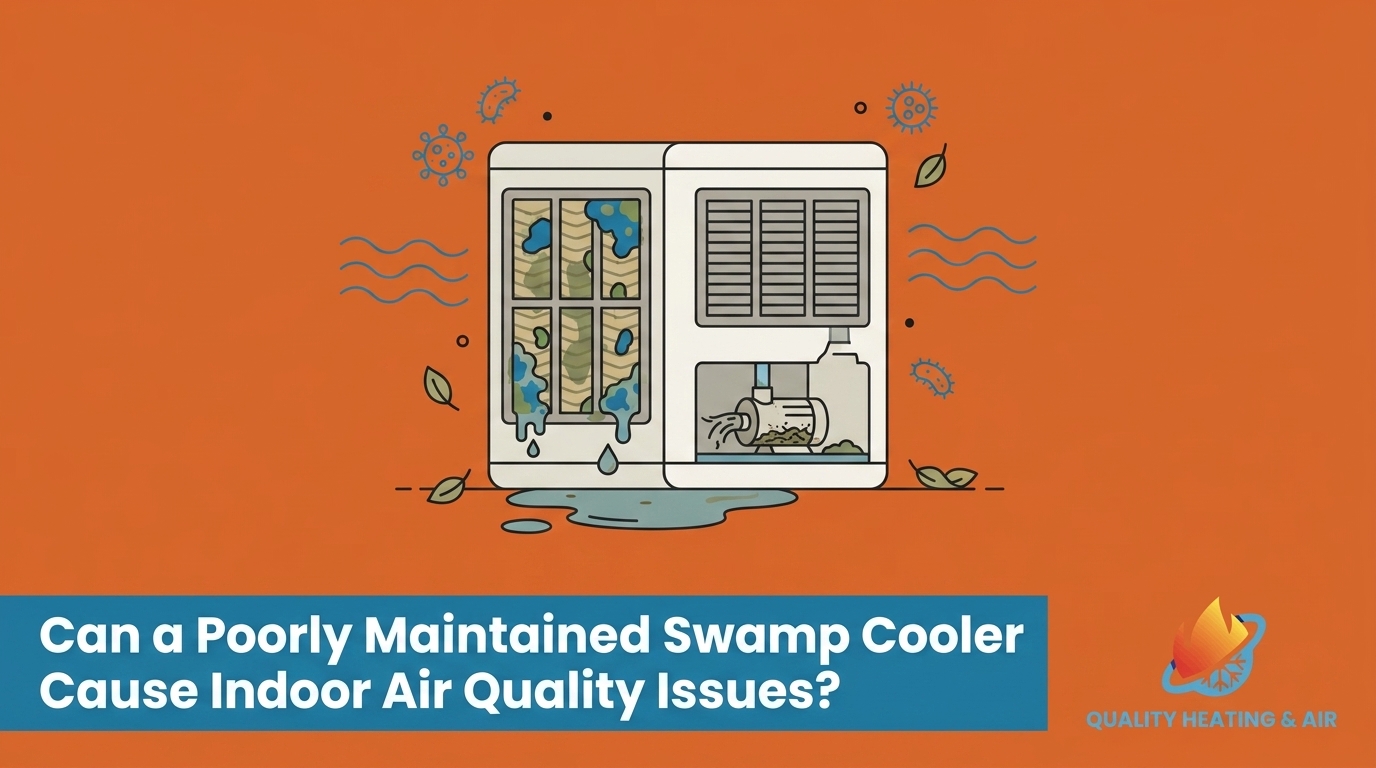
Yes, a poorly maintained swamp cooler can severely degrade indoor air quality. When water pans become stagnant and cooling pads calcify with minerals, they create a breeding ground for mold and bacteria that are then blown directly into commercial spaces.
The Mechanics of Evaporative Cooling
To understand why this degradation happens, you have to look at the basic mechanics of how evaporative coolers operate. Unlike traditional air conditioners that use chemical refrigerants in a closed loop, swamp coolers rely heavily on the natural process of evaporation. A large pump draws water from a reservoir pan and saturates thick cooling pads. A powerful blower fan then pulls hot, dry outside air through these wet pads. As the water evaporates, it absorbs heat, dropping the temperature of the air before it is pushed through the ductwork and into the building.
While this method is highly effective and energy-efficient in dry, high-altitude climates, the system's absolute reliance on constant water flow makes it inherently vulnerable to biological growth if neglected. When the system is not actively maintained, several critical failures begin to occur:
• Water stagnation: The reservoir stops cycling fresh water, allowing biological contaminants to multiply rapidly.
• Pad degradation: The cooling media breaks down or hardens, losing its ability to filter incoming air.
• Airflow restriction: Blockages force the blower motor to strain, reducing the volume of fresh air entering the building.
• Allergen dispersal: Mold spores and bacteria that have settled inside the unit are picked up by the fan and distributed to every room connected to the ventilation system.
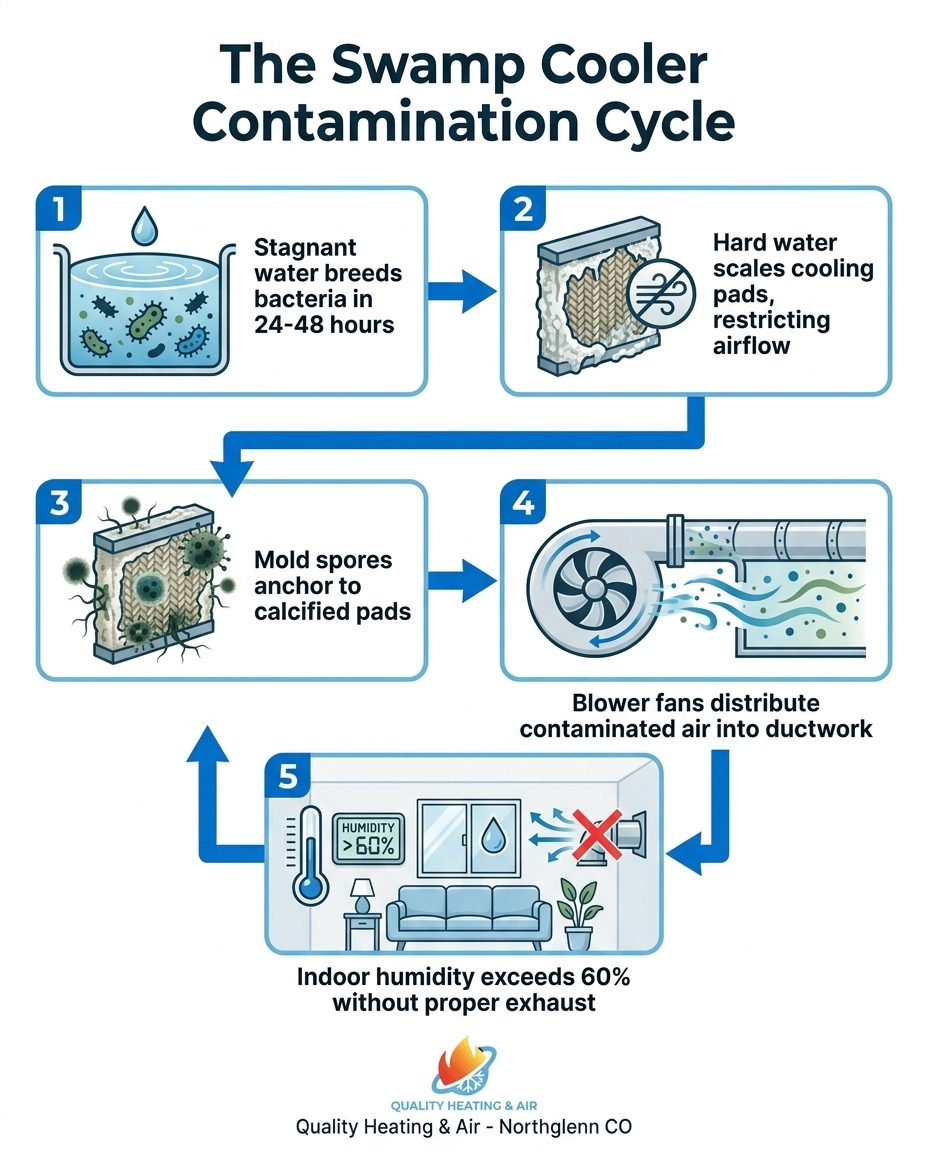
The Role of Stagnant Water Pans in Bacterial Growth
The water reservoir in a commercial evaporative cooler acts as a catch-all for environmental debris. As the system pulls in massive volumes of outside air, it also pulls in dust, pollen, exhaust particulates, and organic matter. Much of this debris gets trapped in the wet pads and eventually washes down into the reservoir pan. Over the course of a busy summer, this creates a thick, nutrient-rich sludge at the bottom of the unit.
The 48-Hour Contamination Window
According to data from environmental health organizations like the EPA and CDC, stagnant water can begin breeding mold and bacteria in as little as 24 to 48 hours under the right conditions. Late summer in Colorado provides the perfect storm for this rapid growth: warm daytime temperatures heat the standing water on the roof, while the accumulated organic debris provides a food source for microbes.
Once this bacterial growth takes hold in the pan, the pump recirculates that contaminated water right back over the cooling pads. The blower fan then atomizes these biological contaminants, pushing them throughout the building's ductwork. This is the root cause of what is colloquially known as "swamp cooler syndrome"—a scenario where occupants experience sudden allergy symptoms, respiratory irritation, and headaches simply from breathing the air in the building.
Routine flushing, draining, and cleaning of the water pan is an absolute necessity to prevent this cycle. Below is a breakdown of how a neglected pan differs from a properly maintained one.
• Maintained (Early Season) — Water Quality: Clear, constantly cycling, properly drained — Air Quality Impact: Fresh, filtered, comfortably humidified — Tenant Experience: Cool, comfortable, high productivity
• Neglected (Late Summer / August) — Water Quality: Cloudy, stagnant, sludge-filled — Air Quality Impact: High in mold spores, bacteria, and dust — Tenant Experience: Complaints of odors, allergies, and mugginess
Why Calcified Cooling Pads Are a Late-Summer Hazard
The cooling pads are the lungs of an evaporative cooler. For the system to function correctly, these pads must remain highly porous and capable of absorbing large amounts of water evenly. However, months of continuous use lead to heavy physical degradation, making them a significant hazard by the time August rolls around.
The Process of Pad Degradation
1. Mineral Accumulation: As water evaporates off the pads, it leaves behind trace minerals. Over weeks of operation, these minerals build up into a hard, chalky scale.
2. Airflow Restriction: The calcification blocks the tiny air passages within the pad. This forces the commercial blower motor to work significantly harder to pull air through, increasing energy consumption and reducing overall cooling efficiency.
3. Biological Anchoring: The rough, porous surface of a heavily calcified pad becomes the perfect anchor point for mold spores, algae, and trapped airborne debris.
4. Contaminant Dispersal: Because the pad can no longer filter the air effectively, the system begins blowing the very allergens it has collected straight into the tenant spaces.
The Colorado Climate Factor
This degradation process is highly localized. In our years of servicing commercial HVAC systems across the Northglenn area, our team at Quality Heating & Air has seen firsthand how quickly this happens. Weaving this into our understanding of how Colorado's dry air affects indoor air quality is critical. Our region is notorious for having hard water, which contains high concentrations of calcium and magnesium. This hard water drastically accelerates pad calcification compared to other parts of the country. For Northglenn CO commercial spaces, a set of pads that might last an entire season elsewhere will often be completely calcified and compromised by late summer, making rigorous end-of-season pad replacement a regional necessity.
Managing Excess Humidity and Musty Odors
Evaporative cooling is a balancing act. It adds moisture to the air to drop the temperature, which feels great in a dry climate. However, this process requires proper exhaust ventilation to work safely. Commercial buildings must have a way to vent the humidified air back outside—often through open windows, roof vents, or dedicated exhaust fans. Without proper exhaust, indoor humidity easily exceeds the 60% threshold that sustains mold growth.
The Consequences of Uncontrolled Moisture
When humidity is allowed to build up inside a commercial space, the sensory and structural impacts are immediate and severe. High indoor humidity connects directly to the musty, "locker room" odors that tenants frequently complain about in late summer. The air feels heavy, damp, and distinctly stale.
Beyond the unpleasant smells, excess moisture poses a serious threat to the physical building. Common signs of uncontrolled humidity include:
• Structural damage: Warped ceiling tiles, peeling paint, and softened drywall around air registers.
• Equipment risk: Condensation forming on sensitive office electronics, servers, and manufacturing equipment.
• Surface mold: Visible fungal growth developing in dark, low-airflow corners of the building, such as supply closets or basements.
• Slippery floors: Condensation settling on tile or polished concrete, creating slip-and-fall hazards for employees and customers.
When Evaporative Cooling Isn't Enough
In some commercial applications, evaporative cooling simply cannot provide the precise environmental control required. If your building houses sensitive inventory, server rooms, or medical equipment, relying on a system that intentionally pumps moisture into the air may be a fundamental mismatch. If humidity cannot be controlled through ventilation alone, exploring dedicated commercial air conditioning solutions might be necessary for certain spaces to maintain a safe, dry environment.
Professional Evaporative Cooler Maintenance vs. DIY Cleaning
There is a massive difference between hosing down a small residential window unit and maintaining a massive commercial rooftop swamp cooler. While a homeowner might handle basic DIY tasks, commercial systems require licensed professional expertise. Attempting to service these large units without proper training can result in severe roof leaks, electrical hazards, and prolonged downtime for your tenants.
What a Professional Commercial Inspection Entails
A licensed HVAC technician approaches a commercial evaporative cooler with a comprehensive checklist designed to address both mechanical reliability and indoor air quality. A professional check entails:
• Inspecting the float valve: Ensuring the water level is perfectly calibrated so the pan doesn't run dry or overflow onto the roof.
• Checking the pump: Verifying that the pump is delivering adequate water pressure to saturate the pads evenly without dry spots.
• Clearing the bleed-off line: Ensuring the system is actively flushing mineral-heavy water out of the pan to slow down pad calcification.
• Handling biological contaminants: Safely draining, scrubbing, and sanitizing the reservoir to eliminate mold and bacteria without dispersing them into the building.
Working with a dedicated local expert means getting more than just a quick filter change. Providing thorough system checks and clear explanations gives commercial property managers the peace of mind they need to run their operations smoothly. Just recently, a commercial property manager reached out to our Quality Heating & Air team needing detailed checks and explanations for their building's aging HVAC setup. Our technician performed comprehensive diagnostics, explained the findings clearly, and discussed different options for moving forward. The customer received the needed information and felt educated about their system—validating their concerns and allowing them to make an informed decision for their tenants.
Proactive communication from an HVAC technician helps property managers validate tenant complaints quickly. Instead of guessing why the air smells musty, you get a clear, documented explanation and an immediate path to resolution.
Frequently Asked Questions About Swamp Coolers and Air Quality
Why does my commercial swamp cooler smell musty?
Musty odors are typically caused by stagnant water in the reservoir pan or mildew growing on calcified cooling pads. When the water isn't draining properly or the pads remain saturated without drying out, biological growth thrives. The smell is then distributed through the ductwork whenever the fan is running, pushing that "locker room" scent into your tenant spaces.
Can a poorly maintained evaporative cooler cause mold?
Yes. If the unit lacks proper bleed-off or if the pads are not changed, mold can grow directly inside the unit itself. Additionally, if the building lacks proper exhaust ventilation, the system will pump too much moisture into the space. When indoor humidity rises above 60%, it encourages secondary indoor mold growth on walls, ceilings, and furniture.
How often should commercial swamp cooler pads be changed?
In regions with hard water, pads may need to be changed at the beginning of the season and checked or replaced again by late summer. Commercial units with heavy usage require much more frequent inspections than residential units. By August, the mineral buildup is often severe enough to restrict airflow and harbor bacteria, necessitating a mid-season swap.
Can a swamp cooler make you sick?
A neglected cooler can trigger allergies and asthma by blowing dust, pollen, and mold spores into the air. In extreme cases, stagnant water can harbor harmful bacteria that cause severe respiratory irritation. This is exactly why routine professional cleaning and sanitization are vital for any commercial building using evaporative cooling.
How does a swamp cooler affect overall indoor air quality?
When properly maintained, they provide fresh, filtered, and comfortably humidified air that feels great in dry climates. The continuous introduction of outside air dilutes indoor pollutants. However, when neglected, they become a primary source of biological contaminants and excess moisture, severely degrading the air quality for everyone inside.
Protect Your Tenants Before the Cooling Season Ends
Can a poorly maintained swamp cooler cause indoor air quality issues? Absolutely. Healthy indoor air requires clean cooling pads, properly calibrated exhaust ventilation, and fresh, cycling water in your evaporative systems. When these elements are neglected, especially as we push through the heat of late summer, the resulting musty odors and airborne contaminants become a serious problem for Northglenn CO commercial spaces.
Addressing these issues now prevents further tenant complaints, protects your building from moisture damage, and limits your liability as a property manager. Don't wait for a minor odor to turn into a major tenant dispute. Secure a routine HVAC maintenance plan today to keep your commercial systems running safely, efficiently, and cleanly year-round.

Testimonials
Neighbors trust Quality Heating & Air for honest work and fair pricing.
Service Areas