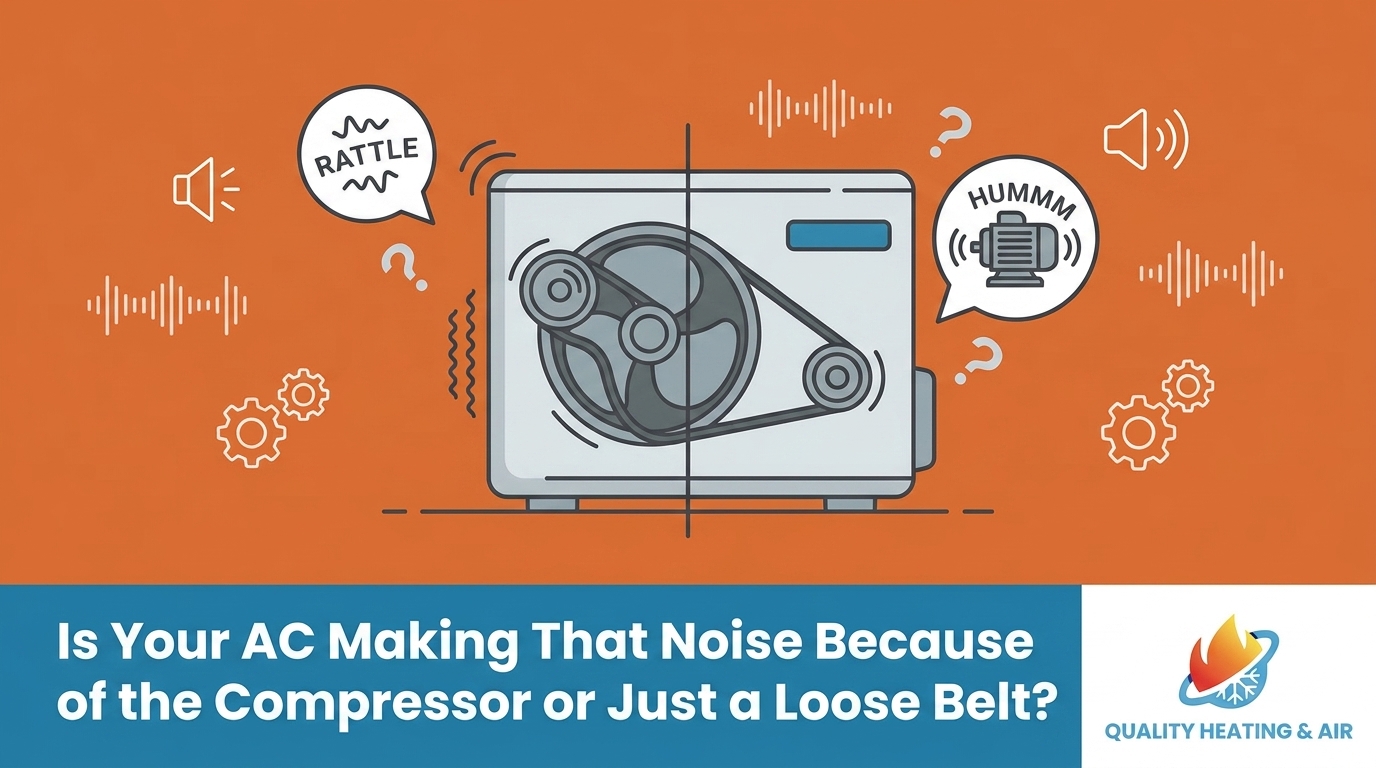
Is Your AC Making That Noise Because of the Compressor or Just a Loose Belt?

Decoding Tenant Noise Complaints: Is It an Emergency?
Is your property's cooling system suddenly sounding alarms, leaving you to wonder: is your AC making that noise because of the compressor or just a loose belt? When a tenant calls to report a loud screeching or heavy grinding sound coming from their unit, property managers face an immediate, stressful decision. You have to determine whether the sound means the system is actively destroying itself or if it simply requires a minor mechanical adjustment. Making the wrong call can lead to unnecessary after-hours emergency fees, or worse, catastrophic equipment failure.
Fielding these noise complaints can be overwhelming, especially when managing multiple properties in Northglenn CO. The priority is to accurately assess the risk without jumping to conclusions or relying on guesswork. By understanding the distinct mechanical sounds a cooling system produces, you can confidently decide whether to dispatch an emergency technician or schedule standard maintenance. Partnering with our team at Quality Heating & Air for professional HVAC services ensures that your properties remain comfortable and your physical assets stay protected, all without taking on the liability of DIY diagnostics.
The Property Manager's HVAC Triage Matrix
Not every loud noise requires an immediate, middle-of-the-night response, but ignoring the wrong sound can lead to a completely destroyed system. By late-summer August wear-and-tear, cooling systems have endured months of continuous operation, making end-of-season fatigue a primary driver of mechanical failures. To help you translate tenant complaints into actionable decisions, our technicians use this triage matrix to categorize the risk level of common mechanical noises we see in the field.
Turning the unit off at the thermostat is always the safest immediate action when heavy mechanical sounds occur. If internal parts are colliding, cutting the power prevents the damage from spreading. Air conditioning repair and service should be scheduled based on the severity of the symptoms described below.
• High-Pitched Squeal or Squeak — Likely Component Issue: Worn, loose, or dry-rotted rubber drive belt; unlubricated blower motor bearings. — Urgency Level: Routine Maintenance — Immediate Action Required: Leave unit running if cooling, but schedule service soon.
• Heavy Metal Grinding or Clanking — Likely Component Issue: Internal compressor failure; broken connecting rod; loose internal motor mounts. — Urgency Level: Emergency (Shut Off Immediately) — Immediate Action Required: Instruct tenant to turn thermostat to OFF immediately.
• Loud Hissing or Bubbling — Likely Component Issue: Refrigerant leak in the copper lines or extreme internal pressure buildup. — Urgency Level: Urgent Repair — Immediate Action Required: Turn unit off to prevent compressor burnout; schedule repair.
• Continuous Electrical Buzzing — Likely Component Issue: Failing contactor, bad capacitor, or electrical arcing at the outdoor unit. — Urgency Level: Urgent Repair — Immediate Action Required: Shut off power at the breaker to prevent electrical fire risks.
• Rattling or Chattering — Likely Component Issue: Loose cabinet panels, debris in the fan blade, or loose hardware. — Urgency Level: Routine Maintenance — Immediate Action Required: Visually inspect exterior; schedule maintenance if internal.

High-Pitched Squeals: Identifying Loose or Frayed Belts
When a tenant reports a distinct, continuous squealing sound every time the cooling cycle kicks on, our technicians know the culprit is highly predictable. In older units that utilize belt-driven blower motors, a high-pitched shriek usually points directly to the rubber drive belt. Over time, the tension on these belts causes them to stretch, fray, and slip along the metal pulleys. While a squealing belt is incredibly annoying to tenants and often prompts urgent phone calls, it rarely requires an immediate middle-of-the-night emergency visit.
The semi-arid climate and low relative humidity in Northglenn CO significantly impact these components. The dry air actively pulls moisture out of the rubber, causing belts to dry rot, crack, and squeal prematurely compared to units in more humid environments. Once a belt begins to slip, the friction generates heat, which only accelerates the degradation process. During a recent late-summer service call at an older property in the area, our team addressed ongoing AC issues by installing a start assist alongside a new furnace to resolve persistent mechanical strain. Addressing these underlying mechanical tensions early keeps the entire system running smoothly.
The key takeaway for property managers is that while a squeal is not a catastrophic emergency, it cannot be ignored. A snapping belt will stop the blower motor entirely, leading to frozen evaporator coils and severe system strain. Enrolling your properties in a routine HVAC maintenance plan with Quality Heating & Air ensures these belts are inspected, tensioned, or replaced before they fail completely.
Why Belts Fail Prematurely
In our years of serving Northglenn, we've found that understanding the root causes of belt degradation helps explain why routine inspections are so valuable. Several factors contribute to early failure:
• Lack of lubrication: Motor bearings that lack proper lubrication increase friction, forcing the belt to pull harder against the resistance.
• Environmental stressors: Low humidity and temperature fluctuations dry out the rubber components, leading to brittle cracking.
• Normal operational fatigue: After months of heavy use, the constant tension naturally stretches the rubber beyond its functional limits.
Grinding, Clanking, and Banging: Signs of Compressor Strain
If a squeal is a cry for maintenance, a heavy metal-on-metal grinding or banging sound is a blaring siren for immediate intervention. These violent noises typically originate from the outdoor condenser unit and indicate serious internal failure. The compressor is the "heart" of the AC system, responsible for pumping pressurized refrigerant through the lines. When internal components like pistons, valves, or connecting rods break loose, they collide inside the hermetically sealed casing, producing a heavy clanking sound.
The high altitude in our region forces compressors to work harder due to lower air density, accelerating wear during periods of peak cooling demand. By the time late-summer August wear-and-tear sets in, a stressed compressor is highly vulnerable to failure. If a tenant reports heavy grinding, instruct them to turn the thermostat to "OFF" immediately. Allowing a failing compressor to continue running will completely destroy the unit, forcing a massive replacement project instead of a potentially manageable repair.
Catching a failing motor bearing early is significantly less disruptive than replacing a fully destroyed compressor. On a recent end-of-season dispatch involving severe noise complaints, our team's thorough inspection across multiple system components allowed us to explain the exact points of failure and provide the property manager with clear, actionable options. Knowing that our 24/7 emergency service is available means you never have to leave a catastrophic compressor issue unchecked. If an older central system has suffered total compressor death, exploring alternative solutions like ductless mini-split systems can provide efficient, decentralized cooling for specific tenant spaces.
When to Shut the System Down
We empower property managers to instruct their tenants to act quickly if they hear any of the following sounds, as these indicate an active emergency:
• Loud banging on startup: Often referred to as "hard starting," this indicates the compressor is struggling to overcome internal pressure or electrical deficits.
• Continuous grinding during the cooling cycle: A clear sign that internal metal components have broken loose and are actively destroying the motor.
• Violent shaking of the outdoor unit: Severe imbalance in the fan motor or compressor casing that can tear the refrigerant lines wide open.
Hissing and Buzzing: Other Warning Sounds to Monitor
While belts and compressors account for the most dramatic noises, property managers in Northglenn CO must also be prepared to diagnose other common auditory warnings that our technicians frequently encounter in the field. A distinct hissing or bubbling sound usually points to a refrigerant leak. Because the refrigerant operates under high pressure, a microscopic crack in the copper lines will force the gas out, creating a hiss. If the system loses its refrigerant charge, it will run continuously without cooling the property, eventually burning out the compressor.
Conversely, a loud electrical buzzing or humming sound points to power delivery issues. The contactor, which acts as a heavy-duty switch to send high voltage to the compressor, can become pitted or coated in debris, causing it to buzz loudly when engaged. A failing capacitor might also produce a hum as it struggles to deliver the necessary starting torque to the motors. Diagnosing these specific sounds requires a licensed HVAC technician, as dealing with high-voltage electrical components and pressurized refrigerants is extremely dangerous. For a broader look at diagnostic sounds, reviewing a comprehensive guide to what different AC noises mean can help you document the exact symptoms when submitting a service request to our team.
Translating Tenant Complaints into Confident Action
When the phone rings with a noise complaint, your ability to ask the right questions dictates the outcome. Panicking leads to rushed decisions, while ignoring the problem leads to expensive failures driven by late-summer August wear-and-tear. Your goal is to gather accurate information quickly so we can dispatch the appropriate level of service.
When evaluating replacement options after a major failure, having an honest assessment matters. In one recent late-summer scenario where we provided an AC installation quote comparison, our team's clear breakdown of equipment differences led to a competitive, on-time installation that restored cooling without delay. To achieve that level of efficiency, follow these specific steps when fielding a noise complaint:
1. Ask for specific audio descriptions: Direct the tenant by asking, "Does it sound like a high-pitched squeak, a heavy metal grind, or an electrical buzz?"
2. Determine the location: Clarify whether the noise is coming from the indoor vents, the indoor air handler closet, or the outdoor condenser unit.
3. Assess the cooling performance: Ask if the air coming out of the vents is still cold. A squealing system may still cool, while a grinding system usually blows warm air.
4. Issue immediate safety instructions: If the sound is heavy, metallic, or electrical, instruct the tenant to switch the thermostat to the "OFF" position immediately.
5. Enforce a strict hands-off policy: Advise tenants and unlicensed maintenance staff never to open the condenser cabinet or attempt belt replacements themselves.
Acting swiftly prevents minor end-of-season issues from cascading into total system failures. Having Quality Heating & Air as a reliable HVAC partner ensures that once you gather the information, you get fast, accurate diagnostics.
Frequently Asked Questions About AC Noises
What does a bad AC compressor sound like?
In our experience, a failing AC compressor typically produces heavy clanking, banging, or deep grinding noises. It often sounds like heavy metal hitting metal inside the outdoor condenser unit. When these violent sounds occur, it requires an immediate shutdown of the system at the thermostat to prevent the internal components from completely tearing themselves apart. Ignoring this sound almost always guarantees a total system replacement.
Why is my AC squealing when it turns on?
A high-pitched squeal usually indicates a loose, worn, or dry-rotted rubber drive belt slipping on its pulleys. We also see it point to unlubricated motor bearings grinding against their housings. This sound is incredibly common in older units equipped with belt-driven blowers, especially in dry climates like Northglenn CO where rubber components degrade faster. While not an immediate emergency, it requires prompt professional maintenance.
Can a loose belt damage my AC?
Yes, if left unresolved, a loose belt can snap and cause the blower motor to stop working entirely. When the blower fails, air stops moving over the indoor coils, leading to frozen evaporator coils and severe system strain. Prompt replacement by our technicians restores proper tension, prevents cascading failures, and keeps the cooling cycle operating efficiently.
Is it safe to run an air conditioner that is making noise?
It depends entirely on the type of noise; squeals may allow for short-term operation, but heavy grinding means you must shut it off immediately. When in doubt, turning the system off prevents expensive secondary damage to the compressor and electrical components. Always consult our licensed professionals rather than risking catastrophic failure by forcing a struggling system to run.
How long do AC drive belts typically last?
The lifespan of a drive belt varies significantly by usage and climate, but we typically recommend professional inspection annually. Dry, semi-arid climates accelerate wear, drying out the rubber and reducing the overall lifespan. Routine maintenance catches this wear, allowing our technicians to replace frayed belts before they snap during peak cooling demand.
Make the Right Call for Your Cooling System
Accurate diagnosis protects both your property's physical assets and your tenants' comfort. When you can confidently distinguish between a routine belt squeal and an emergency compressor grind, you take control of your maintenance budget and prevent late-summer August wear-and-tear from turning into a crisis. Remember that professional assessment is the only way to guarantee safety and proper function.
If your properties are experiencing alarming mechanical noises, don't wait for the system to fail completely. Relying on our 24/7 emergency availability at Quality Heating & Air provides peace of mind that expert help is always ready to respond. Schedule a comprehensive inspection with our team today to confidently triage your maintenance requests and keep your cooling systems running smoothly.

Testimonials
Neighbors trust Quality Heating & Air for honest work and fair pricing.
Service Areas