
Air Purification Systems in Henderson, CO
Air Purification Systems in Henderson, CO
Keeping indoor air clean is essential in Henderson, CO where seasonal pollen, dry dusty conditions, and periodic wildfire smoke from the Front Range can compromise home air quality. A well-specified air purification system reduces allergens, particulate pollution, odors, and airborne pathogens—improving sleep, reducing allergy symptoms, and protecting HVAC equipment. Below is a practical, technician-led guide to the air purification options, sizing and installation process, maintenance expectations, compatible brands and warranty considerations, and how to choose the right system for your Henderson home.
Why Henderson homes need dedicated air purification
- Seasonal pollen and higher spring-time allergen loads that aggravate allergies and asthma
- Local dust levels and construction activity common in fast-growing suburbs
- Occasional wildfire and wood-smoke episodes that send fine particulate matter (PM2.5) into neighborhoods
- Dry winter air that increases household dust circulation and static, making particulates more noticeable
Addressing these issues with targeted air purification reduces health risks and makes indoor environments more comfortable year-round.
Common air purification technologies we install
We evaluate and offer multiple technologies to match your home’s specific needs. Most effective solutions combine modules to address particulates, gases, and biological contaminants.
- HEPA filtration (portable and whole-home in-duct)
- What it does: Removes fine particles including dust, pollen, pet dander, and smoke. True HEPA captures 99.97% of particles 0.3 microns and larger.
- Best for: Allergies, wildfire smoke mitigation, pet owners, and households wanting measurable particulate reduction.
- Activated carbon adsorption
- What it does: Traps odors, exhaust gases, VOCs from cleaners and paints, and some smoke components.
- Best for: Homes with odors, chemical sensitivities, or recent renovations.
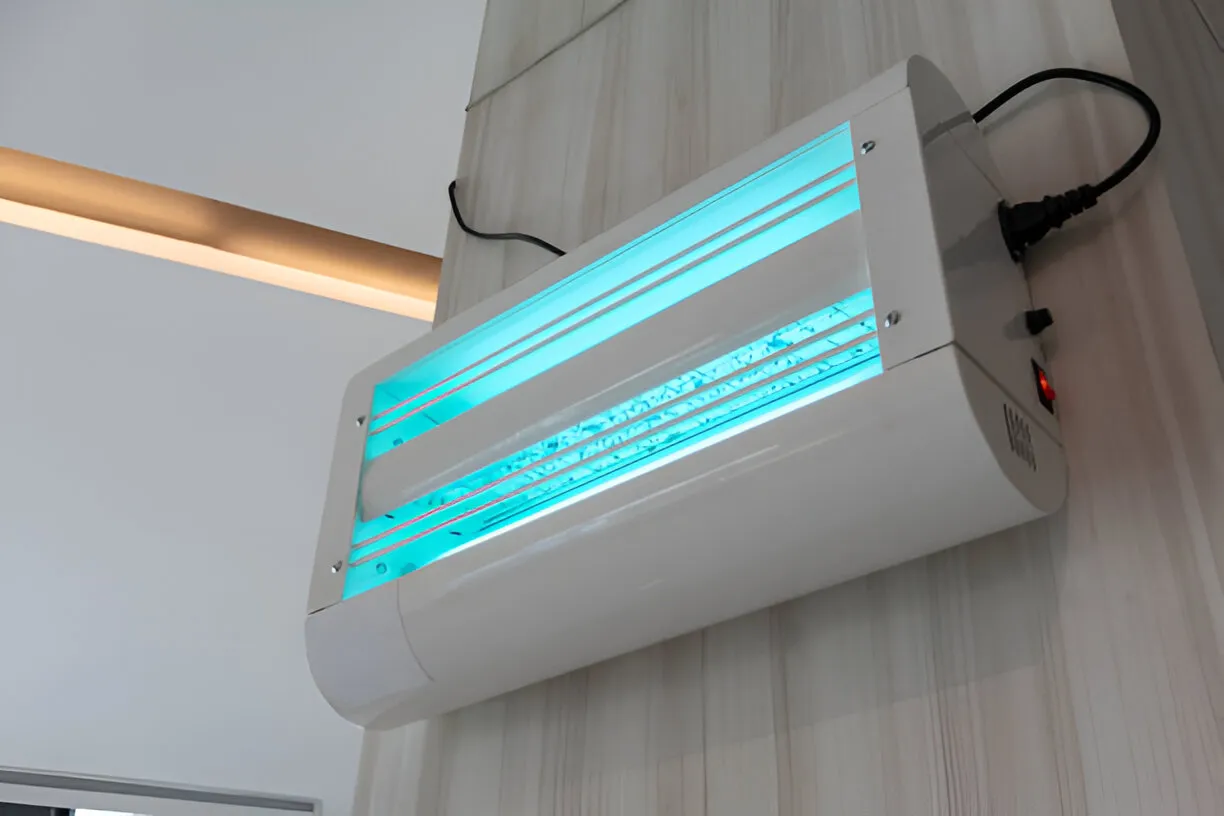
- UV-C germicidal systems
- What it does: Inactivates bacteria, mold spores, and some viruses on HVAC coils or in the air stream when properly applied.
- Best for: Homes concerned about biological contamination and humid-season mold growth on coils.
- Combined systems (HEPA + carbon + UV)
- What it does: Provides broad-spectrum protection—particulate removal, gas adsorption, and microbial control.
- Best for: Homes with multiple IAQ concerns or medically vulnerable occupants.
- Whole-home (in-duct) vs portable units
- Whole-home systems: Installed in the HVAC return or ductwork to treat air for the entire house. Integration preserves aesthetics and centralizes maintenance.
- Portable units: Stand-alone units for single rooms or targeted spaces. Useful for bedrooms, living rooms, or when whole-home integration is not feasible.
Evaluation and system-sizing process
Selecting the right solution starts with a formal assessment of your home and indoor air goals.
- Home survey
- Review floor plan, HVAC type, return locations, existing filtration (MERV rating), and living habits (pets, smoking, cooking).
- IAQ testing (if required)
- Particle counts, VOC spot checks, and humidity readings to quantify problems and set realistic performance targets.
- Sizing by room or whole-home
- For portable units, we use room volume and target air changes per hour (ACH) to select a unit with an appropriate Clean Air Delivery Rate (CADR).
- For whole-home in-duct systems, we evaluate airflow (CFM), static pressure limits, and furnace/air handler capacity to determine appropriate filter/cleaner size and placement.
- Recommended performance goals
- Typical targets: 4–6 ACH for bedrooms and living areas during smoke events; MERV 13+ filtration for optimal particulate capture without overloading equipment.
Professional installation and HVAC integration
Proper installation preserves HVAC performance and ensures safety.
- In-duct HEPA or high-MERV filters require evaluation of blower capability and duct static pressure. We recommend upgrades only when the system can handle added pressure drop.
- UV-C lamps are best mounted near the evaporator coil to prevent mold growth; they require proper electrical integration and protective housing.
- Bypass or dedicated air cleaners need correct orientation and sealing to prevent short-circuiting of air.
- Portable units should be positioned for unobstructed airflow and sized for the intended room.
- We always verify airflow after installation and perform a quality check to confirm system balance and effectiveness.
Maintenance and filter-replacement guidelines
Routine maintenance preserves efficiency and expected performance.
- HEPA filters (portable): inspect every 3 months; typical replacement 6–12 months depending on usage and smoke exposure.
- Whole-home high-efficiency filters (MERV 13+): check every 1–3 months; replace as needed—commonly every 3–6 months.
- Activated carbon cartridges: replace every 3–6 months when treating VOCs or odors heavily; longer in low-use scenarios.
- UV-C lamps: bulb life is typically 9–12 months for germicidal effectiveness; replace annually for consistent results.
- Pre-filters and electrostatic elements: clean or replace per manufacturer recommendations to avoid pressure build-up.
- Annual system check: airflow verification, lamp intensity testing, and duct sealing inspection.
Compatible brands, warranties, and financing
We work with leading IAQ brands known for reliability and parts support, including Carrier, Trane, Lennox, Honeywell, Daikin, and Amana. Manufacturer warranties typically cover component defects; service warranties cover installation workmanship. Many homeowners finance IAQ upgrades through standard home-improvement financing plans—options vary by installer and manufacturer.
- Typical warranty elements to review:
- Manufacturer filter/part warranty
- UV lamp warranty and replacement policies
- Installer workmanship warranty
- Financing considerations:
- Tiered options to spread the cost of whole-home systems
- Financing often available for combined HVAC and IAQ projects
Realistic performance outcomes and what to expect
No system can achieve zero contaminants, but correctly chosen and maintained systems deliver measurable improvements:
- HEPA-level filtration: up to 99.97% reduction of particles ≥0.3 microns in treated air streams
- Properly sized whole-home systems: noticeable drop in dust, longer HVAC coil life, and fewer allergy symptoms
- Activated carbon: significant reduction in odors and many VOCs when cartridge capacity matches contaminant load
- UV-C: reduced biological growth on coils and lower recirculated microbial counts when used alongside filtration
Actual performance depends on home tightness, ventilation rates, occupant behavior (cooking, smoking), and maintenance adherence.
Choosing the right solution for your Henderson home
Consider these factors when deciding:
- Primary concern: allergies/smoke (HEPA + carbon) vs. bio-growth control (UV-C + filtration)
- Home layout: open plan favors whole-home systems; single-room issues may be solved with a portable unit
- Existing HVAC capacity and age: older air handlers may need upgrades before adding high-MERV media
- Budget and long-term operating costs: filter replacements and electricity use add to lifetime cost
- Noise tolerance: portable units vary—look for CADR-to-noise ratio ratings
Selecting the correct combination of filtration, adsorption, and UV—sized and installed by a trained technician—ensures reliable, measurable indoor air improvements tailored to Henderson’s environmental challenges.
Promotions
Save on seasonal system checks from a local team that treats your home like our own.

Testimonials
Neighbors trust Quality Heating & Air for honest work and fair pricing.