From Cold to Cozy: Navigating Boiler Replacement Services in Brighton
## Why Brighton Homeowners Are Choosing New Boilers Over Endless Repairs
If you're a homeowner in Brighton, CO, you know that a reliable heating system isn't a luxury—it's a necessity. The winters can be harsh, and an aging or failing boiler can quickly turn your cozy home into an uncomfortable, cold space. Beyond the chill, a faulty boiler often brings the stress of high utility bills and the constant worry of a complete breakdown when you need heat the most. That's why finding a trustworthy boiler replacement company in Brighton, CO is a top priority for many residents looking to upgrade their home's comfort and efficiency.
For homeowners in Brighton, a failing boiler isn't just inconvenient—it's a comfort and safety issue. Whether you're dealing with frequent breakdowns, skyrocketing energy bills, or a system that's simply outlived its usefulness, understanding when and how to replace your boiler can save you money and restore peace of mind. This guide walks you through the signs you need a new boiler, how to choose the right system for your home, and what to expect from a professional installation.
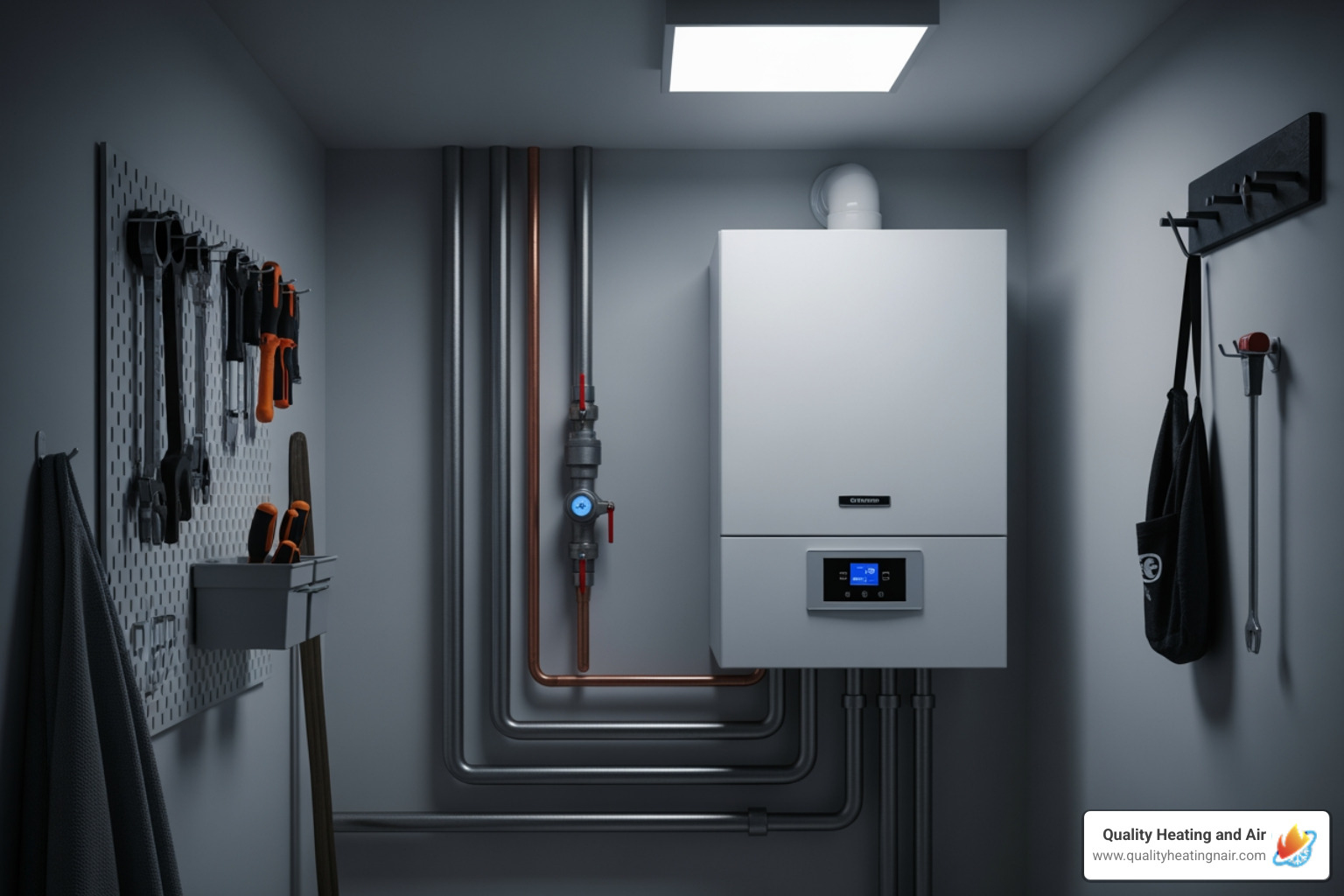
Investing in a new high-efficiency boiler offers numerous advantages that go far beyond simply having heat. Modern systems are engineered for superior performance, providing benefits that you'll notice immediately:
- Improved Reliability: Say goodbye to the stress of unexpected breakdowns. A new boiler, professionally installed, provides dependable performance year after year, giving you peace of mind through the coldest months. - Improved Safety: Today's boilers are built with advanced safety features, including pressure relief valves, automatic shut-offs, and improved ventilation, significantly reducing the risks associated with older units. - Consistent Comfort: High-efficiency boilers deliver steady, even heat throughout your home, eliminating cold spots and ensuring every room is as comfortable as the last. - Reduced Energy Bills: With efficiency ratings reaching up to 98%, new boilers convert nearly all their fuel into heat. This means less wasted energy and a noticeable reduction in your monthly utility bills—often by as much as 30%. - Lower Carbon Footprint: By using less fuel to heat your home, a modern boiler helps reduce your household's environmental impact, making it a greener choice for the planet.
Looking for expert heating solutions? Quality Heating and Air offers comprehensive HVAC services to keep your Brighton home comfortable year-round. Schedule your boiler replacement consultation today.
Telltale Signs Your Boiler Needs Replacing
The warmth and comfort of your home depend heavily on a properly functioning boiler, especially during the chilly Brighton winters. So, how do you know if your trusty heating companion is nearing the end of its journey and needs a replacement? There are several clear indicators that it might be time to call a boiler replacement company in Brighton, CO.
One of the most common signs is frequent repairs. If your boiler seems to be breaking down more often than not, or if you're constantly calling for service, it's a strong signal. We often hear stories of homeowners dealing with "no heat, weird noises, leaks around the system." While a single repair can be a cost-effective solution, a pattern of breakdowns suggests a systemic problem. One failing component can put stress on others, leading to a cascade of issues that become a constant drain on your time and budget.
Another glaring sign is rising energy bills. Older boilers are simply not as efficient as newer models. If your energy bills are steadily climbing even though your usage habits haven't changed, your boiler is likely the culprit. It's working harder, consuming more fuel, and converting less of it into usable heat. This inefficiency can cost you significantly more in the long run than investing in a new, energy-efficient model.
Strange noises emanating from your boiler also indicate trouble. While some operational sounds are normal, loud gurgling, banging, whistling, or clunking sounds are not. These often point to internal issues. A common problem is "kettling," a rumbling sound caused by limescale or sludge buildup on the heat exchanger, which restricts water flow and causes it to boil. Other noises can signal a failing pump or other worn-out components that are struggling to function.
Inconsistent heating is another major frustration. If some rooms are too hot while others remain stubbornly cold, or if your hot water supply fluctuates wildly, your boiler may be failing to distribute heat evenly. This can be caused by internal blockages from sludge and debris, a weakening circulation pump, or a system that's simply lost its ability to meet your home's demands.
Visible leaks or corrosion around your boiler are critical red flags that demand immediate attention. Even a small leak can lead to significant water damage to your property and create a hazardous environment. Corrosion on pipes or the boiler tank itself is a sign of component degradation, which can compromise the system's structural integrity and safety. Any sign of water around your boiler should prompt an immediate call to a professional.
Finally, consider your boiler's age. Most standard boilers are designed to last about 15 years. While diligent maintenance can extend this lifespan, efficiency drops significantly with age, and replacement parts can become scarce or obsolete. If your boiler is over 15 years old, even if it seems to be working, it's wise to start planning for a replacement. A proactive upgrade allows you to choose the best system for your needs without the pressure of an emergency breakdown.
When to Repair vs. Replace
Deciding whether to repair or replace your boiler can be a tough call. We understand that many homeowners put up with inefficient or faulty boilers because they're worried about the cost of a new installation. However, there's a point where continued repairs become "beyond economical repair."
If your boiler is frequently breaking down, if a single repair costs a substantial fraction of a new unit, or if critical parts like the heat exchanger have failed, replacement is often the smartest financial decision. An old boiler that repeatedly fails or poses a safety concern should always be considered for replacement. The long-term value of a new system—with its improved reliability, improved safety, and significant efficiency gains—typically outweighs the ongoing expense and stress of maintaining an outdated unit.
A professional assessment from a trusted boiler replacement company in Brighton, CO can help you make an informed decision. Our expert technicians can perform a thorough evaluation of your current system's condition, including safety checks, efficiency tests, and an analysis of its repair history. Based on this comprehensive review, we can provide an honest recommendation custom to your home's needs and your budget, helping you find a solution that saves you money and hassle in the long run.
Selecting the Right Boiler for Your Home
Choosing a new boiler is an important decision that impacts your home's comfort and energy bills for years to come. When you partner with a professional boiler replacement company in Brighton, CO, we help you focus on several key factors to ensure you select the perfect system for your needs.
First and foremost is energy efficiency. This is measured by the Annual Fuel Utilization Efficiency (AFUE) rating, which indicates the percentage of fuel converted into usable heat. A higher AFUE rating means less fuel is wasted, leading to lower energy bills. Modern high-efficiency boilers can achieve AFUE ratings of up to 98%, a massive improvement over older models that might operate at only 60-70% efficiency. This upgrade translates directly into monthly savings.
Your home size and hot water demand are also crucial. A small apartment has very different heating needs than a large family home with multiple bathrooms. A boiler that is too large for your space (oversized) will cycle on and off too frequently, wasting energy and causing unnecessary wear. A boiler that is too small (undersized) will struggle to heat your home and provide enough hot water. A professional technician performs a detailed load calculation, considering your home's square footage, insulation, window type, and number of occupants to recommend the perfectly sized unit.
Finally, consider the fuel type. Most boilers in Brighton, CO, are fueled by natural gas, which is typically cost-effective and convenient. However, electric boilers are also a viable option, particularly in homes where a gas line is not available. Electric models are highly efficient at the point of use and produce no on-site emissions. Our experts can help you weigh the pros and cons of each fuel type based on your property's infrastructure and local energy costs.
Understanding Different Boiler Types
Modern boiler technology offers several types, each designed for different household needs. Understanding these differences is key to choosing the right system for your Brighton home.
| Boiler Type | How It Works | Best For | Key Benefit | | --- | --- | --- | --- | | Combi (Combination) | Heats water directly from the mains on demand for both heating and hot water. No storage tanks needed. | Smaller homes and apartments with 1-2 bathrooms. | Space-saving and highly efficient, as it only heats water when you need it. | | System | Heats water that is stored in a separate hot water cylinder. Most major components are built into the boiler itself. | Homes with multiple bathrooms and high hot water demand. | Can supply hot water to multiple taps at once without a drop in pressure. | | Conventional (Regular) | Uses both a hot water storage cylinder and a cold water feed tank (often in the attic) to supply heating and hot water. | Larger, older properties with existing pipework that may not handle high water pressure. | Ideal for homes with many bathrooms and low mains water pressure. |
Combi (Combination) Boilers: These are the most popular type in many modern homes due to their compact size and efficiency. Because they heat water instantly on demand, you don't need a bulky hot water storage tank, freeing up valuable space in a closet or utility room. They are perfect for smaller households where hot water isn't typically needed in multiple bathrooms simultaneously.
System Boilers: A system boiler is a great middle-ground option. It requires a cylinder for storing hot water but not a cold water tank in the attic, making the installation neater and more compact than a conventional system. This setup is ideal for homes with higher hot water demand, as it can provide a constant supply to several outlets at once.
Conventional Boilers (also known as Regular or Heat-Only): These traditional systems are best suited for larger properties with older radiator systems that might not be able to handle the high water pressure of a system or combi boiler. They use both a storage cylinder and a feed tank, making them capable of supplying large volumes of hot water to multiple bathrooms, making them a reliable choice for very large families.

Testimonials
Neighbors trust Quality Heating & Air for honest work and fair pricing.
Really happy with my overall experience. They worked neatly, quickly, and taught me MUCH along the way. Gave great advice, helped me with a side concern, that was holding me up; and finished in time for my Dentist visit. I would highly recommend this business, and the price was a pure blessing. GREAT local company and I wasn't bribed for my review 🙃 thx guys!
Bonnie B.
Fred was very knowledgeable, he repaired an old rusted iron pipe that was part of the original house build. I thought the repair would be more costly than what Fred qouted me including parts and labor. Fred made the repair after 5pm, after getting the necessary parts and he was very clean because he put down a cloth on the bathroom floor while working. I would highly recommend Fred for service in the future and I will use Quality's services again in the future.
Chris S.
Fred did a wonderful job diagnosing our air conditioning issue, presenting options available, and installing the new unit we needed. In addition to being a truly nice person, Fred was very knowledgable and professional, and we highly recommend him. Thank you Fred!
James D.
Fred was great and explained our issues we had and fixes we needed in an easy to understand way. Will ask for him next time.
Justin F.
Great service, Fred was able to show up the same day we had a problem and get everything fixed. Very knowledgeable and did not pressure us to spend money we didn’t need to spend. I would recommend to a friend without question.
Kyle F.
Fred Gottschalk performed a miracle with the furnace. He is by far the most knowledgeable HVAC professional I know to date. He knew everything about my furnace and replaced an old blower. The blower is far superior over the OEM one. I did the right thing choosing Fred!
Marty P.
I had an amazing experience with Fred Gottschalk! From the moment he came in to the moment he left he was very personable and made me feel good about my decision to call this company for assistance. I love the fact that they prioritize a personal touch making sure whoever comes to your door will remain your tech every time you call in. One thing he told me that gained my trust is that he will take care of my furnace the way he would want someone to take care of his granny’s. Thank you Quality heating and air, and thank you Fred!
Monica G.
Our technician Fred was excellent. Arrived on time, communicated well and was very knowledgable. Highly recommend and will continue to use these guys.
Nancy S.
Fred was great! He was friendly and informative, answered all of our questions and even got along with our cat (also named Fred). Would highly recommend!
Sadie P.
Highly recommend. Easy scheduling process and our technician Fred was on time, very professional, and knowledgeable on all things in the mechanical world. Took time to educate us and fix the issues we had.
Scott F.
Really happy with my overall experience. They worked neatly, quickly, and taught me MUCH along the way. Gave great advice, helped me with a side concern, that was holding me up; and finished in time for my Dentist visit. I would highly recommend this business, and the price was a pure blessing. GREAT local company and I wasn't bribed for my review 🙃 thx guys!
Bonnie B.
Fred was very knowledgeable, he repaired an old rusted iron pipe that was part of the original house build. I thought the repair would be more costly than what Fred qouted me including parts and labor. Fred made the repair after 5pm, after getting the necessary parts and he was very clean because he put down a cloth on the bathroom floor while working. I would highly recommend Fred for service in the future and I will use Quality's services again in the future.
Chris S.
Fred did a wonderful job diagnosing our air conditioning issue, presenting options available, and installing the new unit we needed. In addition to being a truly nice person, Fred was very knowledgable and professional, and we highly recommend him. Thank you Fred!
James D.
Fred was great and explained our issues we had and fixes we needed in an easy to understand way. Will ask for him next time.
Justin F.
Great service, Fred was able to show up the same day we had a problem and get everything fixed. Very knowledgeable and did not pressure us to spend money we didn’t need to spend. I would recommend to a friend without question.
Kyle F.
Fred Gottschalk performed a miracle with the furnace. He is by far the most knowledgeable HVAC professional I know to date. He knew everything about my furnace and replaced an old blower. The blower is far superior over the OEM one. I did the right thing choosing Fred!
Marty P.
I had an amazing experience with Fred Gottschalk! From the moment he came in to the moment he left he was very personable and made me feel good about my decision to call this company for assistance. I love the fact that they prioritize a personal touch making sure whoever comes to your door will remain your tech every time you call in. One thing he told me that gained my trust is that he will take care of my furnace the way he would want someone to take care of his granny’s. Thank you Quality heating and air, and thank you Fred!
Monica G.
Our technician Fred was excellent. Arrived on time, communicated well and was very knowledgable. Highly recommend and will continue to use these guys.
Nancy S.
Fred was great! He was friendly and informative, answered all of our questions and even got along with our cat (also named Fred). Would highly recommend!
Sadie P.
Highly recommend. Easy scheduling process and our technician Fred was on time, very professional, and knowledgeable on all things in the mechanical world. Took time to educate us and fix the issues we had.
Scott F.
Really happy with my overall experience. They worked neatly, quickly, and taught me MUCH along the way. Gave great advice, helped me with a side concern, that was holding me up; and finished in time for my Dentist visit. I would highly recommend this business, and the price was a pure blessing. GREAT local company and I wasn't bribed for my review 🙃 thx guys!
Bonnie B.
Fred was very knowledgeable, he repaired an old rusted iron pipe that was part of the original house build. I thought the repair would be more costly than what Fred qouted me including parts and labor. Fred made the repair after 5pm, after getting the necessary parts and he was very clean because he put down a cloth on the bathroom floor while working. I would highly recommend Fred for service in the future and I will use Quality's services again in the future.
Chris S.
Fred did a wonderful job diagnosing our air conditioning issue, presenting options available, and installing the new unit we needed. In addition to being a truly nice person, Fred was very knowledgable and professional, and we highly recommend him. Thank you Fred!
James D.
Fred was great and explained our issues we had and fixes we needed in an easy to understand way. Will ask for him next time.
Justin F.
Great service, Fred was able to show up the same day we had a problem and get everything fixed. Very knowledgeable and did not pressure us to spend money we didn’t need to spend. I would recommend to a friend without question.
Kyle F.
Fred Gottschalk performed a miracle with the furnace. He is by far the most knowledgeable HVAC professional I know to date. He knew everything about my furnace and replaced an old blower. The blower is far superior over the OEM one. I did the right thing choosing Fred!
Marty P.
I had an amazing experience with Fred Gottschalk! From the moment he came in to the moment he left he was very personable and made me feel good about my decision to call this company for assistance. I love the fact that they prioritize a personal touch making sure whoever comes to your door will remain your tech every time you call in. One thing he told me that gained my trust is that he will take care of my furnace the way he would want someone to take care of his granny’s. Thank you Quality heating and air, and thank you Fred!
Monica G.
Our technician Fred was excellent. Arrived on time, communicated well and was very knowledgable. Highly recommend and will continue to use these guys.
Nancy S.
Fred was great! He was friendly and informative, answered all of our questions and even got along with our cat (also named Fred). Would highly recommend!
Sadie P.
Highly recommend. Easy scheduling process and our technician Fred was on time, very professional, and knowledgeable on all things in the mechanical world. Took time to educate us and fix the issues we had.
Scott F.
Really happy with my overall experience. They worked neatly, quickly, and taught me MUCH along the way. Gave great advice, helped me with a side concern, that was holding me up; and finished in time for my Dentist visit. I would highly recommend this business, and the price was a pure blessing. GREAT local company and I wasn't bribed for my review 🙃 thx guys!
Bonnie B.
Fred was very knowledgeable, he repaired an old rusted iron pipe that was part of the original house build. I thought the repair would be more costly than what Fred qouted me including parts and labor. Fred made the repair after 5pm, after getting the necessary parts and he was very clean because he put down a cloth on the bathroom floor while working. I would highly recommend Fred for service in the future and I will use Quality's services again in the future.
Chris S.
Fred did a wonderful job diagnosing our air conditioning issue, presenting options available, and installing the new unit we needed. In addition to being a truly nice person, Fred was very knowledgable and professional, and we highly recommend him. Thank you Fred!
James D.
Fred was great and explained our issues we had and fixes we needed in an easy to understand way. Will ask for him next time.
Justin F.
Great service, Fred was able to show up the same day we had a problem and get everything fixed. Very knowledgeable and did not pressure us to spend money we didn’t need to spend. I would recommend to a friend without question.
Kyle F.
Fred Gottschalk performed a miracle with the furnace. He is by far the most knowledgeable HVAC professional I know to date. He knew everything about my furnace and replaced an old blower. The blower is far superior over the OEM one. I did the right thing choosing Fred!
Marty P.
I had an amazing experience with Fred Gottschalk! From the moment he came in to the moment he left he was very personable and made me feel good about my decision to call this company for assistance. I love the fact that they prioritize a personal touch making sure whoever comes to your door will remain your tech every time you call in. One thing he told me that gained my trust is that he will take care of my furnace the way he would want someone to take care of his granny’s. Thank you Quality heating and air, and thank you Fred!
Monica G.
Our technician Fred was excellent. Arrived on time, communicated well and was very knowledgable. Highly recommend and will continue to use these guys.
Nancy S.
Fred was great! He was friendly and informative, answered all of our questions and even got along with our cat (also named Fred). Would highly recommend!
Sadie P.
Highly recommend. Easy scheduling process and our technician Fred was on time, very professional, and knowledgeable on all things in the mechanical world. Took time to educate us and fix the issues we had.
Scott F.
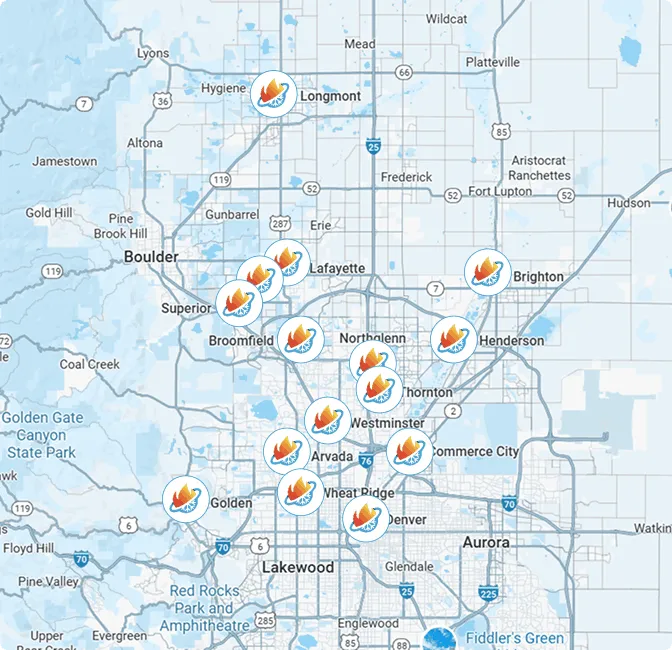
Service Areas

Testimonials
Neighbors trust Quality Heating & Air for honest work and fair pricing.
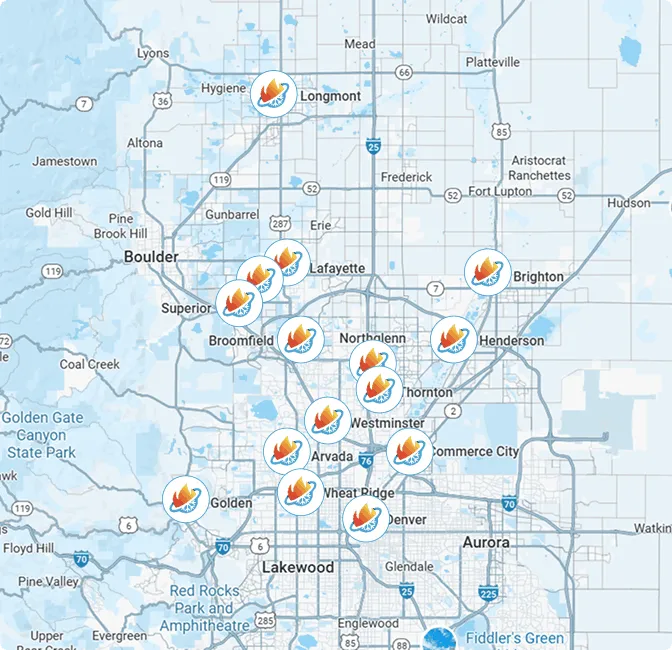
Service Areas