Why Your Edgewater Boiler Isn’t Heating: A Quick Fix Guide
## When Your Boiler Blowing Cold Air in Edgewater CO Leaves You Freezing
Boiler blowing cold air in edgewater co is more than just frustrating—it’s a serious comfort problem during Colorado winters. When temperatures drop in Edgewater and your boiler starts pushing cold air through your vents or leaving radiators ice-cold, you need answers fast. This guide walks you through the most common causes and quick fixes you can try before calling in the pros.
Quick troubleshooting checklist for a cold boiler:
1. Check your thermostat – Confirm it’s set to heat mode and the temperature is higher than the current room temperature 2. Inspect water pressure – Look at the pressure gauge; it should read between 12-15 PSI for most systems 3. Test the circulator pump – Feel if it’s warm and vibrating slightly when the system runs 4. Look for error codes – Modern boilers display codes that identify specific problems 5. Bleed your radiators – Air trapped in the system prevents hot water from circulating 6. Reset the system – Turn off power for 30 seconds, then restart
For expert help with any heating issues, explore our comprehensive heating services, or if you need immediate boiler repair, contact Quality Heating and Air today.
Edgewater’s cold winters demand a reliable heating system. When your boiler fails, the cold creeps in quickly. Most boiler problems fall into a few categories: thermostat issues, low water pressure, air in the lines, or component failures. Some are simple DIY fixes, while others need a trained technician. This guide helps you tell the difference and get your home warm again.
First Steps: Simple DIY Checks for Your Boiler
Before you start worrying about expensive repairs or spending another frigid night in Edgewater, let’s walk through some surprisingly simple checks that often solve the problem. You’d be amazed how many times a boiler blowing cold air in Edgewater, CO turns out to be something as straightforward as a thermostat setting or a flipped switch.
Your thermostat is the command center for your heating system. When it’s not working right or set incorrectly, your boiler won’t know when to heat your home. Start here before you do anything else.
Check that you’re in heat mode. We know it sounds basic, but this trips up more people than you’d think. If you ran your AC recently, your thermostat might still be set to “Cool” or “Off.” Make sure it’s switched to “Heat” mode.
Look at your temperature setting. Is the target temperature higher than what your home currently feels like? If your thermostat is set to 68 degrees and your house is already 70, the boiler won’t turn on. Try bumping it up a few degrees to see if that triggers the heating cycle.
Make sure your fan is set to AUTO, not ON. When the fan is set to “On,” it runs constantly, even when the boiler isn’t heating water. This pushes cold air through your vents. Setting it to “Auto” ensures the fan only runs when your system is actively heating.
Check the batteries. If you have a battery-powered thermostat and the screen looks dim or blank, pop in fresh batteries. It’s such a simple fix, but it can save you a service call.
Now let’s talk about power. Your boiler needs electricity to run, and sometimes the power supply gets interrupted without you realizing it.
Check your circuit breaker. Head to your electrical panel and look for any tripped breakers. A tripped breaker sits halfway between “On” and “Off.” If you find one, flip it all the way to “Off” first, then back to “On.” If it trips again right away, don’t keep resetting it—that means there’s a real electrical problem that needs professional attention.
Look for the emergency shut-off switch. Most boilers have a dedicated shut-off switch that looks just like a regular light switch, often with a red cover plate. It’s usually mounted on the wall near your boiler or at the top of your basement stairs. Sometimes these get bumped or accidentally flipped off. Make sure yours is in the “On” position.
These quick checks take just a few minutes but solve heating problems more often than you’d expect. If your boiler blowing cold air in Edgewater, CO continues after you’ve tried these steps, it’s time to look at more specific boiler components and consider calling in the experts at Quality Heating and Air.
Common Reasons Your Boiler is Blowing Cold Air in Edgewater, CO
So you’ve checked the basics and your boiler blowing cold air in Edgewater, CO is still leaving you bundled in blankets. Time to look at what’s really going on inside that heating system. Most boiler problems fall into a few common categories, and understanding them helps you know whether you can tackle the fix yourself or need to call in the experts.
Understanding Thermostat and Ignition Failures
We covered basic thermostat settings earlier, but sometimes the problem runs deeper than just which mode you’ve selected.
Your thermostat might be lying to you. Even when set correctly, a malfunctioning thermostat can misread your home’s temperature, telling your boiler everything’s fine when you’re actually freezing. The wiring connecting your thermostat to the boiler can also fail, breaking the communication between the two. If your thermostat is old, displays weird readings, or seems to have a mind of its own, it might be time for a replacement.
For older boilers with a pilot light, that little flame is your heating system’s spark of life. When it goes out, nothing happens. Drafts, clogs, or a faulty thermocouple can extinguish your pilot light. You might be able to relight it yourself following the manufacturer’s instructions, but if it keeps going out, something else is wrong.
Newer boilers skip the pilot light entirely and use an electronic ignition system instead. When this fails, your boiler simply won’t fire up. The igniter itself might be faulty, or the problem could be a dirty flame sensor.
Speaking of flame sensors, here’s a sneaky culprit: a dirty flame sensor covered in carbon buildup. This safety device confirms there’s actually a flame before allowing gas to flow. When carbon accumulates on the sensor, it can’t “see” the flame properly. Your boiler’s safety system kicks in, shuts off the gas, and suddenly you’re dealing with cold air. You might notice your boiler trying to start, briefly firing up, then shutting down almost immediately. While cleaning a flame sensor sounds simple, it requires careful handling and is often best left to professionals who know what they’re doing.
Why Low Water Pressure or a Faulty Circulator Pump Causes Cold Air
Think of your boiler system like your home’s circulatory system. Just like your body needs proper blood pressure and a working heart to stay healthy, your boiler needs adequate water pressure and a functioning pump to keep you warm.
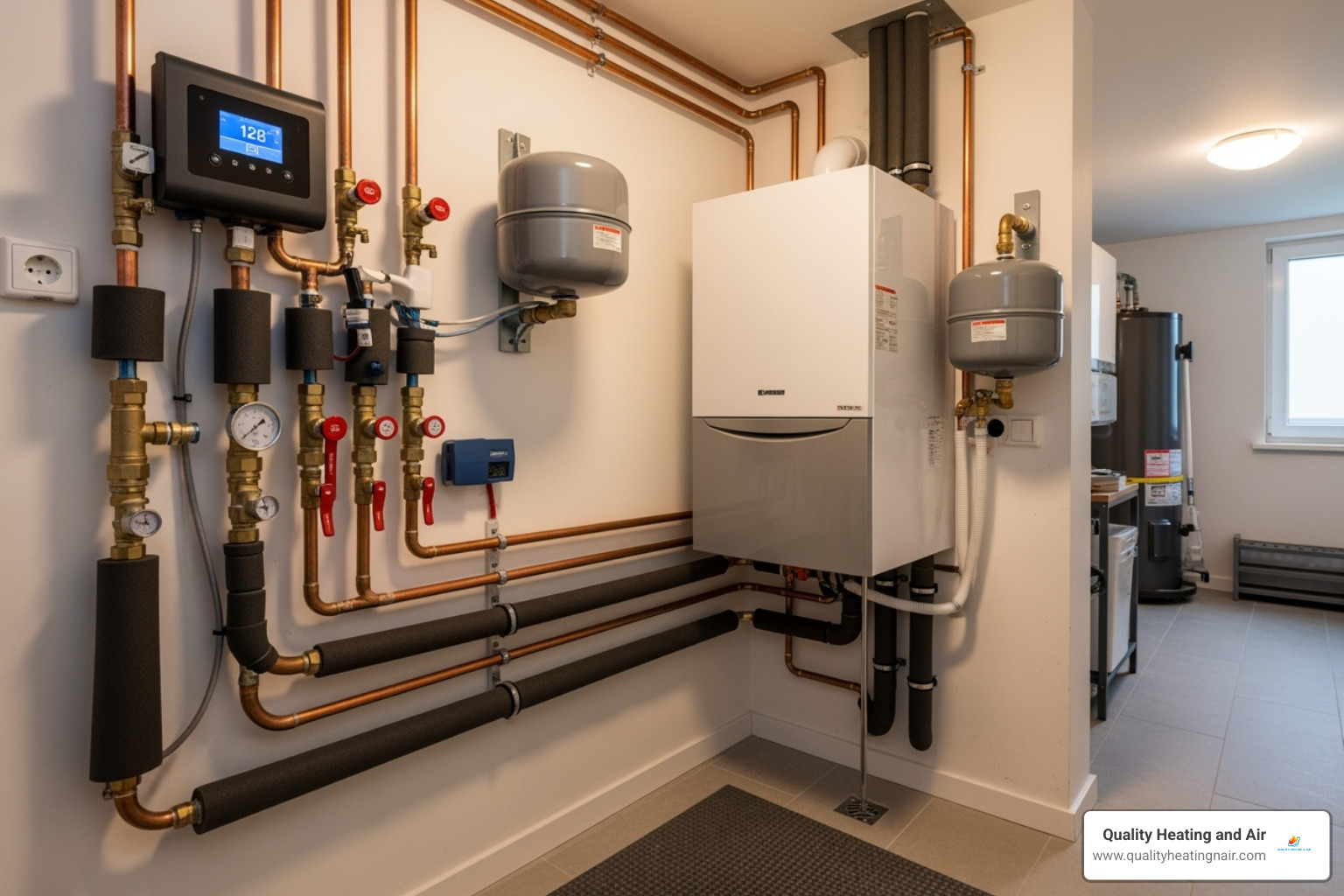
Low water pressure is one of the most common reasons for heating problems in hydronic boiler systems. Your boiler needs specific water pressure to operate safely and effectively. Most residential boilers work best at 12-15 PSI when cold. Drop below that, and a safety switch prevents the boiler from firing up, or it significantly reduces heating capacity.
Check your boiler’s pressure gauge. If it’s reading well below the recommended range, you’ve found your problem. But what causes low pressure in the first place? System leaks are often the culprit. Even tiny leaks in your boiler, pipes, or radiators gradually drain water from the system. Walk around and look for moisture, drips, or water stains around your boiler, along visible pipes, and under radiators. Found a leak? It needs professional repair to restore pressure and prevent damage.
Now let’s talk about your circulator pump. This hardworking component pushes heated water from your boiler through your home’s pipes and radiators, then brings the cooled water back for reheating. When the circulator pump fails, hot water just sits in the boiler instead of traveling through your home. Your boiler might be working perfectly, heating water like a champ, but that warmth never reaches your living spaces.
Listen to your pump. Is it making strange noises like grinding, whining, or humming? That’s your pump crying for help. These sounds often indicate a failing motor or a blockage inside the pump itself. A completely silent pump that should be running is even worse—it means total failure and no circulation whatsoever.
How Air in the System Can Stop Heat Distribution
Air in your hydronic heating system is like a traffic jam on the highway to warmth. Since air is lighter than water, it rises and gets trapped in the high points of your system, creating blockages that prevent hot water from flowing where it needs to go.
An air-bound system happens when trapped air creates obstacles in your pipes or radiators. The boiler is doing its job, heating water perfectly, but that warmth can’t push past the air pockets to reach your rooms. It’s frustrating because the boiler itself is working fine—the problem is distribution.
How do you know if air is your enemy? Listen for gurgling noises coming from your pipes or radiators. That distinctive sound is water trying to squeeze past trapped air bubbles. It’s your heating system’s way of telling you it needs help.
Check your radiators for cold spots. If the top of a radiator is cold but the bottom is warm, you’ve got trapped air. The hot water enters at the bottom but can’t fill the entire unit because air is camping out at the top.
The solution is straightforward: bleeding your radiators. This process releases trapped air through a small valve on each radiator. You’ll hear a hiss as air escapes, followed by a trickle of water once all the air is out.
Tools needed to bleed a radiator:
- A radiator key (a small square-ended tool, though some newer radiators work with a flathead screwdriver) - A rag or small cup to catch drips - Gloves to protect your hands from hot, dirty water
Start with radiators furthest from your boiler and work your way back. Make sure your boiler is off and the system is cool before you begin. After bleeding, check your boiler’s pressure gauge—you’ll likely need to add a bit of water to bring the system back to optimal pressure.
If your boiler blowing cold air in Edgewater, CO is due to trapped air, this simple maintenance task can restore comfortable warmth throughout your home. Sometimes the fix is easier than you think!
When It’s Time to Call a Professional in Edgewater
Look, we love empowering Edgewater homeowners to tackle simple heating fixes. There’s real satisfaction in solving a problem yourself. But here’s the honest truth: some boiler issues are simply out of DIY territory. Recognizing when you’ve reached that point isn’t admitting defeat—it’s being smart about your safety, your home, and your heating system’s future.
Signs Your Boiler Needs Expert Attention
We’ve helped countless Edgewater families diagnose and repair tricky boiler problems. Over the years, certain warning signs have emerged as clear indicators that professional help isn’t just recommended—it’s necessary.
If your troubleshooting hasn’t worked, something deeper is wrong. You’ve checked the thermostat three times. You’ve confirmed the circuit breaker is fine. You’ve bled the radiators and checked the pressure gauge. Yet your boiler blowing cold air in Edgewater, CO continues. At this point, the problem has moved beyond surface-level fixes into the field of internal component failure or complex system issues that require diagnostic equipment and expertise.
Any smell of gas is an immediate emergency. We can’t stress this enough. Natural gas has a distinctive sulfur or “rotten egg” smell added specifically so you’ll notice leaks. If you detect even a faint gas odor near your boiler, don’t investigate further. Don’t flip switches or light matches. Turn off your boiler if you can do so safely, open windows, get everyone out of the house, and call your gas provider immediately. Then call us. Gas leaks require specialized handling and pose serious risks of explosion or poisoning.
Major water leaks demand quick action. A few drops under a connection might just need tightening. But significant water pooling around your boiler, streaming from pipes, or dripping from the pressure relief valve signals a serious problem. Water damage spreads fast, and the underlying issue—whether it’s a corroded heat exchanger, failed gasket, or cracked pipe—won’t fix itself. Shut off the water supply to your boiler and get professional help before the leak causes extensive property damage.
Strange sounds often mean trouble brewing. Boilers make some operational noise—that’s normal. But loud banging, rumbling, or a sound like a kettle constantly boiling (aptly called “kettling”) aren’t normal. These noises typically indicate mineral buildup restricting water flow through the heat exchanger, which reduces efficiency and can eventually crack the exchanger itself. Kettling can also signal overheating or circulation problems. These issues require professional descaling or component replacement.
No power despite your checks means internal electrical failure. You’ve verified the circuit breaker is on. The emergency shut-off switch is in the right position. Yet your boiler sits completely dead—no lights, no sounds, nothing. This points to an electrical problem inside the unit itself. It could be a failed control board, a blown transformer, faulty wiring, or a tripped internal safety switch. Diagnosing and repairing these electrical issues requires specialized knowledge and tools.
Error codes are your boiler’s cry for help. Modern boilers feature digital displays that show error codes when something goes wrong. While your owner’s manual might tell you what code “E3” or “F2” means, understanding it and actually fixing it are two different things. These codes often indicate specific sensor failures, ignition problems, or pressure issues that require professional diagnostic equipment to properly resolve.
The Dangers of DIY on Complex Boiler Repairs
We genuinely appreciate homeowners who want to understand and maintain their heating systems. But there’s a line between basic maintenance and complex repairs—and crossing that line without proper training can be genuinely dangerous.
Electrical work on boilers carries real shock hazards. Your boiler contains multiple electrical components—control boards, ignition systems, pumps, and sensors—all operating on household voltage. Without proper training and safety equipment, attempting electrical repairs can result in serious shock, permanent injury, or even fire. The risk simply isn’t worth the potential savings.
Gas line work is strictly professional territory. If your boiler runs on natural gas, any work involving gas connections, valves, or supply lines must be handled by certified professionals. Improper gas line work can cause leaks that lead to explosions or carbon monoxide poisoning. This isn’t an exaggeration—it’s why gas work requires specific licensing and certification. The stakes are literally life and death.
Carbon monoxide is a silent killer. A malfunctioning boiler, especially one with a cracked heat exchanger or blocked venting, can produce carbon monoxide. This gas has no smell, no color, and no taste. You can’t detect it without special equipment, and exposure can be fatal. Professional technicians have CO detectors and know exactly what to look for to ensure your boiler operates safely. DIY repairs might inadvertently create conditions for CO production without you realizing it.
Your warranty protection matters. Most boiler manufacturers require professional installation and service to maintain warranty coverage. If you attempt repairs yourself and something goes wrong—even something unrelated to your repair—the manufacturer may deny warranty coverage for the entire unit. That expensive heat exchanger replacement that would have been covered? Now it’s coming out of your pocket.
Specialized tools exist for good reasons. Boiler diagnostics and repairs require equipment most homeowners don’t own: combustion analyzers, pressure testing equipment, specialized wrenches, electronic diagnostic tools, and more. These aren’t optional luxuries—they’re necessary for accurate diagnosis and safe repairs. Without them, you’re essentially guessing, which can make problems worse or create new ones.
When your boiler blowing cold air in Edgewater, CO moves beyond simple fixes, our team at Quality Heating and Air brings the training, tools, and experience to get your system running safely and efficiently. We’ve seen too many situations where DIY attempts created bigger problems or safety hazards. Let us handle the complex stuff so you can focus on staying warm and comfortable. Contact us for professional boiler services and we’ll restore your home’s warmth the right way.
Proactive Boiler Maintenance for Year-Round Comfort
The best time to think about your boiler isn’t when it’s blowing cold air in Edgewater, CO on the coldest night of winter—it’s right now, before any problems arise. Think of boiler maintenance like going to the dentist. You can wait until you have a toothache, but wouldn’t you rather prevent the pain in the first place? Regular care keeps your heating system running smoothly, saves you money, and gives you peace of mind when the temperature drops.
Simple Ways to Maintain Your Boiler
You don’t need to be a heating expert to keep your boiler in good shape. A few straightforward habits can make all the difference between a warm, cozy winter and a frustrating breakdown.
Schedule annual professional tune-ups every fall, ideally before the first real cold snap hits Edgewater. This isn’t optional—it’s essential. During this visit, our technicians inspect every component of your system, looking for wear and tear that could cause problems down the road. We clean the burners and heat exchanger, check water pressure, test safety controls, examine electrical connections, and look for any signs of leaks or corrosion. We also verify that your thermostat is reading temperatures accurately. This comprehensive inspection catches small issues before they turn into expensive emergencies that leave you shivering.
Keep an eye on your pressure gauge between professional visits. Glance at it every few weeks when you’re near your boiler. It should read between 12 and 15 PSI when the system is cold. If you notice it dropping consistently, you might have a slow leak developing. Catching this early means a simple repair instead of a major problem.
Clear space around your radiators and baseboards sounds obvious, but it’s easy to forget. That chair you pushed against the radiator, the curtains hanging over the baseboard heater, or the storage boxes blocking heat flow—they all reduce your system’s efficiency. Heat needs room to circulate. Walk through your home and make sure nothing is blocking your heating elements.
Listen to your boiler as it runs. You’ll get familiar with its normal sounds—the click of ignition, the gentle hum of the circulator pump, the whoosh of water moving through pipes. When you hear something new—banging, grinding, excessive gurgling, or clanging—pay attention. These unusual noises are your boiler’s way of telling you something isn’t right. Maybe air is trapped in the system, or the circulator pump is starting to fail, or mineral deposits are building up. Whatever the cause, addressing strange sounds early prevents bigger problems later.
How Regular Maintenance Prevents a Boiler Blowing Cold Air in Edgewater, CO
Regular maintenance isn’t just about checking boxes on a list. It’s about protecting your investment and ensuring your family stays warm all winter long.
When you maintain your boiler properly, it runs more efficiently. Dirt, sediment, and worn components force your system to work harder to produce the same amount of heat. That means higher energy bills for the same comfort level. A clean, well-tuned boiler operates at peak efficiency, using less energy to keep your home warm. You’ll notice the difference in your monthly utility costs.
Your boiler will also last significantly longer with regular care. Most boilers can run for 15 to 20 years or more when properly maintained. Without maintenance, you might be looking at replacement after 10 years or less. The math is simple—a few hundred dollars a year in maintenance costs far less than replacing your entire system prematurely.
Perhaps most importantly, regular maintenance means fewer unexpected breakdowns. There’s never a convenient time for your boiler to fail, but it always seems to happen on the coldest day of the year. Professional maintenance catches problems before they cause complete system failures. That leaking valve, that dirty flame sensor, that failing circulator pump—we spot these issues during routine service and fix them before they leave you without heat.
Safety is another critical benefit that shouldn’t be overlooked. Gas-fired boilers involve combustion and produce exhaust gases. During maintenance, we check for proper ventilation, test for gas leaks, and verify that your system isn’t producing dangerous carbon monoxide. These safety checks protect your family from invisible hazards that can have serious consequences.
Many Edgewater homeowners find that professional maintenance plans offer the best value and peace of mind. These plans typically include priority service if you do have an emergency, discounted rates on any needed repairs, automatically scheduled annual tune-ups so you don’t have to remember to call, and the confidence that comes from knowing your system is being monitored by professionals who know it inside and out.
By investing in regular maintenance now, you’re not just preventing your boiler blowing cold air in Edgewater, CO during the next cold snap—you’re investing in years of reliable comfort, lower energy bills, and the security of knowing your heating system will be there when you need it most. Contact Quality Heating and Air to set up your maintenance plan today.
Conclusion
When your boiler blowing cold air in Edgewater, CO leaves you shivering, it’s more than just an inconvenience—it’s a call to action. Colorado winters don’t wait, and neither should you. Throughout this guide, we’ve explored the most common culprits behind a cold boiler, from simple thermostat mix-ups and tripped breakers to more involved issues like low water pressure, faulty circulator pumps, and air trapped in your heating lines.
The good news? Many of these problems have straightforward solutions you can handle yourself. A quick check of your thermostat settings, a glance at your circuit breaker, or bleeding your radiators might be all it takes to restore warmth to your home. These simple steps can save you worry and get your system back on track fast.
However, knowing when to step back is just as important as knowing what to check. If you smell gas, see major water leaks, hear loud banging sounds, or your troubleshooting fails, it’s time to call a professional. Complex repairs carry safety risks, require special tools, and can void your warranty, making professional service the smartest choice.
A reliable heating system isn’t just about fixing problems after they happen. It’s about preventing them in the first place. Regular professional maintenance keeps your boiler running efficiently, safely, and for the long haul. Think of it as an investment in uninterrupted comfort and peace of mind—especially during those long Edgewater winters when you need your heating system most.
At Quality Heating and Air, we know exactly what Edgewater homes need to stay warm and comfortable. Our team treats every home like our own, offering honest, expert service whenever you need it. Whether it’s a routine tune-up or an urgent repair, we’re here to make sure your boiler keeps doing its job.
Ready to bring the warmth back? Contact us for professional boiler services and let’s get your home feeling cozy again.

Testimonials
Neighbors trust Quality Heating & Air for honest work and fair pricing.
Service Areas